42CrMo vs 4140 Steel: Key Differences Engineers Should Know
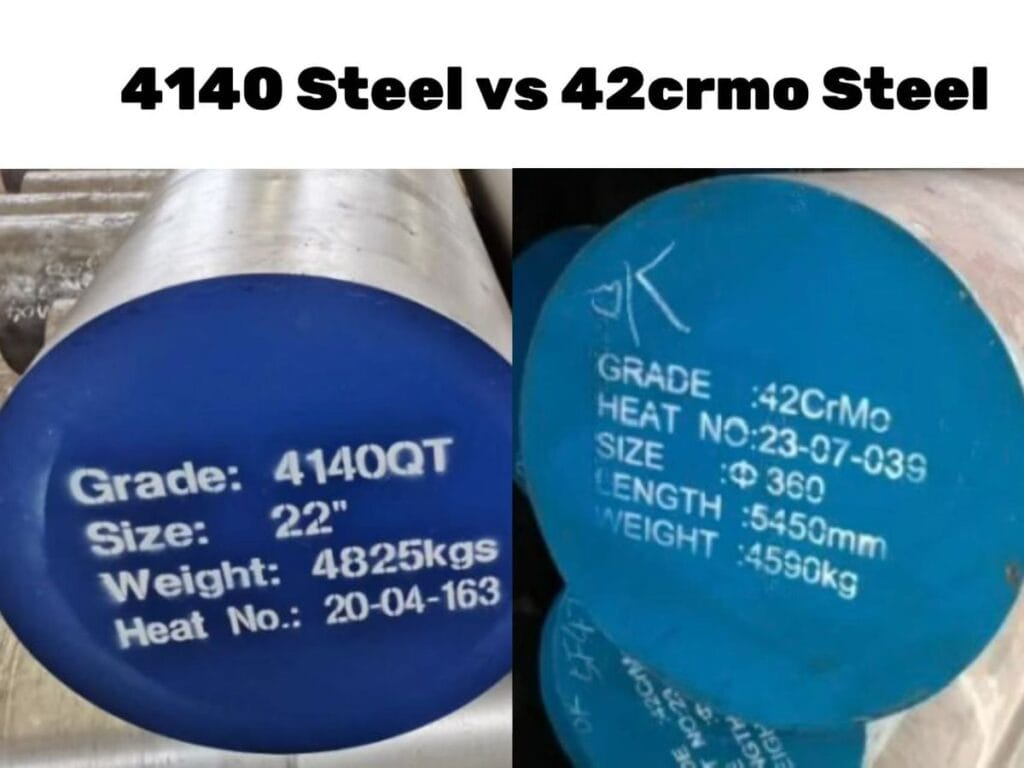
When choosing reliable alloy steel for demanding industrial components, 4140 steel and 42CrMo are often the two leading options. Both materials are widely used in heavy machinery, energy equipment, and high-load forged parts. So what sets them apart? This short guide breaks down the key differences between 4140 vs 42CrMo to help you select the right grade.
Chemical Composition and Hardenability
Standard | C (%) | Si (%) | Mn (%) | Cr (%) | Mo (%) |
4140 | 0.38–0.43 | 0.15–0.35 | 0.75–1.00 | 0.80–1.10 | 0.15–0.25 |
42CrMo | 0.38–0.45 | 0.17–0.37 | 0.50–0.80 | 0.90–1.20 | 0.15–0.25 |
Based on the chemical composition table, 4140 and 42CrMo share similar alloying elements, but differ in several key ranges. 42CrMo contains slightly higher carbon (up to 0.45%) and chromium (up to 1.20%), which improves its hardenability and allows it to reach higher strength after heat treatment.
4140 has a higher manganese range (0.75–1.00%), giving it better toughness and stable performance under medium loads. Its balanced chemistry also contributes to good machinability and weldability, making it widely used in U.S. manufacturing.
Although the differences in composition look small, the higher carbon and chromium levels in 42CrMo translate into greater hardness and tensile strength, making it more suitable for heavy-duty shafts, ring gears, and other high-load components.
Mechanical Properties and Heat Treatment Response
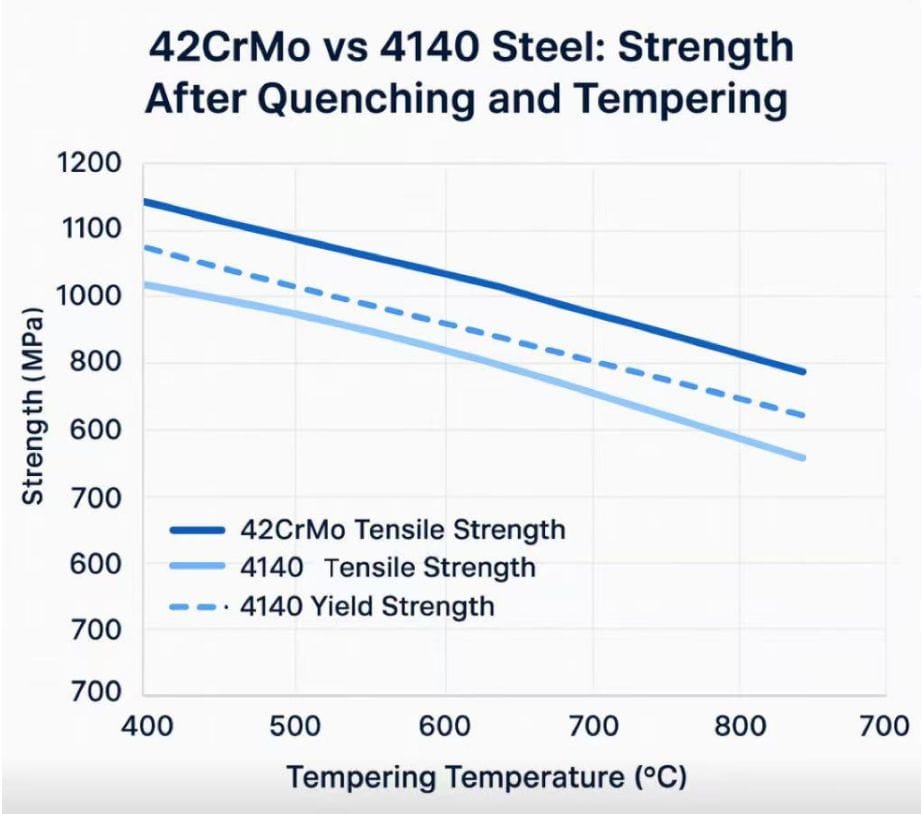
The difference between 42CrMo and 4140 steel becomes clear after quenching and tempering, as shown in the strength–temperature curve on the right.
4140 maintains stable tensile strength in the medium tempering range and offers excellent machinability, making it suitable for automotive and general machinery parts.
42CrMo, however, shows consistently higher tensile strength across all tempering temperatures. Its greater hardenability and fatigue resistance help it withstand high-cycle loads and harsh working conditions.This makes 42CrMo ideal for heavy-duty shafts, ring gears, drilling tools, and mining equipment subjected to high torque and impact.
In short, 4140 provides balanced performance and better machinability, while 42CrMo offers higher load capacity and durability for demanding applications.
Recommended Applications
42CrMo:
Ideal for heavy-duty shafts, large ring gears, hydraulic cylinders, and mining components that operate under high torque, repeated impact, and deep hardening requirements. Its superior strength and hardenability make it suitable for critical forged parts in construction machinery, drilling equipment, and high-load transmission systems.
4140:
Commonly used for automotive parts, medium-duty gears, industrial machinery components, and tools and fixtures where good machinability, balanced strength, and cost efficiency are important. Its stable performance makes it a popular choice for OEM equipment, maintenance parts, and general mechanical applications.
Conclusion
In summary, both 4140 and 42CrMo are strong and versatile alloy steels, but their performance advantages differ. 4140 offers balanced toughness and great machinability, making it ideal for general industrial machinery. 42CrMo provides higher strength and superior hardenability, delivering better reliability under heavy loads.
Weforging can help determine whether 4140 or 42CrMo is best for your load, machining, and heat-treatment requirements.Send us your drawings or specifications, and our engineers will recommend the ideal material and manufacturing solution.
Start your custom consultation today.