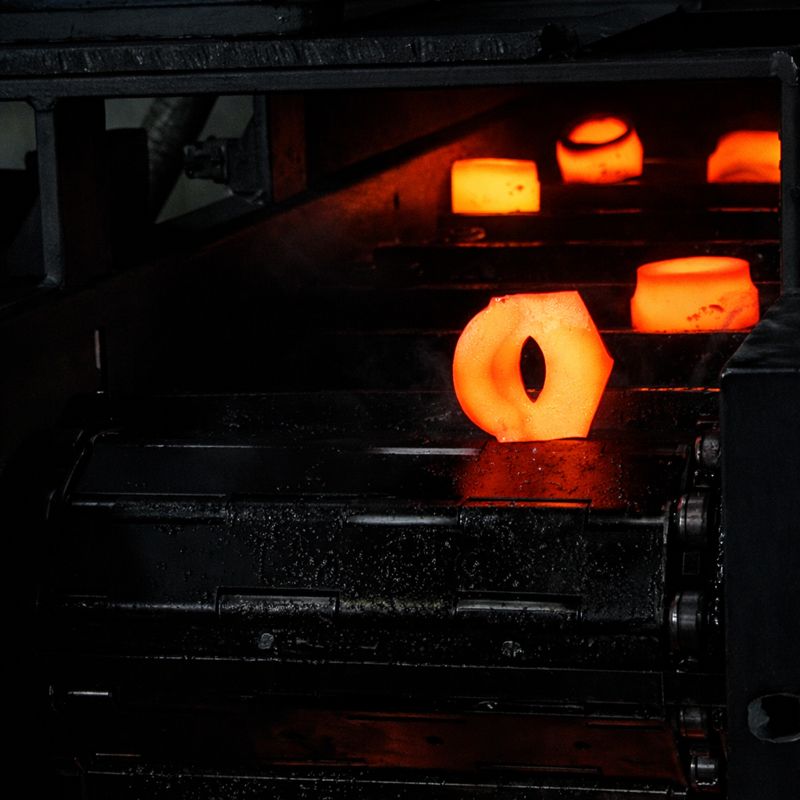
Custom Rolled Ring Forgings
Seamless rings manufactured from carbon and alloy steel,
available with heat treatment, CNC machining and inspection.
✓ Up to 3000 mm OD
✓ Carbon & Alloy Steel
✓ Heat Treatment Available
✓ UT / MT Inspection
✓ CNC Machining Included
Rolled Ring Forging Capabilities
| Capability | Range |
|---|---|
| Outer diameter | 50 mm – 6000 mm |
| Weight Range | 1 kg – 1 ton |
| Materials | Carbon Steel, Alloy Steel, Stainless Steel |
| Heat Treatment | Quenching & Tempering, Normalizing, Annealing |
| Machining | Rough & Finish CNC Machining |
| Wall Thickness | > 10 mm |
| Ring Type | Seamless Rolled Rings, Gear Rings, Bearing Rings |
| Inspection | UT, MT, Dimensional Inspection |
| Surface Finish | Machined or Custom Surface Treatment |
| Production Type | OEM Custom Manufacturing |
Additional OEM Support
✓ Prototype and low-volume production
✓ Drawing-based quotation and manufacturability review
✓ Material selection and substitution recommendations
✓ Heat treatment and machining process planning
✓ Full material traceability and inspection documentation
✓ One-stop service from forging to finished machining
Typical Rolled Ring Forging Products
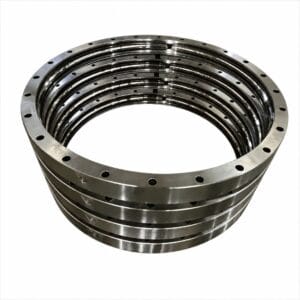
- Rolled Ring Forgings
Forged Flange Rings
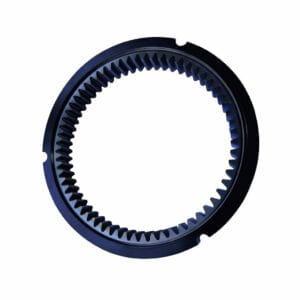
- Rolled Ring Forgings
Forged Ring Gears
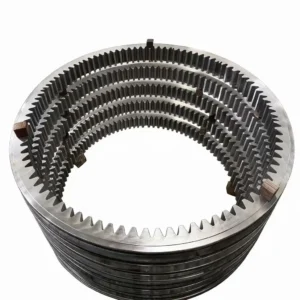
- Rolled Ring Forgings
Forged Internal Ring Gears
Rolled Ring Forging Process
The rolled ring forging process at Weforging follows a precise, step-by-step workflow to ensure consistency, accuracy, and high quality across every product.
Billet Preparation & Heating — High-grade alloy or carbon steel billets are evenly heated to the optimal forging temperature, ensuring proper metal flow and forming stability.
Piercing — The heated billet is pierced to create a central opening, forming a clean and uniform ring blank.
Ring Rolling — The blank is placed on a ring rolling mill where axial and radial rolls gradually expand the diameter while refining wall thickness and grain structure.
Heat Treatment — Each forging is normalized and tempered to achieve the required hardness, strength, and fine microstructure.
CNC Machining — Precision machining is applied to surfaces, bores, and gear profiles using advanced CNC centers to maintain tight tolerances and smooth finishes.
Inspection & Quality Control — Every stage, from billet heating to final machining, is verified through ultrasonic, dimensional, and mechanical inspections to ensure accuracy, strength, and traceability.
Advantages of Rolled Ring Forging
Rolled ring forging offers several critical advantages over casting and machining:
- Continuous Grain Flow
The grain structure follows the ring shape, improving load distribution and reducing stress concentration. - Higher Fatigue Resistance
Ideal for rotating and high-load applications such as bearings and gear systems. - Reduced Material Waste
Compared with machining from solid bar, material utilization is significantly higher. - Improved Structural Integrity
No internal porosity or shrinkage defects commonly found in castings. - Cost Efficiency at Scale
Lower lifecycle cost due to longer service life and reduced failure risk.
Materials for Rolled Ring Forgings
Weforging manufactures custom rolled ring forgings using a wide range of industrial-grade materials based on application requirements and mechanical performance targets.
| Material Grade | Typical Applications |
|---|---|
| 42CrMo4 / 4140 | Gear Rings, Bearing Rings |
| 4340 Alloy Steel | Heavy Load Transmission Systems |
| Carbon Steel | Structural Rings, Industrial Components |
| Stainless Steel | Corrosion-Resistant Ring Components |
| Aluminum Alloys | Lightweight Industrial Rings |
Additional material grades are available according to OEM drawings and technical specifications.
Applications of Rolled Ring Forged Components
Rolled ring forged components are widely used in:
- Mining Equipment: Crushers, conveyors, and processing machinery.
- Construction Machinery: Excavators, cranes, and drilling equipment.
- Wind Energy: Yaw rings, pitch rings, and flange rings for turbines.
- Industrial Power Transmission: Heavy-duty gearboxes and rotating machinery.
Each industry requires specific ring types tailored to operational loads and environmental conditions.
Quality Control and Inspection
Quality control is integrated throughout the rolled ring forging and machining process to ensure product reliability and traceability.
Inspection & Quality Measures
- Ultrasonic Testing (UT)
- Magnetic Particle Testing (MT)
- Dimensional Inspection
- Hardness & Mechanical Testing
- Heat Number Traceability
- Material Certification
- OEM Inspection Reports
Our quality control procedures help ensure stable mechanical performance and compliance with customer technical requirements.
Contact Weforging
Looking for precision rolled ring forgings or custom alloy rings for your next project?
📩 Click the inquiry button below to request a quotation or upload your technical drawings.
Our engineering team provides expert consultation, detailed quotations, and full support to help you achieve the ideal forging solution.