
Hydraulic Forging Components in Hydraulic Systems
Hydraulic forging components are vital to systems that handle heavy loads, precise movement, and high pressure — from excavators and cranes to industrial presses and marine equipment. These systems rely on mechanical components that can maintain strength, sealing, and dimensional stability under continuous stress.
Forged and machined parts ensure this reliability. Through custom forging for hydraulic systems, metals are compacted and shaped to align the grain structure with the working load, producing dense and fatigue-resistant parts such as cylinders, piston rods, and valve blocks.
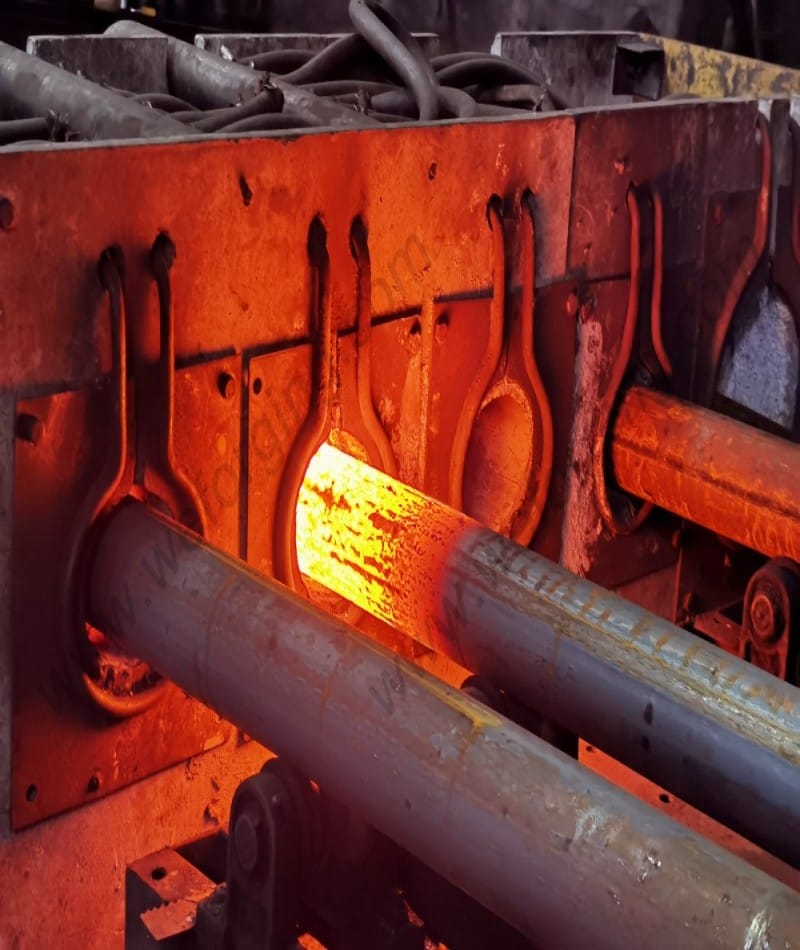
Applications of Forged Hydraulic Components in Heavy Machinery
Forged hydraulic components are widely used in systems where high pressure and durability are essential.
Typical applications include:
- Construction equipment such as excavators and loaders
- Mining machinery operating under heavy loads
- Agricultural equipment requiring stable hydraulic actuation
- Industrial presses and automated systems
In these environments, components must withstand pressure fluctuations, mechanical stress, and long operating cycles without failure.
Key Components in Hydraulic Systems
A hydraulic system transfers power through pressurized fluid within a sealed circuit. Its performance depends on the reliability of several key components.
These include:
- Cylinder housing – Converts hydraulic energy into linear motion
- Piston rod – Transfers force and requires high strength and surface quality
- Valve block – Controls pressure, direction, and flow rate
- Flanges and fittings – Ensure leak-free and secure connections
Each component must maintain tight tolerances and sealing performance throughout its service life.
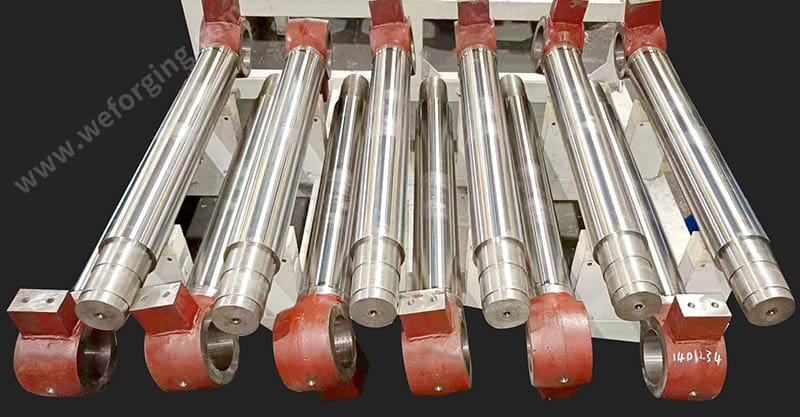
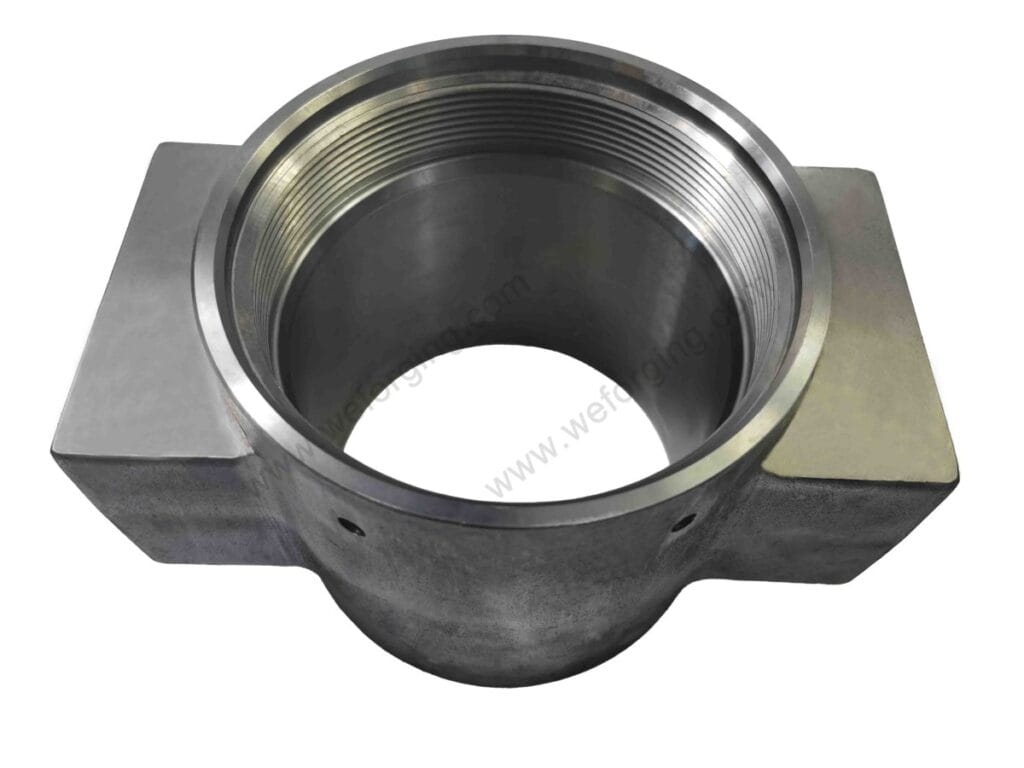
Custom Forged Hydraulic Components We Supply
At Weforging, we produce a range of custom hydraulic forging components based on OEM drawings and specifications.
Our main products include:
- Forged piston rods with induction hardening for wear resistance
- Precision cylinder sleeves with honing up to Ra ≤ 0.4 μm
- CNC-machined valve blocks with tight tolerances
- Hydraulic flanges and fittings for high-pressure applications
Each component is engineered to match system requirements and ensure reliable operation.
Why Forged Parts Excel in Hydraulic Systems
1️⃣ Strength and Fatigue Resistance
Forging aligns the metal grain flow with part geometry, resulting in greater tensile strength and longer fatigue life — essential for forged hydraulic cylinder parts.
2️⃣ Structural Integrity
The forging process eliminates porosity and internal voids often seen in cast materials, ensuring reliable sealing and leak-free operation.
3️⃣ Dimensional Stability
After CNC machining, forged blanks achieve tight tolerances, ensuring consistent assembly across hydraulic cylinders and valve systems.
4️⃣ Efficiency and Cost Control
Forged components use material more effectively, reducing waste and machining time — improving cost efficiency without compromising performance.
Forging and CNC Machining: A Combined Advantage
High-performance hydraulic components require both strong internal structure and precise geometry.
Forging creates a dense and uniform structure, while CNC machining ensures accuracy and surface quality.
At Weforging, we offer:
- Machining accuracy up to ±0.01 mm
- Heat treatment including quenching and tempering
- Surface finishing such as grinding and honing
This integrated process ensures reliable performance in high-pressure environments.
Conclusion
Hydraulic systems require components that can perform under pressure without failure. Hydraulic forging components provide the strength, durability, and reliability needed for these demanding applications.
At Weforging, we combine forging and machining to deliver consistent quality for OEM customers worldwide.
Send us your drawings today for a fast and professional quotation.