
Hot Forging Manufacturer for OEM Steel Components
Weforging provides custom hot forging services for steel components from 1 kg to 200 kg, including forged shafts, rings, flanges, gear blanks and non-standard OEM parts for heavy-duty industrial applications.
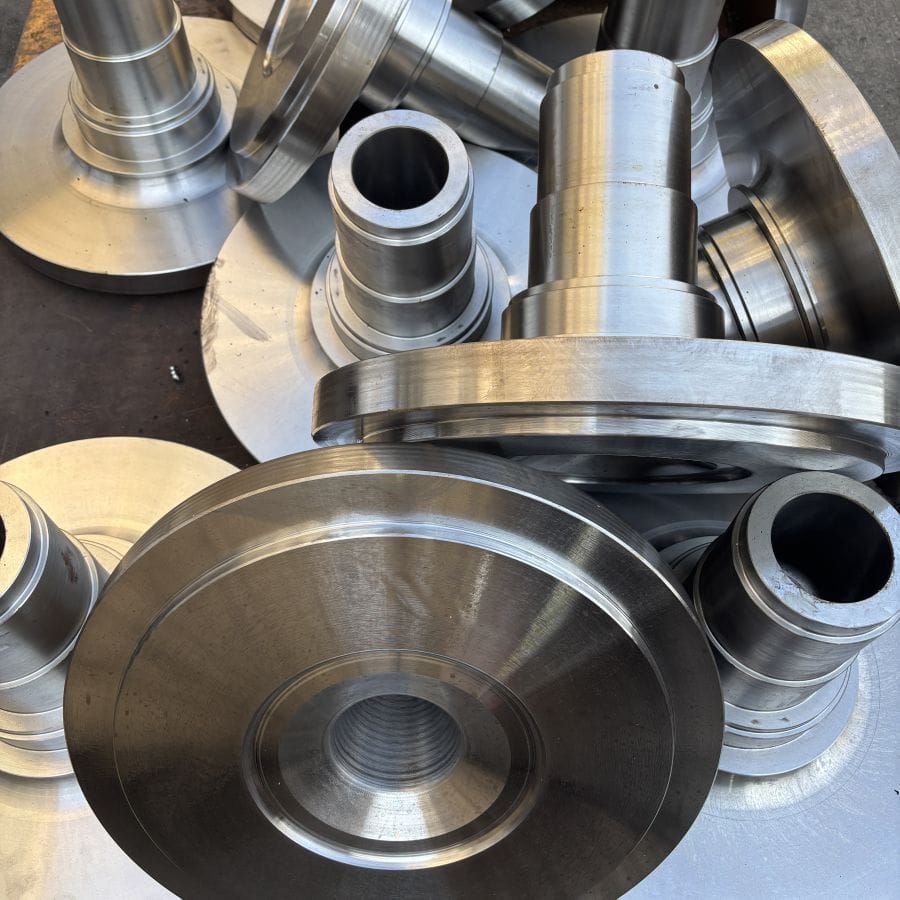
Hot forged components can be supplied as forged blanks or fully machined parts with CNC machining, heat treatment, UT/MT inspection and dimensional inspection integrated into one production process.
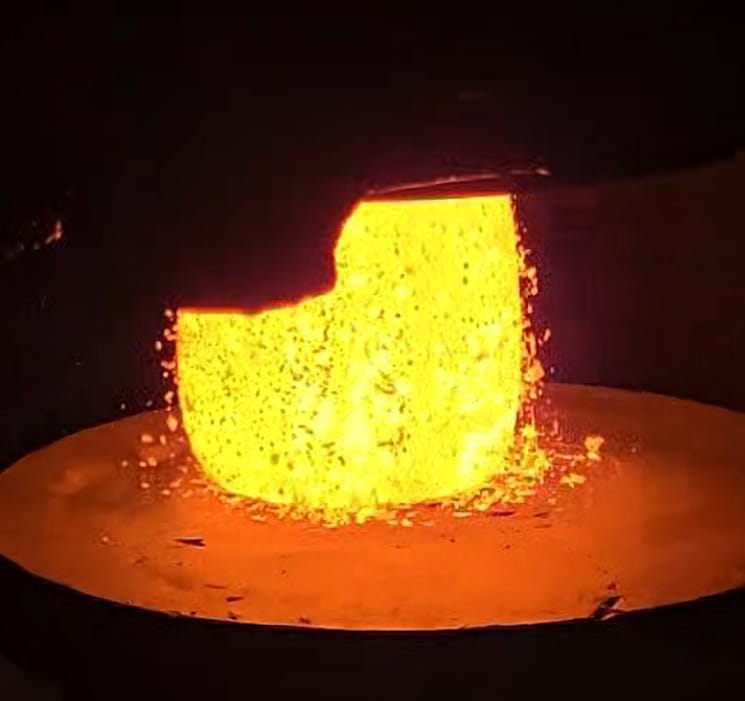
What Is Hot Forging?
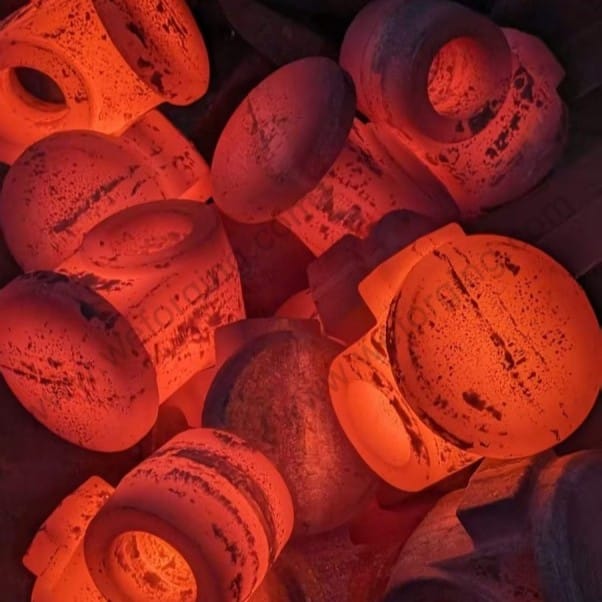
Hot forging is a manufacturing process in which metal is heated above its recrystallization temperature before being formed under compressive force. This improves material flow and creates a refined grain structure that offers higher strength and fatigue resistance than many other manufacturing methods.
It is widely used for components that operate under heavy loads or repeated stress, including gears, shafts, flanges, hydraulic parts and mining equipment.
What Can We Forge?
Our hot forging services support a wide range of industrial components. Parts can be supplied as forged blanks or fully machined finished components depending on project requirements.
Forged Shafts
Forged shafts are commonly used in mining equipment, construction machinery, power transmission systems, and heavy industrial applications where high torsional strength and fatigue resistance are required.
Typical materials include:
- 42CrMo4
- 4140
- 4340
- 20MnCr5
- 18CrNiMo7-6
Forged Rings
Hot forged rings provide superior structural integrity and are widely used in bearing assemblies, slewing drives, gear systems, and wind energy equipment.
Available products include:
- Seamless Rolled Rings
- Bearing Rings
- Gear Rings
- Flange Rings
Forged Flanges
Compared with cast alternatives, forged flanges offer better pressure resistance and improved mechanical properties.
Applications include:
- Oil & Gas Equipment
- Pumps
- Valves
- Industrial Piping Systems
Gear Blanks and Hubs
Hot forged gear blanks provide a reliable foundation for gear cutting and heat treatment processes, helping improve fatigue strength and dimensional stability.
Custom Forged Components
We regularly manufacture custom forged components according to customer drawings, including sleeves, couplings, brackets, blocks, clevises, and other non-standard parts.
Hot Forging Capabilities & Specifications
The capability of a hot forging supplier is often measured by forging size range, material options, machining capacity, and quality control standards.
| Item | Capability |
|---|---|
| Forging Weight | 1 kg – 200 kg |
| Maximum Diameter | Up to 600 mm |
| Material Grades | Carbon Steel, Alloy Steel, Stainless Steel |
| Heat Treatment | Normalizing, Q&T, Induction Hardening |
| CNC Machining | Available |
| Inspection | UT, MT, CMM |
| MOQ | 1 Piece |
| Production Volume | Prototype to Mass Production |
Whether you require a small prototype or a long-term production program, our hot forging services can be tailored to your technical and commercial requirements.
Quality Control for Hot Forgings
Quality assurance is integrated throughout the manufacturing process.
Raw Material Verification
- Mill Test Certificates (MTC)
- Heat Number Traceability
- Chemical Composition Review
Process Monitoring
- Forging Temperature Monitoring
- Die Inspection
- Production Record Tracking
Heat Treatment Validation
- Hardness Testing
- Microstructure Evaluation
- Mechanical Property Verification
Final Inspection
- Ultrasonic Testing (UT)
- Magnetic Particle Testing (MT)
- CMM Dimensional Inspection
- Surface Quality Inspection
Documentation
Available upon request:
- Material Certificates
- Inspection Reports
- Heat Treatment Records
- NDT Reports
Integrated Manufacturing Services
Many OEM customers prefer working with a single-source supplier to reduce lead times and simplify project management.
Our hot forging services can be combined with:
- CNC Turning
- CNC Milling
- Gear Cutting
- Heat Treatment
- Surface Treatment
- Final Inspection
- Export Packaging
This integrated manufacturing approach helps reduce communication costs and improve delivery reliability.
Typical Lead Time
Forging Lead time depends on part size, tooling complexity, quantity, and inspection requirements.
| Stage | Typical Time |
|---|---|
| RFQ Review | 1–2 Days |
| Technical Evaluation | 2–3 Days |
| Tooling Manufacture | 10–20 Days |
| Sample Validation | 5–7 Days |
| Production | 20–30 Days |
Most custom hot forging projects can be completed within 40–60 days depending on project scope.
Why Choose Weforging for Hot Forging
Weforging provides integrated hot forging services for OEM and industrial applications requiring strength, dimensional control, and process reliability.
Key reasons OEM customers choose Weforging include:
- Integrated forging + CNC machining + testing
- Full material traceability (heat number tracking)
- NDT capability (UT / MT inspection)
- Stable batch consistency for OEM projects
- Compliance with ASTM, DIN, and ISO standards
- Experience in global industrial applications
Our focus is not just on producing parts, but ensuring consistent performance in real-world applications.
Get a Quote for Hot Forging Services
If you are sourcing custom hot forged components, our engineering team can review your project and provide manufacturing feedback before production begins.
To receive a quotation, simply send:
- Drawing or CAD File
- Material Specification
- Required Quantity
- Target Delivery Date
We will review manufacturability, recommend suitable production methods, and provide a practical quotation based on your requirements.