
CNC Milling Services: Process, Capabilities & Applications
CNC milling services play a critical role in manufacturing high-precision components for industries such as mining, construction, energy, and industrial machinery. By combining custom CNC milling with forged blanks, manufacturers can achieve tight tolerances, excellent surface finishes, and consistent quality for demanding applications.
At Weforging, we integrate forging, heat treatment, precision CNC milling, and CMM inspection into a single manufacturing process. This one-stop approach reduces lead times, improves dimensional consistency, and delivers reliable forged components from prototype development to full-scale production.
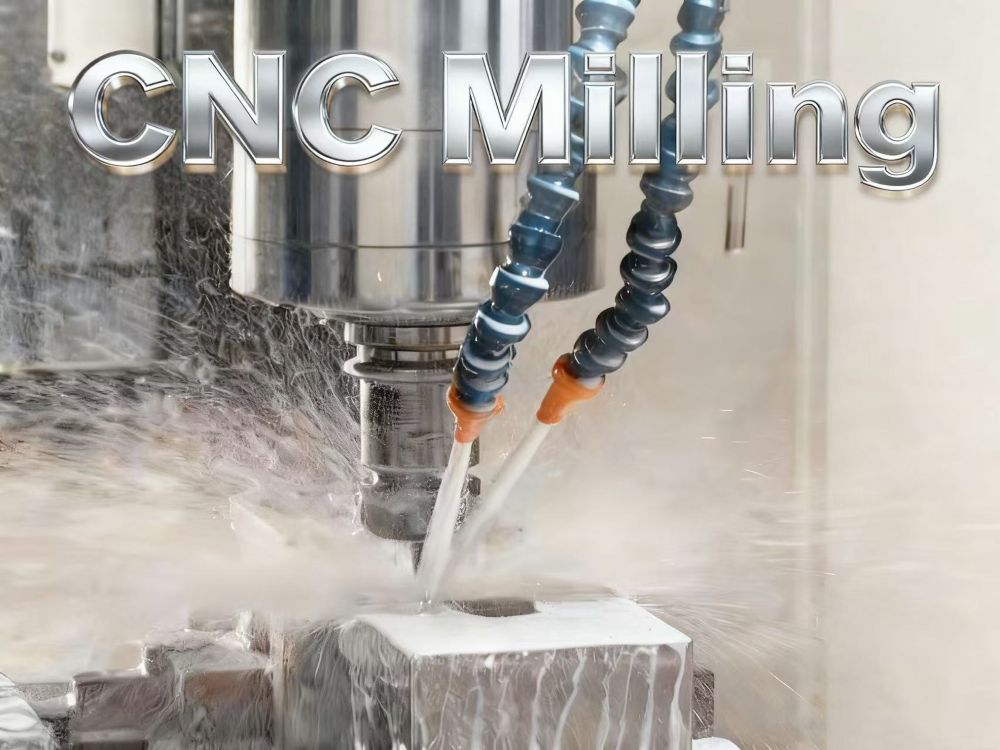
What Are CNC Milling Services?
CNC milling services use computer-controlled machine tools to remove material and create precise features based on CAD/CAM programs. Compared with conventional machining, CNC milling offers higher accuracy, repeatable quality, and greater flexibility for producing complex geometries.
Typical machined features include:
- Flat and contoured surfaces
- Slots and keyways
- Precision holes and threads
- Pockets and cavities
- Multi-face machining
For forged components, CNC milling is typically the final manufacturing step, ensuring every critical dimension matches the engineering drawing while maintaining the mechanical advantages created during forging.
Why Choose CNC Milling for Forged Parts?
Forging provides exceptional strength, while precision CNC milling delivers the dimensional accuracy required for assembly and long-term performance. Combining both processes offers significant advantages for industrial components.
Key Benefits
- Higher Accuracy – Achieve tight tolerances for critical mounting and sealing surfaces.
- Improved Surface Finish – Reduce friction and improve assembly quality.
- Consistent Production – Maintain stable dimensions across prototype and production batches.
- Lower Material Waste – Near-net-shape forgings reduce machining time and material removal.
- Greater Design Flexibility – Easily machine slots, pockets, keyways, and complex profiles.
Typical forged components requiring CNC milling include gears, shafts, flanges, hydraulic cylinder parts, bearing housings, and heavy equipment components.
CNC Milling Process
A standardized manufacturing workflow helps ensure consistent quality throughout production.
- Engineering Review – Evaluate drawings, tolerances, and material requirements.
- Forging & Heat Treatment – Produce near-net-shape blanks with the required mechanical properties.
- CAM Programming – Generate optimized machining strategies.
- Rough & Finish Milling – Machine all functional surfaces and critical dimensions.
- Quality Inspection – Verify dimensions using precision measuring equipment, including CMM when required.
- Final Cleaning & Packaging – Complete final inspection before shipment.
By integrating forging and machining within the same facility, we improve manufacturing efficiency while maintaining complete production traceability.
Common CNC Milling Operations
Different machining strategies are selected according to part geometry and functional requirements.
- Face Milling – Produces flat, accurate reference surfaces.
- End Milling – Creates pockets, contours, and complex profiles.
- Slot Milling – Machines keyways and precision slots.
- Profile Milling – Generates external contours and irregular shapes.
- Drilling & Tapping – Produces threaded and precision mounting holes.
- Chamfering – Removes sharp edges and improves assembly safety.
Selecting the appropriate operation improves machining efficiency while ensuring the required dimensional accuracy.
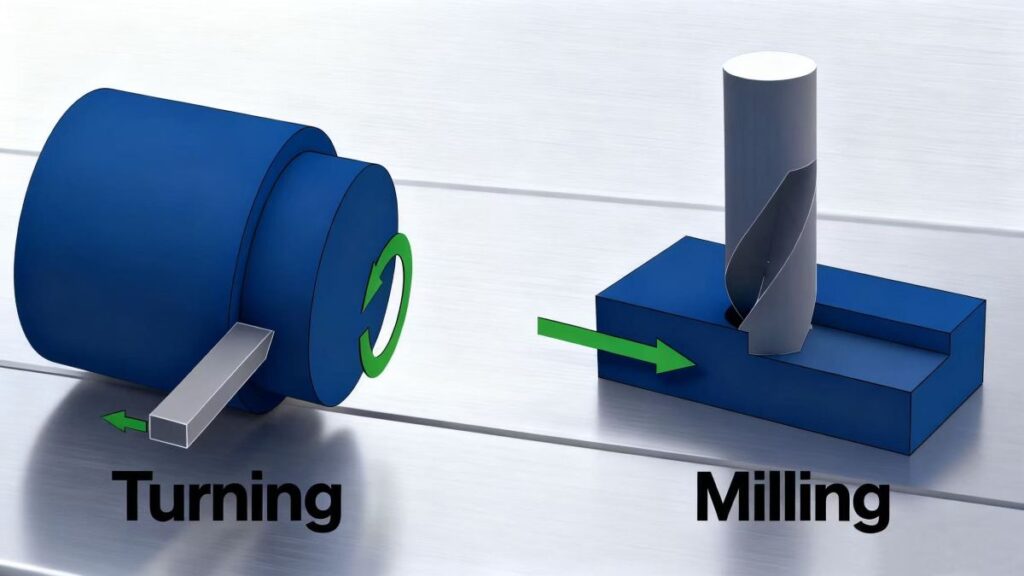
CNC Milling vs CNC Turning
Although both are CNC machining processes, each is designed for different component geometries.
| Feature | CNC Milling | CNC Turning |
|---|---|---|
| Best For | Flat and complex surfaces | Cylindrical parts |
| Typical Parts | Flanges, housings, brackets | Shafts, pins, bushings |
| Machining Method | Rotating cutting tool | Rotating workpiece |
| Geometry | Multi-face machining | Round profiles |
| Complexity | High | Medium |
In many industrial applications, both processes are combined. For example, a forged shaft may first be turned to achieve its outer diameter before being milled to create keyways or mounting features.
Advantages of CNC Milling
CNC milling improves more than dimensional accuracy. For forged components, it enhances machining consistency, surface quality, and production efficiency while supporting reliable downstream processing.
Key Advantages
- High Accuracy – Achieves tight tolerances for critical dimensions and assembly features.
- Better Surface Finish – Produces smooth, consistent surfaces for improved product performance.
- Higher Efficiency – Multi-axis machining reduces setups and shortens production time.
- Consistent Quality – Stable machining processes help ensure repeatable results across production batches.
- Supports Secondary Operations – Provides an accurate foundation for heat treatment, grinding, and surface finishing.
Applications of CNC Milling in Industry
Our CNC milling services support OEMs and industrial manufacturers across multiple sectors.
Mining Equipment
Heavy-duty housings, wear components, and transmission parts designed for demanding environments.
Construction Machinery
Hydraulic cylinder components, brackets, and structural forgings requiring high strength and precision.
Agricultural Machinery
Drive components, hubs, and mechanical parts built for reliable long-term operation.
Energy & Power
Forged and machined components used in wind energy, power transmission, and industrial equipment.
Industrial Machinery
Precision parts for pumps, gearboxes, compressors, and automation systems.
Why Choose Weforging CNC Milling Services?
Choosing the right CNC milling supplier means more than evaluating machining capacity. A reliable manufacturing partner should provide engineering support, consistent quality, and integrated production capabilities.
At Weforging, we offer:
- Integrated forging and CNC machining
- Prototype to production manufacturing
- Heat treatment support
- Coordinate Measuring Machine (CMM) inspection
- Full material traceability
- ISO 9001 quality management
- Engineering support for manufacturability
- Stable production quality and dependable lead times
This one-stop manufacturing approach helps customers simplify their supply chain while ensuring consistent product quality.
Inquiry and Customization
Whether you need a prototype or high-volume production, our engineering team is ready to support your project.
Send us your drawings or CAD files, and we’ll review your requirements, recommend the most suitable manufacturing solution, and provide a competitive quotation based on your specifications.
F.A.Q.
CNC milling is ideal for parts with flat surfaces, pockets, slots, keyways, threaded holes, and complex contours. It is widely used to manufacture gear housings, flanges, valve bodies, hydraulic components, brackets, and other custom forged parts that require high dimensional accuracy.
Yes. Most forged components require CNC milling after forging to achieve final dimensions, surface finishes, and assembly tolerances. Combining forging with precision machining provides both excellent mechanical strength and high dimensional accuracy.
Our CNC milling services support carbon steel, alloy steel, stainless steel, aluminum, brass, titanium, and other engineering materials. Material selection depends on the application’s strength, corrosion resistance, wear resistance, and machining requirements.