
Cold Forging Services for Precision Industrial Components
Cold forging is a metal forming process used to produce strong, accurate, and repeatable parts at room temperature. At Weforging, we provide cold forging support for custom cold forged parts and precision cold forged components used in OEM machinery, transmission systems, fasteners, and industrial assemblies.
Compared with machining from solid bar, cold forging can improve material utilization, strengthen grain flow, and reduce secondary processing. For projects that require tighter tolerances or special features, we can combine forged blanks with CNC machining, heat treatment, and dimensional inspection to support stable batch production.
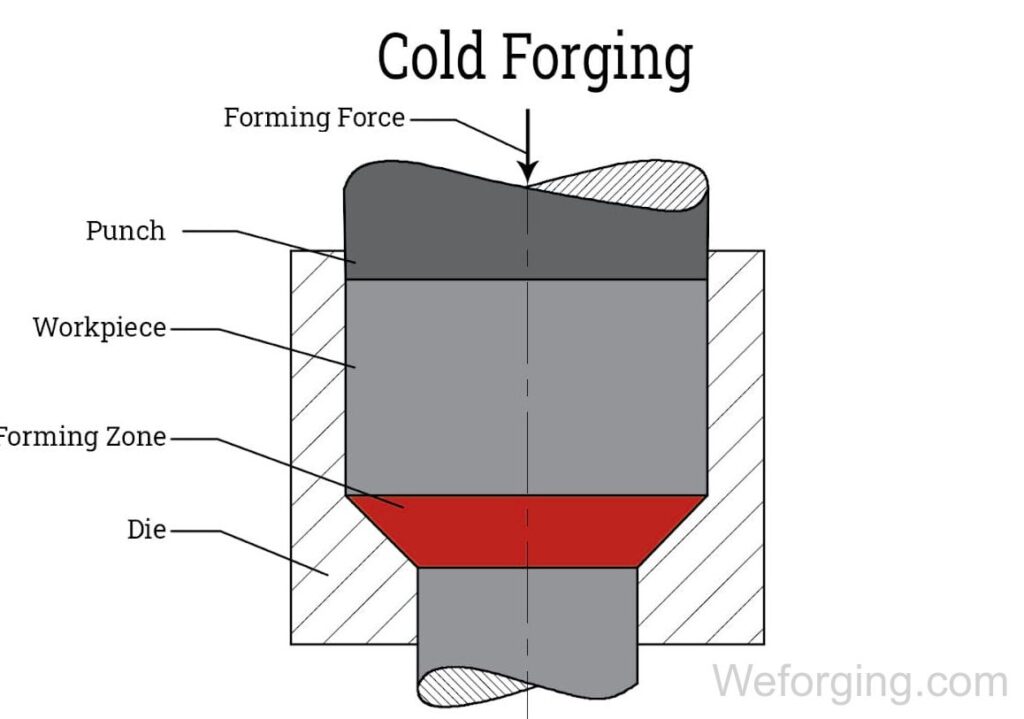
How the Cold Forging Process Works
Cold forging forms metal without heating it to a high forging temperature. The material is placed into a die and shaped under high pressure. During deformation, the metal flows into the required geometry while maintaining good surface quality and dimensional stability.
A typical cold forging process may include:
- Cutting raw material into blanks
- Lubricating the blank surface
- Cold heading, extrusion, or closed-die forming
- Trimming or sizing if required
- CNC machining for tighter tolerances
- Heat treatment or surface finishing when needed
- Final inspection before shipment
The key advantage of cold forging is that the part can achieve near-net shape while retaining strong grain flow. This makes it suitable for components that need strength, accuracy, and repeatable production quality.
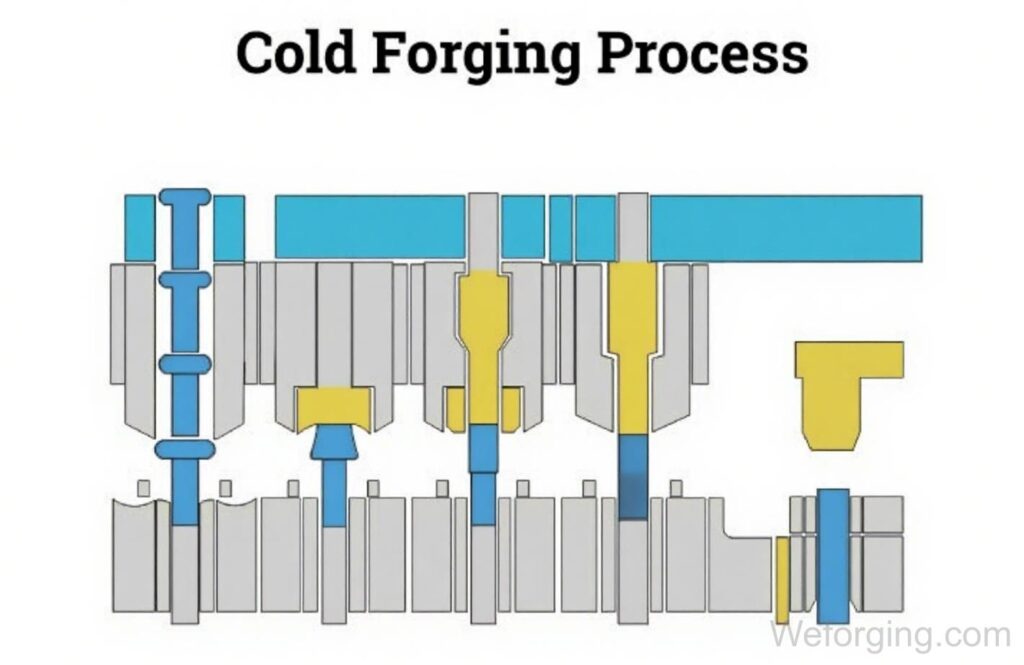
Types of Cold Forging Processes
Cold forging is not limited to one method. The correct process depends on part geometry, material, forming difficulty, and production volume.
Cold Heading
Cold heading is commonly used for bolts, nuts, studs, pins, and connectors. It provides high productivity and excellent material utilization for high-volume production.
Cold Extrusion
Cold extrusion is suitable for sleeves, bushings, hollow parts, and shaft-like components. It allows the material to flow in a controlled direction and can improve mechanical strength.
Multi-Station Cold Forging
Multi-station cold forging is used when one forming step is not enough. The part is shaped progressively through several stations, improving dimensional consistency and production efficiency.
Closed-Die Cold Forging
Closed-die cold forging is used for precision components with defined shapes. It supports near-net-shape manufacturing and reduces unnecessary machining allowance.
Custom Cold Forged Parts We Manufacture
Weforging manufactures custom cold forged parts for industrial and OEM applications. Depending on your drawings, material, and tolerance requirements, we can suggest whether cold forging, hot forging, CNC machining, or a combined process is more suitable.
Cold-Forged Fasteners and Connectors
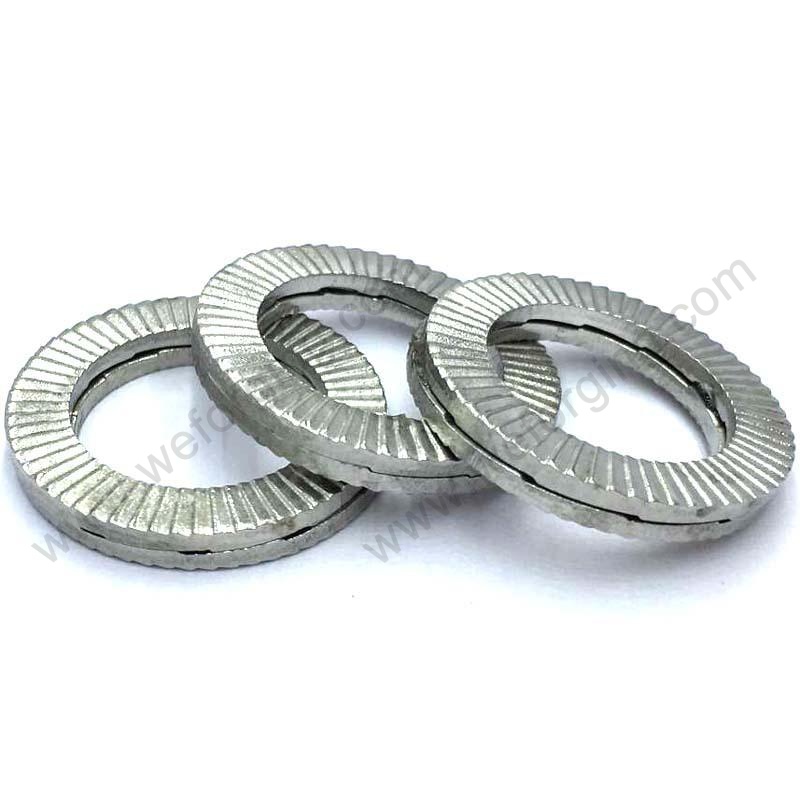
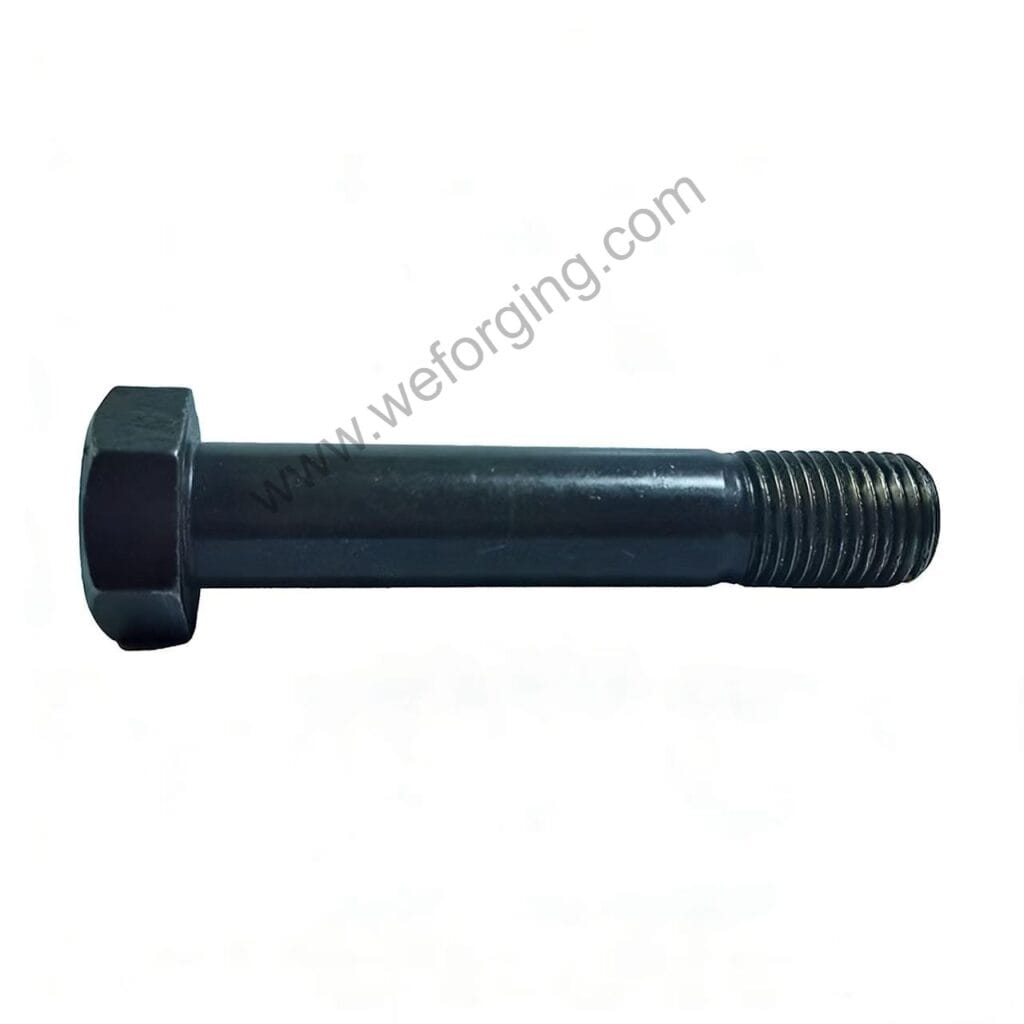
We produce cold-forged fasteners, nuts, bolts, studs, sleeves, and connectors for machinery and assembly systems. For customers looking for a cold forged fasteners manufacturer, we can support production from material selection to final inspection.
Small Shafts and Transmission Blanks
Cold-forged shafts, stepped shafts, gear blanks, and transmission blanks can be supplied for further machining. As a custom cold forged shafts supplier, we focus on stable dimensions, material flow, and repeatable batch quality.
Mechanical Connectors and CNC-Finished Parts
Some parts cannot rely on forging alone. For components with threads, grooves, gear profiles, or tight assembly dimensions, we can provide cold forged blanks with CNC machining.
Components for Machinery Systems
Cold forging can be used for plugs, housings, bushings, compact structural parts, and functional components used in machinery systems. These parts are often chosen when strength, accuracy, and material efficiency are all important.
Cold Forging Capabilities for OEM Projects
| Capability | Details |
|---|---|
| Part Size | Small to medium-sized components |
| Materials | Carbon steel, alloy steel, stainless steel, aluminum, copper, and brass |
| Production Volume | Prototype, small batch, and mass production |
| Secondary Operations | CNC machining, heat treatment, surface treatment, and finishing |
| Inspection | Dimensional inspection, surface checks, and quality records |
| Documentation | Material certificates, inspection reports, and process records when required |
For OEM cold forging solutions, our engineering team reviews drawings before production to reduce forming risks, machining conflicts, and tolerance issues during batch manufacturing.
Advantages of Cold Forging
Cold forging offers several engineering and commercial advantages:
Excellent mechanical strength due to refined grain flow
High dimensional accuracy and smooth surface finish
Near-net-shape capability with minimal machining
High material utilization, reducing production waste
Lower energy consumption compared with hot forging
Cost-effective for small to medium-sized parts in large quantities
These benefits make it a preferred method for producing precise and durable components.
Cold Forging vs. Hot Forging
| Category | Cold Forging | Hot Forging |
|---|---|---|
| Temperature | Formed at or near room temperature | Metal is heated before forming |
| Accuracy | Higher dimensional accuracy | Lower accuracy due to thermal expansion |
| Surface Finish | Smoother surface | Rougher surface, often needs machining |
| Strength | Good grain flow and work hardening | Good strength, often with heat treatment |
| Part Size | Best for small to medium parts | Suitable for larger and complex parts |
| Tooling Load | Higher forming pressure | Lower forming pressure |
| Cost Efficiency | Good for repeatable batches | Good for large or complex forged parts |
Cold forging is often selected when the part requires accuracy, surface finish, and production consistency. Hot forging is more suitable for large parts, complex shapes, or materials that are difficult to form at room temperature.
Materials for Cold Forging
Material selection has a direct effect on forming difficulty, tool life, part strength, and final cost. Common materials used for cold forging include:
- Carbon steel: C10, C20, C35, C45
- Alloy steel: 20Cr, 40Cr, 42CrMo
- Stainless steel: 304, 316, 410
- Aluminum alloys
- Copper and brass
Not every material is suitable for every cold forging design. Before production, Weforging reviews material grade, deformation ratio, part geometry, and tolerance requirements. If cold forging is not the best option, we can also suggest hot forging or CNC machining alternatives.
Applications of Cold Forging
Cold forging is widely used in applications where dimensional accuracy, material strength, and production efficiency are critical. The process is particularly suitable for high-volume manufacturing of small to medium-sized components.
Typical cold forging applications include:
Automotive and Transportation Components
Power Transmission and Mechanical Systems
Industrial Machinery and Equipment
Components for CNC Finishing Operations
These applications benefit from cold forging’s ability to deliver near-net shape components, reduced material waste, and stable quality in mass production.
Why Choose Weforging for Cold Forging
Weforging provides integrated cold forging solutions for OEM and industrial applications requiring precision, strength, and production stability.
Key advantages include:
Cold forging combined with CNC machining
Forged parts can be supplied near-net shape or finished through CNC machining for tighter tolerances.In-house tooling and process design
Forming processes are engineered to support stable deformation and consistent quality.High-volume production stability
Cold forging processes are optimized for repeatability and long-term batch consistency.Material and standards alignment
Carbon steels, alloy steels, and stainless steels aligned with international standards.OEM and export project experience
Support for global OEM programs with defined documentation and quality control.
Request a Cold Forging Quote
If you need custom cold forged parts or precision cold forged components, you can send us your drawings for review. Our team will check material, forming feasibility, machining requirements, heat treatment, and inspection needs before quoting.
To request a cold forging quote, please provide:
- 2D or 3D drawings
- Material grade
- Annual or batch quantity
- Tolerance requirements
- Surface treatment requirements
- Application or working conditions if available
We will help evaluate whether cold forging is the right manufacturing route and provide a practical quotation for your project.