
Forging Temperature of Steel: Chart, Range, and Process Guide
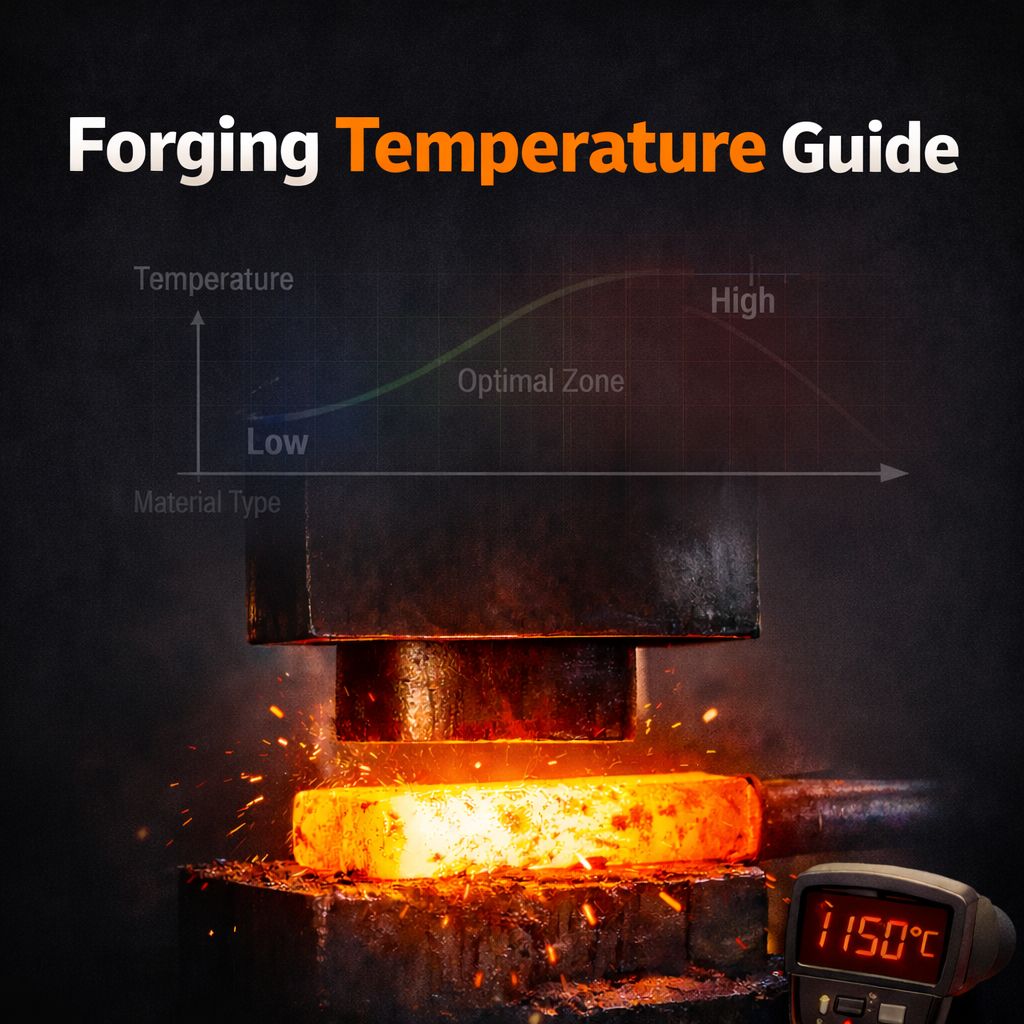
Forging temperature defines the thermal window where metal becomes plastic enough to deform without cracking while preserving internal structure. It is one of the most critical variables in forging, directly influencing grain flow, mechanical strength, fatigue resistance, and long-term reliability.
For engineers and procurement teams, understanding correct forging temperature is not just a theoretical issue. It affects product lifespan, failure risk, machining behavior, and total lifecycle cost. This guide explains forging temperature ranges, material differences, charts, and professional process control methods used in industrial forging.
What Is Forging Temperature and Why Is It Critical?
Forging temperature is the controlled heat range that allows metal to flow plastically under pressure. Below this range, the material becomes brittle. Above it, grain damage and oxidation occur.
Hot forging operates at high temperature where metal recrystallizes during deformation. Warm forging sits in an intermediate range. Cold forging occurs near room temperature and relies on material ductility instead of heat.
Correct forging temperature ensures optimal grain alignment, internal density, and structural continuity. These microstructural benefits translate directly into higher fatigue life and impact strength.
Forging Temperature of Steel: Recommended Ranges
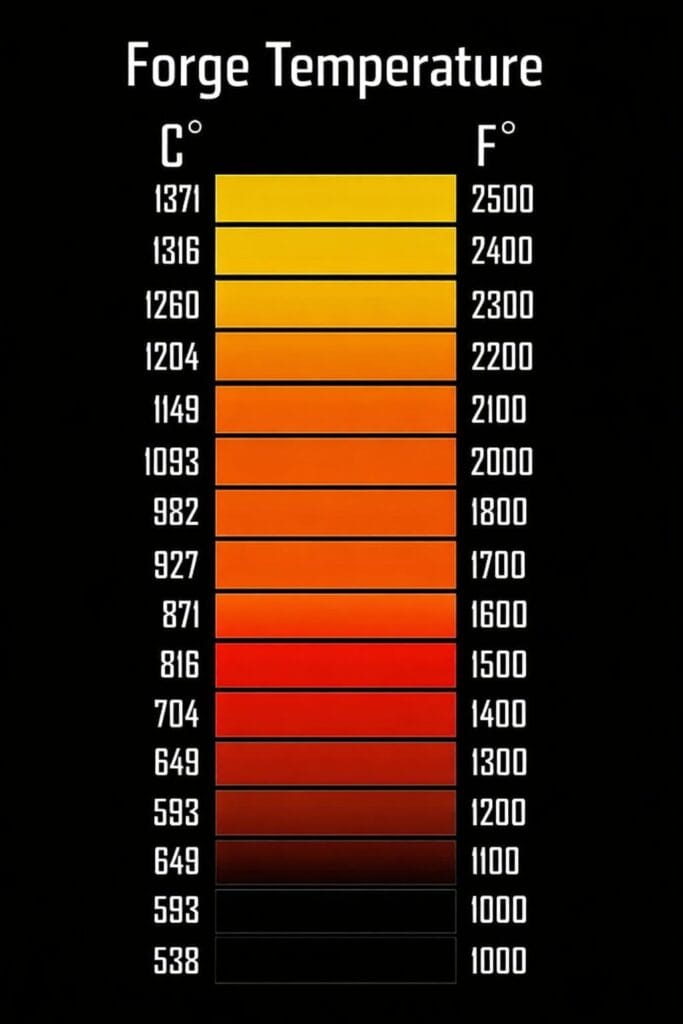
Different steel grades each have their own suitable forging temperature windows. When process temperature deviates from the recommended range, the risk of cracking, grain coarsening, and surface defects increases significantly.
Steel Type | Initial Forging Temperature | Final Forging Temperature |
Carbon Steel | 1150–1250°C | 850–900°C |
Alloy Steel | 1100–1200°C | 850–950°C |
Stainless Steel | 1050–1150°C | ~900°C |
Tool Steel | 1000–1150°C | 850–900°C |
The initial heating temperature must be high enough to ensure proper plastic flow of the material, while the final forging temperature must remain above the recrystallization threshold to prevent cracking or structural damage in the final deformation stage.
Proper temperature control affects not only forming quality, but also grain refinement, internal density, and the long-term mechanical performance of the component.
Steel Forging Temperature Chart by Material
Forging temperature requirements vary significantly across metals due to differences in melting point and crystal structure. Selecting the correct thermal window for each material is essential to ensure stable plastic flow, microstructural integrity, and consistent forming quality.
Material | Forging Temperature Range |
Carbon Steel | 850–1250°C |
Stainless Steel | 900–1150°C |
Aluminum Alloys | 350–500°C |
Titanium Alloys | 700–950°C |
Copper Alloys | 700–900°C |
Each material reacts to heat in a unique way. Aluminum alloys require tight thermal control because their forging window is narrow. Titanium alloys are highly sensitive to oxidation and demand protective processing conditions. Steel, by comparison, offers a wider process window and greater tolerance during plastic deformation.
Understanding how different materials behave at forging temperature improves process stability, enhances microstructural control, and ensures reliable mechanical performance in the finished component.
Hot Forging Temperature Range vs Cold Forging
Hot forging and cold forging address different engineering priorities. The fundamental distinction lies in whether metal is formed above or near its recrystallization temperature, which directly affects forming force, grain evolution, achievable tolerances, and final mechanical performance.
Hot forging (high-temperature forming)
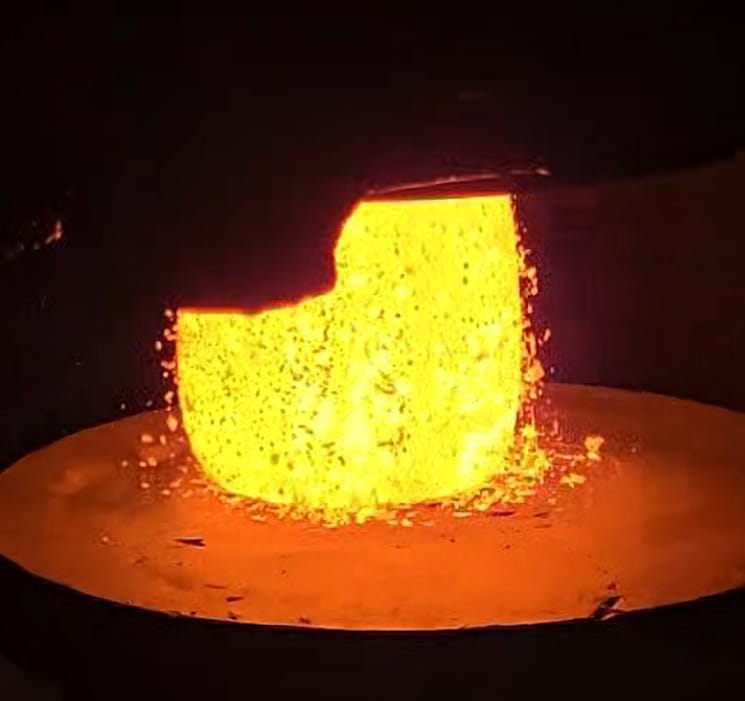
Hot forging heats steel into a plastic state within the recommended forging temperature range. Elevated temperature reduces forming resistance and allows grain flow to align with load paths, improving internal soundness and fatigue resistance.
- Best for: large parts, thick sections, complex geometries, high-load components
- Key advantages: lower forming force, refined grain flow, stronger internal structure
- Typical considerations: oxidation/scale, dimensional variation, machining allowance required
Hot forging prioritizes structural reliability and internal quality over tight dimensional accuracy.
Cold forging (room-to-low temperature forming)
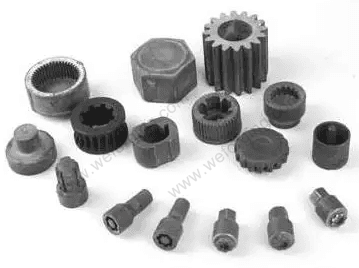
Cold forging shapes metal with little or no heating. Because the material remains hard, higher forming pressure is required, but the process delivers exceptional dimensional precision and surface finish. Work hardening during deformation can further increase strength.
- Best for: fasteners, small/medium parts, high-volume production, tight tolerance components
- Key advantages: high accuracy, smooth surface finish, excellent repeatability
- Typical considerations: limited formability for some steels, cracking risk, higher press capacity needed
Cold forging prioritizes precision, consistency, and production efficiency.
How to choose (engineering + procurement perspective)
Process selection depends on performance priorities:
- Choose hot forgingwhen strength, internal integrity, or complex shape capability is critical
- Choose cold forgingwhen tolerance, surface quality, and production efficiency dominate
Many industrial applications combine both approaches:
Hot forging for near-net shape + machining for final precision
This hybrid strategy balances structural performance with cost efficiency.
What Happens If Forging Temperature Is Incorrect?
Incorrect forging temperature leads to severe defects:
- Cracking due to low plasticity
- Excess oxidation and scaling
- Grain coarsening from overheating
- Decarburization reducing surface strength
- Internal stress concentration
These defects shorten service life and increase failure probability. Proper temperature control is a primary quality safeguard.
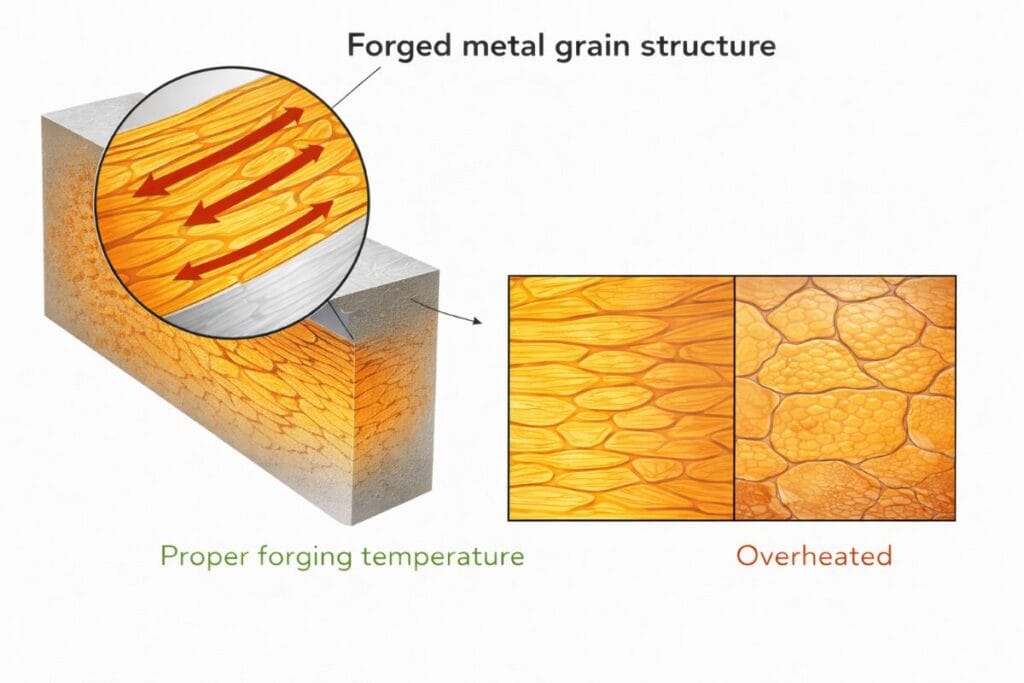
How Forging Temperature Affects Grain Structure
Forging temperature directly shapes the internal grain structure of metal:
- Controls grain size, orientation, and flow continuity
- Proper temperature creates fine, directional grain flow along load paths
- Improves fatigue resistance, impact tolerance, and crack resistance
- Promotes uniform recrystallization and structural strength
- Overheating causes grain coarsening and weakens the material
Forging is not only shaping metal — it is controlled microstructural engineering that determines long-term performance.
How Professional Forging Plants Control Temperature
Modern forging facilities use:
- Computer-controlled furnaces
- Infrared temperature monitoring
- Real-time process tracking
- Thermal documentation for traceability
- Controlled heating and cooling cycles
These systems ensure repeatable mechanical performance and stable product quality.
Conclusion
Forging temperature is the foundation of structural performance. Precise thermal control preserves grain integrity, minimizes defects, and ensures predictable long-term reliability. In industrial forging, temperature is not a secondary parameter — it defines process stability.
If you are developing a forged component or evaluating a supplier, our engineering team can review drawings, discuss material and temperature strategy, and provide a free technical quotation based on your application requirements.