
How to Qualify a Backup Forging Supplier for OEM Projects
Finding the right forging supplier is an important part of any OEM project. While most companies focus on selecting a primary supplier, having a qualified backup forging supplier can be just as important.
A delayed shipment, limited production capacity, or unexpected quality issue can quickly affect project schedules. As a result, many OEM buyers now evaluate alternative suppliers before supply problems occur, rather than reacting after the fact.
The challenge is knowing what to look for. Beyond price and capacity, factors such as manufacturing capability, quality control, traceability, and delivery performance all play a role in supplier qualification. This article outlines the key areas OEM buyers should review when selecting a reliable backup forging supplier.
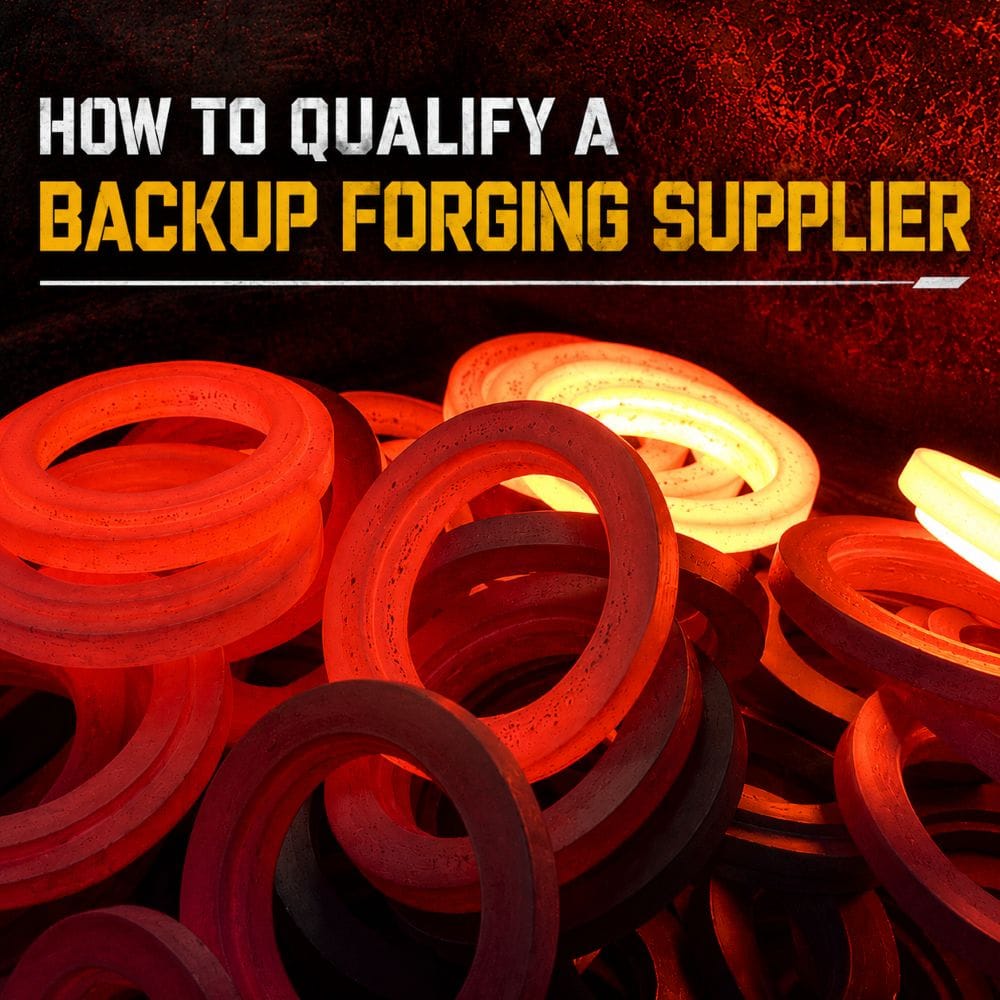
Why OEM Buyers Need a Backup Forging Supplier
Many OEM buyers do not actively search for a backup forging supplier until a project encounters an unexpected challenge. In most cases, the need for a second source becomes clear when an existing supplier can no longer support production as planned.
Common situations that trigger supplier qualification include:
- Production demand grows faster than the current supplier’s available capacity.
- Lead times become difficult to manage during peak production periods.
- Quality performance becomes inconsistent across different batches.
- A new project requires additional manufacturing resources or specialized processes.
- Procurement teams want to reduce dependence on a single supplier.
In these situations, a qualified second source forging supplier provides more than emergency support. It gives OEM buyers additional sourcing flexibility and helps reduce the risk of production interruptions when business conditions change.
Key Capabilities to Review During Supplier Qualification
A successful forging supplier qualification process should focus on a supplier’s ability to support the project throughout its entire lifecycle. Beyond pricing, OEM buyers typically evaluate manufacturing capability, quality performance, delivery reliability, communication, and long-term support before approving a new supplier.
Similar Project Experience and Manufacturing Capability
One of the first questions buyers ask during a forging supplier evaluation is whether the supplier has experience producing similar components.
A supplier that regularly manufactures gears, shafts, hydraulic cylinder parts, rolled rings, or other industrial forgings is often easier to qualify than one entering a new market segment.
Key questions include:
- What forging processes are available?
- Can machining and heat treatment be completed in-house?
- What size and weight ranges can be supported?
- Can both prototype and production quantities be handled?
Working with a supplier that manages forging, machining, and secondary operations under one project schedule can often simplify coordination and reduce lead time.
Quality Systems and Inspection Capability
Consistent quality is often a deciding factor when selecting a backup forging supplier.
During supplier qualification, buyers typically review:
- Material Certificates (MTC)
- Heat Treatment Reports
- Dimensional Inspection Reports
- Traceability Records
Inspection capability is equally important. Suppliers with CMM inspection, UT, MT, and documented quality procedures are generally better positioned to support critical OEM components and long-term production programs.
Delivery Performance and Capacity Planning
Even the most capable supplier can become a risk if delivery performance is inconsistent.
When evaluating a second source forging supplier, buyers should understand:
- Typical lead times for similar products
- Current production capacity
- How urgent orders are handled
- Whether capacity can be expanded as demand grows
For many OEM projects, stable delivery is just as important as manufacturing capability.
Technical Support and Long-Term Reliability
A supplier’s value extends beyond production. As projects move from quotation to production and future expansion, technical support often becomes increasingly important.
An experienced supplier should be able to:
- Review drawings before production
- Recommend material alternatives when appropriate
- Identify potential manufacturing risks
- Suggest cost-effective process improvements
For OEM buyers, these capabilities can help reduce development costs, improve manufacturability, and support long-term cooperation.
What Documents Should a Qualified Forging Supplier Provide?
A formal forging supplier audit typically includes a review of manufacturing records and quality documentation.
At minimum, a supplier should be able to provide:
Document | Purpose |
Material Certificate (MTC) | Verify material compliance |
Heat Treatment Report | Confirm mechanical properties |
Dimensional Inspection Report | Verify drawing requirements |
Traceability Records | Track production batches |
ISO Certification | Demonstrate quality management |
For industries such as mining, energy, construction equipment, and hydraulic systems, documentation is often as important as the product itself.
Red Flags to Watch for During Supplier Qualification
A competitive price does not always mean a supplier is ready for OEM production. During a forging supplier evaluation, some warning signs often appear long before production starts.
Pay attention to the following situations:
- The supplier provides a quotation without asking technical questions or reviewing drawings.
- Similar projects cannot be shown as references.
- Inspection reports or material certificates are difficult to provide.
- Lead times change significantly between discussions and quotations.
- Quality control processes are explained in general terms but lack supporting records.
- Communication becomes slow once technical details are discussed.
None of these issues automatically disqualify a supplier. However, they often indicate areas that require additional verification before supplier approval.
Backup Forging Supplier Qualification Checklist
Before approving a backup forging supplier, many OEM buyers focus on a few practical questions rather than lengthy audit documents. The goal is not only to verify manufacturing capability, but also to understand how the supplier will perform when a project is under pressure.
Audit Area | Questions Worth Asking |
Similar Project Experience | Have you produced parts similar in size, material, or application before? |
Manufacturing Capability | Which forging processes do you perform in-house, and what are your size limitations? |
Machining & Secondary Operations | Can you provide CNC machining, heat treatment, and surface finishing under one project schedule? |
Quality Control | What inspections are performed before shipment, and can reports be shared? |
Traceability | Can every batch be traced back to its material certificate and production records? |
Inspection Equipment | Do you have CMM, UT, MT, or other inspection capabilities required for critical components? |
Delivery Performance | What is your typical lead time, and how do you handle urgent orders? |
Communication | Who will be responsible for project updates and technical discussions? |
A supplier that can answer these questions clearly and provide supporting records is usually easier to qualify as a reliable second source.
Conclusion
Choosing a backup forging supplier is often less about finding a replacement and more about creating options before they are needed.
For OEM projects, manufacturing capability, quality consistency, delivery performance, and technical support all play a role in supplier qualification. Taking the time to evaluate these areas early can help avoid unnecessary delays and sourcing risks later.
If you are currently reviewing suppliers for a new project, an early drawing review or technical discussion can often provide useful insights before moving forward with quotations and production planning.