
Custom Forged Steel Parts for OEM Equipment
Steel forging parts are widely used in OEM equipment where components must withstand high loads, cyclic stress, and demanding operating conditions. Compared with cast or fully machined components, forged steel parts provide improved grain flow continuity, better fatigue resistance, and more stable mechanical performance.
In industries such as construction machinery, mining equipment, oil and gas systems, transportation, and heavy industrial applications, steel forgings are commonly selected for components requiring long-term structural reliability and controlled material properties.
This guide explains common steel grades, forging processes, dimensional control considerations, inspection methods, and the advantages of custom steel forging parts for OEM manufacturing projects.
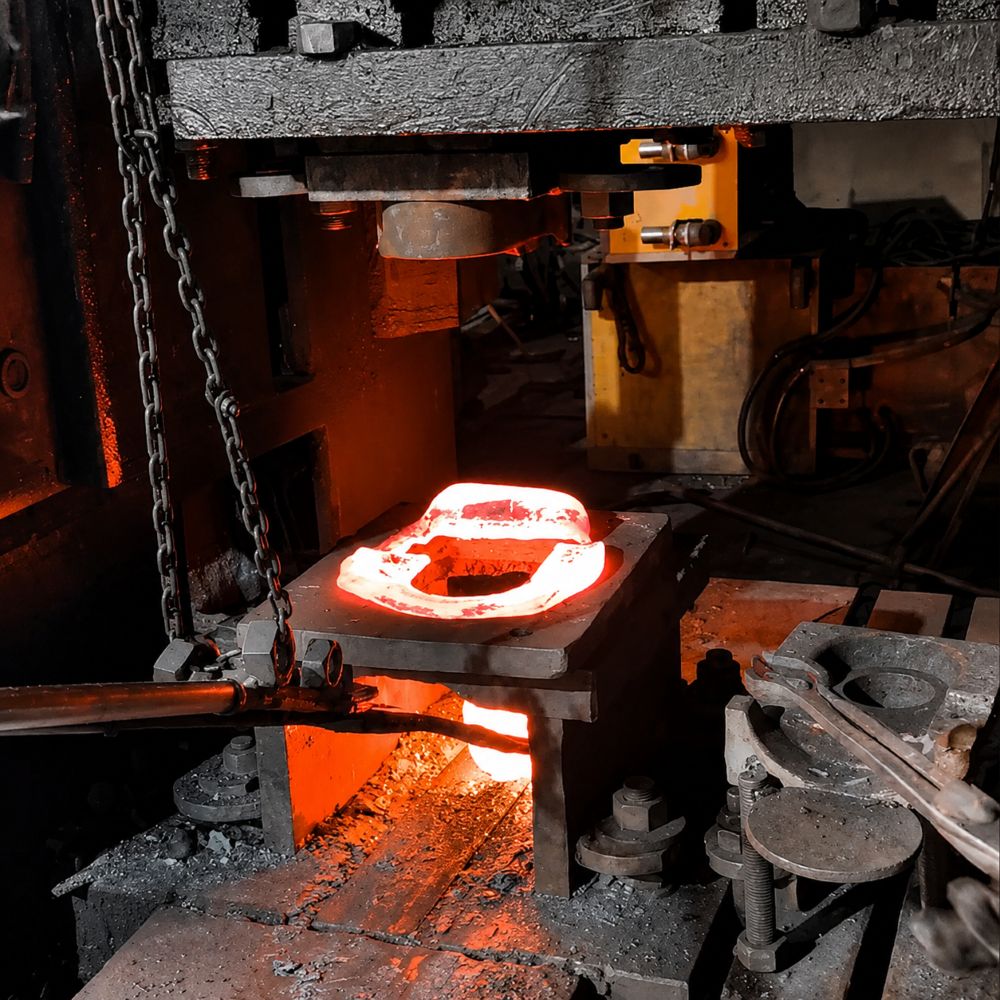
What Are Custom Steel Forging Parts?
Custom steel forging parts are engineered components manufactured to customer-specific drawings rather than standard dimensions. They are commonly used in OEM applications where part geometry, material performance, or assembly interfaces require tailored solutions.
Production is guided by engineering drawings or 3D models, with material selection, forging routes, machining allowances, and inspection requirements defined upfront. Custom forging is well suited for components that demand controlled load transfer, reliable fatigue performance, and precise integration within larger assemblies.
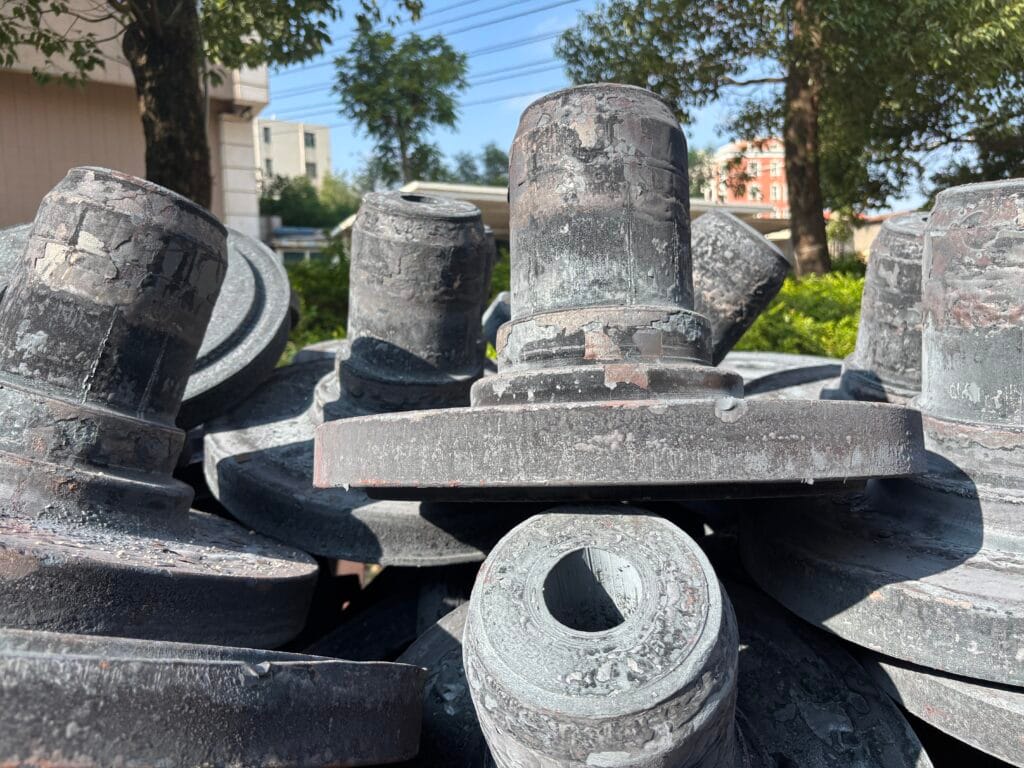
Common Steel Grades for Custom Forging
Material selection is a core factor in custom steel forging parts, directly influencing mechanical performance, heat treatment response, and machining stability.
Carbon Steel
Carbon steels such as AISI 1020 and AISI 1045 are commonly used for custom forgings requiring balanced strength, machinability, and cost efficiency. These grades are suitable for shafts, flanges, and structural components with moderate load conditions.
Alloy Steel
Alloy steels are widely applied in custom steel forging parts subjected to higher loads or cyclic stress. Typical grades include 42CrMo4, AISI 4140, 20CrNiMo, 35CrMn5, and SAE 8620H.
These materials support enhanced fatigue resistance and stable performance after heat treatment, making them suitable for gear blanks and transmission components.
Stainless Steel
Stainless steels such as AISI 304 and AISI 316 are selected when corrosion resistance is required. Custom stainless steel forgings are often used in industrial equipment exposed to moisture or chemical environments.
Tool Steel (Selective Applications)
Tool steels may be used in specialized applications requiring wear resistance or elevated temperature performance, typically in low-volume projects.
Steel Forging Manufacturing Process
The steel forging process is designed to improve material structure, dimensional stability, and downstream machining performance for OEM applications.
1. Drawing and Technical Review
Early drawing review helps define forging allowances, machining stock, material grades, and heat treatment routes before tooling production begins. This stage is important for reducing downstream machining variation and assembly mismatch risks.
2. Die Design and Tooling Preparation
Proper die design is critical for maintaining material flow continuity, dimensional stability, and forging repeatability during batch production. Tooling is designed according to part geometry, forging method, and production volume.
3. Steel Forging Operation
Mechanical or hydraulic forging equipment compresses heated steel into the required shape. This stage establishes the external geometry while improving internal grain flow and reducing the risk of internal discontinuities.
Depending on component size and geometry, open-die forging or closed-die forging methods may be selected.
4. Heat Treatment
Controlled heat treatment processes are used to achieve required hardness, toughness, and mechanical performance. Heat treatment consistency directly affects fatigue resistance, dimensional stability, and downstream machining behavior.
For alloy steel forgings used in load-bearing applications, controlled quenching and tempering processes are especially important.
5. CNC Machining
Integrated CNC machining operations help achieve final tolerances and surface quality requirements. Forged near-net shapes typically require less material removal than fully machined components.
Coordinated machining processes also help maintain dimensional consistency between forged features and final assembly requirements.
6. Final Inspection
Finished steel forging parts undergo dimensional and material inspection before shipment. Inspection requirements are defined according to customer drawings and OEM specifications.
This integrated manufacturing process supports stable batch consistency and reliable long-term performance for industrial applications.
Dimensional Control for Custom Steel Forging Parts
Dimensional control is a critical capability when manufacturing custom steel forging parts for OEM applications. Forging and machining allowances are planned early based on part geometry, functional requirements, and selected process routes to ensure stable results across batches.
Forging allowances: Typical forging tolerances are 2.5–3.0 mm per side, aligned with forging method, part size, and forming characteristics.
Machining allowances: Rough machining allowances are generally 0.5–1.0 mm, followed by heat treatment and final machining to meet drawing requirements, such as ±0.01 mm where specified.
Critical features: Bearing seats and sealing surfaces are controlled throughout the process, commonly finished to ±0.003 mm, with surface roughness reaching Ra ≤ 0.4 μm.
This dimensional control approach supports consistent assembly fit and reliable long-term performance for OEM applications.
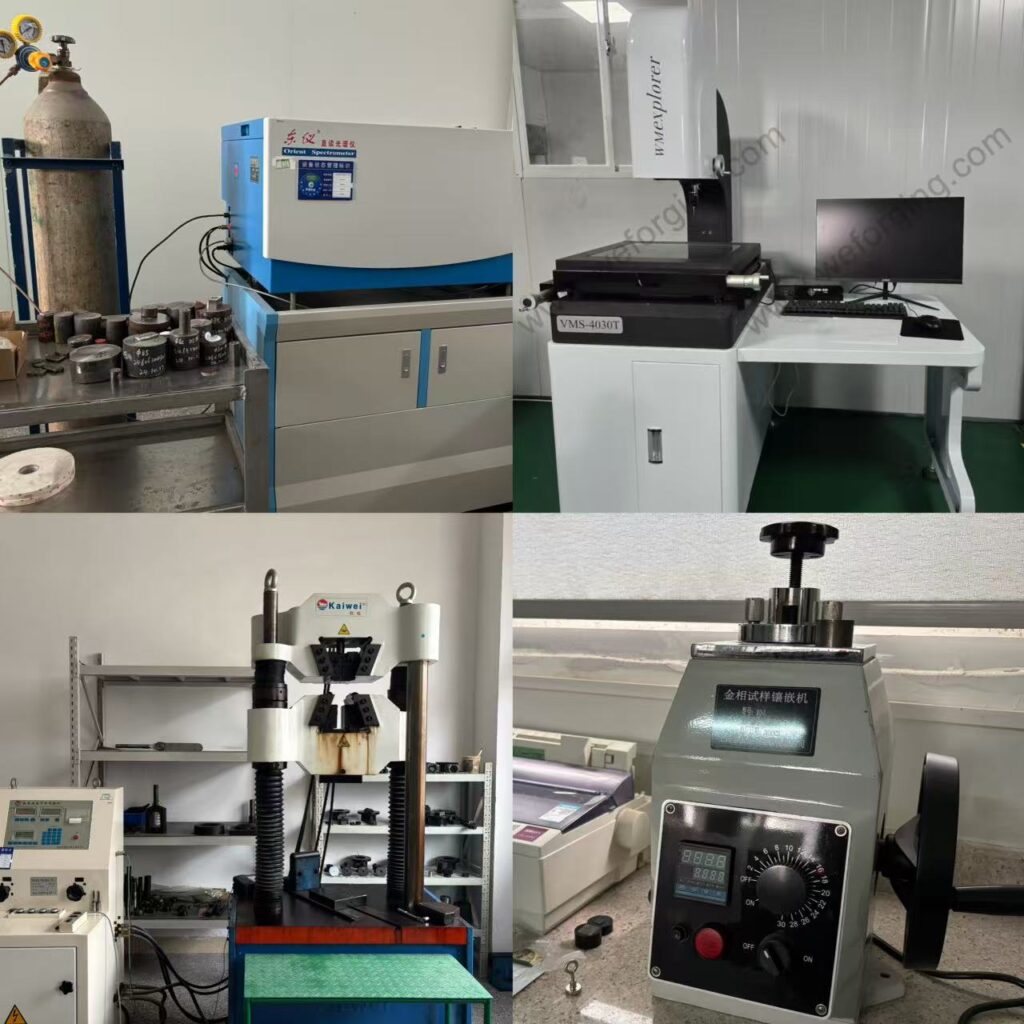
Inspection and Quality Verification for Custom Steel Forging Parts
Inspection and quality verification are integrated throughout the manufacturing process to ensure that custom steel forging parts meet drawing-based requirements and OEM performance expectations.
To maintain dimensional accuracy and traceability, inspections are carried out at key production stages:
Forging stage: basic dimensional checks, along with magnetic particle testing (MT) and ultrasonic testing (UT) to verify surface and internal integrity.
Heat treatment stage: hardness testing and selected mechanical property checks, including tensile strength, yield strength, and elongation, as required.
Machining stage: final dimensional inspection using gauges, surface roughness testers, and coordinate measuring machines (CMM) for critical features.
This multi-stage inspection approach supports consistent quality and predictable performance for OEM applications.
Steel Forging Parts vs Casting and Machining
When comparing steel forging parts with cast or fully machined components, manufacturers are evaluating not only production methods, but also structural reliability, fatigue performance, and long-term durability.
| Feature | Steel Forging Parts | Casting | CNC Machining |
|---|---|---|---|
| Grain flow | Continuous | Random | Interrupted |
| Fatigue resistance | High | Lower | Medium |
| Internal defects | Lower risk | Higher risk | None |
| Material efficiency | High | Medium | Low |
| Structural reliability | High | Moderate | Depends on material |
For industrial applications exposed to repeated loading, vibration, or impact conditions, forged steel parts are often preferred because forging improves material continuity and reduces internal discontinuity risks.
Industries Using Custom Steel Forging Parts
Steel forging parts are widely used in industrial sectors where components must withstand high loads, impact stress, and long operating cycles.
Construction and Mining Equipment
Forged steel components are commonly used in heavy-duty equipment exposed to abrasion, shock loading, and harsh operating environments.
Transportation and Mobility Systems
Forged shafts, hubs, and structural components are widely used in automotive, rail, and industrial transportation systems requiring reliable mechanical performance.
Oil and Gas Equipment
Custom steel forging parts are often selected for pressure-containing and high-reliability applications where material integrity is critical.
Gear and Transmission Systems
Forged gear blanks help improve material density and machining stability for industrial transmission assemblies and rotating equipment.
Energy and Industrial Machinery
Industrial steel forgings are commonly used in turbines, rotating assemblies, couplings, and structural mechanical systems requiring stable long-term performance.
Why OEM Buyers Choose Weforging
Weforging supports OEM custom steel forging projects through long-term manufacturing expertise and a fully integrated production approach.
Key strengths include:
Integrated forging, heat treatment, and machining: coordinated in-house processes support stable dimensional control and efficient project scheduling
Extensive forging expertise: experience with open-die and closed-die components, including shafts, rings, flanges, and structural parts
Engineering-led process planning: drawing-based reviews define materials, tolerances, and machining allowances at an early stage
Structured quality management: inspection and documentation support consistent batch performance and full traceability
EU and US OEM project experience: familiarity with ISO, DIN, and EN-related technical requirements
Conclusion
Custom steel forging parts are defined by the effective alignment of material selection, component geometry, process planning, and quality control throughout production. For OEM projects, stable batch consistency, predictable machining performance, and reliable mechanical properties are essential factors when selecting a forging partner.
If you are planning or evaluating a custom steel forging project, you are welcome to share your drawings and application details with our engineering team. We offer manufacturing-focused technical evaluations to support informed sourcing decisions and long-term project success.