
Best Forging Materials for High-Strength Parts
In heavy-duty manufacturing, the durability of a component is determined long before it reaches the production line—it begins with forging material selection. Choosing the right metal grade is a critical decision for OEM engineers that directly impacts fatigue resistance, service life, and total project cost. Whether you are sourcing carbon steel for general machinery or high-strength alloy steels (like 4140 or 4340) for critical drivetrain parts, understanding each material’s unique characteristics is essential for ensuring long-term performance.
This guide provides a comprehensive comparison of the best forging materials used in the automotive, aerospace, and energy sectors, helping you balance mechanical strength with cost-efficiency.
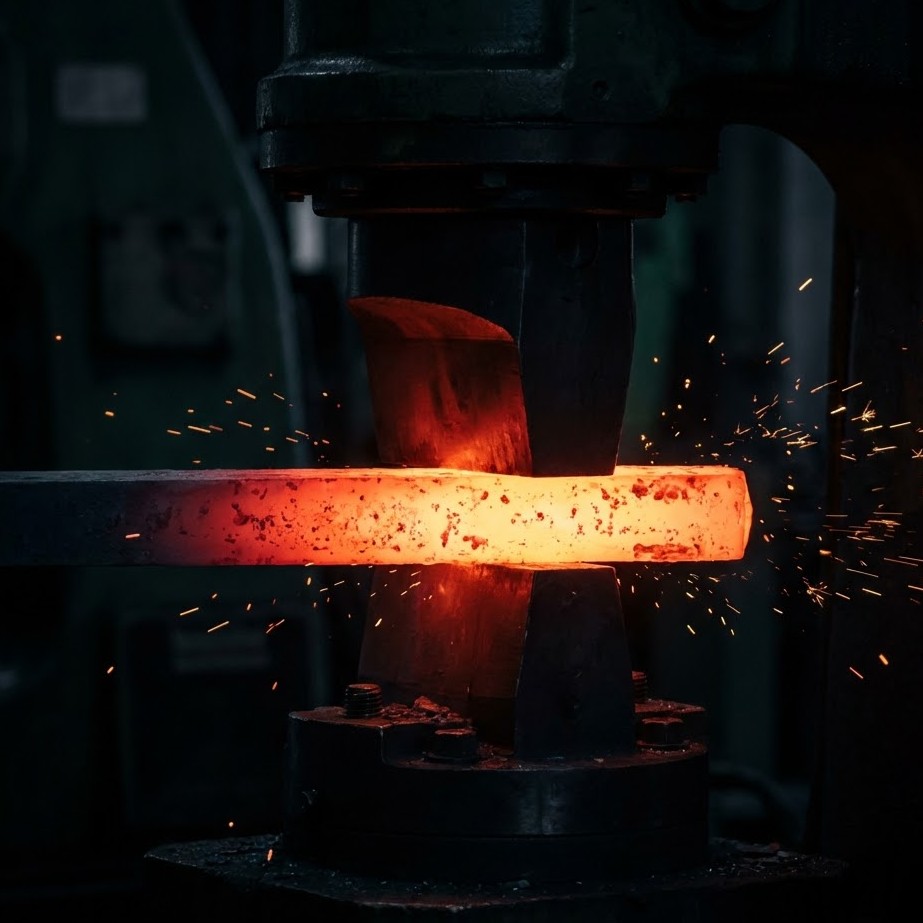
ASTM A105 & 1045: The Standard for Carbon Steel Forging
Carbon steel forging materials are the workhorses of the manufacturing world. They offer excellent machinability and cost-efficiency for parts that do not require extreme strength or corrosion resistance.
ASTM A105: The most common grade for forged carbon steel flanges and piping components. It is highly weldable and suitable for ambient and higher-temperature service in pressure systems.
AISI 1045: Known for its balance of strength and ductility. It is widely used for forged shafts, gears, and structural brackets.
These materials are ideal for construction machinery where strong impact resistance and budget-friendly solutions are primary concerns.
4140 & 42CrMo4: Why Alloy Steel is Best for Heavy-Duty Parts
When carbon steel reaches its limit, alloy steel forging takes over. By adding elements like Chromium (Cr), Molybdenum (Mo), and Nickel (Ni), these materials achieve superior mechanical properties.
AISI 4140 (42CrMo4): The “gold standard” for high-strength applications. 4140 alloy steel forged parts exhibit exceptional fatigue strength and impact resistance, making them the preferred choice for crankshafts and drivetrain components.
AISI 4340: Provides deep hardenability and high toughness, making it ideal for heavy-section forgings in the aerospace and defense sectors.
These alloys respond exceptionally well to heat treatment, allowing for a hard surface with a durable core—perfect for high-torque industrial gears.
Material Performance Comparison Table
To assist in your forging material selection, we have summarized the key characteristics of the most popular grades in the table below. This comparison helps procurement teams balance performance requirements with project budgets.
| Material Grade | Category | Key Advantage | Common Application |
| ASTM A105 | Carbon Steel | Cost-effective, Weldable | Flanges, Pipe Fittings |
| AISI 1045 | Carbon Steel | Balanced Strength/Ductility | Axles, Forged Shafts |
| AISI 4140 | Alloy Steel | High Fatigue Strength | Gears, Crankshafts |
| SS 316L | Stainless Steel | Corrosion Resistance | Marine Pumps, Valves |
Key Mechanical Properties to Consider in Forging Selection
When evaluating forging materials, engineers must focus on four primary technical metrics:
Tensile & Yield Strength: Defines the load-bearing capacity before permanent deformation.
Impact Toughness: The ability to absorb energy during sudden shocks, critical for mining and construction.
Ductility (Elongation): Indicates how much the material can deform before fracturing.
Hardenability: The depth to which the steel can be hardened through heat treatment.
Understanding these parameters allows for “downsizing” components—using a higher-grade material to achieve the same strength with less weight, thereby optimizing machine design and reducing freight costs.
The Role of Heat Treatment in Enhancing Material Grades
A forging is only as good as its heat treatment. Forging materials like 42CrMo4 require precise thermal processing to reach their full potential.
Quenching & Tempering (Q&T): The most common method to enhance hardness while maintaining core toughness.
Carburizing (Case Hardening): Creates a wear-resistant outer shell for gear teeth while keeping the interior ductile.
Normalizing: Refines the grain structure after forging to ensure uniform mechanical properties.
Alloy steels offer much better hardenability than carbon steels, meaning the hardness penetrates deeper into the cross-section of large parts, ensuring uniform strength throughout.
Selecting Materials by Industry
Oil & Gas: Forgings face sour gas and high pressure. 316L stainless steel and Duplex steel are indispensable due to their resistance to stress corrosion cracking.
Wind Energy: Large-scale forged ring rolling typically utilizes alloy steels like 42CrMo4 to handle immense torque.
Aerospace: Demands high-temperature forging alloys like Inconel or Titanium, which maintain structural integrity at temperatures where standard steel would soften.
How to Choose a Reliable Forging Supplier
When sourcing forging materials, buyers should evaluate:
- Material sourcing and traceability
- Metallurgical testing (UT, MT, tensile, hardness, chemical analysis)
- CNC machining capability
- Heat treatment control
- Supplier certifications
- Delivery reliability (especially forging supplier in USA for local support)
Why OEMs Choose Weforging
Weforging integrates forging, CNC machining, heat treatment, and full-process inspection to support European and North American OEMs. With experience across 20+ forging material grades, we provide stable quality, fast turnaround, and consistent mechanical performance.
Conclusion
Selecting the right forging material is essential for achieving long-term strength, reliability, and cost-effective performance. By understanding material behavior and choosing suitable grades—whether carbon steel, alloy steel, stainless steel, or custom forging materials—engineers and procurement teams can significantly improve product quality and operational lifespan.
If you need guidance on material selection or support for an upcoming project, feel free to reach out.