
Forging Materials Guide: Types, Properties & Selection
Selecting the right forging materials is one of the most important decisions in industrial manufacturing. The material used in forging directly influences strength, fatigue resistance, machinability, corrosion behavior, and long-term reliability. Engineers and procurement teams evaluate forging materials not only by raw material price, but by performance stability across real working conditions.
Incorrect material selection can increase lifecycle cost, accelerate wear, and reduce operational safety. A structured forging material selection guide helps manufacturers balance performance, durability, and cost efficiency. Understanding how different metals behave under forging conditions allows better engineering decisions and more predictable production outcomes.
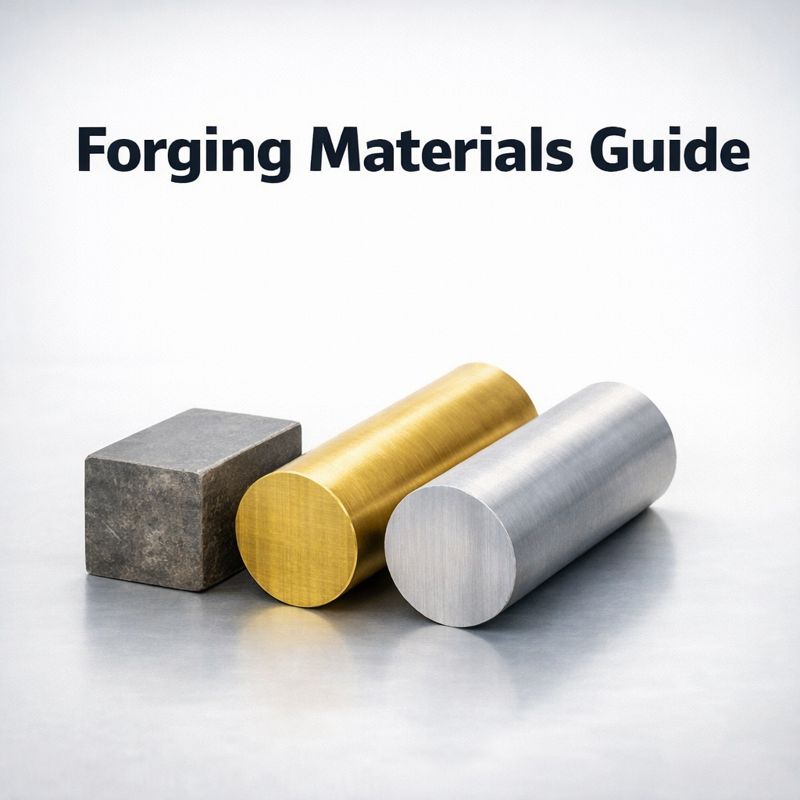
What Are Forging Materials?
Forging materials are metals capable of controlled plastic deformation under high temperature and compressive force. During forging, grain flow aligns with component geometry, improving strength and fatigue resistance compared to cast structures.
Key characteristics include:
- High ductility at forging temperature
- Crack resistance under compression
- Stable microstructure after cooling
Metals that forge well maintain structural integrity while allowing complex shaping.
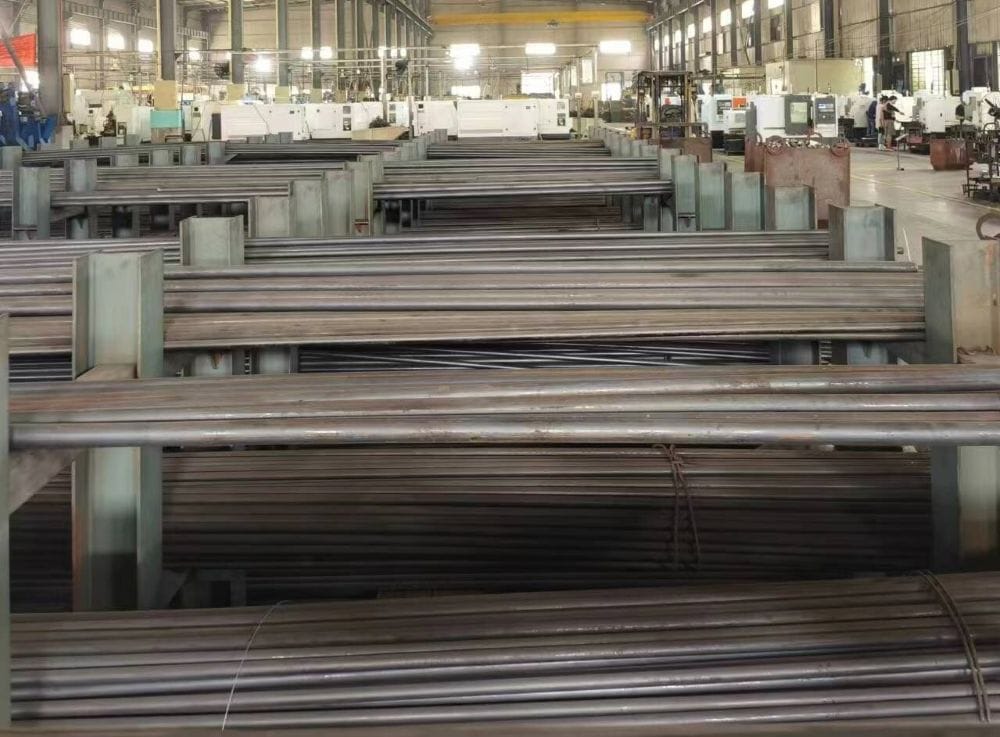
Types of Forging Materials
Forging materials are selected based on strength requirements, environment, weight limits, and lifecycle cost. Industrial forging commonly uses the following material families:
Carbon Steels
Carbon steel forgings are widely used for structural components that require a balance of strength, machinability, and cost efficiency.
- Common grades: A105 / 1045
- Applications: flanges, shafts, general machinery parts
- Advantages: economical, easy machining, stable heat treatment
- Best for: medium-load industrial structures
Alloy Steels
Alloy steel forgings are engineered for high-load applications where fatigue resistance and durability are critical.
- Common grades: 42CrMo / 4140 / 8620
- Applications: gears, heavy shafts, mining components
- Advantages: high impact strength and heat-treatment stability
- Best for: heavy-duty OEM equipment
Stainless Steels
Stainless steel forgings are selected for corrosion resistance in chemical, marine, and high-humidity environments.
- Common grades: 304 / 316 / 410
- Applications: valves, marine hardware, chemical equipment
- Advantages: corrosion resistance, clean surface finish
- Best for: aggressive or wet environments
Aluminum Alloys
Aluminum forgings are lightweight solutions used in transportation and aerospace assemblies.
- Common grades: 6061 / 7075
- Applications: automotive, aerospace, structural brackets
- Advantages: high strength-to-weight ratio
- Best for: weight-sensitive applications
Titanium Alloys
Titanium forgings are high-performance materials used where strength-to-weight ratio and heat resistance are critical.
- Common grades: Ti-6Al-4V
- Applications: aerospace, energy, high-performance machinery
- Advantages: extreme strength, corrosion resistance
- Best for: critical engineered systems
Heat Treatment Methods for Common Forging Materials
Different forging materials require specific heat treatment processes to achieve optimal strength, toughness, and durability. Proper heat treatment improves microstructure, fatigue resistance, and dimensional stability.
Typical heat treatment by material:
- Carbon steels
— Normalizing: improves uniform grain structure
— Quenching & tempering: increases strength and toughness
— Annealing: improves machinability - Alloy steels (42CrMo / 4140)
— Quenching & tempering: high strength and fatigue resistance
— Induction hardening: surface wear resistance
— Stress relieving: reduces distortion after machining - Stainless steels (304 / 316)
— Solution annealing: restores corrosion resistance
— Passivation: improves surface stability
— Aging (for precipitation grades): increases hardness - Aluminum alloys (6061 / 7075)
— Solution heat treatment + aging: strength optimization
— T6 temper: aerospace-grade performance - Titanium alloys
— Solution treatment & aging: strength-to-weight optimization
— Stress relieving: improves dimensional stability
Correct heat treatment selection ensures forged components meet OEM mechanical requirements and long-term reliability standards.
Forged Steel Material Properties
Forged steel materials develop a refined grain flow during deformation. This internal structure increases impact resistance, fatigue strength, and load-bearing reliability. Compared to cast materials, forged steel components exhibit improved structural continuity and predictable performance.
Heat treatment further enhances forged steel properties. Processes such as quenching and tempering increase hardness and strength while maintaining toughness. These characteristics make forged steel the preferred choice for heavy industrial components.
Comparison of Forging Materials
A structured comparison of forging materials helps engineers and procurement teams evaluate strength, cost, corrosion resistance, and lifecycle performance. Different materials serve different industrial priorities — from heavy load capacity to chemical durability and lightweight design.
Material | Strength Level | Cost Level | Corrosion Resistance | Typical Grades | Typical Applications |
Carbon Steel | High | Low | Moderate | A105, 1045 | Machinery shafts, structural parts |
Alloy Steel | Very High | Medium | Moderate | 42CrMo, 4140, 4340 | Heavy equipment, gears, load-bearing parts |
Stainless Steel | Medium | High | Excellent | 304, 316, 410 | Marine, chemical, food industry |
Aluminum Alloy | Medium | Medium | Good | 6061, 7075 | Transportation, aerospace components |
Titanium Alloy | Very High | Very High | Excellent | Ti-6Al-4V | Aerospace, high-performance systems |
Each forging material offers a different balance between mechanical strength, cost efficiency, and environmental resistance. Selecting the right material depends on operating stress, temperature exposure, corrosion risk, and expected service life.
For OEM projects, material selection should align with total lifecycle cost rather than purchase price alone.
How to Choose Forging Materials
Choosing forging materials depends on load conditions, environment, and lifecycle cost. Engineers select forging materials based on strength, corrosion resistance, heat treatment compatibility, and dimensional stability. Proper material selection improves reliability, reduces maintenance risk, and ensures consistent performance in OEM industrial applications.
Key factors include:
Load and fatigue strength requirements
Operating temperature and corrosion exposure
Machining and heat treatment compatibility
Dimensional stability for precision parts
Total lifecycle cost and service life
Industrial Forging Materials by Application
Industrial forging materials are selected based on application load, environment, and service life. Different industries require specific material properties such as impact strength, heat resistance, and wear durability. Matching forging materials to application improves reliability, safety, and lifecycle performance in heavy industrial systems.
Typical industry material priorities:
Mining & heavy equipment — high-strength alloy steels for impact and fatigue resistance
Energy & power systems — heat-resistant steels for pressure and temperature stability
Construction machinery — carbon and low-alloy steels balancing strength and cost
Transportation & drivetrains — precision alloy steels for wear resistance
Industrial gear systems — carburizing steels for surface hardness and durability
Forging Material Strength vs Cost Considerations
While higher-strength forging alloys increase initial material cost, they often reduce total lifecycle expense through long-term performance advantages:
- Longer service life and fewer replacement cycles
- Reduced maintenance and failure risk
- Improved fatigue resistance and impact durability
- Better dimensional stability in demanding environments
For OEM production, true component cost includes downtime, reliability, and operational safety. Engineers therefore evaluate forging materials based on lifecycle performance rather than purchase price alone. Selecting the right balance between strength and cost ensures predictable maintenance schedules and safer industrial operation over the component’s full service life.
Conclusion
Seleccionar el material de forja adecuado es fundamental para garantizar rendimiento a largo plazo, seguridad y eficiencia de costes. Cada aleación ofrece un equilibrio distinto entre resistencia, peso, comportamiento frente a la corrosión y durabilidad, y la elección óptima depende del entorno operativo y de los requisitos de servicio.
En proyectos OEM, las decisiones de materiales deben respaldarse con evaluación técnica y capacidad de fabricación para asegurar una calidad de producción estable. Si está evaluando opciones de materiales de forja, puede enviar planos o especificaciones para una consulta gratuita. Nuestro equipo de ingeniería responde en 24 horas para apoyar el análisis de viabilidad y la selección de materiales.