
Forging Materials Guide: Types, Properties & Selection
Choosing the right forging materials is critical for achieving the required strength, fatigue resistance, and service life of industrial forged parts. Different applications require different material grades, from carbon steel for general components to alloy steel such as 4140 and 42CrMo4 for heavy-duty applications.
A proper forging materials selection process considers not only mechanical properties, but also operating environment, heat treatment requirements, machining performance, and long-term reliability. Selecting the wrong material can lead to premature failure, higher maintenance costs, and reduced component performance.
This guide explains common forging materials, widely used material grades, and how engineers select the right materials for different industrial applications.
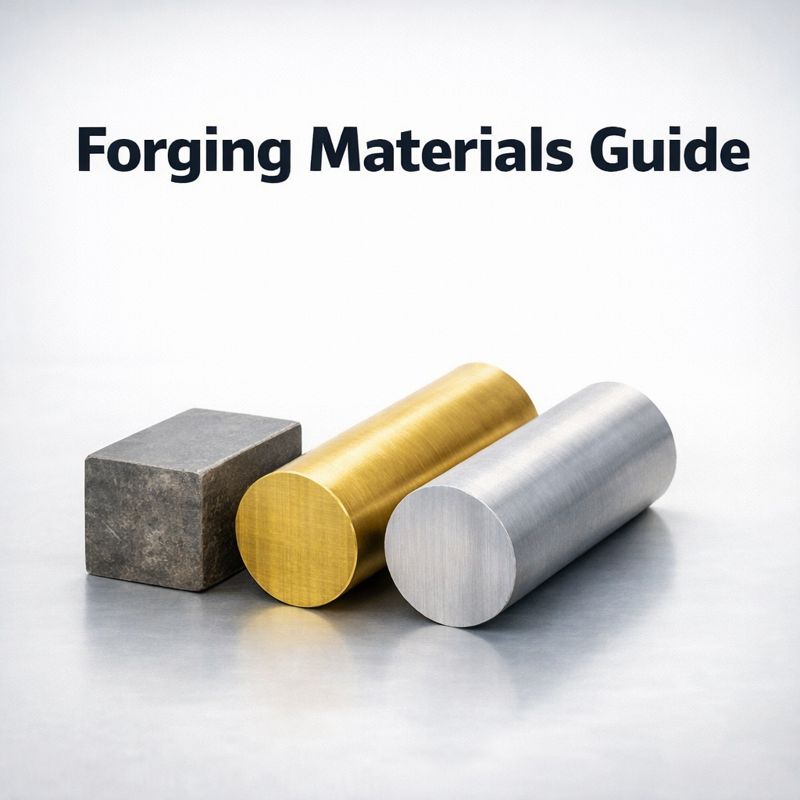
What Are Forging Materials?
Forging materials are metals capable of controlled plastic deformation under high temperature and compressive force. During forging, grain flow aligns with component geometry, improving strength and fatigue resistance compared to cast structures.
Key characteristics include:
- High ductility at forging temperature
- Crack resistance under compression
- Stable microstructure after cooling
Metals that forge well maintain structural integrity while allowing complex shaping.
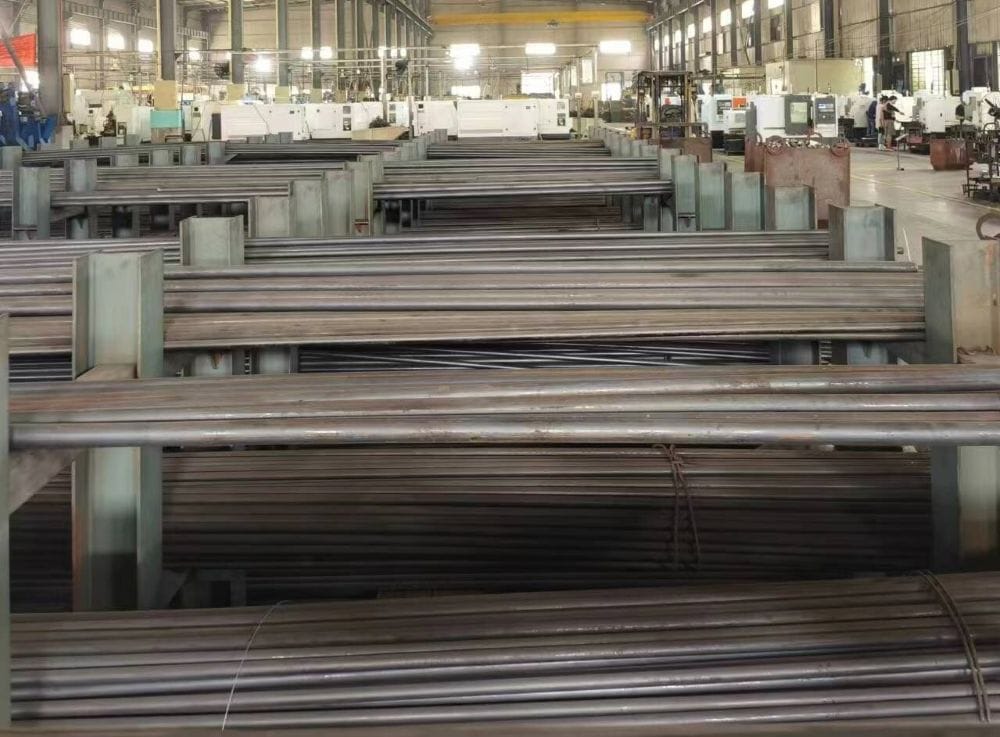
Types of Forging Materials
Industrial manufacturers commonly use several categories of forged steel materials and specialty alloys. Each material provides different advantages depending on strength requirements, environment, and application.
Carbon Steel Forgings
Carbon steel forgings are widely used for general industrial components because they provide a good balance between strength, machinability, and cost.
Common grades include:
- A105
- 1045 carbon steel
Typical applications:
- Shafts
- Flanges
- Machinery components
- General structural parts
Advantages:
- Cost-effective
- Easy machining
- Good mechanical performance
- Suitable for standard industrial applications
Carbon steel is often selected when extreme strength or corrosion resistance is not the primary requirement.
Alloy Steel Forgings
Alloy steel forgings are preferred for components requiring higher strength, impact resistance, and fatigue performance.
Common grades include:
- AISI 4140
- 42CrMo4
- 4340 steel
- 8620 steel
Typical applications:
- Industrial gears
- Forged shafts
- Mining equipment components
- Construction machinery parts
For example, 4140 forging is widely used because it offers an excellent combination of strength, toughness, and heat treatment performance.
Similarly, 42CrMo4 forging is commonly selected in European industrial applications where high-load performance and long service life are required.
Stainless Steel Forgings
Stainless steel forgings are mainly selected for environments where corrosion resistance is important.
Common grades include:
- 304 stainless steel
- 316 stainless steel
- 410 stainless steel
Typical applications:
- Marine equipment
- Chemical processing equipment
- Food processing machinery
- Corrosion-resistant components
Advantages:
- Excellent corrosion resistance
- Good durability
- Stable performance in harsh environments
Aluminum and Titanium Forgings
Aluminum and titanium alloys are used when lightweight design and high performance are required.
Aluminum forgings
Common grades:
- 6061
- 7075
Applications:
- Transportation components
- Aerospace structures
- Lightweight assemblies
Titanium forgings
Common grade:
- Ti-6Al-4V
Applications:
- Aerospace components
- High-performance equipment
- Critical lightweight structures
These materials provide excellent strength-to-weight ratios but usually involve higher material costs.
Common Forging Material Grades and Their Applications
Understanding forging material grades helps engineers choose the right balance between strength, cost, and manufacturability.
| Material Grade | Material Type | Typical Applications |
|---|---|---|
| 1045 | Carbon Steel | Shafts, machinery parts, general components |
| A105 | Carbon Steel | Flanges, pressure components |
| 4140 | Alloy Steel | Gears, shafts, heavy equipment parts |
| 42CrMo4 | Alloy Steel | High-load forged components |
| 4340 | High Strength Steel | Mining, aerospace, demanding applications |
| 316 | Stainless Steel | Corrosion-resistant components |
For many industrial forged parts, alloy steel grades such as 4140 and 42CrMo4 provide a better balance of performance and cost compared with higher-grade specialty alloys.
How to Select the Right Forging Material for Your Application
Choosing the best material for forged parts depends on several engineering factors rather than a single material property.
1. Load and Strength Requirements
Components exposed to heavy loads require materials with higher tensile strength and toughness.
Examples:
- Heavy shafts → 4140 / 42CrMo4
- Gear components → alloy steel
- General machinery parts → carbon steel
2. Fatigue and Impact Resistance
For rotating or impact-loaded components, fatigue resistance is often more important than static strength.
Common applications:
- Gears
- Drive shafts
- Mining equipment parts
Alloy steel forgings are often preferred because they maintain performance under repeated loading.
3. Operating Environment
Environmental conditions also influence material selection.
Examples:
- Corrosive environments → stainless steel
- High-temperature applications → heat-resistant alloys
- Outdoor heavy equipment → alloy steel with proper heat treatment
4. Machining and Heat Treatment Requirements
Material selection should consider the complete manufacturing process.
Factors include:
- Machining difficulty
- Heat treatment compatibility
- Required hardness
- Final dimensional accuracy
A material with excellent strength may not be the best choice if it creates unnecessary manufacturing challenges.
Forging Material Comparison
Different materials provide different advantages. The best choice depends on the balance between performance requirements and project cost.
| Material | Strength | Cost | Best Applications |
|---|---|---|---|
| Carbon Steel | Medium | Low | General industrial parts |
| 4140 Alloy Steel | High | Medium | Gears, shafts, heavy equipment |
| 42CrMo4 Steel | High | Medium | High-load forged components |
| Stainless Steel | Medium | High | Corrosion-resistant applications |
| Titanium Alloy | Very High | Very High | Aerospace and critical parts |
For OEM projects, the lowest material cost is not always the most economical option. A higher-performance material may reduce replacement frequency, downtime, and maintenance expenses.
Conclusion
Choosing the right forging materials is essential for achieving the required strength, durability, and service life of industrial forged parts. Different applications require different material properties, from cost-effective carbon steel to high-performance alloy steels such as 4140 and 42CrMo4.
A proper forging material selection process should consider load conditions, operating environment, heat treatment requirements, and manufacturing needs. The right material choice helps improve component reliability and reduce long-term maintenance costs.
With experience in forging, machining, and heat treatment, we can help evaluate suitable materials and manufacturing solutions based on your part requirements. Contact us for technical support or a material recommendation for your forged components.