
Stainless Steel Forgings: A Complete Guide
Stainless steel forgings are high-strength metal components produced by shaping heated stainless steel through controlled forging processes. Compared with cast or machined parts, forged stainless steel components provide better strength, fatigue resistance, and reliability for demanding industrial applications.
Custom stainless steel forgings are widely used in hydraulic equipment, industrial machinery, energy systems, and other heavy-duty applications. Selecting a reliable stainless steel forging supplier requires attention to forging capability, material traceability, machining accuracy, and inspection processes.
This article covers the stainless steel forging process, common components, material grades, advantages, applications, and key factors for choosing a forging supplier.
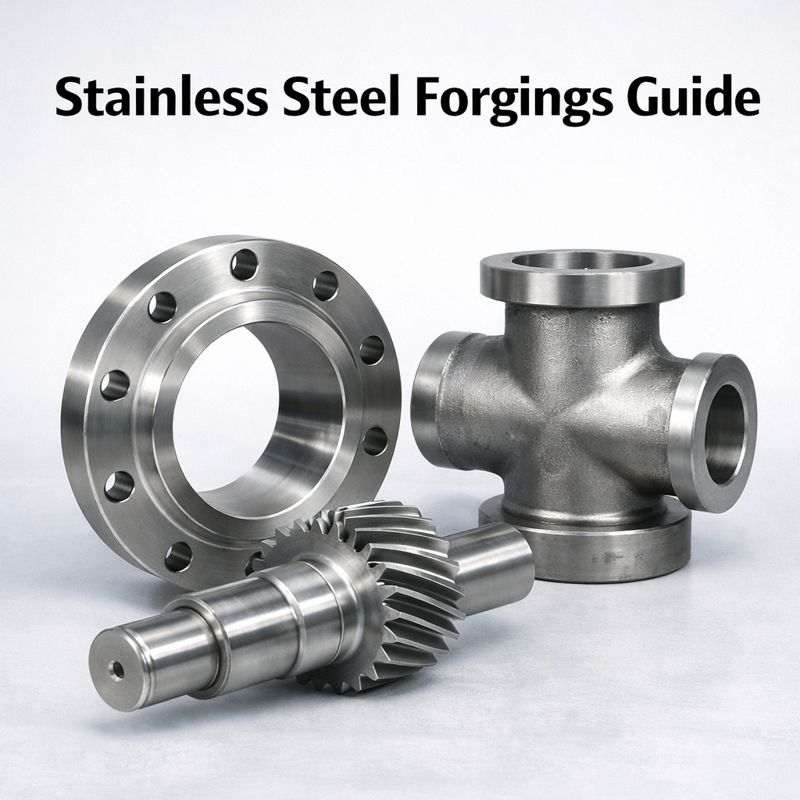
What Are Stainless Steel Forgings?
Stainless steel forgings are metal components formed by shaping heated stainless steel under high pressure. The forging process compresses the metal instead of cutting it, strengthening the internal structure and improving durability.
Key characteristics include:
- Continuous grain flow aligned with part geometry
- Improved strength and fatigue resistance
- Reduced internal defects compared with casting
- Better machining consistency
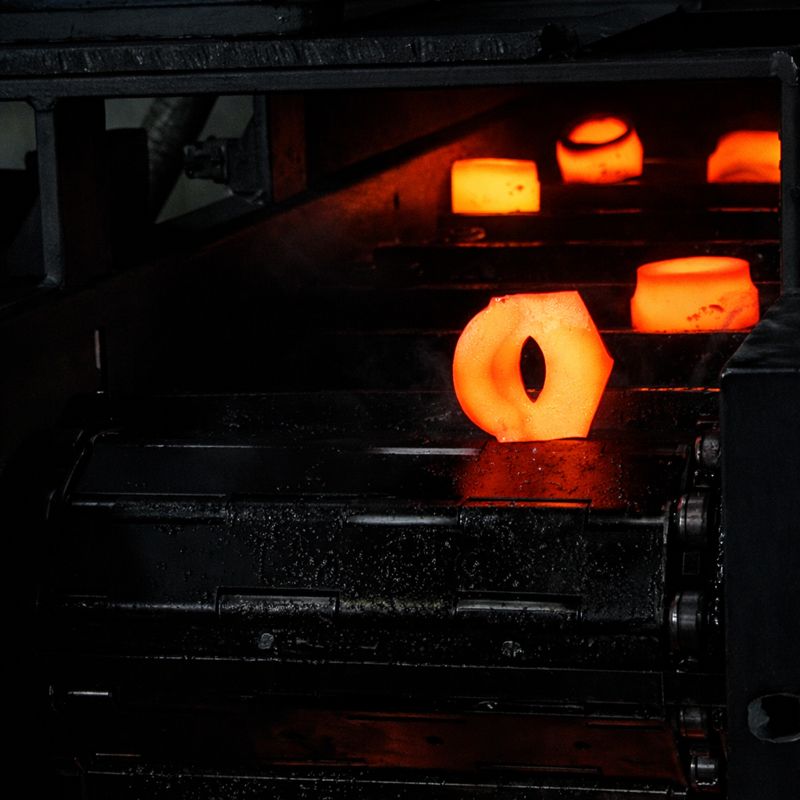
Typical Stainless Steel Forged Parts
Stainless steel forgings are widely used for components requiring high strength, corrosion resistance, and long service life. Common forged stainless steel components include:
- Forged flanges for pressure systems and industrial piping
- Forged shafts and sleeves for rotating equipment
- Valve bodies and pressure components for industrial applications
- Forged rings and structural components for heavy-duty equipment
- Custom OEM forged parts manufactured according to customer drawings
These components are commonly used in energy, marine, hydraulic, and industrial equipment where reliable performance is required.
Advantages of Stainless Steel Forgings
Stainless steel forgings provide higher strength, fatigue resistance, and reliability by improving the internal grain structure of stainless steel during the forging process. These advantages make forged components suitable for demanding industrial applications.
Key advantages include:
- Higher strength and impact resistance for heavy loads and harsh conditions
- Improved fatigue resistance under repeated stress and cyclic loading
- Fewer internal defects compared with cast stainless steel parts
- Longer service life with reliable performance in demanding environments
Forged Stainless Steel vs Cast Stainless Steel
Forging and casting are both common manufacturing methods for stainless steel components. The right choice depends on application requirements, production volume, and performance expectations.
| Factor | Stainless Steel Forging | Stainless Steel Casting |
|---|---|---|
| Strength | Higher due to improved grain flow | Lower due to possible casting defects |
| Fatigue resistance | Excellent for repeated loads | Generally lower |
| Internal structure | Dense and consistent | May contain porosity |
| Design flexibility | Suitable for strong structural parts | Better for complex shapes |
| Typical applications | Shafts, flanges, hydraulic parts, heavy-duty components | Complex housings and intricate parts |
For components requiring high reliability, impact resistance, and long service life, custom stainless steel forgings are often the preferred solution.
Stainless Steel Forging Process Explained
The stainless steel forging process involves heating stainless steel billets and forming them under controlled pressure to achieve high strength, durability, and dimensional accuracy. The typical process includes:
1. Material Preparation
Certified stainless steel materials are selected, with material certificates and heat number traceability verified before production.
2. Forging and Heat Treatment
Heated billets are shaped through open-die or closed-die forging to improve grain flow, strength, and fatigue resistance. Heat treatment is applied according to material grade and performance requirements.
3. CNC Machining
Forged components are precision machined to meet OEM drawings, dimensional tolerances, and surface requirements.
4. Inspection and Testing
Quality control includes dimensional inspection, hardness testing, and non-destructive testing such as UT or MT when required.
An integrated forging, machining, and inspection process helps OEM customers achieve consistent-quality stainless steel components with reliable performance.
Common Stainless Steel Grades Used in Forgings
Different stainless steel grades are selected based on strength, corrosion resistance, and application requirements.
| Stainless Steel Grade | Key Characteristics | Typical Applications |
|---|---|---|
| 304 Stainless Steel | Excellent corrosion resistance and weldability | Industrial components, general equipment |
| 316 Stainless Steel | Superior corrosion resistance, especially in marine environments | Chemical equipment, marine applications |
| 17-4PH Stainless Steel | High strength and hardness after heat treatment | Aerospace, heavy-duty components |
| 410 Stainless Steel | Good wear resistance and strength | Shafts, mechanical components |
Selecting the correct stainless steel grade is essential for achieving the required service performance.
How Should OEM Buyers Select a Stainless Steel Grade for Forging?
The right stainless steel grade depends on the service environment, mechanical loads, corrosion resistance, heat treatment, machining requirements, and applicable specifications. For example, 304/304L is widely used for general corrosion resistance, while 316/316L is preferred where chloride or chemical exposure is a concern. 17-4 PH is often selected when higher strength is required, while 410 can suit applications requiring higher hardness and wear resistance.
For custom forgings, material selection should be reviewed together with part geometry, forging feasibility, final mechanical properties, and production volume. OEM buyers should specify the required grade or standard on the drawing whenever possible. Weforging can review material and manufacturing requirements before production.
Typical Applications of Stainless Steel Forgings
Stainless steel forged components are widely used in:
- Oil and gas equipment
- Mining and construction machinery
- Marine propulsion systems
- Power generation equipment
- Industrial pumps and valves
- Heavy transmission components
Their corrosion resistance and structural reliability make them suitable for harsh environments.
Why Choose Weforging for Your Stainless Steel Forging Needs?
Weforging specializes in stainless steel forgings supported by an integrated forging and CNC machining workflow. From certified raw material sourcing to final inspection, every stage is controlled to ensure traceability, dimensional consistency, and stable batch quality for OEM production.
Our factory experience in heavy industrial forgings allows us to manage complex drawings, tight tolerances, and repeat production requirements. With responsive communication, reliable lead times, and strict quality inspection, Weforging helps buyers reduce risk and maintain long-term supply stability.
Conclusion
Stainless steel forgings provide corrosion resistance and high mechanical strength for demanding industrial applications. Understanding materials, forging processes, and supplier capability helps procurement teams make safer long-term decisions.
If you are planning a stainless steel forging project, we’re happy to provide technical advice and a free quotation. Share your drawings or requirements — we typically respond within 24 hours.