
Gear Inspection: Methods, Tools and Quality Standards
Gear inspection is a critical process in gear manufacturing that ensures gears meet design specifications and performance requirements. Gears are widely used in industries such as construction machinery, mining equipment, agricultural machines, and power transmission systems, where dimensional accuracy and surface quality directly affect operational reliability.
To maintain consistent gear performance, manufacturers perform strict inspection procedures throughout production. This article explains common gear inspection methods, inspection equipment used in manufacturing, and the major gear inspection standards applied in industrial production.
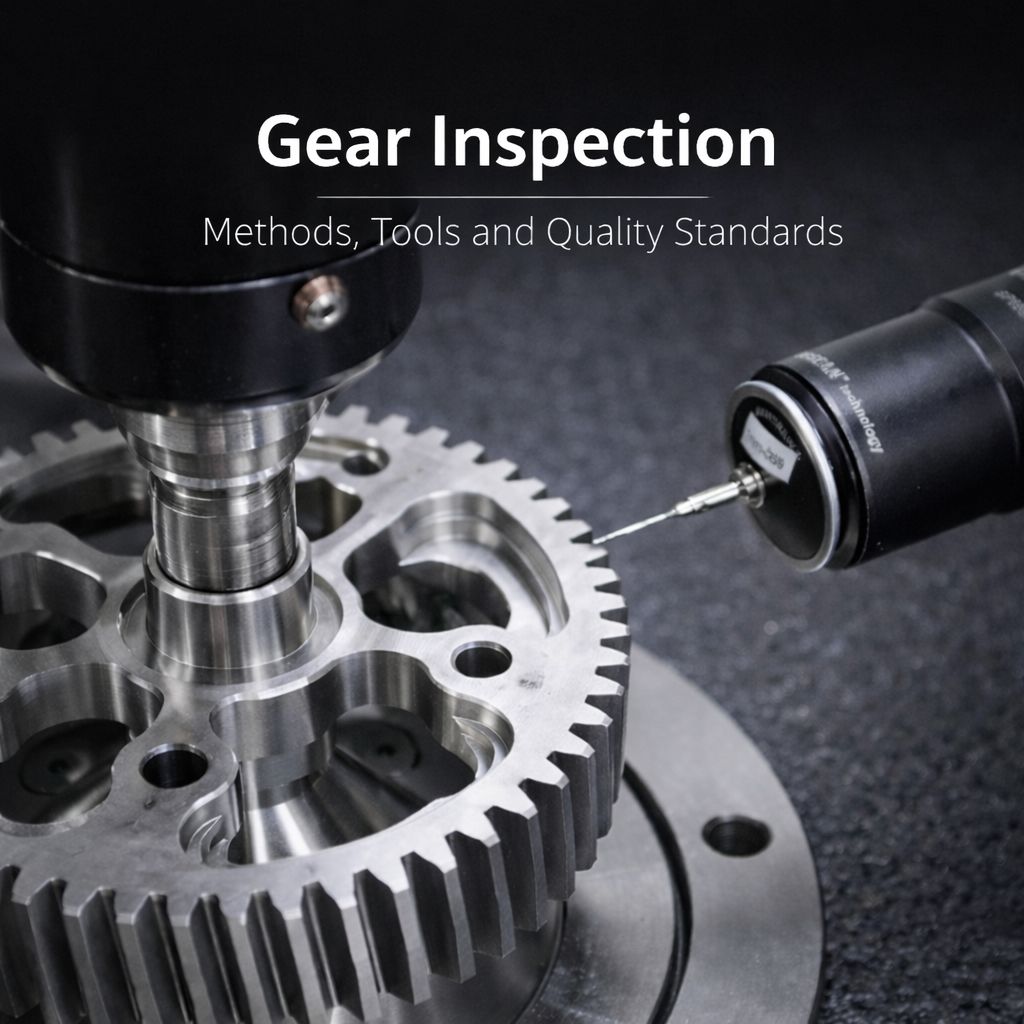
What Is Gear Inspection?
Gear inspection refers to the process of evaluating gear geometry, dimensions, and surface conditions to confirm that the gear meets design specifications and functional requirements. Inspection ensures that gears can transmit power smoothly and maintain stable operation under load.
Typical gear quality inspection focuses on several important parameters:
- Gear tooth profile accuracy
- Tooth pitch and spacing consistency
- Gear runout and concentricity
- Surface roughness and finishing quality
- Overall dimensional tolerances
Through systematic gear inspection, manufacturers can detect production errors early and prevent potential mechanical failures in service.
Why Gear Inspection Is Important for Industrial Gears
Industrial gears often operate under demanding conditions such as heavy loads, high speeds, and long operating hours. Even small manufacturing errors can affect gear performance and service life.
Reliable gear inspection ensures that gears meet design tolerances before installation. Proper inspection procedures help detect defects early and maintain consistent gear quality.
The benefits of effective gear inspection include:
- Improved dimensional accuracy
- Early detection of manufacturing defects
- Increased fatigue resistance
- Reduced vibration and operational noise
- Longer equipment service life
For industries such as mining, construction, and energy equipment manufacturing, strict gear quality inspection is essential for maintaining reliable machine performance.
Common Gear Inspection Methods
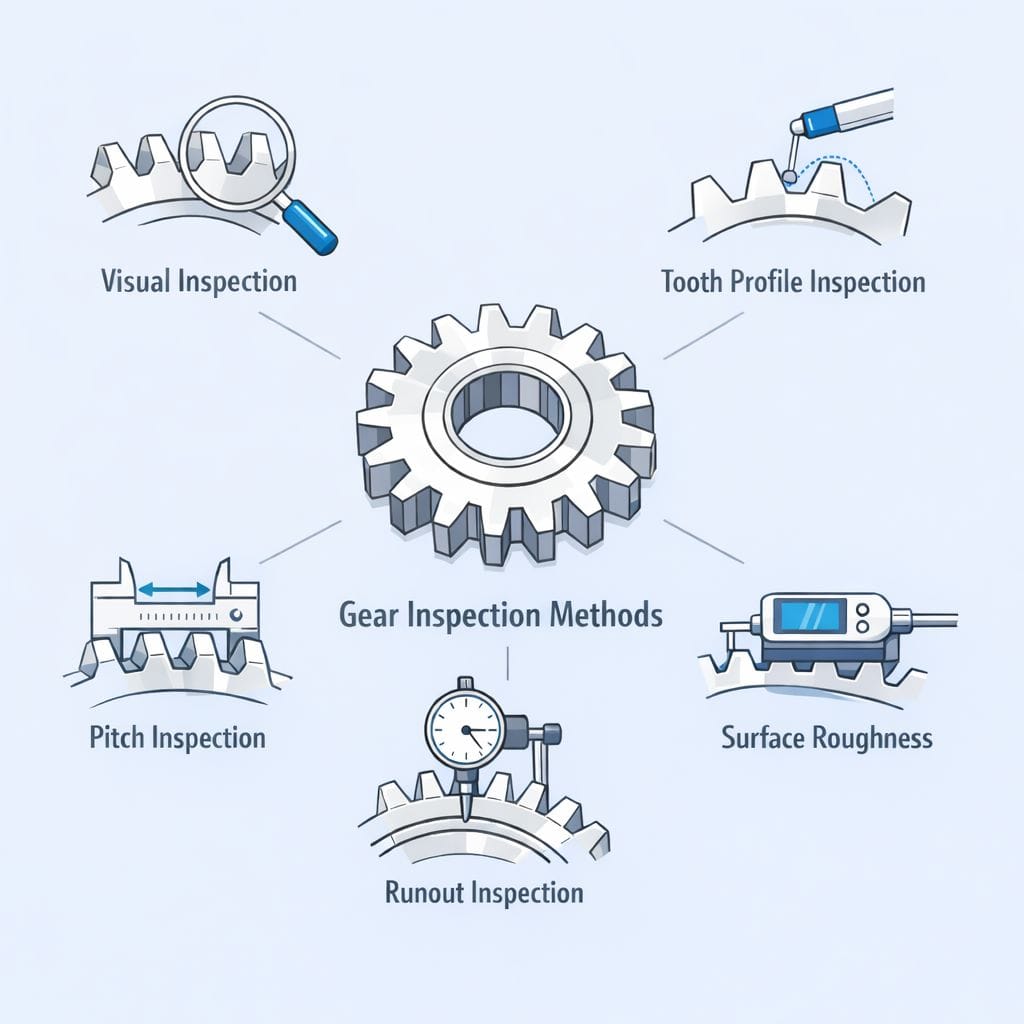
Different gear inspection methods are used to evaluate gear geometry and surface conditions during manufacturing. The selection of inspection techniques depends on gear size, required precision, and production processes.
Common inspection methods include:
Visual Inspection
Engineers visually examine gear surfaces to detect cracks, burrs, or deformation.
Gear Tooth Profile Inspection
This method measures the tooth profile to ensure it follows the designed involute curve.
Pitch Inspection
Pitch inspection evaluates the spacing between gear teeth to guarantee smooth meshing.
Runout Inspection
Runout inspection measures the deviation of gear rotation relative to its center axis.
Surface Roughness Inspection
Surface roughness measurement ensures that the gear tooth surface meets finishing requirements.
These gear inspection methods help manufacturers maintain consistent gear performance and reliability.
Common Defects Found During Gear Inspection
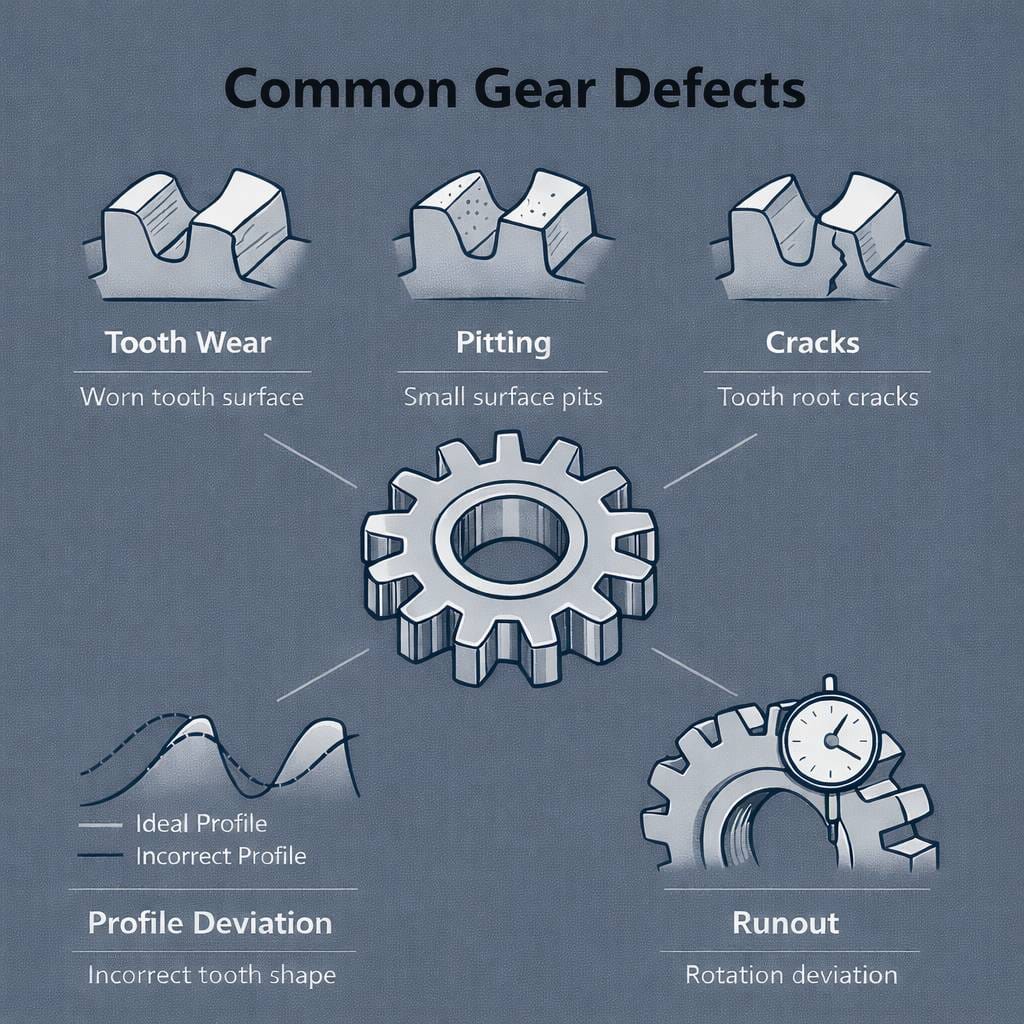
During gear inspection, engineers may detect several defects that affect gear accuracy and service life. Identifying these problems early helps improve gear reliability and prevent mechanical failures.
Tooth Wear
Gradual material loss on the gear tooth surface caused by friction and repeated contact.
Pitting
Small pits on the gear tooth surface caused by fatigue stress during operation.
Cracks
One of the most serious gear tooth defects, usually caused by excessive stress or improper heat treatment.
Profile Deviation
Occurs when the actual tooth profile differs from the designed involute curve, affecting gear meshing accuracy.
Runout Problems
Excessive runout occurs when the gear does not rotate precisely around its center axis.
Regular gear defects inspection helps maintain gear accuracy and stable performance.
Gear Inspection Equipment Used in Manufacturing
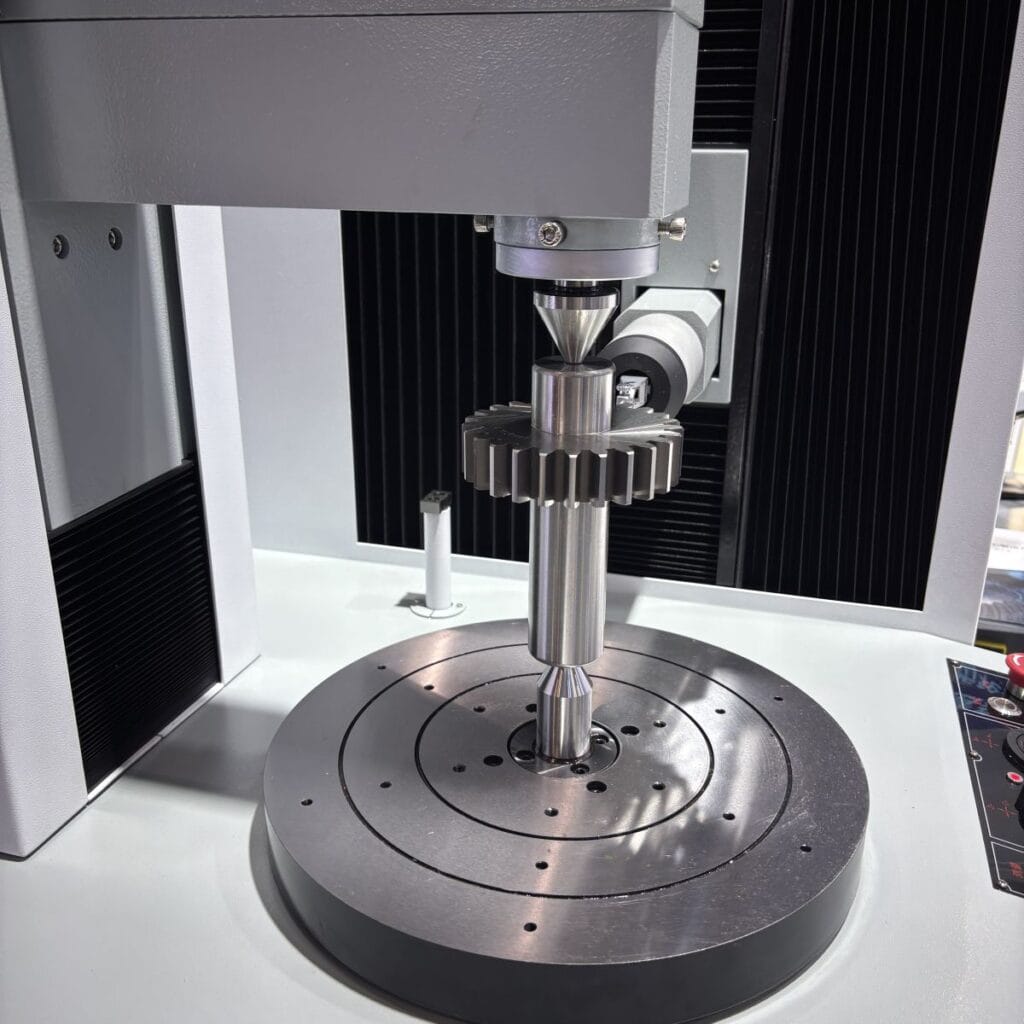
Modern manufacturing relies on advanced gear inspection equipment to perform accurate measurements and ensure consistent product quality.
Common inspection equipment includes:
- Gear measuring machines for tooth profile analysis
- Coordinate measuring machines (CMM) for dimensional inspection
- Gear profile testers for geometry verification
- Runout measurement instruments for rotational accuracy
Using specialized gear inspection equipment allows manufacturers to achieve precise measurement results and maintain stable gear quality.
Gear Inspection Standards
International gear inspection standards define measurement methods, tolerance levels, and quality requirements for gears used in industrial applications.
Common standards include:
- AGMA Standards – The American Gear Manufacturers Association provides widely used standards for gear accuracy classification and inspection procedures.
- ISO Standards – ISO standards provide internationally recognized guidelines for gear measurement and quality control.
- DIN Standards – DIN standards are commonly applied in European gear manufacturing and inspection practices.
Following these gear inspection standards helps ensure consistent gear quality across different industries and regions.
Gear Inspection vs Gear Testing: What’s the Difference?
In gear manufacturing, gear inspection and gear testing are two different quality control processes. Gear inspection focuses on measuring geometric accuracy, while gear testing evaluates performance under operating conditions.
The key differences between gear inspection and gear testing are shown below.
Aspect | Gear Inspection | Gear Testing |
Purpose | Verify gear geometry and dimensional accuracy | Evaluate operational performance |
Focus | Gear dimensions, tolerances, and surface quality | Gear behavior during operation |
Typical Methods | Tooth profile measurement, pitch inspection, runout inspection | Load testing, noise testing, vibration testing |
Stage | Manufacturing and quality control stage | Performance validation stage |
Goal | Ensure gears meet design specifications | Ensure gears perform reliably in real conditions |
In practice, both gear inspection and gear testing are essential steps in ensuring gear quality and long-term reliability.
How to Inspect Gears in Manufacturing
Understanding how to inspect gears is essential for maintaining manufacturing quality. A typical gear inspection process includes several stages during production.
Typical inspection steps include:
- Raw material inspection before forging or machining
- Dimensional inspection of gear diameter and tolerances
- Tooth profile inspection to verify gear geometry
- Surface finish inspection after machining
- Final inspection to confirm overall accuracy
A structured gear inspection process ensures that gears meet performance requirements before entering service.
Conclusion
Reliable gear inspection is essential for ensuring gear accuracy, durability, and stable performance. By applying proper inspection methods and following recognized quality standards, manufacturers can maintain consistent gear quality throughout production.
For OEM projects requiring high-performance gears, strict inspection during forging, machining, and finishing processes is critical for long-term reliability.
If you are sourcing custom forged gears or precision machined gear components, feel free to send your drawings for a free quotation or technical evaluation.