
Hydraulic Forging Components in Hydraulic Systems
Hydraulic forging components are vital to systems that handle heavy loads, precise movement, and high pressure — from excavators and cranes to industrial presses and marine equipment. These systems rely on mechanical components that can maintain strength, sealing, and dimensional stability under continuous stress.
Forged and machined parts ensure this reliability. Through custom forging for hydraulic systems, metals are compacted and shaped to align the grain structure with the working load, producing dense and fatigue-resistant parts such as cylinders, piston rods, and valve blocks.
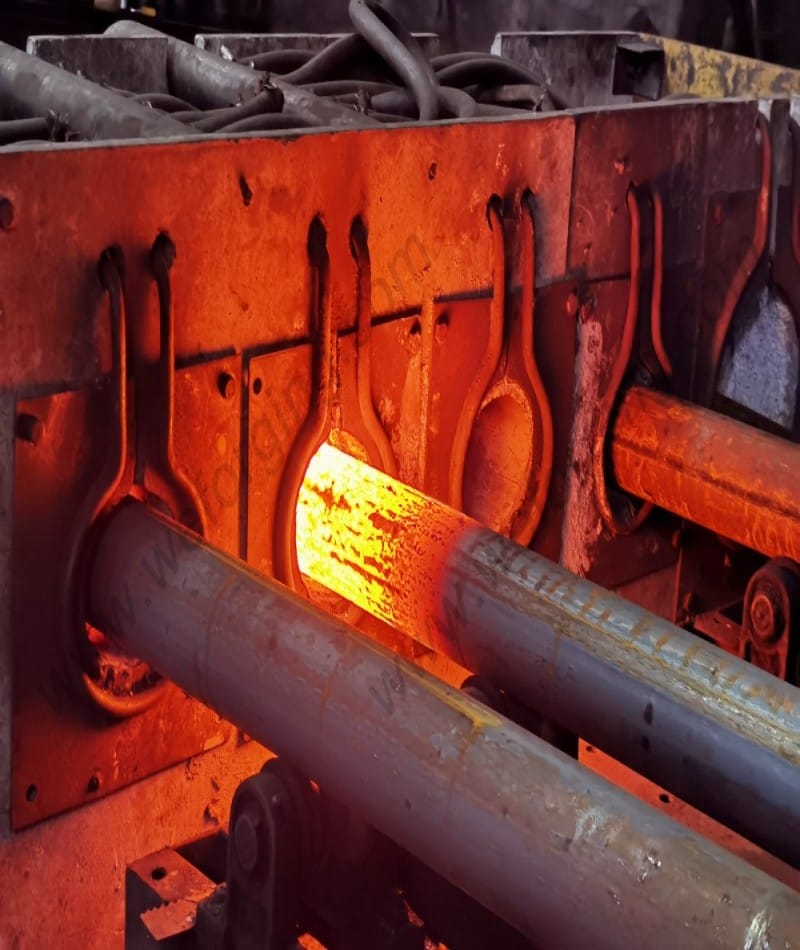
Structure of a Hydraulic System
A hydraulic system transmits power through pressurized fluid within a closed loop. Core forged hydraulic parts include:
Cylinder housing: converts fluid energy into linear motion.
Piston rod: transfers force while maintaining surface hardness for seal durability.
Valve block: controls pressure, direction, and flow rate.
Flanges and fittings: connect circuits and maintain sealing integrity.
Each component must resist pressure peaks, avoid leakage, and sustain dimensional accuracy throughout its service life.
Why Forged Parts Excel in Hydraulic Systems
1️⃣ Strength and Fatigue Resistance
Forging aligns the metal grain flow with part geometry, resulting in greater tensile strength and longer fatigue life — essential for forged hydraulic cylinder parts.
2️⃣ Structural Integrity
The forging process eliminates porosity and internal voids often seen in cast materials, ensuring reliable sealing and leak-free operation.
3️⃣ Dimensional Stability
After CNC machining, forged blanks achieve tight tolerances, ensuring consistent assembly across hydraulic cylinders and valve systems.
4️⃣ Efficiency and Cost Control
Forged components use material more effectively, reducing waste and machining time — improving cost efficiency without compromising performance.
Forging + CNC Machining: Precision Under Pressure
In hydraulic manufacturing, forging and machining are often combined to produce high-performance parts. Forging defines the internal strength, while CNC machining ensures surface accuracy and dimensional control.
At Weforging, forged blanks are machined on Mazak CNC centers, achieving tolerance within ±0.01 mm and surface roughness Ra ≤ 1.6 μm. This dual-control process ensures each part — from piston rods to flanges — meets the high precision required in hydraulic systems.
Conclusion
Hydraulic systems demand components that combine strength, accuracy, and fatigue life. Hydraulic forging components meet these requirements through dense structure and controlled geometry. When paired with CNC machining, they deliver lasting reliability and performance for global OEM hydraulic solutions.
Custom forging for hydraulic systems combines metallurgical integrity with precision manufacturing — enabling durable performance for global OEM hydraulic solutions.