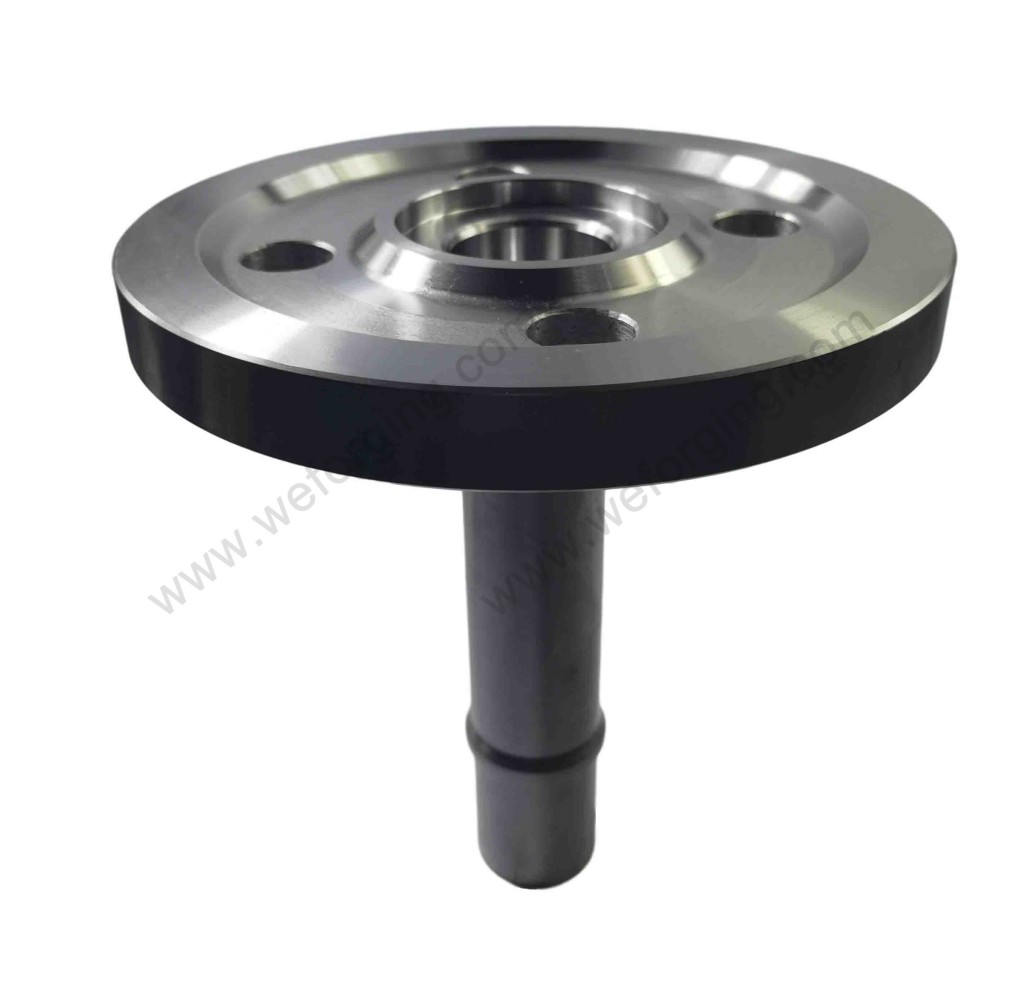
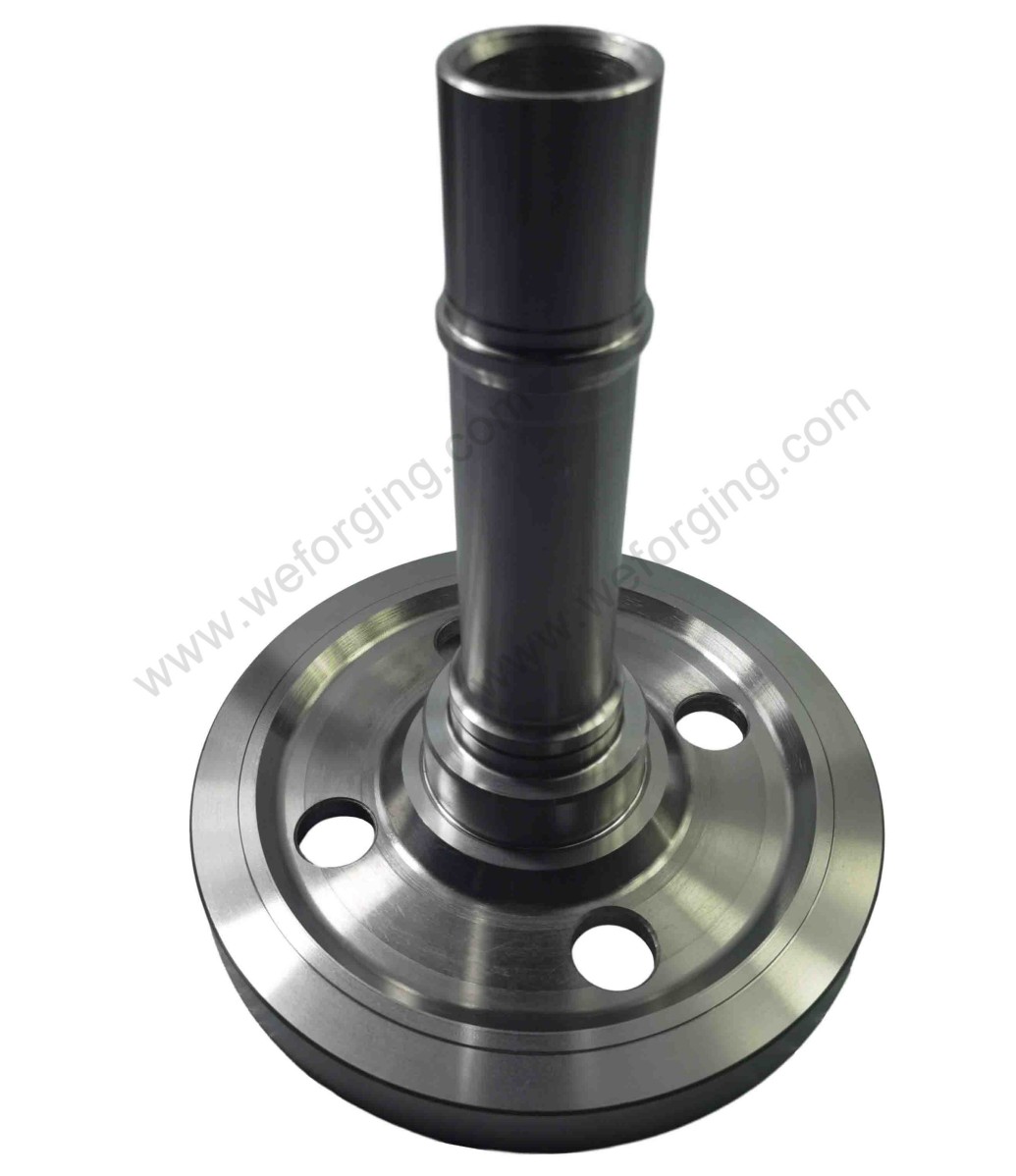
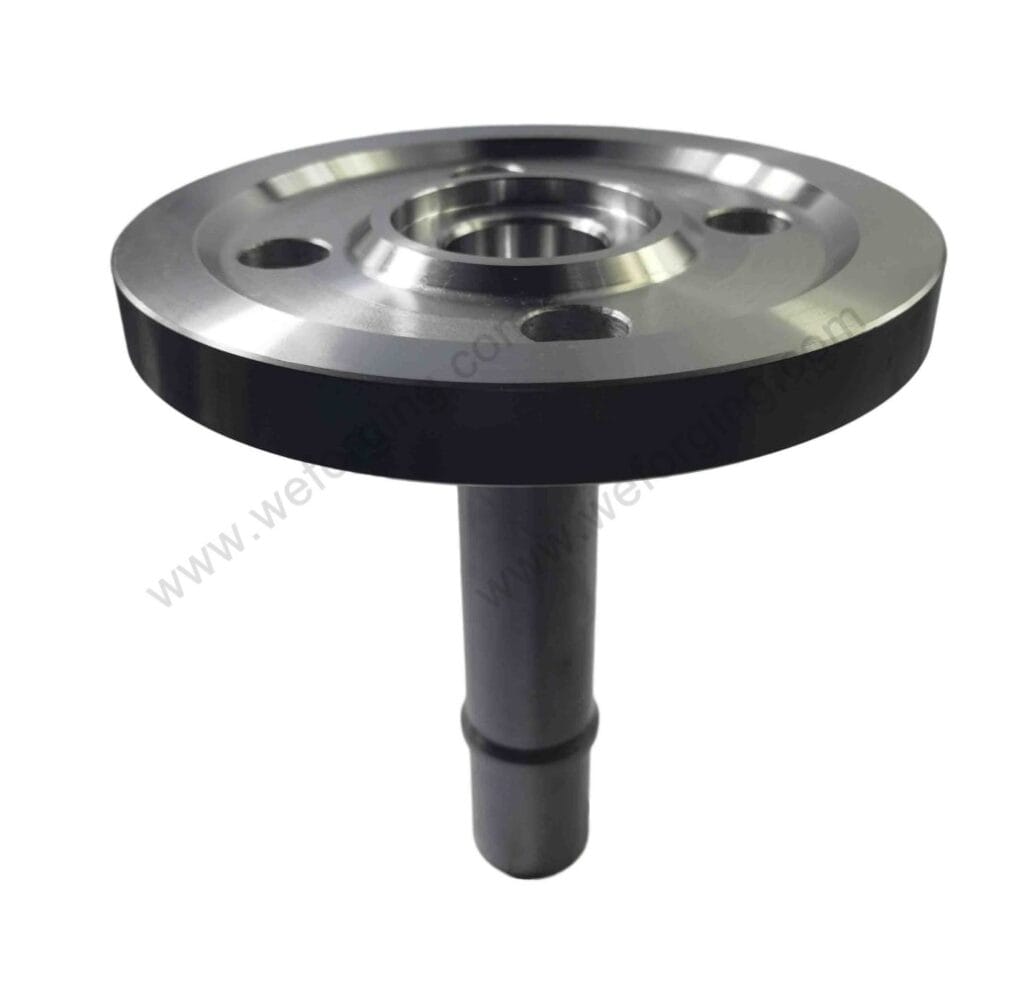
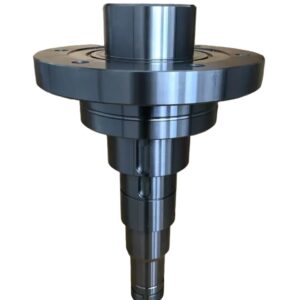
A flanged shaft is a one-piece shaft component with an integrated flange, designed to provide secure mounting, accurate positioning, and stable load transfer within mechanical assemblies. This structure is commonly specified in OEM equipment where alignment, repeatability, and long-term operational stability are important.
At Weforging, forged flanged shafts are manufactured through a coordinated process that combines hot forging and CNC machining. By controlling material flow during forging and applying precision machining to functional surfaces, we support consistent geometry, reliable dimensional accuracy, and efficient integration into applications such as hydraulic systems, gearboxes, and heavy industrial equipment.
What Is a Flanged Shaft?
A flanged shaft consists of a cylindrical shaft body with an integral flange formed as part of the same component. The flange typically provides a mounting surface with bolt holes or locating features, while the shaft section supports rotation, alignment, or torque transmission within an assembly.
This integrated design—often described as an integral flanged shaft or shaft with flange—supports consistent axial positioning and efficient load distribution. It is commonly specified on engineering drawings where secure installation and repeatable assembly are required.
Forged Flanged Shaft Manufacturing Process
Hot Forging for One-Piece Flanged Shafts
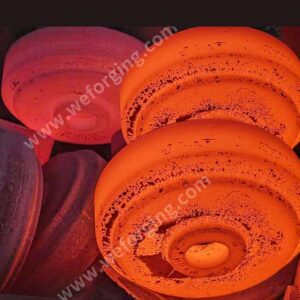
Forged flanged shafts are produced by hot forging, where heated steel billets are shaped into near-net geometries. This process allows continuous metal flow through the transition between the shaft and flange, supporting uniform mechanical characteristics throughout the component.
CNC Machining & Dimensional Control
After forging, CNC machining is applied to functional surfaces such as shaft diameters, flange faces, and mounting holes. Precision machining supports accurate tolerances, flat flange interfaces, and reliable assembly performance across production batches.
Key Advantages of Forged Flanged Shafts
Forged flanged shafts offer structural and manufacturing advantages for OEM applications where dimensional stability and repeatable assembly are important. Key advantages include:
One-Piece Integrated Structure The shaft and flange are formed as a single component through forging, supporting stable geometry and consistent load transfer within the assembly.
Controlled Material Flow Hot forging allows continuous material flow through the shaft–flange transition, contributing to uniform material characteristics across functional areas.
Dimensional Consistency After Machining Coordinated forging and CNC machining processes support accurate tolerances on shaft diameters, flange faces, and mounting features.
Suitability for Batch Production Forged flanged shafts are well suited for small to medium batch OEM programs that require repeatable quality across production runs.
These advantages make forged flanged shafts a reliable solution for industrial equipment, gearboxes, and hydraulic assemblies.
Custom Flanged Shaft Specifications
Flanged shafts can be manufactured according to customer drawings and application requirements. Typical specifications include:
Material options: carbon steel, alloy steel, stainless steel
Shaft diameter and length
Flange outer diameter and thickness
Mounting hole configuration
Heat treatment requirements
Machining tolerances
Applications of Flanged Shafts
Forged flanged shafts are commonly used in industrial and OEM equipment, including:
Quality control for forged flanged shafts focuses on dimensional accuracy, material traceability, and batch consistency for OEM applications. At Weforging, inspection procedures are coordinated with forging and CNC machining processes to support stable and repeatable manufacturing results.
Key inspection activities include:
Material Traceability Certified raw materials are used, with heat numbers and material records maintained throughout production.
Dimensional Inspection Critical features such as shaft diameters, flange thickness, mounting hole positions, and flange face flatness are inspected according to drawing requirements.
Machining Quality Verification CNC-machined functional surfaces are checked to ensure dimensional accuracy and assembly suitability.
Batch Consistency Control Unified inspection procedures are applied across production batches to support repeatable quality for OEM supply programs.
These quality control measures help ensure forged flanged shafts are delivered with consistent geometry, controlled dimensions, and reliable material characteristics.
Why Weforging for Flanged Shaft Manufacturing
Weforging provides forged flanged shafts for OEM applications with an integrated forging and CNC machining workflow. Our experience supports:
Drawing-based manufacturing and OEM project coordination
Controlled material selection and machining allowances
Stable dimensional accuracy across production batches
Small to medium batch production for industrial equipment
This integrated approach supports reliable assembly performance and consistent quality delivery.
Conclusion
Forged flanged shafts are widely used in OEM equipment where stable mounting, accurate positioning, and repeatable assembly are required. By combining hot forging with CNC machining in one coordinated workflow, Weforging supports consistent geometry, controlled dimensions, and reliable manufacturing outcomes for industrial applications.
For flanged shaft projects, drawings or technical requirements are welcome. We provide free quotation and engineering review, with feedback typically available within 24 hours, to support efficient sourcing and project evaluation.
We use cookies to ensure that we give you the best experience on our website. If you continue to use this site we will assume that you are happy with it.