
What Is Cold Forging? Process, Benefits & Applications
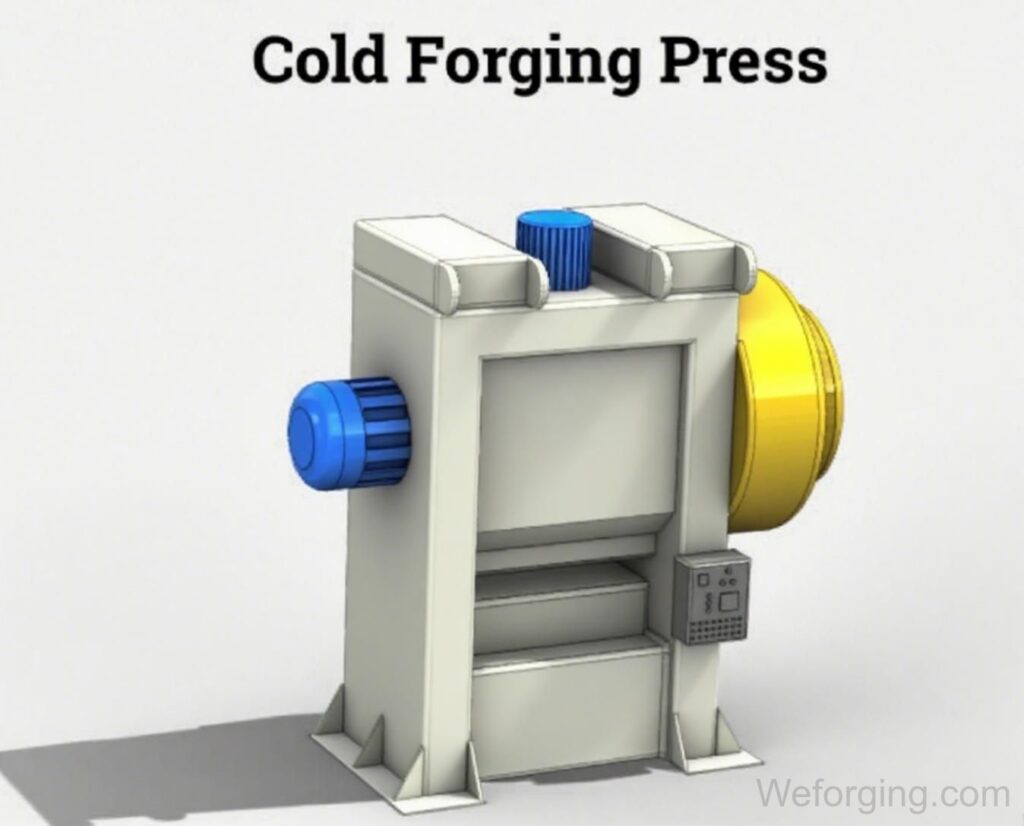
Cold forging is a precision metal forming process that shapes metal parts at room temperature or near-room temperature without heating the material to a forging temperature. By applying high compressive force through dies and punches, manufacturers can produce cold forged parts with excellent dimensional accuracy, smooth surface finishes, and improved mechanical properties.
Compared with traditional machining processes, cold forging can reduce material waste, improve production efficiency, and provide consistent quality for high-volume components. It is widely used in automotive, industrial equipment, electronics, and machinery applications where strength, accuracy, and cost efficiency are critical.
For OEM projects requiring reliable metal components, understanding the cold forging process, advantages, limitations, and suitable applications helps engineers choose the right manufacturing solution.
What Is Cold Forging?
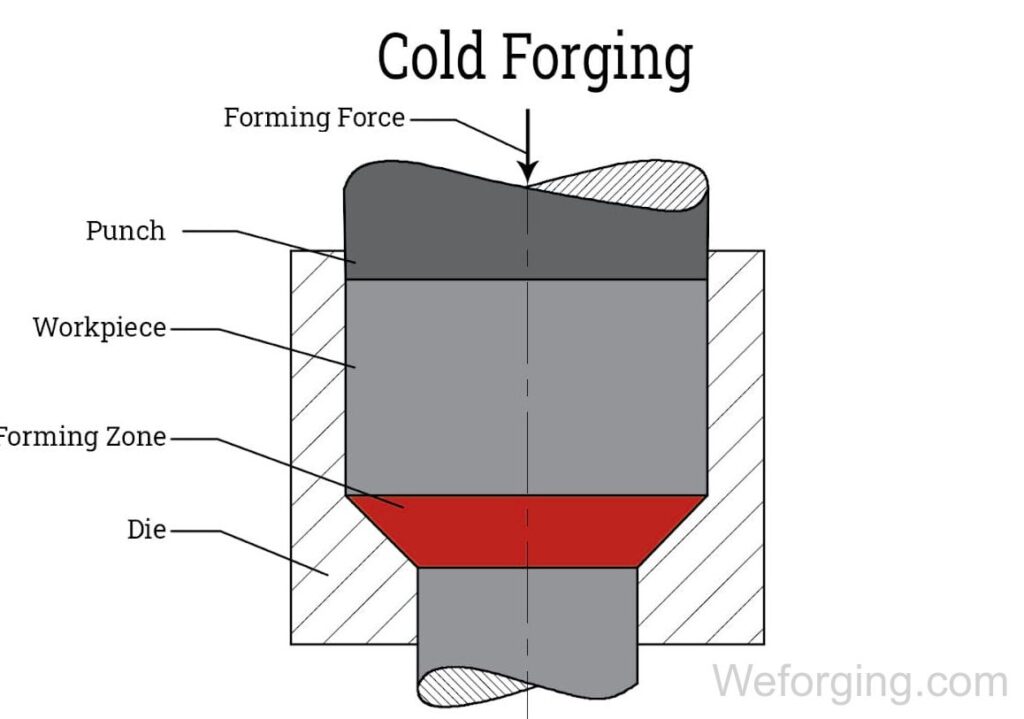
Cold forging is a metal forming process that uses mechanical force to deform metal at temperatures below its recrystallization temperature. Unlike hot forging, which requires heating the material before forming, cold forging relies on high pressure to reshape the metal while maintaining its original material structure.
The process is also known as cold forming and is commonly used for producing precision components such as fasteners, shafts, gears, connectors, and other small-to-medium-sized parts.
During cold forging, the metal experiences plastic deformation, which changes the grain structure and improves certain mechanical properties such as strength and hardness.
Common materials used in cold forging include:
- Carbon steel
- Alloy steel
- Stainless steel
- Aluminum
- Copper and copper alloys
The choice of material depends on the required strength, corrosion resistance, dimensional requirements, and application environment.
How Does the Cold Forging Process Work?
The cold forging process typically includes several important manufacturing stages:
1. Material Preparation
The process starts with metal billets, wire, or bar stock prepared according to the required component size. The material surface is usually cleaned and lubricated to reduce friction between the material and tooling.
Proper preparation helps improve forming stability and extends die life.
2. Die Design and Tooling Preparation
Cold forging requires specially designed dies and punches to shape the material under high pressure.
Tooling design directly affects:
- Part accuracy
- Surface quality
- Material flow
- Production efficiency
For complex components, engineers analyze metal flow and deformation behavior to reduce defects during forming.
3. Cold Forming Operation
During forming, the material is placed into the die cavity and compressed by powerful presses.
Depending on the part design, different cold forging methods may be used:
- Cold heading – commonly used for bolts, screws, and fasteners.
- Cold extrusion – used for shafts, sleeves, and precision components.
- Cold drawing – improves dimensional accuracy of metal rods and wires.
Through controlled deformation, manufacturers can achieve near-net-shape components with reduced machining requirements.
4. Secondary Processing and Inspection
After cold forging, some components may require additional processes, including:
- Heat treatment
- CNC machining
- Surface finishing
- Threading
- Dimensional inspection
For critical OEM components, inspection methods such as CMM measurement, hardness testing, and material traceability checks help ensure consistent quality.
Main Advantages of Cold Forging
Cold forging is widely selected for applications requiring precision, strength, and high production efficiency.
High Dimensional Accuracy
Because cold forging is performed without heating, the process can achieve tighter tolerances and better surface finishes compared with many traditional hot forming methods.
This reduces the amount of secondary machining required and improves production efficiency.
Excellent Material Utilization
Cold forging creates components through controlled material deformation rather than removing material.
Compared with machining from solid stock, cold forging can:
- Reduce material waste
- Improve production efficiency
- Lower overall manufacturing costs for high-volume production
Improved Mechanical Properties
The cold working process strengthens the metal through grain refinement and work hardening.
Cold forged components often provide:
- Higher tensile strength
- Improved hardness
- Better fatigue performance
These advantages make cold forging suitable for demanding mechanical applications.
Consistent Production Quality
With proper tooling design and process control, cold forging provides excellent repeatability for large production runs.
This is especially valuable for OEM manufacturers requiring thousands or millions of identical components.
Types of Cold Forging Components
Cold forging is suitable for many precision metal parts, including:
Fasteners
Common examples include:
- Bolts
- Nuts
- Screws
- Rivets
Cold forging improves strength and allows efficient mass production.
Shafts and Transmission Components
Cold forged shafts and similar components are used in:
- Automotive systems
- Industrial equipment
- Power transmission applications
The improved grain structure helps enhance durability under repeated loading.
Gears and Mechanical Parts
Precision cold forging can produce gear components and mechanical parts with excellent dimensional consistency.
For more complex gear and shaft components, cold forging can also be combined with CNC machining and heat treatment to meet strict performance requirements.
Industrial Applications of Cold Forging
Cold forging is widely used across multiple industries.
Automotive Industry
Automotive manufacturers use cold forged parts for:
- Fasteners
- Transmission components
- Steering components
- Engine-related parts
The process helps achieve lightweight, strong, and cost-effective components for mass production.
Industrial Machinery
In industrial equipment, cold forged components are commonly used where durability and reliability are required.
Examples include:
- Shafts
- Pins
- Bushings
- Connectors
Electronics and Electrical Applications
Copper and aluminum cold forged parts are widely used for:
- Electrical connectors
- Terminals
- Conductive components
The excellent surface quality and material efficiency make cold forging suitable for precision applications.
Cold Forging vs Hot Forging: What Is the Difference?
| Criteria | Cold Forging | Hot Forging |
|---|---|---|
| Temperature | Room or near-room temperature | Above recrystallization temperature |
| Accuracy | Higher dimensional accuracy | Lower, often requires machining |
| Surface finish | Smooth surface finish | More oxidation and scale |
| Material utilization | Excellent, minimal waste | More material loss due to flash |
| Production volume | Ideal for high-volume parts | Suitable for various production sizes |
| Part complexity | Limited by material flow | Better for larger and complex shapes |
Cold forging is usually preferred for precision, high-volume components, while hot forging is more suitable for larger parts requiring significant deformation.
Limitations of Cold Forging
Although cold forging provides many advantages, it is not suitable for every application.
Key limitations include:
- Suitable mainly for ductile materials.
- Higher initial tooling costs due to precision dies.
- Limited capability for extremely large or complex parts.
- Some components may still require machining or heat treatment after forging.
Therefore, selecting the right forging method depends on part size, material requirements, production volume, and performance expectations.
Conclusion
Cold forging remains an important manufacturing solution for companies seeking strong, precise, and cost-effective metal components.
At Weforging, we support OEM customers with integrated manufacturing capabilities including forging, CNC machining, heat treatment, and inspection. By combining forming expertise with strict quality control, we help customers develop reliable forged components for industrial machinery, energy equipment, automotive, and other demanding applications.
Whether you need prototype support or production-scale custom cold forged parts, selecting the right manufacturing process and supplier is essential for long-term performance and supply chain stability.