
Precision Forging: Process, Tolerances & OEM Applications
Precision forging is an advanced forging process used to produce near-net-shape components with high dimensional accuracy and stable mechanical performance. Compared with conventional forging, it reduces machining allowance, improves repeatability, and supports efficient OEM production.
At Weforging, precision forging is integrated with CNC machining, controlled heat treatment, and inspection to ensure consistent quality across production batches. This guide explains how precision forging works, typical tolerance ranges, and when engineers choose precision forging for industrial applications.
What Is Precision Forging?
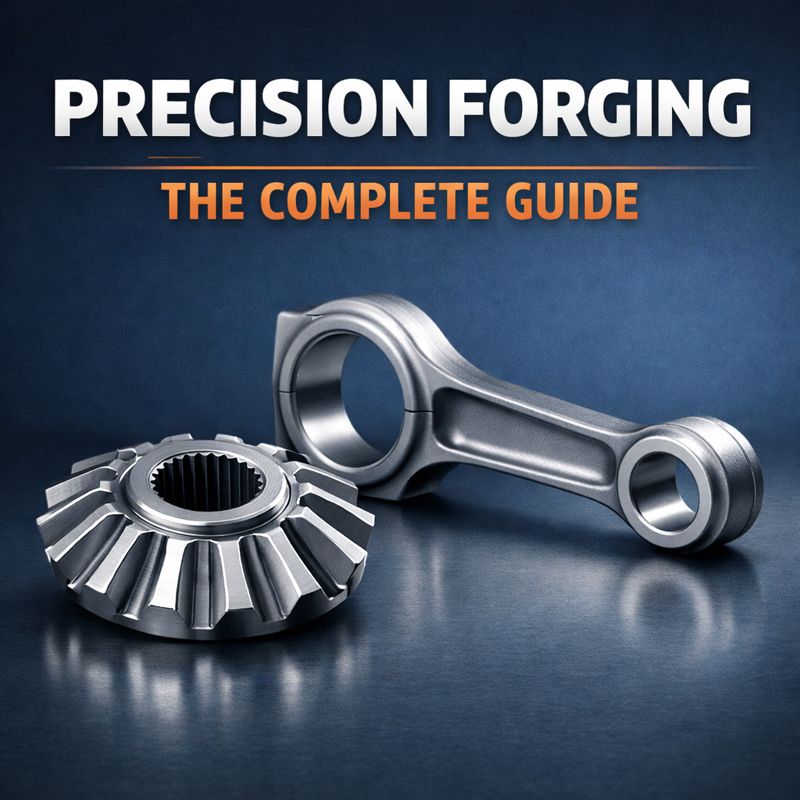
Precision forging is a controlled forging process that produces components closer to final dimensions with tighter tolerances than conventional forging. By optimizing die geometry, material flow, and deformation control, manufacturers achieve improved dimensional stability and consistent internal grain flow.
In practical manufacturing, precision forging does not eliminate machining entirely but significantly reduces machining allowance and improves downstream production efficiency.
How the Precision Forging Process Works
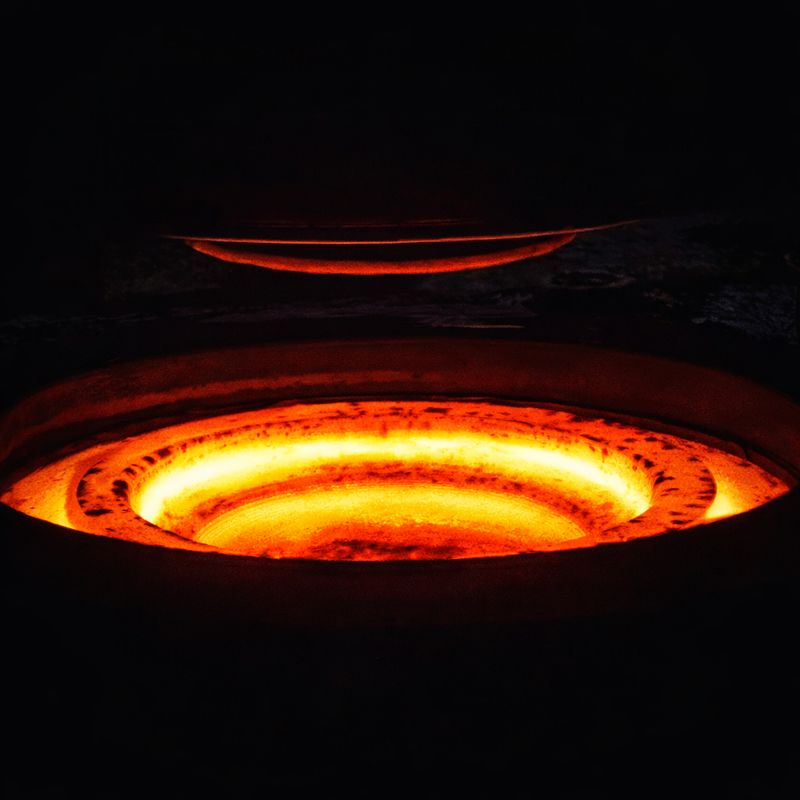
The precision forging process follows a controlled and repeatable sequence designed to support dimensional accuracy and process stability:
- Billet selection and preparation
The process begins with controlled billet selection. Material chemistry, billet size, and surface condition are carefully managed to ensure consistent deformation behavior. - Controlled heating
Billets are heated within a defined temperature range to achieve optimal plasticity while maintaining stable material structure. - Precision die forging
During forging, precision-designed dies guide material flow to ensure uniform filling and minimize dimensional variation. Controlled deformation supports stable grain flow and reduced residual stress. - Post-forging operations
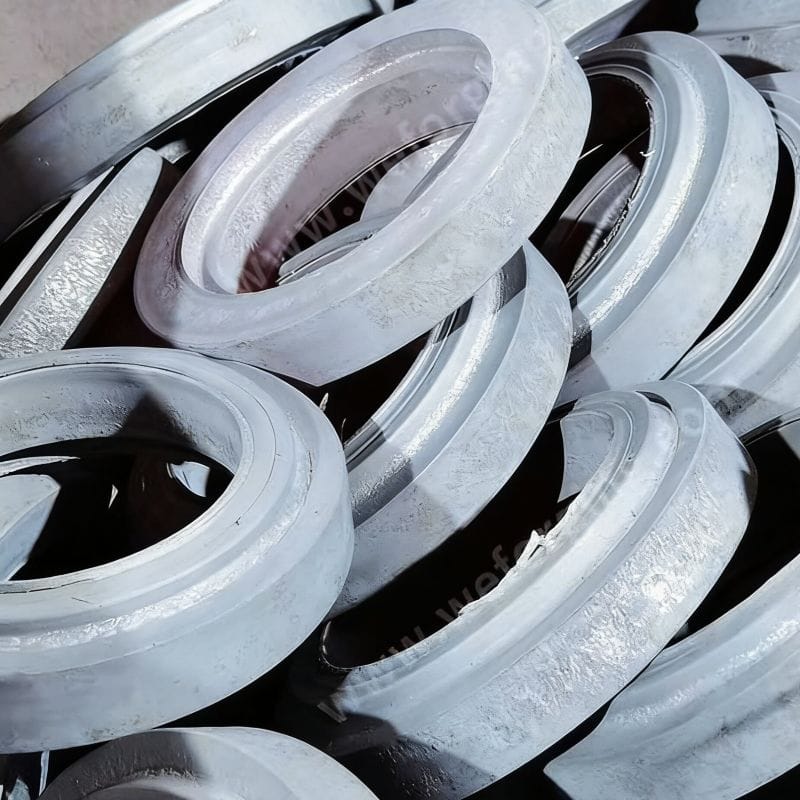
After forging, trimming, shot blasting, and dimensional inspection are performed to prepare components for heat treatment or CNC machining.
Typical Precision Forging Tolerance Range
Precision forging is widely used when tighter dimensional control is required.
Typical tolerance ranges:
±0.3 mm to ±1.0 mm (depending on part size and geometry)
Reduced machining allowance compared with conventional forging
Improved repeatability for serial OEM production
By controlling deformation and tooling accuracy, precision forging helps stabilize downstream machining and assembly processes.
Precision Forging vs Closed Die Forging
| Comparison Aspect | Precision Forging | Closed Die Forging |
|---|---|---|
| Forming Focus | Near-net-shape control | Shape formation |
| Dimensional Accuracy | Higher | Moderate |
| Machining Allowance | Reduced | Larger |
| Process Stability | High repeatability | Depends on machining |
| Material Efficiency | Higher | Moderate |
| Typical Use | Tight-tolerance OEM parts | General forged parts |
Precision forging is typically selected when dimensional consistency and machining efficiency are critical.
Materials Used in Precision Forging
Precision forging is most commonly applied to carbon steel and alloy steel grades used in load-bearing and structural applications. These materials provide a balanced combination of strength, toughness, and machinability under controlled forging and heat treatment conditions.
Common materials include:
- Carbon steels
Typical grades such as AISI 1020 and 1045, commonly used for shafts, flanges, and general structural components. - Alloy steels
Grades like AISI 4140 and 42CrMo4 selected for higher strength and fatigue resistance. - Case-hardening steels
Materials such as 20MnCr5 and 8620, widely used for gear blanks and transmission components.
Material selection depends on load conditions, heat treatment requirements, and machining compatibility. specifications.
Heat Treatment Standards in Precision Forging
Heat treatment plays a key role in achieving final mechanical properties.
Common processes include:
Quenching & tempering
Normalizing
Stress relieving
Controlled heat treatment improves dimensional stability and supports consistent CNC machining results.
Typical Applications
Precision forged components are widely used in industrial and OEM applications where dimensional consistency and mechanical reliability are required. Typical applications include:
- Gear blanks
Used in power transmission systems where controlled geometry and stable grain flow support reliable gear machining and long service life. - Shafts
Suitable for rotating or load-bearing shafts that require predictable mechanical properties and dimensional stability after machining. - Flanges
Applied in pressure-bearing and structural connections where uniform material structure and consistent performance are critical. - Load-bearing structural components
Used in heavy-duty assemblies that operate under high stress and demanding service conditions.
Typical industries include construction machinery, mining equipment, power transmission, and energy systems.
Key Benefits of Precision Forging (OEM Perspective)
From an OEM perspective, precision forging helps improve dimensional control, process stability, and overall manufacturing efficiency.
Improved dimensional consistency
Reduced machining variability
Stable mechanical performance
Better alignment with serial production
Lower downstream quality risk
These benefits help OEM manufacturers maintain consistent product quality and reduce production costs.
When CNC Machining Is Required After Precision Forging
Although precision forging significantly reduces machining requirements, CNC machining is often still required to achieve final tolerances, surface finishes, or functional features. Machining allowances are intentionally controlled during forging to support predictable and efficient CNC operations.
By integrating precision forging with CNC machining, manufacturers can achieve an optimal balance between forming efficiency and final dimensional accuracy, particularly in complex OEM components.
Conclusion
Precision forging provides a reliable manufacturing solution for producing high-accuracy forged components with controlled quality and repeatable performance. By integrating material selection, heat treatment standards, and machining considerations, precision forging supports stable production for OEM applications.
If you have drawings or technical requirements to review, feel free to contact us to discuss feasibility, tolerances, and production alignment.