
42CrMo vs 40Cr Steel for Forging: Which Material Is Better?
Choosing the right steel grade is an important step when manufacturing forged 42CrMo steel and 40Cr steel are commonly used alloy steels for forging applications. Both materials provide good strength, machinability, and heat treatment performance, but they are suitable for different working conditions.
The main difference between 42CrMo and 40Cr is their strength and fatigue resistance. 42CrMo is typically selected for high-strength forged components requiring better toughness and load capacity, while 40Cr is often used for general mechanical parts where cost efficiency and balanced performance are important.
This article explains the key differences between 42CrMo and 40Cr steel, including mechanical properties, heat treatment performance, and material selection considerations for custom forged parts and OEM components.
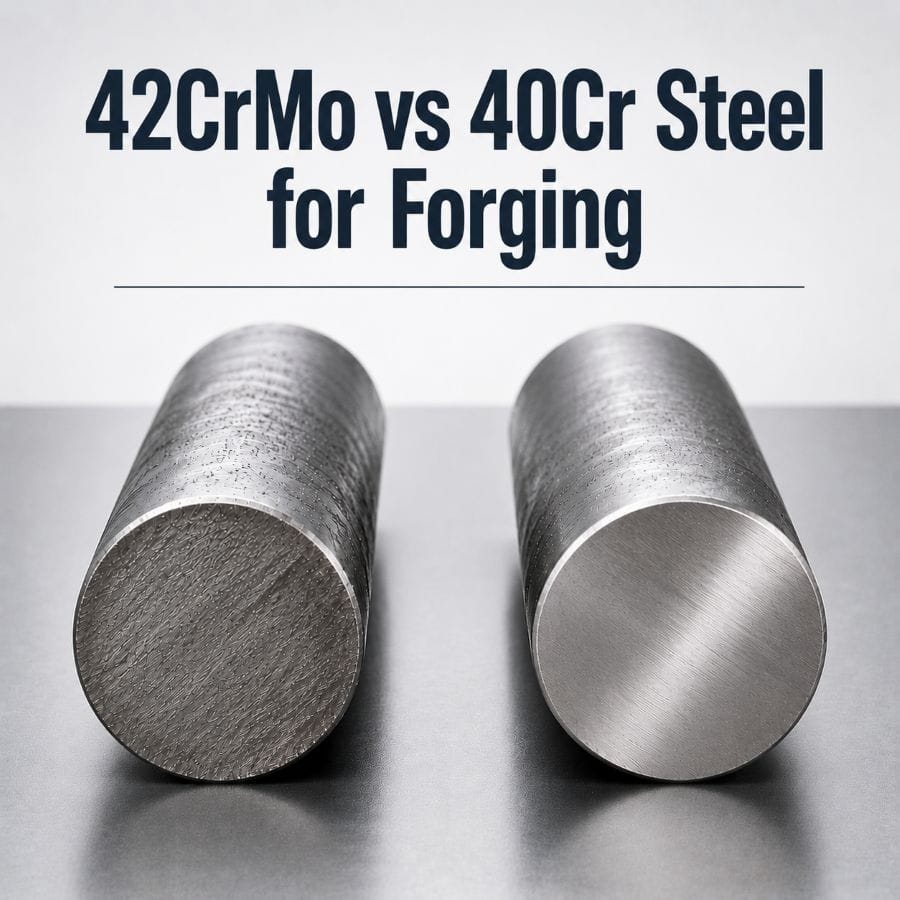
42CrMo and 40Cr Steel for Forging Applications
42CrMo and 40Cr are widely used alloy steels for forged steel components. The suitable material depends on the required strength, loading conditions, and production requirements.
42CrMo Steel
42CrMo is a chromium-molybdenum alloy steel known for its high strength, toughness, and fatigue resistance.
It is commonly used for:
- Forged hydraulic cylinder components
- Heavy equipment forgings
- Forged shafts
- Gear components
Due to its excellent hardenability, 42CrMo forged components can maintain reliable performance under heavy loads and repeated stress.
40Cr Steel
40Cr is a medium carbon alloy steel that provides a good balance between strength, machinability, and cost.
Common applications include:
- General mechanical components
- Shafts
- Automotive parts
- Standard forged steel components
Compared with 42CrMo, 40Cr offers easier machining and lower material cost, making it suitable for moderate-load applications.
42CrMo vs 40Cr Mechanical Properties Comparison
The main difference between 42CrMo and 40Cr steel is their performance under high-load and fatigue conditions.
Although both materials have similar carbon content, the addition of molybdenum (Mo) in 42CrMo improves hardenability, toughness, and fatigue resistance, making it more suitable for demanding forged components.
Chemical Composition Difference
Element | 42CrMo Steel | 40Cr Steel |
Carbon (C) | 0.38–0.45% | 0.37–0.44% |
Chromium (Cr) | 0.90–1.20% | 0.80–1.10% |
Molybdenum (Mo) | 0.15–0.25% | — |
Manganese (Mn) | 0.50–0.80% | 0.50–0.80% |
The key difference is molybdenum (Mo). This element improves hardenability and helps 42CrMo maintain better mechanical performance in large-section and high-stress components.
Mechanical Properties Comparison
Property | 42CrMo Steel | 40Cr Steel |
Strength | Higher | Good |
Toughness | Excellent | Good |
Fatigue Resistance | Excellent | Moderate |
Heat Treatment Response | Excellent | Good |
Machinability | Good | Better |
Cost Efficiency | Medium | Higher |
For high-strength forged components, 42CrMo generally provides better strength and fatigue performance.
40Cr remains a practical choice for general mechanical parts where balanced performance, easier machining, and cost control are required.
Common Applications of 42CrMo and 40Cr Forged Components
The selection between 42CrMo and 40Cr steel depends on the component application, load conditions, and performance requirements. 42CrMo is commonly used for high-load forged components requiring higher strength and fatigue resistance, while 40Cr is suitable for general industrial parts where balanced performance and cost efficiency are important.
Application | Recommended Material | Main Reason |
Hydraulic cylinder components | 42CrMo | Higher strength and fatigue resistance for repeated loads |
Mining equipment forgings | 42CrMo | Better durability under heavy working conditions |
Heavy machinery components | 42CrMo | Suitable for high-load applications |
Forged shafts | 42CrMo / 40Cr | Selected based on load and service requirements |
General mechanical components | 40Cr | Balanced performance and good machinability |
Cost-sensitive forged parts | 40Cr | Lower material cost with reliable performance |
Factors to Consider When Selecting Forging Materials
Selecting between 42CrMo and 40Cr steel is not only based on material strength. For forged components, engineers usually evaluate several factors to ensure the selected material meets performance and production requirements.
Selection Factor | Why It Matters |
Load Requirements | Higher loads require better strength and toughness |
Fatigue Conditions | Repeated stress requires better fatigue resistance |
Component Size | Large sections may need higher hardenability |
Machining Requirements | Affects production efficiency and manufacturing cost |
Service Environment | Influences durability and long-term performance |
42CrMo vs 40Cr Steel: Which Should You Choose?
The choice between 42CrMo steel and 40Cr steel depends on the component design, working conditions, and performance requirements.
42CrMo is generally preferred when higher strength, toughness, and fatigue resistance are required. 40Cr is a practical option when balanced mechanical performance, machining efficiency, and cost control are more important.
Selection Factor | 42CrMo Steel | 40Cr Steel |
High load and repeated stress | Recommended | Suitable for moderate loads |
Fatigue resistance requirements | Excellent choice | Standard performance |
Machining efficiency | Good | Better |
Cost control | Higher material cost | More economical |
Heavy-duty forged parts | Preferred | Suitable for general applications |
Choose 42CrMo When:
42CrMo is recommended for components requiring:
- Higher strength and fatigue resistance
- Long service life under heavy loads
- Stable performance in demanding environments
Choose 40Cr When:
40Cr is suitable for components requiring:
- Balanced mechanical performance
- Good machinability
- Cost-effective production
For OEM custom forged parts, the best material choice should be evaluated together with forging process, heat treatment, machining requirements, and inspection standards.
Conclusion
Choosing between 42CrMo and 40Cr steel for forging depends on the actual application requirements rather than simply selecting the stronger material.
42CrMo is suitable for demanding forged components requiring high strength, fatigue resistance, and long-term durability, while 40Cr provides a practical solution for applications where balanced performance and cost efficiency are important.
For OEM custom forged parts, proper material selection combined with controlled forging, heat treatment, machining, and inspection processes helps ensure consistent quality and reliable service performance.