
Alloy Steel Forgings: Process, Grades, and Applications
Alloy steel forgings are widely applied in industrial and OEM projects that emphasize mechanical strength, dimensional accuracy, and consistent performance. Through the use of alloy steel materials and a controlled forging process, forged components develop refined grain flow and stable mechanical characteristics suitable for a wide range of service conditions.
In OEM sourcing activities, these components are typically assessed based on material grade selection, heat treatment specifications, and dimensional control to support uniform quality throughout production. Common applications include gear blanks, shafts, flanges, and structural components used in construction machinery, mining equipment, and power transmission systems.
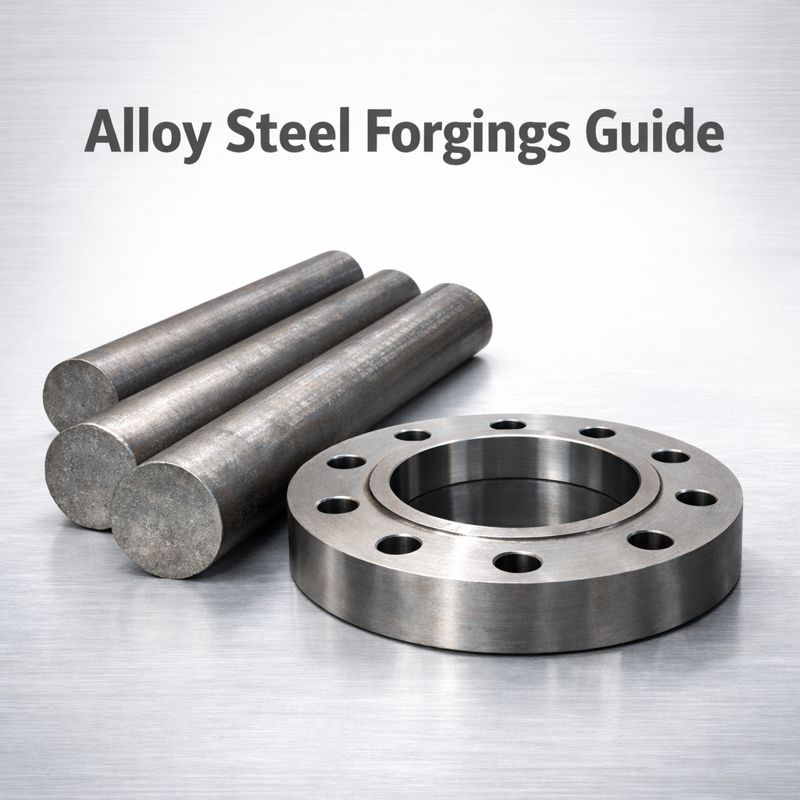
What Are Alloy Steel Forgings?
Alloy steel forgings are components produced by shaping alloy steel billets under controlled compressive forces at elevated temperatures. Alloy steels contain elements such as chromium, molybdenum, nickel, or manganese, contributing to strength, hardenability, and fatigue performance for industrial use.
During forging, controlled plastic deformation promotes continuous grain flow aligned with the component geometry. This supports stable mechanical properties and makes forged alloy steel components suitable for applications requiring load stability, repeatable performance, and long-term service reliability.
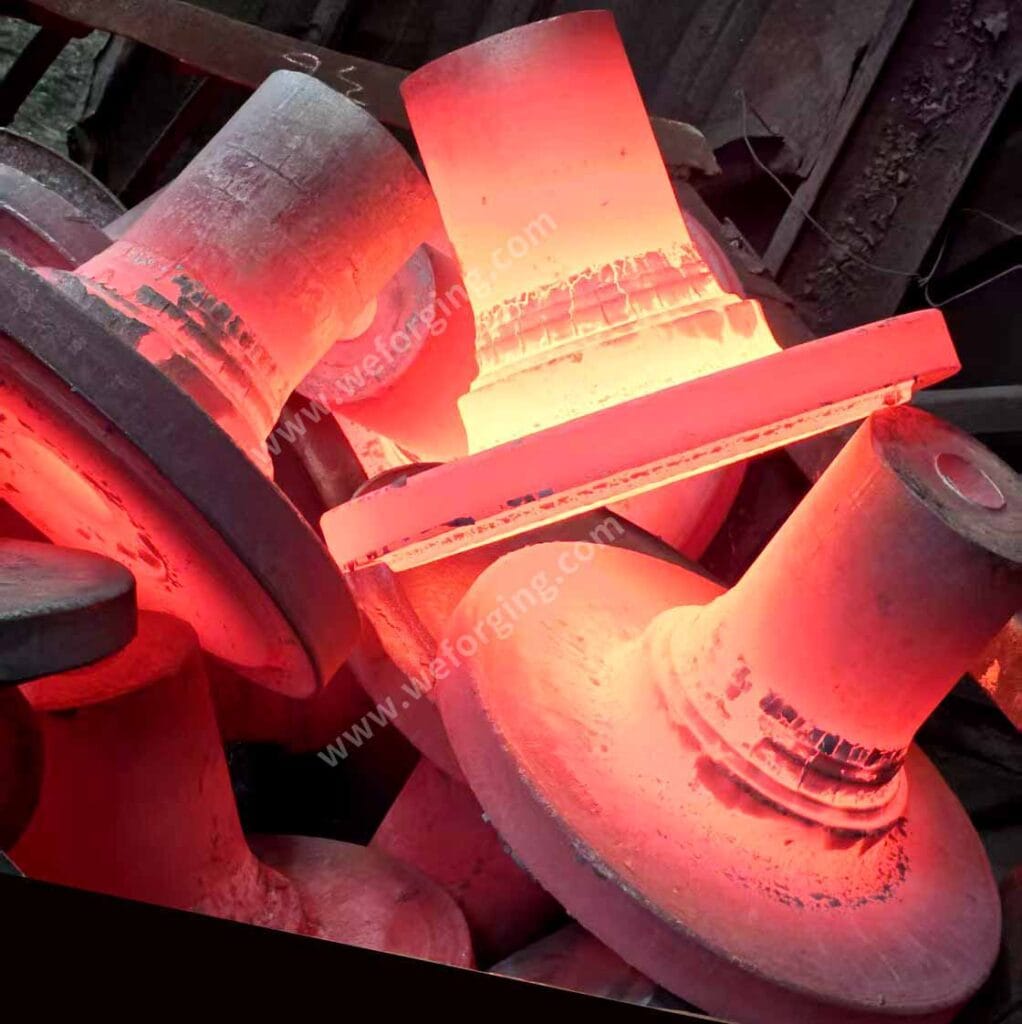
Alloy Steel Forging Process Explained
The alloy steel forging process is designed to shape material while maintaining internal strength and consistency. Although process parameters vary depending on alloy grade and component geometry, the typical process includes the following steps:
- Billet heating
Alloy steel billets are heated to a controlled temperature range suitable for uniform plastic deformation. - Forging and shaping
The heated material is formed using open-die forging, closed-die forging, or drop forging methods. Drop forged alloy steel components are commonly used when repeatable geometry and dimensional control are required. - Heat treatment
Processes such as quenching and tempering or normalizing are applied to achieve target mechanical properties. - CNC machining
Final machining ensures dimensional accuracy, surface finish, and assembly interfaces.
This integrated alloy steel forging process supports consistent quality across production batches.
Common Types of Alloy Steel Forgings
Alloy steel forgings are commonly used in industrial and OEM applications where strength, toughness, and dimensional stability are required. Based on geometry and functional requirements, typical alloy steel forgings include the following categories:
- Shafts and rotor components
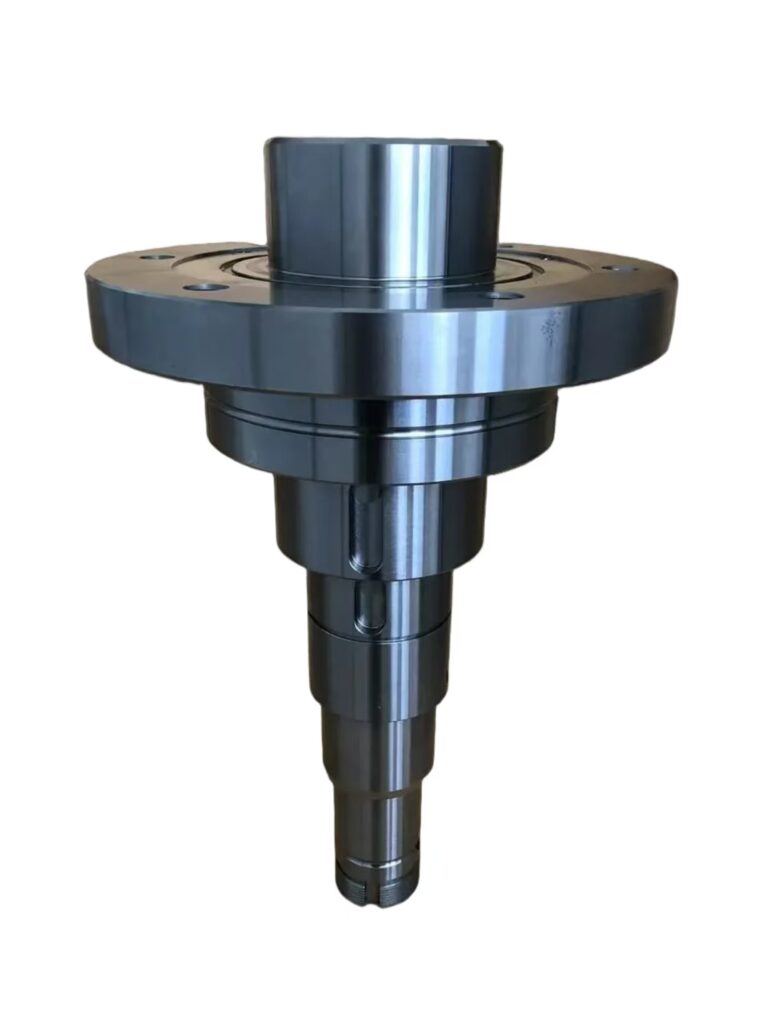
Used in power transmission, gearboxes, and rotating machinery where torsional strength and fatigue resistance are important. - Gear blanks and ring gear forgings
Supplied as near-net-shape forgings for subsequent gear machining, supporting stable grain flow and long service life. - Flanges and pressure-related components
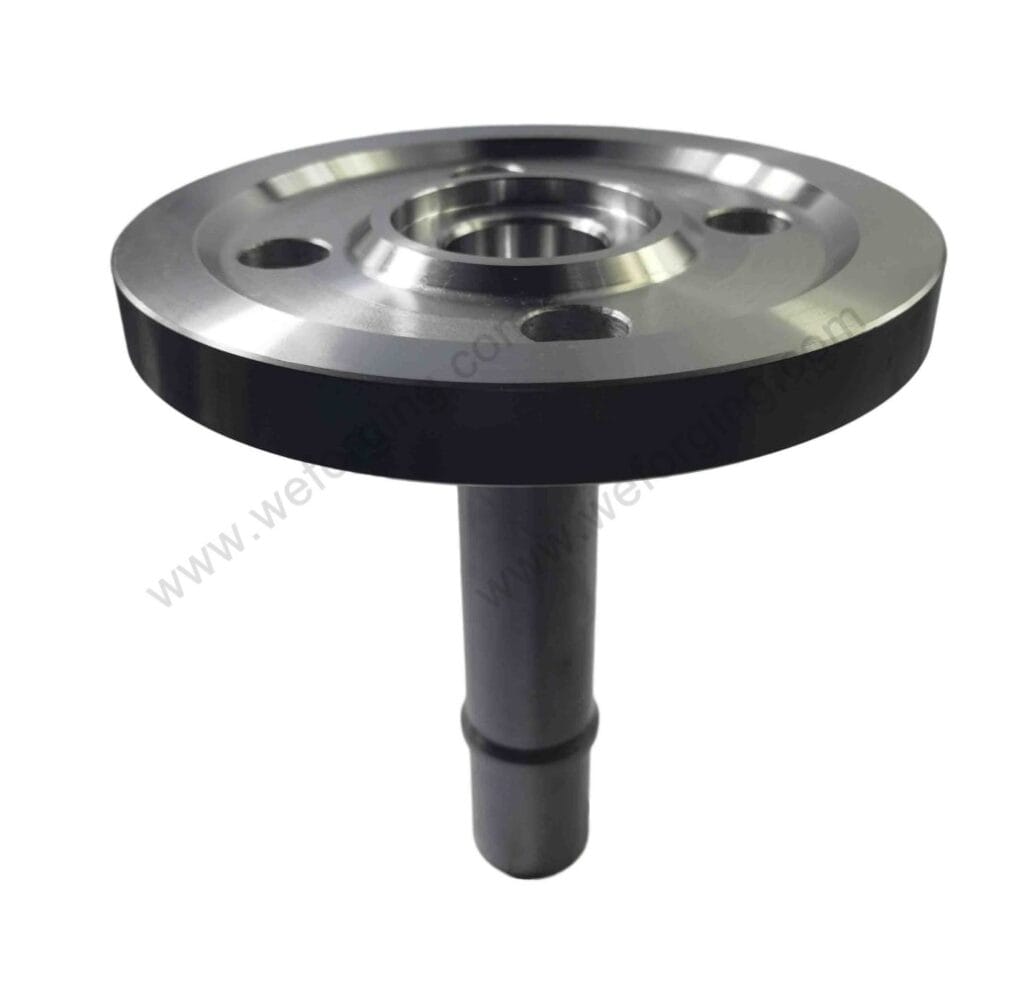
Applied in piping systems, energy equipment, and heavy machinery assemblies requiring structural integrity. - Connecting rods and linkage parts
Common in mechanical systems subjected to repeated or cyclic loading. - Structural and load-bearing forgings
Including brackets, arms, hubs, and customized structural components for construction and mining equipment. - Custom alloy steel forgings
Produced according to customer drawings for specialized OEM applications with defined mechanical and dimensional requirements.
These alloy steel forgings are typically manufactured using grades such as 4140, 4340, 42CrMo, or equivalent materials, followed by controlled heat treatment and machining.
Advantages of Alloy Steel Forgings
Alloy steel components produced by forging are widely used in industrial and OEM applications where stable mechanical performance and long service life are required. With controlled deformation and appropriate heat treatment, these components develop a refined grain flow structure that supports uniform strength distribution throughout the part.
Key advantages include:
High strength and toughness supported by alloying elements
Reliable fatigue performance under repeated or cyclic loading
Good hardenability, allowing effective heat treatment in thicker sections
Dimensional stability suitable for precision machining and assembly
Adaptability to a wide range of industrial operating conditions
These characteristics make forged alloy steel components a practical solution for use in demanding mechanical systems.
Common Alloy Steel Grades Used in Forgings
Alloy steel forgings are commonly specified under different national and regional standards depending on the project location and OEM requirements. In practice, alloy steel grades are best grouped by standard system, as material names vary while application intent remains similar.
- United States (ASTM / AISI):
AISI 4140 and AISI 4340 are widely used for forged shafts, gear blanks, and load-bearing components. - Europe (EN / DIN / UNI):
42CrMo4 and 34CrNiMo6, defined under EN 10083, are common across Germany and Italy for mechanical and structural forgings. - China (GB):
42CrMo and 35CrMo are frequently used for alloy steel forgings produced to GB standards.
In OEM projects, material selection is typically based on performance equivalence, heat treatment condition, and standard compliance rather than grade name alone.
Alloy Steel Forgings vs Carbon Steel Forgings
Comparison of Alloy Steel Forgings and Carbon Steel Forgings
Aspect | Alloy Steel Forgings | Carbon Steel Forgings |
Material composition | Contains alloying elements such as Cr, Mo, Ni to enhance performance | Primarily carbon as the main strengthening element |
Hardenability | Higher hardenability, suitable for thicker sections | Moderate hardenability, suitable for simpler sections |
Heat treatment flexibility | Broad adjustment range for strength and toughness | More limited adjustment range |
Mechanical performance | Higher strength and improved fatigue resistance | Stable performance for general load conditions |
Typical applications | Gears, shafts, heavy-duty structural components | Flanges, basic structural and support parts |
Application focus | Performance-oriented and long-term reliability | Cost-oriented and general-purpose use |
Alloy steel forgings provide greater flexibility in mechanical performance due to added alloying elements. This allows precise control during heat treatment and supports applications with higher strength or fatigue requirements. Carbon steel forgings are commonly selected for applications with moderate loads and stable service conditions.
Typical Applications
Alloy steel forgings are widely used in:
- Gear blanks and transmission components
- Shafts and rotor parts
- Flanges and pressure-related components
- Mining and construction machinery
- Energy and heavy equipment systems
Quality Control
Quality control is essential in alloy steel forging projects, particularly for load-bearing and performance-critical components. To support consistent quality and predictable mechanical performance, a structured inspection and control process is applied throughout production.
Key quality control measures include:
- Material certification and traceability in accordance with commonly used standards such as ASTM and EN/DIN, supported by heat number identification
- Dimensional inspection after forging and CNC machining to verify compliance with technical drawings
- Non-destructive testing (UT or MT) applied when required by project specifications
- Heat treatment control and hardness verification, following practices referenced in standards such as ASTM A29/A29Mand ASTM A788
Typical hardness ranges after heat treatment may include:
- As-forged or normalized:approximately HB 170–220
- Quenched and tempered (Q&T):typically HB 220–300
Through systematic quality control, alloy steel forgings can maintain batch consistency and full traceability from raw material to finished part.
Why OEMs Choose Weforging
OEM manufacturers select forging partners based on production consistency, technical capability, and long-term manufacturing reliability. An integrated production approach supports stable quality outcomes across both prototype development and serial production programs.
Key factors valued by OEM customers include:
Integrated forging, heat treatment, and CNC machining capabilities
Experience with commonly specified alloy steel grades
Controlled machining allowances and dimensional repeatability
Documented inspection procedures and quality management systems
Engineering support for custom designs based on technical drawings
These capabilities enable forged components to be supplied with predictable performance and consistent quality across a wide range of industrial applications.
Conclusion
Alloy steel forgings are a practical solution for industrial components requiring strength, dimensional stability, and consistent mechanical performance. Through controlled forging, heat treatment, machining, and inspection, stable quality can be achieved across both prototype and serial production.
At Weforging, alloy steel forgings are produced through integrated manufacturing processes to support drawing-based OEM projects. Drawings or technical data can be submitted for a free inquiry, with technical feedback typically provided within 24 hours.