
What Is Aluminium Forging?
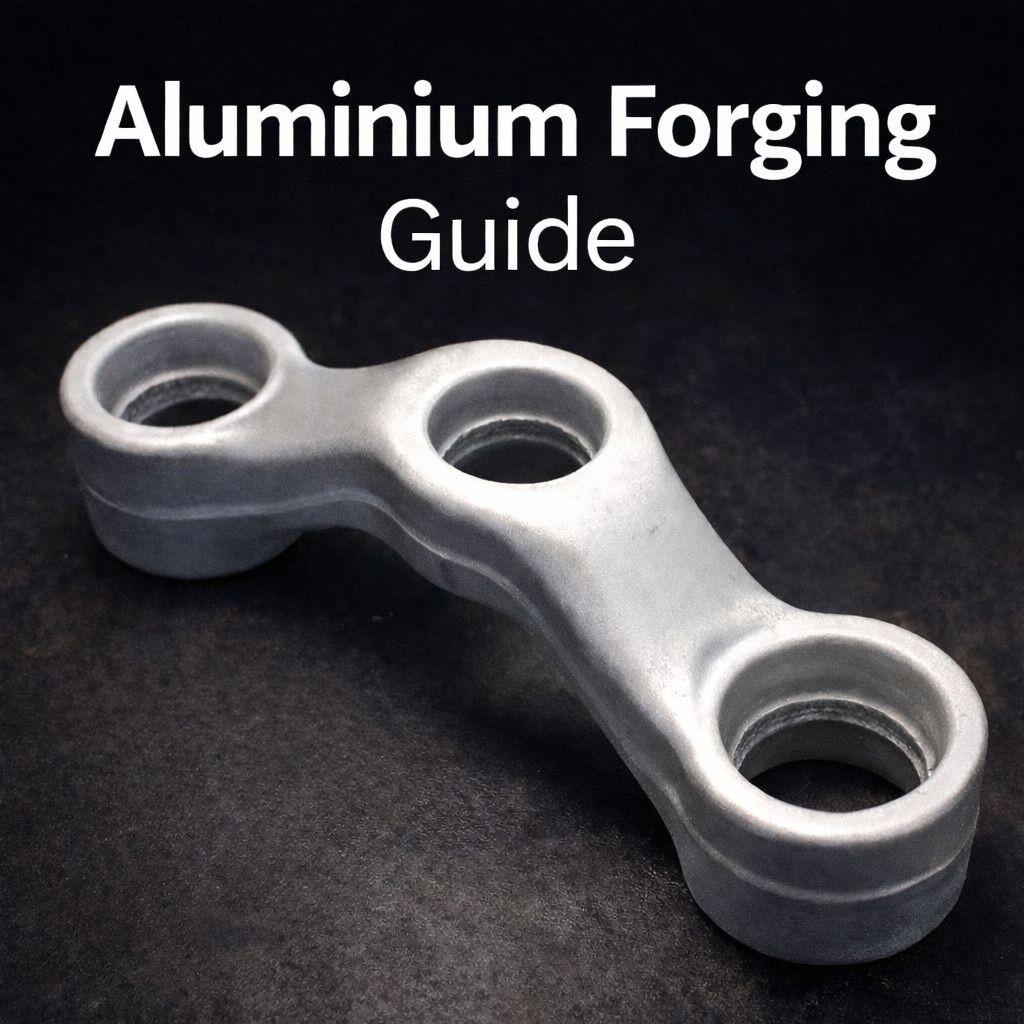
Aluminium forging is a manufacturing process that shapes aluminum alloys into forged aluminium parts using controlled heat and pressure. Unlike casting or machining, the aluminium forging process aligns the metal’s internal grain structure, producing components with higher strength, better fatigue resistance, and long-term reliability.
For engineers and procurement teams, industrial aluminium forging is often chosen when structural integrity, weight reduction, and service life are critical. Compared with aluminium forging vs casting, forged parts offer greater density and mechanical consistency. This guide explains how aluminium forging works, its key benefits, and where forged aluminium parts are used in modern industry.
What Is Aluminium Forging?
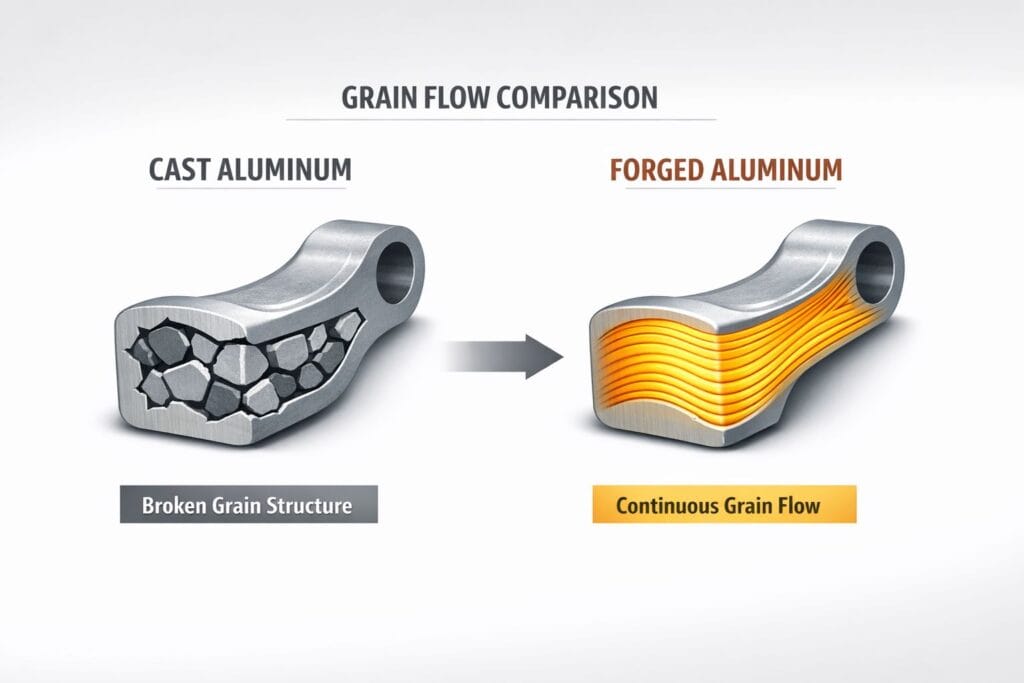
Aluminium forging is a manufacturing process that plastically deforms heated aluminum under pressure to produce high-strength forged components with refined grain structure. Instead of pouring molten metal into a mold, forging compresses solid aluminum, preserving structural continuity.
This continuous grain flow is the key reason forged aluminium parts outperform cast components in strength-critical applications. Because the internal structure remains aligned, aluminium forging delivers superior mechanical strength, fatigue resistance, and long-term reliability.
In simple terms, aluminium forging creates stronger and more durable aluminum parts by reshaping solid metal rather than melting it.
Aluminium Alloys Used in Forging
The performance of a forged component depends heavily on the aluminum alloy selected. Different alloys offer unique combinations of strength, corrosion resistance, machinability, and fatigue behavior. In industrial aluminium forging, material choice is not only about mechanical performance — it also affects production efficiency and long-term reliability.
Several aluminum alloys are widely preferred in forging because they balance formability with structural performance:
- 6061 aluminum alloy
One of the most versatile forging alloys. It combines good strength, weldability, and corrosion resistance. 6061 is commonly used in aerospace fittings, automotive structures, and hydraulic components where balanced mechanical performance is required. - 6063 aluminum alloy
Known for excellent surface finish and formability. While slightly lower in strength, it is ideal for architectural and precision extruded or forged shapes where appearance and corrosion resistance are priorities. - 6082 aluminum alloy
A high-strength alloy with strong resistance to corrosion. It performs well in load-bearing forged parts used in transportation and heavy machinery. - 7075 aluminum alloy
A premium high-strength alloy with exceptional strength-to-weight ratio. Often selected for aerospace and high-performance structural applications where maximum durability is required. - 2024 aluminum alloy
Offers strong fatigue resistance and good machinability. Frequently used in aerospace structural components and precision industrial assemblies.
Each alloy responds differently to the aluminium forging process, so material selection must match the mechanical demands of the final application.
Types of Aluminium Forging
Aluminium forging can be performed using different methods depending on part geometry, production volume, and performance requirements. Understanding the types of aluminium forging helps engineers select the most suitable process for structural reliability and manufacturing efficiency.
The main forging types include:
- Open-die forging
The metal is compressed between flat dies without fully enclosing the shape. This method is suitable for large components and simple geometries, offering flexibility and excellent grain refinement. - Closed-die forging
Also known as impression-die forging, the metal is pressed inside shaped dies that control final geometry. This method produces high precision parts with strong directional grain flow, ideal for load-bearing components. - Hot forging
Performed at elevated temperatures to improve plasticity and reduce forming resistance. Hot forging is widely used for complex industrial components. - Cold or warm forging
Conducted at lower temperatures to achieve tighter tolerances and improved surface finish. These methods are often used for smaller, high-precision parts.
Each forging type influences strength, surface quality, and production cost. Selecting the correct aluminium forging method ensures optimal balance between performance and efficiency.
Aluminium Forging Process
The aluminium forging process is a controlled sequence designed to optimize internal grain structure, mechanical strength, and dimensional accuracy. Different forging methods — such as hot aluminium forging, closed-die forging, and precision forging — are selected based on part geometry and production volume.
A typical aluminium forging process includes the following steps:
- Billet heating
Aluminum billets are heated to a controlled forging temperature, typically between 350–500°C depending on alloy type. Proper heating ensures uniform plastic deformation and prevents cracking during forming. - Forming under forging press
Mechanical or hydraulic forging presses compress the heated billet into shape. This step aligns the grain flow with the component geometry, which significantly improves strength and fatigue resistance. - Trimming and finishing
Excess flash material is removed to refine geometry and prepare the part for secondary operations. Accurate trimming improves consistency in mass production. - Heat treatment
Post-forging heat treatment enhances hardness, stability, and mechanical performance. Different alloys require tailored heat cycles to achieve optimal strength. - CNC machining
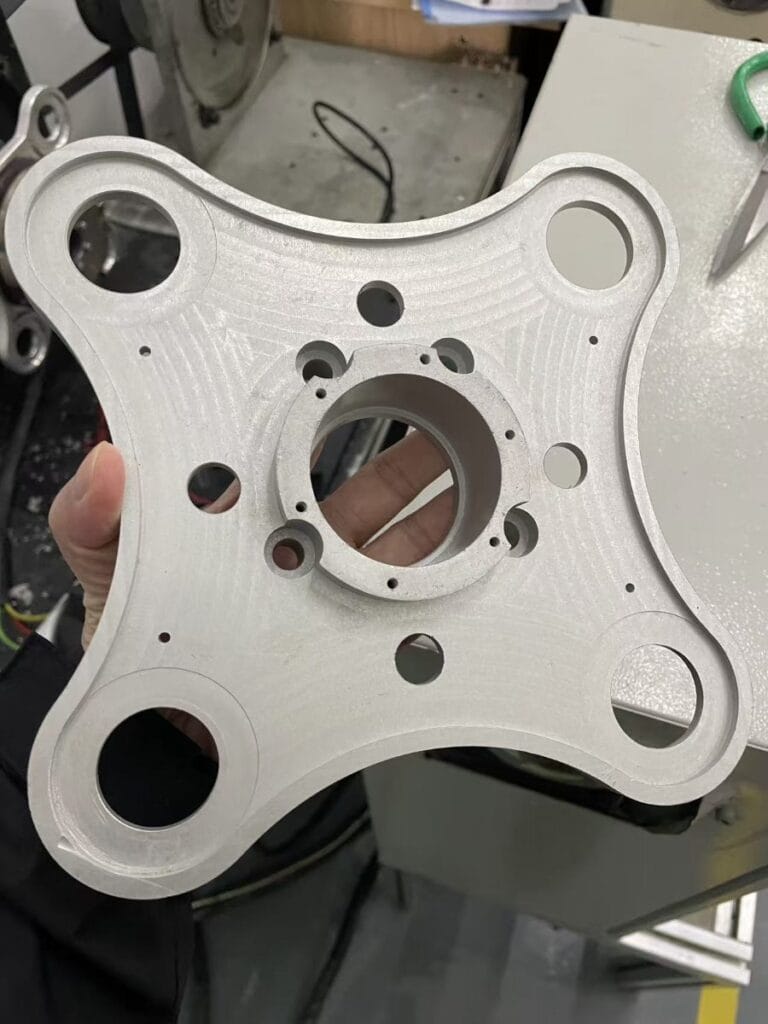
Final machining achieves tight tolerances and surface quality. Forged parts often require less material removal compared with fully machined components.
Each stage of the aluminium forging process directly influences structural integrity, making process control essential for high-performance industrial applications.
Aluminium Forging vs Casting and Machining
When evaluating aluminium forging vs casting and CNC machining, engineers are not only comparing manufacturing methods — they are comparing internal material structure, mechanical performance, and long-term durability.
Each process shapes aluminum differently, which directly affects strength, fatigue resistance, and structural reliability. The table below summarizes the key differences between aluminium forging, casting, and machining to help illustrate why forged components are often selected for load-bearing industrial applications.
Feature | Aluminium Forging | Casting | CNC Machining |
Strength | High | Moderate | Moderate |
Grain structure | Continuous | Random | Cut structure |
Fatigue resistance | Excellent | Lower | Medium |
Material efficiency | High | Medium | Low |
Advantages of Aluminium Forging
Manufacturers choose aluminium forging for critical components because it delivers performance that casting and machining cannot match. By controlling grain flow and material density, the forging process improves strength, reliability, and long-term durability.
Key advantages of aluminium forging include:
- Superior mechanical strength
Forged aluminum components exhibit higher strength, toughness, and fatigue resistance, making them ideal for load-bearing and safety-critical applications. - Improved dimensional integrity
The forging process produces consistent internal structure, reducing distortion and improving reliability under stress. - Material efficiency
Forging minimizes internal defects and reduces scrap compared with subtractive machining processes. - Cost effectiveness in volume production
Once tooling is established, aluminium forging becomes highly economical for medium to high production runs. - Excellent strength-to-weight ratio
Lightweight forged aluminum parts deliver high performance while reducing overall system mass.
These combined benefits explain why industrial aluminium forging remains a preferred solution in aerospace, automotive, and high-performance engineering.
Common Industrial Applications
Because forged aluminium combines high strength, fatigue resistance, and corrosion stability, it is widely used in industries where reliability and long-term performance are critical. Typical applications include:
- Aerospace —aircraft structural fittings, landing gear connectors, frame joints, and load-bearing brackets
- Automotive —suspension arms, steering knuckles, drivetrain components, and lightweight structural parts
- Hydraulic systems —pressure housings, end caps, and industrial connectors
- Energy equipment —wind power hubs, mounting structures, and high-strength connection nodes
- Industrial machinery —articulated arms, structural links, and precision mechanical assemblies
Forged aluminium components are selected when structural integrity and weight reduction must be achieved at the same time.
How to Choose an Aluminium Forging Supplier
When selecting a supplier, consider:
- Forging equipment capacity
- Alloy expertise
- Heat treatment capability
- Quality inspection systems
- Lead time reliability
A professional supplier ensures performance consistency and traceability.
Conclusion
Aluminium forging combines lightweight efficiency with structural strength, making it a reliable method for critical industrial components. The controlled forging process improves grain structure, durability, and long-term performance compared with alternative manufacturing methods.
For applications where safety and fatigue resistance matter, forged aluminium remains a trusted solution. If you are evaluating aluminium forging for a project, you are welcome to share drawings for a free quotation.