
Mechanical Assembly & Custom Component Integration
Mechanical assembly plays a vital role in transforming forged and machined components into complete, ready-to-install industrial units. At Weforging, we combine forging, CNC machining, assembly, and testing into one streamlined workflow. This integrated approach not only improves structural reliability but also reduces procurement complexity for OEM customers. As a result, our mechanical assembly services are widely used in hydraulic systems, industrial machinery, mining equipment, marine components, and custom-designed assemblies.

What Is Mechanical Assembly?
Mechanical assembly refers to joining components—such as shafts, housings, gears, valves, and couplings—into a complete functional unit. The process often includes torque-controlled fastening, precision alignment, seal installation, and functional validation. Because Weforging manufactures and assembles components in-house, compatibility issues and tolerance conflicts are significantly minimized.
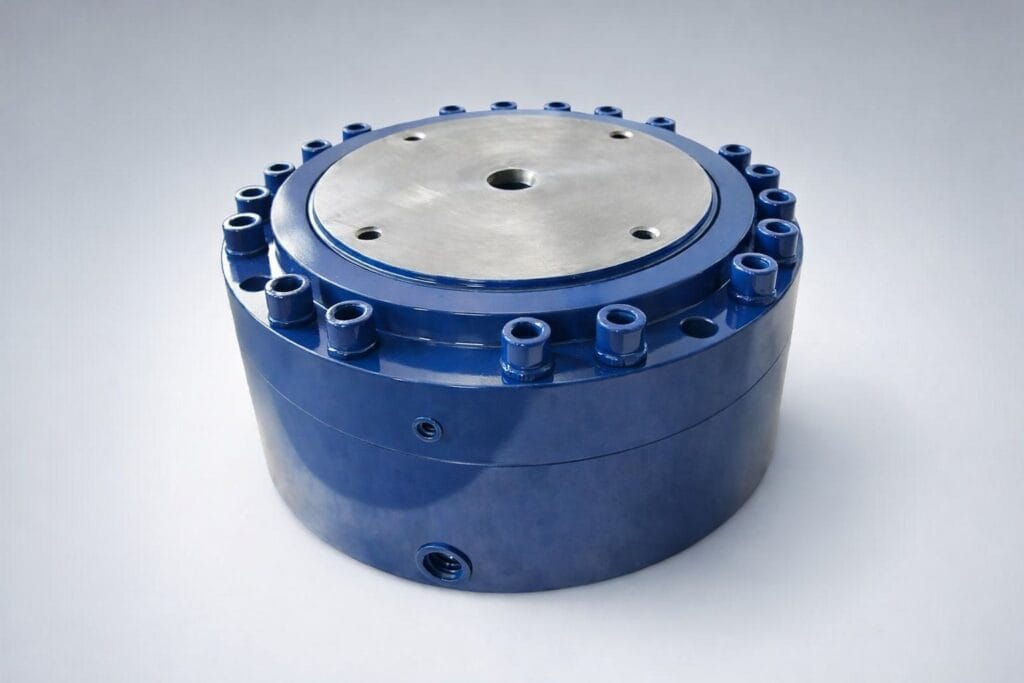
Our Integrated Forging-to-Assembly Workflow
Weforging’s vertically integrated workflow ensures dimensional accuracy and functional consistency at every step.
Our process includes:
Forging high-strength blanks with optimized grain flow
CNC machining to tight tolerances
Finishing, deburring, and dimensional inspection
Controlled mechanical assembly
Final testing and visual inspection
This seamless flow eliminates multi-vendor delays and ensures stable performance.
Types of Mechanical Assemblies We Deliver
Weforging supports both simple and complex assemblies for heavy machinery, automotive systems, agricultural equipment, mining gearboxes, marine drives, and industrial transmission units.
Typical assemblies include:
Shaft assemblies with bearings or seals
Valve and actuator assemblies
Gearbox sub-assemblies
Flange and coupling assemblies
Multi-component units requiring torque control
Whether the assembly involves two components or multiple integration steps, Weforging ensures consistent workmanship and repeatability.
Benefits of Choosing Weforging
Choosing a single manufacturer for forging, machining and assembly offers substantial advantages.
Key benefits include:
Consistent quality — parts and assemblies produced under one system
Reduced lead time — no delays between multiple suppliers
Lower cost — simplified procurement and logistics
Improved tolerance control — machining and assembly teams work together
Better traceability — full process records from raw material to assembly
For OEM buyers, these advantages directly translate to improved reliability and more predictable production planning.
Quality Control and Testing
All assemblies undergo dimension verification, functional testing and appearance inspection. Depending on customer requirements, we also perform torque testing, sealing tests, rotation smoothness checks, thread accuracy inspection and pre-loading validation for bearings or fasteners.
Our assembly process complies with ISO quality standards, and all records are archived for full traceability. This ensures that each assembled component is reliable, repeatable and ready for end-use installation.
Why OEM Buyers Choose Weforging
OEM engineers and procurement teams prefer Weforging because of our integrated manufacturing model and stable long-term production capability. With forging, CNC machining and assembly under one roof, communication is simpler, product quality is more consistent and project risks are lower.
We support both small-batch custom assemblies and high-volume production programs, making us a dependable long-term partner for global machinery OEMs.
Request a Mechanical Assembly Quote
If you need forged, machined and fully assembled components for industrial applications, our engineering team can review drawings and recommend the most suitable manufacturing & assembly process.