
CNC Machining Cost: Pricing Factors & Cost Reduction Guide
CNC machining cost can vary significantly depending on part design, material selection, machining requirements, production volume, and quality standards. Two components with similar dimensions may have very different prices because factors such as machining time, tooling, tolerances, and manufacturing processes directly affect the final cost.
For engineers and purchasing teams, understanding how CNC machining cost is calculated helps improve supplier communication, evaluate CNC machining quotes, and identify opportunities to reduce manufacturing expenses.
This guide explains the main factors affecting CNC machining pricing, how suppliers estimate costs, and why combining forging with CNC machining can provide a more cost-effective solution for certain industrial components.
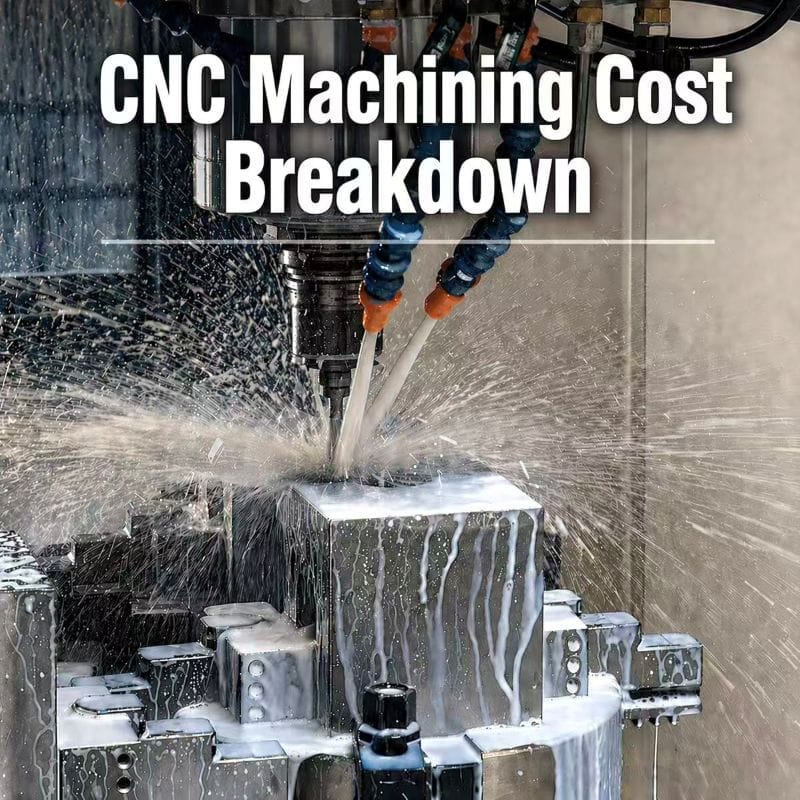
How Much Does CNC Machining Cost?
The cost of CNC machining depends on the complexity of the part and the manufacturing requirements. In general, suppliers calculate pricing based on machining time, material cost, setup requirements, tooling, and inspection needs.
Typical CNC machining rates may vary depending on machine type:
- 3-axis CNC machining: Usually suitable for simple or moderately complex parts with lower hourly costs.
- 5-axis CNC machining: Generally has a higher machine rate but can reduce setups and improve efficiency for complex geometries.
- Prototype machining: Usually has a higher unit cost because programming, setup, and tooling costs are distributed across fewer parts.
- Production machining: Offers lower cost per part because fixed costs are spread across larger quantities.
However, hourly machining rates alone do not represent the complete CNC machining cost. For industrial parts, the final price is usually determined by the entire manufacturing process, including material preparation, machining operations, quality control, and finishing requirements.
CNC Machining Cost Breakdown
A typical CNC machining cost breakdown includes several major components. Understanding these elements helps buyers evaluate whether a quote is reasonable and where cost optimization may be possible.
Material Cost
Material is one of the largest contributors to CNC machining pricing.
Different materials affect cost through both raw material price and machinability:
- Aluminum is often more economical because it is easy to machine and requires less cutting time.
- Stainless steel and alloy steel usually increase cost due to higher tool wear and slower machining speeds.
- Hardened materials may require special tooling and additional processing.
For large industrial components, machining directly from solid material can also create significant material waste. In some applications, using a forged blank before CNC machining can improve material utilization and reduce overall manufacturing cost.
Machining Time
Machining time is another major factor affecting CNC machining cost.
The longer a machine runs, the higher the production cost becomes. Machining time depends on:
- Part geometry
- Cutting conditions
- Number of operations
- Required accuracy
- Material hardness
Parts with deep cavities, complex contours, or multiple machining surfaces usually require more operations and longer cycle times.
Setup and Tooling
Before production begins, CNC machines require programming, fixture preparation, and tooling setup.
For small batches or prototypes, these fixed costs have a larger impact because they are distributed over fewer parts.
A professional CNC machining quote normally includes:
- CNC programming
- Fixture design
- Cutting tools
- Machine setup time
- Process optimization
For larger production runs, these costs become less significant because they are spread across more components.
Inspection and Finishing
Quality requirements also influence CNC machining cost.
Additional inspection or post-processing may include:
- Dimensional inspection
- CMM measurement
- Surface treatment
- Heat treatment
- Non-destructive testing
For precision industrial parts, inspection is necessary to ensure dimensional accuracy and long-term reliability. Although these steps add cost, they help prevent quality issues during final assembly.
What Factors Affect CNC Machining Cost
Material Selection and CNC Machining Cost
Material selection is one of the most significant factors affecting CNC machining cost. Different materials vary greatly in both raw material price and machinability.
- Material cost comparison: Aluminum CNC machining cost is typically lower than stainless steel due to lower raw material prices and easier machining. Plastics are even more cost-effective for certain applications.
- Machinability impact: Materials with poor machinability (e.g., hardened steel or titanium) increase tool wear and machining time, directly raising overall cost.
Part Complexity and Machining Time
Part complexity directly impacts machining time, which is a major driver of CNC machining cost.
- Geometry complexity: More complex designs require longer machining cycles and advanced programming.
- Critical features: Deep cavities, thin walls, and undercuts increase machining difficulty and cost.
Machine Type: 3-Axis vs. 5-Axis CNC Machining Cost
The type of CNC machine directly affects cost, efficiency, and achievable accuracy. Different machines are suited to different levels of part complexity.
- 3-axis machining:
Lower hourly cost and ideal for simple or prismatic parts. However, multiple setups are often required to machine different faces. This increases setup time and can introduce cumulative positioning errors. - 5-axis machining:
Higher hourly cost, but enables complex parts to be machined in a single setup. By reducing re-clamping, it improves positional accuracy and ensures better geometric tolerance consistency across all surfaces. It can also shorten total machining time and improve overall efficiency.
Although 5-axis machining has a higher hourly rate, it often reduces total production cost for complex parts by minimizing setups and improving process stability.
Tolerances and Precision Requirements
Tolerance requirements have a nonlinear impact on CNC machining cost.
- Tighter tolerances require slower machining speeds, higher precision tools, and more inspections.
- Quality risks increase with stricter tolerances, leading to higher rejection rates and cost.
Surface Finishes and Post-Processing
Surface finishing and post-processing steps add additional cost to CNC machining.
- Common finishes include anodizing, bead blasting, polishing, and coating.
- Parts with only as-machined surfaces are significantly cheaper than those requiring additional finishing.
Production Volume and Setup Costs
Production volume has a major impact on cost per part.
- Setup costs (programming, fixturing) are fixed and distributed across the production batch.
- Economies of scale: Larger batch sizes significantly reduce per-unit cost.
How to Estimate CNC Machining Cost
A reliable CNC machining cost estimate requires evaluating the complete manufacturing process rather than only calculating machine hours.
A simplified cost calculation includes:
Total Cost = Machine Time + Material + Setup + Tooling + Labor + Inspection + Finishing
To prepare an accurate CNC machining quote, suppliers usually need:
- 2D drawings
- 3D CAD files
- Material requirements
- Quantity
- Surface finish requirements
- Dimensional tolerances
- Testing requirements
Providing complete technical information allows manufacturers to recommend suitable processes and avoid unexpected cost increases.
CNC Machining Cost vs Forging + CNC Machining Cost
For many industrial components, CNC machining from solid material is not always the most economical manufacturing method.
The comparison between traditional machining and forging and CNC machining cost depends on part size, production volume, and performance requirements.
CNC Machining from Solid Material
Advantages:
- Suitable for prototypes and small quantities
- Flexible for complex designs
- Requires no forging tooling
Limitations:
- Higher material waste
- Longer machining time
- Higher cost for large components
Forging + CNC Machining
For components such as gears, shafts, rings, and heavy-duty mechanical parts, forging combined with CNC machining can provide cost advantages.
Benefits include:
- Better material utilization
- Reduced machining allowance
- Improved strength through grain flow
- Lower machining time for production parts
By selecting the appropriate manufacturing route, companies can often reduce CNC machining cost while improving component performance.
How to Reduce CNC Machining Cost
Reducing CNC machining cost mainly involves optimizing design, material, and production strategy. Even small adjustments can make a noticeable difference.
Key ways to reduce cost include:
- Simplifying part design – Reduce complex features to shorten machining time
- Avoiding tight tolerances – Use practical tolerances to lower machining and inspection cost
- Increasing batch size – Spread setup and programming cost across more parts
- Choosing suitable materials – Improve machinability and reduce tool wear
- Combining processes – Integrate forging and machining to improve efficiency
In many cases, better process planning can significantly reduce both cost and lead time.
How to Choose a Cost-Effective CNC Machining Supplier
A reliable supplier should offer:
- Integrated manufacturing (forging + machining)
- Stable batch quality
- Full material traceability
- Non-destructive testing capabilities
- Transparent cost structure
Suppliers with strong process control can help reduce long-term production risks and costs.
Conclusion
CNC machining cost is influenced by factors such as material, part complexity, tolerance, and production volume. Understanding these variables helps buyers better control costs while ensuring product quality and performance.
In many cases, combining forging with CNC machining can be a more cost-effective solution, especially for batch production. If you are reviewing a current project, it may be worth evaluating design, material, and process options together—small adjustments can often lead to meaningful cost savings.
If you already have drawings or specifications, a quick review from a manufacturing perspective can often highlight practical ways to optimize cost before production.