
Heat Treating Guide: Types, Methods & Applications
Heat treating is an essential manufacturing process used to control the hardness, strength, toughness, wear resistance, and fatigue performance of steel components. Common heat treatment methods include annealing, normalizing, quenching, tempering, carburizing, nitriding, and induction hardening.
For forged and machined parts, the right process depends on material grade, component geometry, loading conditions, and required surface or core properties. This guide compares the main types of heat treatment for steel, explains how each method works, and shows where they are commonly used in industrial components.
What Is Heat Treating?
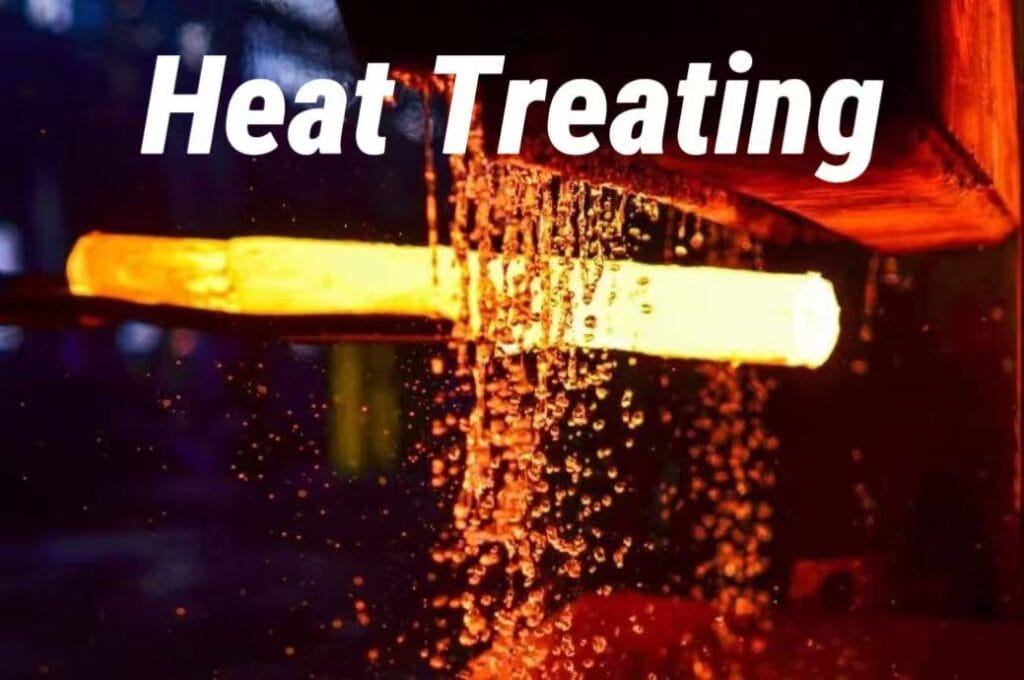
Heat treating is a controlled heating and cooling process used to improve the mechanical properties of metal without changing its shape.
Instead of modifying dimensions, heat treating changes the internal structure of steel, allowing manufacturers to achieve specific performance requirements such as higher hardness, better wear resistance, improved toughness, or reduced internal stress.
For forged components, heat treating is almost always part of the production process. It helps stabilize the material after forging, improves machining performance, and prepares parts for demanding working conditions.
Major Types of Heat Treating Processes
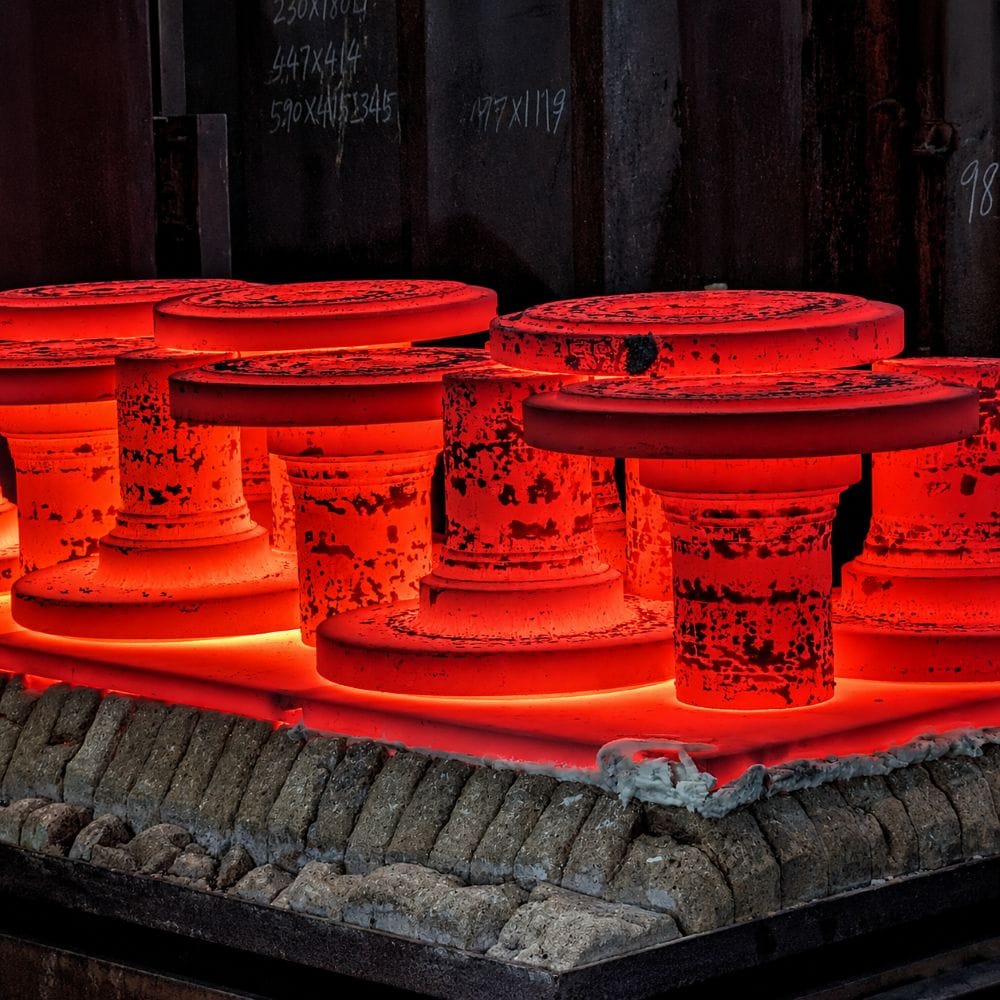
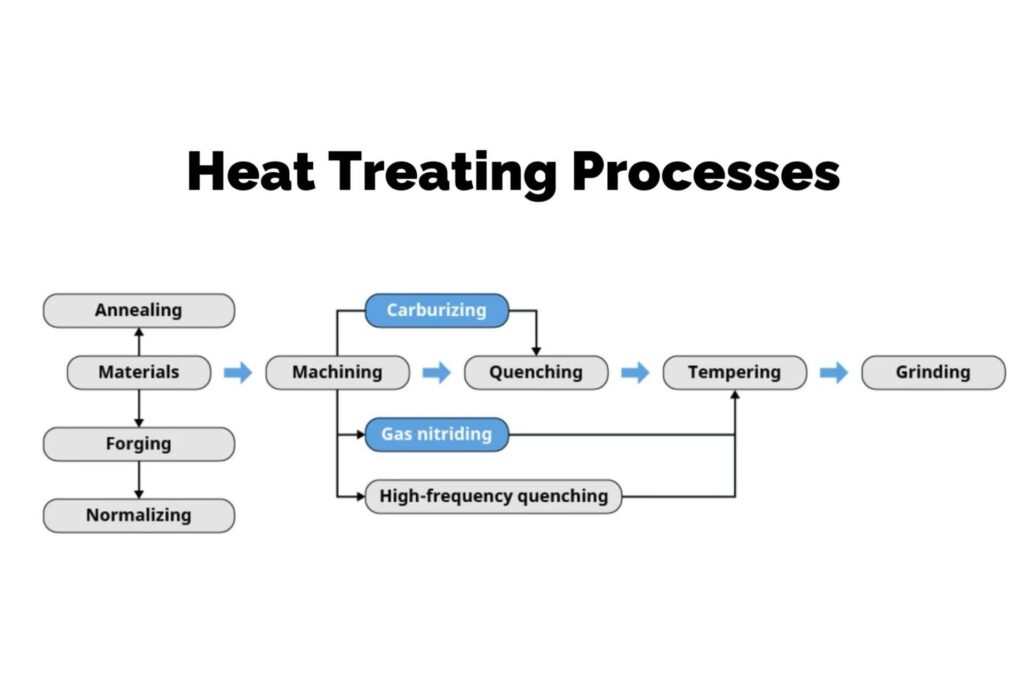
The main types of heat treatment include annealing, normalizing, quenching, tempering, quenching and tempering, carburizing, nitriding, and induction hardening. Some processes modify properties throughout the component, while others primarily improve surface hardness and wear resistance.
1. Annealing – Improving Ductility and Machinability
Annealing heats steel to a controlled temperature followed by slow cooling. It reduces hardness and residual stress while improving ductility and machinability, making it useful before machining or further processing.
2. Normalizing – Refining Grain Structure
Normalizing heats steel above its critical temperature and allows it to cool in air. It refines the grain structure and improves material uniformity, making it common for forged shafts, rings, flanges, and other steel components.
3. Carburizing – Hard Surface, Tough Core
Carburizing increases the carbon content at the steel surface before hardening. It produces a hard, wear-resistant case while maintaining a tougher core and is widely used for gears, pinions, and other components exposed to repeated contact loads.
4. Gas Nitriding – Low-Distortion Surface Hardening
Gas nitriding introduces nitrogen into the steel surface to form a hard, wear-resistant layer. Because it normally does not require subsequent quenching, distortion can be relatively low, making it suitable for precision shafts, gears, and wear surfaces.
5. Induction Hardening – Localized Surface Hardening
Induction hardening rapidly heats selected areas of a steel component before quenching. It provides localized surface hardness while retaining a tougher core and is commonly used for gear teeth, shaft journals, pins, and bearing surfaces.
6. Quenching – Increasing Hardness and Strength
Quenching rapidly cools heated steel using water, oil, polymer, or another controlled medium. It significantly increases hardness and strength but can also introduce brittleness, residual stress, and distortion.
7. Tempering – Balancing Strength and Toughness
Tempering reheats quenched steel to a lower temperature to reduce brittleness and residual stress. It retains much of the hardness gained during quenching while providing a better balance of strength and toughness.
8. Quenching and Tempering – For Heavy-Duty Forgings
Quenching and tempering (Q&T) combines hardening with subsequent tempering to provide high strength and good toughness. It is widely used for forged shafts, rings, pins, and other components subjected to impact, fatigue, or heavy mechanical loads.
After Heat Treatment: Finish Grinding
Grinding is not a heat treatment method, but it may be required after heat treatment to correct dimensional changes, control critical tolerances, or achieve the required surface finish.
Heat Treating Methods Comparison
| Method | Main Purpose | Typical Components |
|---|---|---|
| Annealing | Improve machinability | Forgings, billets |
| Normalizing | Improve consistency | Shafts, flanges |
| Carburizing | High surface hardness | Gears, pinions |
| Gas Nitriding | Low distortion | Precision shafts |
| Induction Hardening | Localized hardening | Drive shafts |
| Quenching & Tempering | Strength and toughness | Heavy-duty forged parts |
Each method offers different advantages, and in many cases multiple heat treating processes are combined to achieve the required mechanical properties.
Benefits of Heat Treating for Industrial Components
Heat treating allows the properties of steel to be matched to the operating requirements of a component. Depending on the process, key benefits include:
- Higher hardness and wear resistance
- Improved strength and toughness
- Better fatigue performance
- Reduced residual stress
- Improved machinability
- Better dimensional stability
- Longer component service life
These benefits are especially important for components exposed to high loads, wear, impact, or repeated stress.
How to Choose the Right Heat Treating Method
Selecting the right heat treating process depends on more than hardness alone. Engineers typically evaluate the material grade, operating environment, load conditions, dimensional requirements, and production cost before making a decision.
A simple selection guide is shown below.
| Requirement | Recommended Method |
|---|---|
| Better machinability | Annealing |
| Stable machining after forging | Normalizing |
| Maximum wear resistance | Carburizing |
| Minimal distortion | Gas Nitriding |
| Local surface hardening | Induction Hardening |
| High strength and toughness | Quenching & Tempering |
Working with an experienced forging supplier helps ensure that the heat treating process matches the material, manufacturing route, and end-use application.
Conclusion
Heat treating remains essential for improving performance and ensuring long-term reliability across industrial components. Understanding key heat treatment types allows manufacturers and engineers to thermally strengthen metal, achieve precise mechanical properties, and meet strict industry standards.
If you require heat-treated forgings, custom machined components, or technical guidance on choosing the right heat treatment process, our engineering team is ready to support you.
Send us your drawings or specifications for a fast, professional quotation.