
How to Choose Forged Mining Safety Components
In underground mining, forged components used in ground support systems are critical for ensuring structural safety and preventing collapse. These forged mining safety components operate under extreme conditions, including high rock pressure, dynamic loads, and long-term stress.
In Australia, where underground mining environments are often deep and complex, failure of a single component can lead to serious safety risks and costly downtime. As a result, selecting reliable mining ground support components is not just a technical decision—it directly affects safety, compliance, and long-term performance.
This guide explains how to choose the right forged components for mining safety systems, key technical factors to consider, and how to avoid common sourcing risks.
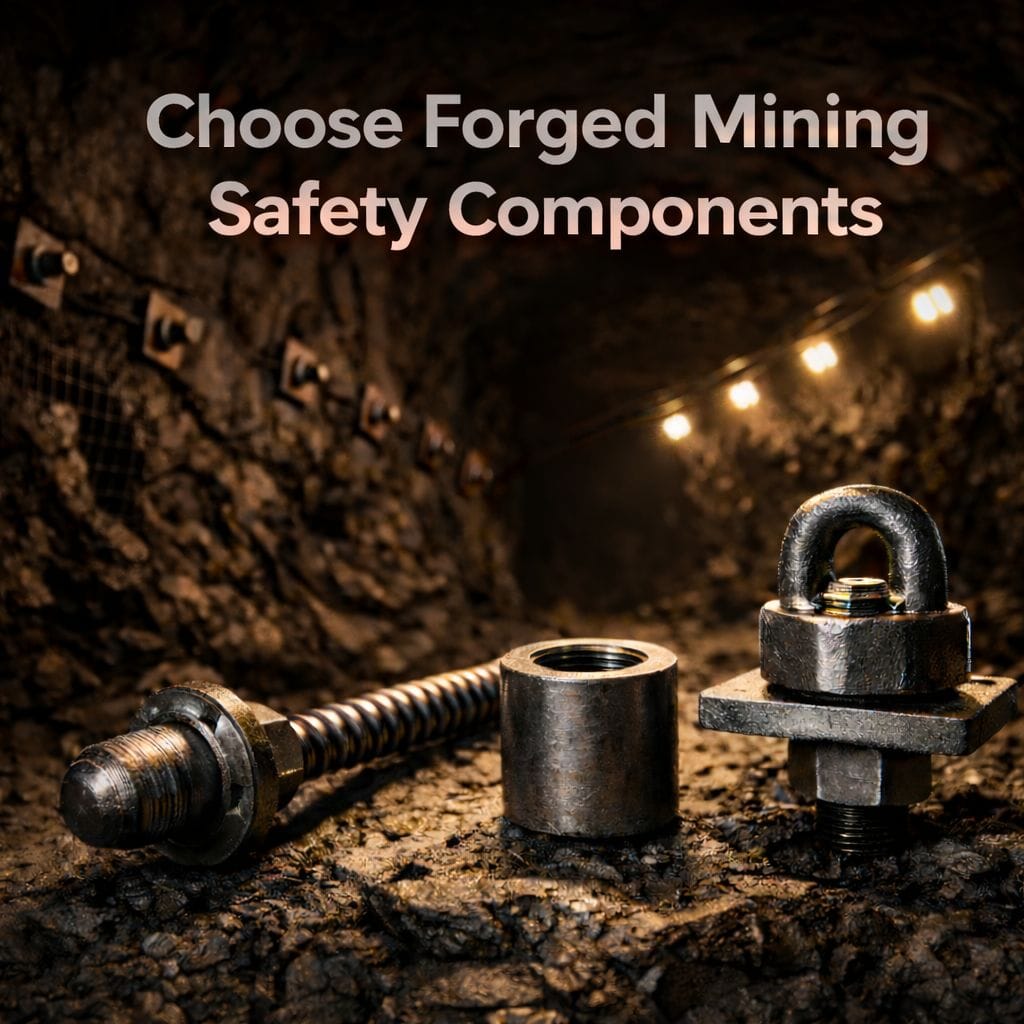
What Are Forged Parts for Mining Equipment?
Forged safety components in mining are high-strength parts used in load-bearing and ground support systems. These components are manufactured through forging processes that improve grain structure and mechanical performance.
Compared to cast parts, forging provides better fatigue resistance and structural integrity, which is essential in safety-critical applications where failure is not acceptable.
Typical applications include underground support systems where components must withstand continuous rock pressure and dynamic loading.
Applications of Forged Safety Components in Mining
Forged safety components are widely used in underground mining, especially in ground support systems where stability and safety are critical. These parts must withstand high tensile loads, rock pressure, and long-term stress.
Typical applications include:
- Rock bolting systems – forged rock bolts and anchor rods for ground stabilization
- Support structures – coupling sleeves and bearing plates for load transfer
- Tunnel and shaft reinforcement – high-strength fasteners for high-stress zones
- Drilling and anchoring systems – components for reliable installation and anchoring
Selecting the right forged mining safety components helps improve stability and reduce failure risk.
Key Forged Components in Mining Ground Support Systems
maintain structural stability. These parts must handle high tensile loads and ensure secure anchoring.
Key components include:
- Forged rock bolts and anchor rods – primary load-bearing elements for rock stabilization
- Coupling sleeves – connect bolt sections and transfer load
- Bearing plates – distribute load across the rock surface
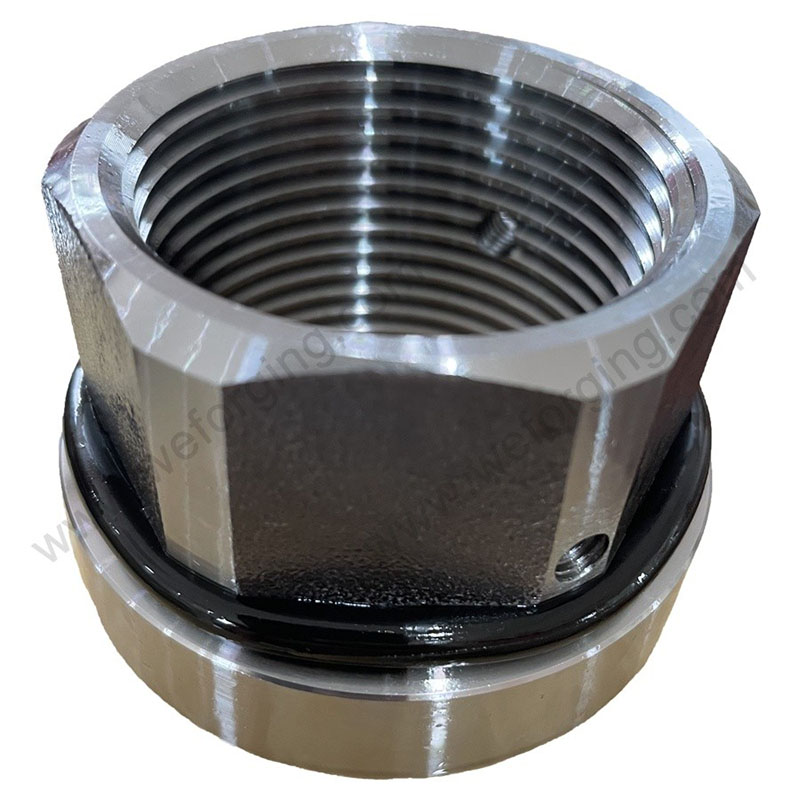
- Forged nuts and fasteners – ensure secure installation under stress
These components are widely used in underground tunnels, shafts, and high-stress mining zones.
High Strength Requirements for Underground Safety
Underground mining environments require components that can withstand extreme tensile loads and long-term stress. High strength alloy forgings are essential for preventing structural failure.
Key performance requirements include:
- Yield and tensile strength – must meet load-bearing standards
- Toughness – prevents brittle fracture under impact
- Fatigue resistance – supports repeated stress cycles
Failure to meet these requirements can result in bolt breakage, instability, or safety incidents.
Forged vs Cast Components in Safety Applications
When comparing forged vs cast components in mining safety applications, the differences go beyond initial cost and directly impact reliability, safety, and failure risk.
Comparison of Forged vs Cast Components
Criteria | Forged Components | Cast Components |
Grain Structure | Continuous grain flow, higher strength | Non-uniform structure |
Defect Risk | Low porosity, dense structure | Higher risk of internal defects |
Load Capacity | Excellent under tensile and impact loads | Lower under dynamic loads |
Fatigue Resistance | Strong performance in cyclic stress | More prone to fatigue cracks |
Service Life | Longer in high-stress environments | Shorter under heavy load |
Reliability | Stable, lower risk of sudden failure | Less predictable performance |
Lifecycle Cost | Lower (less maintenance and downtime) | Higher over time |
In practice, forged components are preferred in ground support systems because they provide more consistent performance and reduce the risk of sudden failure in underground environments.
Key Factors When Choosing Forged Mining Safety Components
Selecting the right forged mining safety components requires evaluating not only material and process, but also load conditions, safety requirements, and long-term reliability in underground environments.
Key factors include:
- Material selection – high-strength alloy steels (such as 42CrMo / 4140) to meet tensile and fatigue requirements under rock pressure
- Heat treatment – quenching and tempering processes to ensure strength, toughness, and durability
- Load rating – components must meet required tensile capacity and safety margins for ground support systems
- Dimensional accuracy – precise tolerances ensure proper installation and effective load transfer
- Surface and thread quality – critical for anchoring performance and long-term stability
- Inspection and traceability – UT, MT, and full material traceability to ensure consistent quality
These factors directly affect structural safety, component lifespan, and the overall reliability of underground mining operations.
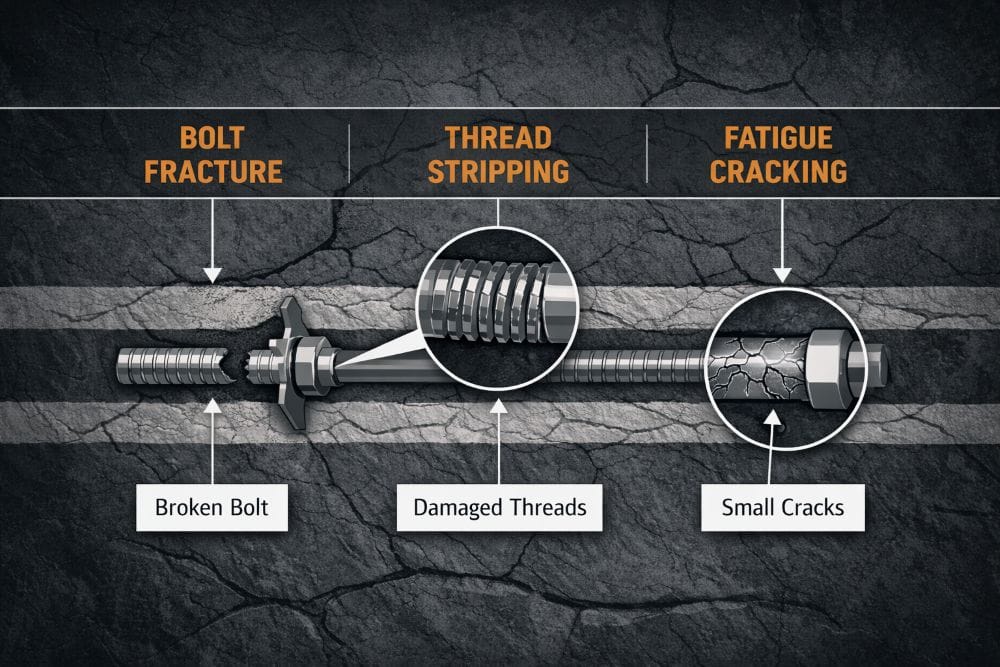
Common Failures in Mining Support Components
In underground mining, failures in support components can directly affect structural stability and safety. Most issues are related to material selection, manufacturing quality, or improper load matching.
Typical failures include:
- Bolt fracture – often caused by insufficient tensile strength or poor heat treatment under high rock pressure
- Thread stripping – results from low thread accuracy or inadequate surface hardness, affecting anchoring performance
- Fatigue cracking – develops under repeated stress cycles, especially in long-term ground support applications
Understanding these failure modes helps improve component selection, reduce unexpected downtime, and ensure reliable support performance.
Common Mistakes When Selecting Mining Safety Components
In underground mining, small selection mistakes can lead to serious safety risks and costly downtime. Below are the most critical issues to avoid:
❌ Price-Driven Decisions
Focusing only on initial cost while ignoring lifecycle cost often leads to higher failure rates and frequent replacements.
❌ Ignoring Load Requirements
Components that are not designed for actual rock pressure and dynamic loads may fail prematurely under real conditions.
❌ Poor Material & Heat Treatment Selection
Inadequate material grade or improper heat treatment reduces strength, wear resistance, and fatigue life.
❌ Lack of Inspection & Traceability
Without proper testing (e.g., UT/MT) and traceability, hidden defects can go undetected until failure occurs.
❌ Overlooking Thread Quality
In anchoring systems, poor thread precision directly affects load transfer and system stability.
❌ Choosing Inexperienced Suppliers
Suppliers without mining-specific experience may deliver mismatched solutions that do not meet real operating conditions.
Key takeaway: Avoiding these issues helps improve safety, reduce downtime, and ensure reliable long-term performance in mining environments.
Custom Forging Solutions for Ground Support Systems
Why Custom Forging Is Required
In underground mining, standard components often cannot meet specific geological conditions and load requirements. Variations in rock pressure, tunnel depth, and working environment require components with tailored strength and performance.
Custom forging ensures:
- proper load matching under real conditions
- improved structural safety and stability
- reduced risk of premature failure
Key Custom Forging Solutions
Typical custom forging solutions include:
- Material selection – high-strength alloy steels based on rock conditions and load requirements
- Heat treatment optimization – improving strength, toughness, and fatigue resistance
- Dimensional design – ensuring accurate installation and effective load transfer
Working with suppliers who integrate forging, machining, and inspection capabilities helps ensure consistent quality and reliable long-term performance.
Choosing the Right Forged Components for Long-Term Safety
Choosing the right forged components is not just about cost—it is about ensuring long-term safety and reliability in mining ground support systems.
To make the right decision, focus on:
- Load matching – meet tensile requirements under real conditions
- Material – use high-strength alloy steels
- Process – ensure proper forging and heat treatment
- Precision – maintain accurate fit and thread quality
- Supplier – choose one with integrated capabilities
Clear drawings and working conditions help achieve better results. Reliable components reduce failure risk and downtime.
Quick Selection Guide for Mining Safety Components
To quickly select the right forged components for ground support systems, focus on the following key conditions:
- High load → High-strength forged parts
ensure reliable performance under rock pressure - Critical safety → Alloy steel materials
such as 42CrMo / 4140 for strength and toughness - Anchoring performance → Precision threads
ensure stable load transfer and long-term support - Harsh conditions → Proper heat treatment
improve fatigue resistance and durability - High reliability → Full inspection (UT/MT)
ensure internal quality and consistency
These quick checks help buyers make safer and more reliable decisions in underground mining applications.
Conclusion
Choosing the right forged components in mining is not just about meeting specifications—it is about ensuring long-term safety and reliability, especially in ground support systems.
Material, process, and supplier capability all directly affect performance in demanding underground environments. Matching components to real working conditions helps reduce failure risk and downtime.
If specific parts are under evaluation, sharing drawings or application details can help identify suitable solutions. Our technical team will respond within 24 hours.