
Forged vs Machined Parts: Key Differences for OEMs
In precision manufacturing, comparing forged and machined parts often centers on performance factors such as strength, accuracy, and cost efficiency. Forging enhances the internal grain structure through plastic deformation, improving toughness and fatigue resistance. Machining, on the other hand, removes material with precision tools to achieve complex geometries and tight tolerances.
In modern production, both methods are frequently combined — forged blanks are CNC machined to meet final dimensional and surface requirements. This integration ensures reliable mechanical properties and high-precision results for critical industrial components.
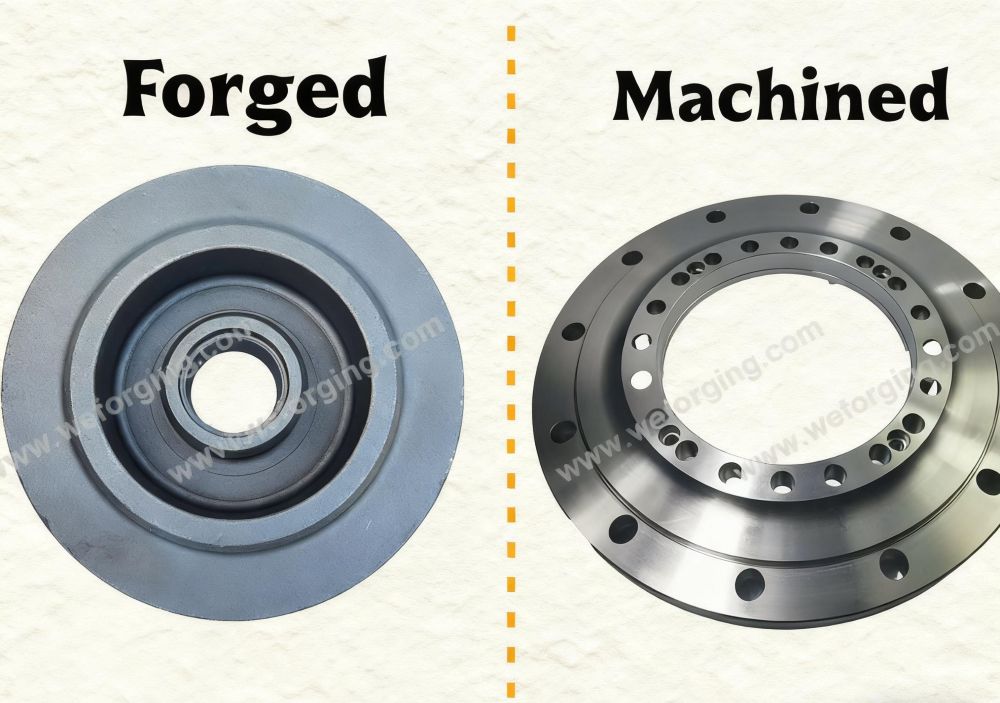
What Is the Difference Between Forged and Machined Parts
| Aspect | Forged Parts | Machined Parts |
|---|---|---|
| Manufacturing Method | Metal deformation under pressure | Material removal by cutting |
| Grain Structure | Continuous and refined | Interrupted |
| Strength & Durability | Very high | Moderate |
| Dimensional Accuracy | High | Very high |
| Material Utilization | Up to 90% | Lower due to chip waste |
| Cost Efficiency | Better for large batches | Better for low volume |
| Typical Applications | Shafts, gears, flanges | Housings, fittings, tools |
Forged vs Machined Parts: Which Should You Choose?
Choosing between forged vs machined parts depends on performance requirements, production volume, and cost considerations.
- Choose forging when high strength, fatigue resistance, and load-bearing capacity are critical. Forged parts are ideal for components such as shafts, gears, and flanges used in heavy-duty OEM applications.
- Choose machining when tight tolerances, complex geometries, or low production volume are required. CNC machining is suitable for precision parts and customized designs.
- Choose forging + CNC machining for most industrial OEM projects. Forged blanks provide superior mechanical properties, while machining ensures dimensional accuracy and surface finish.
In practice, the combined approach offers the best balance between strength, precision, and cost efficiency.
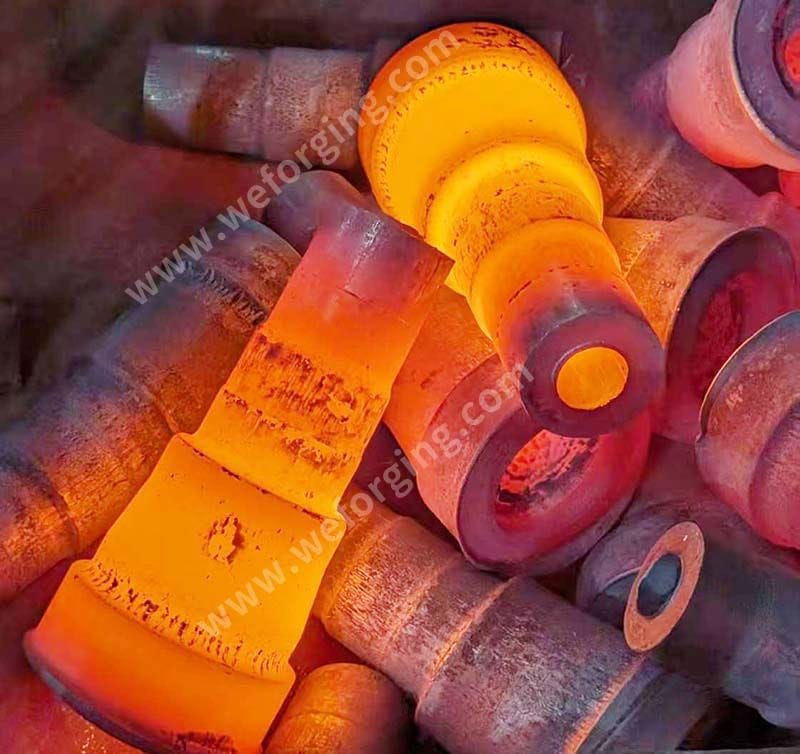
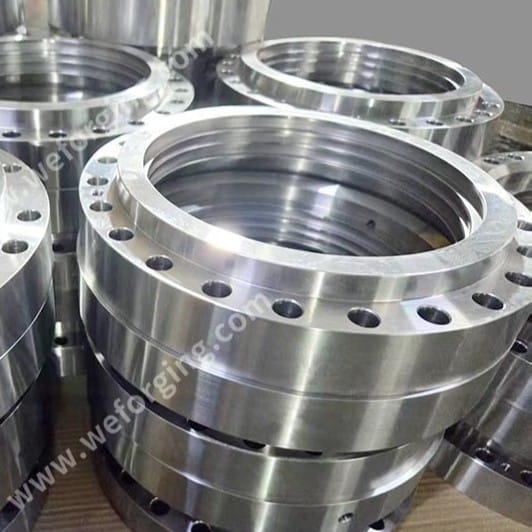
Forged vs Machined Parts: Strength and Grain Structure Comparison
Forged parts exhibit superior mechanical performance due to continuous grain flow. The grain structure follows the geometry of the component, improving load distribution and resistance to fatigue cracking.
In contrast, machining interrupts the grain structure, which may reduce durability under cyclic loading conditions.
Typical benefits of forged parts:
- 20–30% higher fatigue resistance
- Improved impact strength
- Better performance under high load
Forged vs Machined Parts Cost Comparison
Cost efficiency depends on production volume and material utilization.
- Forging: Near-net shape, up to 90% material utilization, ideal for medium to high-volume production
- Machining: Higher material waste due to chip removal, suitable for low-volume or prototyping
For OEM projects, forging significantly reduces cost per unit in batch production.
Forging vs Machining: Which Is Better for OEM Applications?
The choice depends on performance requirements and production scale.
| Requirement | Recommended Process |
|---|---|
| High strength & fatigue resistance | Forging |
| Tight tolerance (IT6–IT8) | CNC Machining |
| Complex geometry | Machining |
| Large batch production | Forging + Machining |
| Cost efficiency (OEM) | Forging |
Conclusion:
For most OEM industrial components, a combined process (forging + CNC machining) provides the best balance.
How Forging and CNC Machining Work Together
Typical integrated workflow:
Raw Material → Forging → Heat Treatment → CNC Machining → Inspection
At Weforging, forging, machining, and quality testing are managed under one production system. This dual-control manufacturing approach ensures dimensional consistency, batch traceability, and reliable performance.
Applications of Forged vs Machined Parts in Industry
Forged vs machined parts are widely used in industries that require both strength and precision.
- Automotive
Used in shafts, gears, and flanges to ensure reliable performance under continuous load. - Wind & Energy
Applied in turbine shafts and bearing housings, maintaining stability under rotation and temperature changes. - Heavy Machinery
Used in couplings, hubs, and drive components, delivering durability under high mechanical stress. - Marine & Mining
Applied in anchor parts and shafts, ensuring safety in corrosive and high-impact environments.
Why OEM Buyers Prefer Forged and Machined Components
OEM buyers prefer forged and machined components because they offer a balanced combination of strength, precision, and cost efficiency.
Higher mechanical reliability: Forging improves grain structure and load capacity.
Improved fatigue resistance: Ideal for parts under continuous stress.
Better dimensional accuracy: CNC machining ensures tight tolerances.
Higher material efficiency: Forged blanks reduce machining waste.
Stable batch consistency: Integrated manufacturing improves repeatability.
Lower lifecycle cost: Longer service life reduces replacement and maintenance expenses.
For demanding industrial applications, forged parts with CNC machining provide the most reliable solution.
Conclusion
When comparing forged vs machined parts, the best choice depends on balancing strength, precision, and long-term reliability. In many OEM applications, combining forging and CNC machining provides the optimal solution for both performance and cost efficiency.
At Weforging, we integrate forging, CNC machining, heat treatment, and inspection under one system to ensure consistent quality and full traceability.
Looking for customized forged or machined components?
Contact our engineering team today to discuss your project requirements or request a quotation.