
Common Forging Defects and How to Prevent Them
Forging defects can affect the strength, fatigue life and reliability of forged components, especially in demanding applications such as mining equipment, heavy machinery, gears and shafts.
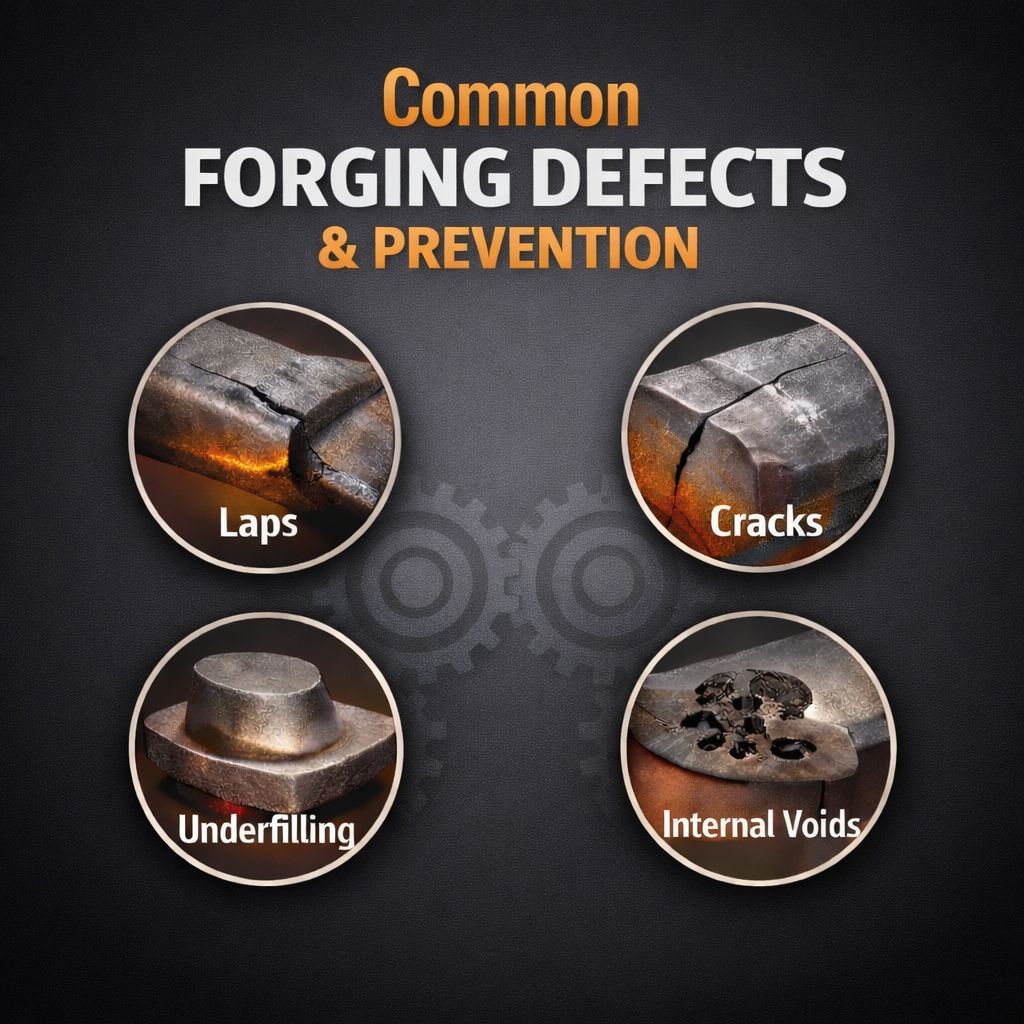
Although forging is known for producing high-strength metal components with excellent grain flow and mechanical properties, improper material preparation, temperature control or process parameters can lead to defects such as cracks, laps, underfilling and internal voids.
Understanding common forging defects, their causes and prevention methods helps manufacturers and engineers improve component reliability and reduce unexpected failures in service.
What Are Forging Defects
Forging defects refer to imperfections that occur in metal components during the forging process. These issues may appear on the surface of the forged part or inside the material structure. Surface imperfections can often be identified visually, while internal flaws such as voids or inclusions usually require non-destructive testing methods.
Such defects may reduce fatigue strength, affect load-bearing capacity, and shorten the service life of industrial components. Therefore, proper process control is essential for maintaining consistent forging quality.
Types of Forging Defects
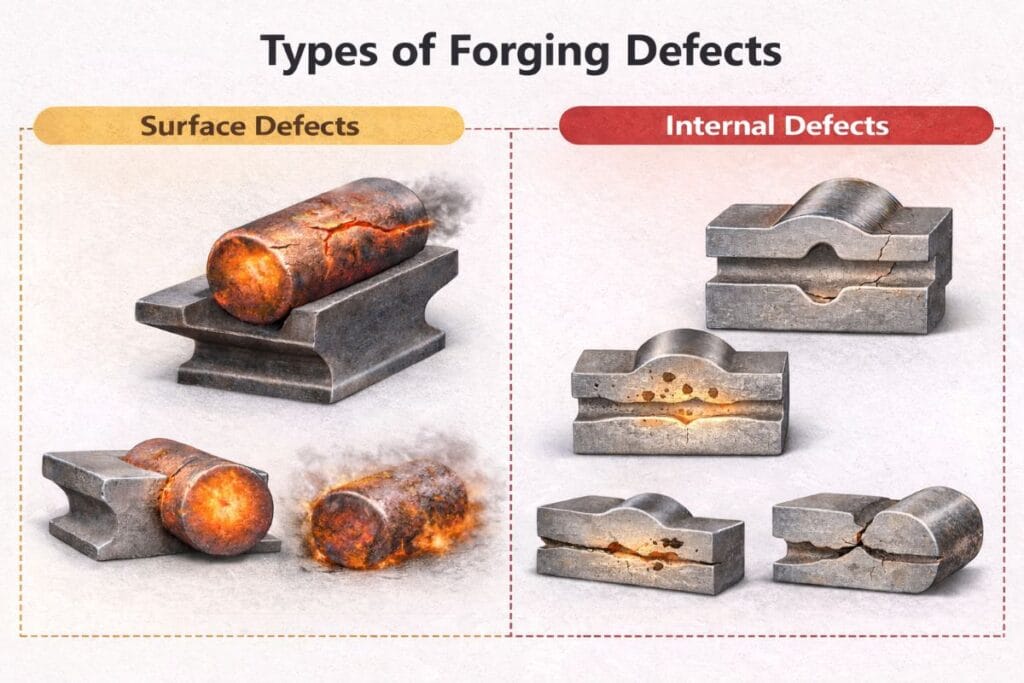
Forging defects can generally be classified into two main categories: surface defects and internal defects. This classification helps engineers understand where defects occur and what process factors may cause them during forging production.
- Surface Defects
Surface defects appear on the outer surface of the forging and are often related to process conditions such as:
- Improper metal flow during deformation
- Oxidation during heating
- Uneven material distribution in the die
These defects mainly affect surface quality and dimensional accuracy.
- Internal Defects
Internal defects occur inside the material structure and are usually associated with:
- Insufficient forging reduction
- Material impurities or inclusions
- Improper process parameters
These defects may reduce mechanical strength and fatigue resistance.
Common Forging Defects Explained
The most common forging defects include surface defects, forming defects and internal defects. Each type has different causes and requires different prevention methods.
| Forging Defect | Main Causes | Potential Impact |
|---|---|---|
| Laps and folds | Improper metal flow, poor die design | Reduced fatigue strength |
| Cracks | Incorrect temperature, excessive deformation | Component failure risk |
| Underfilling | Insufficient material flow or forging force | Incomplete geometry |
| Internal voids | Material issues, insufficient deformation | Reduced structural integrity |
Laps and Folds
Laps occur when metal folds over itself during forging without properly bonding.
They are commonly caused by:
- Improper material flow
- Incorrect die design
- Excess material volume
Proper tooling design and process control help reduce the risk of laps.
Cracks
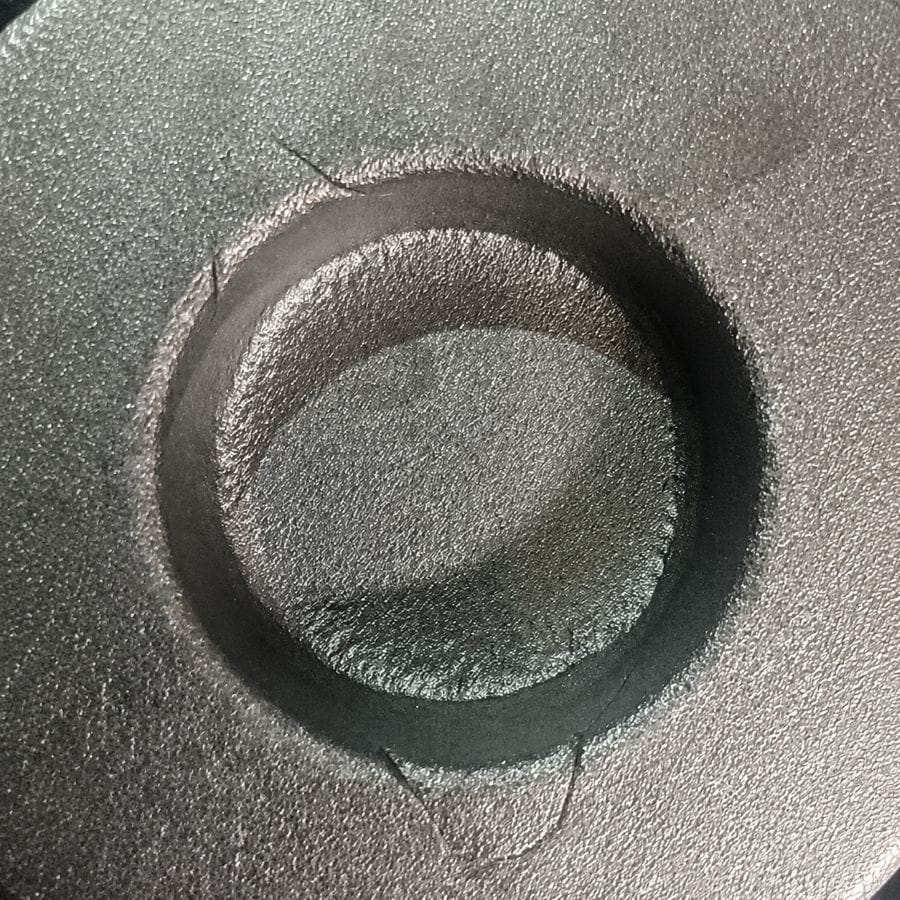
Cracks are among the most serious forging defects because they may significantly reduce component reliability.
Common causes include:
- Incorrect forging temperature
- Excessive deformation
- Improper cooling
- Material-related issues
Maintaining proper forging temperature and controlling deformation parameters are key methods to prevent cracking.
Related article:
Underfilling and Internal Defects
Underfilling occurs when metal does not completely fill the die cavity, resulting in incomplete geometry.
Internal defects such as voids may remain hidden inside forged components and affect fatigue performance.
Common prevention methods include:
- Optimized billet design
- Improved die filling
- Proper forging ratio
- Non-destructive testing
Main Causes of Forging Defects
Improper Forging Temperature
Temperature has a direct impact on metal flow and final mechanical properties.
Incorrect temperature control may lead to:
- Cracks
- Poor grain structure
- Reduced strength
Proper heating control helps achieve consistent forging quality.
Poor Die Design and Material Flow
Die design determines how metal fills the cavity during forging.
Poor design may cause:
- Laps
- Underfilling
- Uneven deformation
Optimized tooling design improves:
- Material utilization
- Dimensional accuracy
- Production consistency
Material and Process Issues
Raw material quality and process control also influence defect formation.
Important factors include:
- Chemical composition
- Material traceability
- Deformation control
- Heat treatment parameters
How to Prevent Forging Defects
Preventing forging defects requires proper process control and consistent quality management throughout the forging process. By optimizing key production parameters and using reliable inspection methods, manufacturers can significantly reduce defect risks and improve product consistency.
The following measures are commonly used in industrial forging production to prevent forging defects.
- Maintain Proper Forging Temperature
Maintaining the correct forging temperature ensures sufficient metal plasticity and smooth material flow during deformation.
- Optimize Die Design
Proper die design helps guide metal flow and prevents defects caused by uneven material distribution.
- Increase the Forging Ratio
A higher forging ratio improves internal material density and helps eliminate internal voids.
- Use High-Quality Raw Materials
Using refined steel with low impurity levels can significantly reduce inclusions and other material-related defects.
- Apply Proper Inspection Methods
Combining process control with inspection methods such as ultrasonic testing and dimensional inspection helps ensure consistent forging quality.
Quality Control Throughout the Forging Process
Effective quality control throughout the forging process helps reduce the risk of forging defects and ensures consistent product performance. Manufacturers typically control quality at several key stages:
Before forging
- Careful material selection
- Proper process planning and simulation
During forging
- Controlling forging temperature and deformation
- Ensuring stable metal flow and process parameters
After forging
- Heat treatment to improve material properties
- Surface finishing and dimensional inspection
- Non-destructive testing such as ultrasonic inspection
Together, these measures help ensure reliable forged components for demanding industrial applications.
Forging Inspection Methods for Defect Detection
Inspection is an essential step to identify defects before forged components are delivered.
Common inspection methods include:
| Inspection Method | Purpose |
|---|---|
| Visual Inspection | Detect surface cracks, laps and visible defects |
| Dimensional Inspection | Verify drawing requirements and accuracy |
| CMM Measurement | Check complex dimensions and geometric tolerance |
| Ultrasonic Testing (UT) | Detect internal cracks and voids |
| Magnetic Particle Testing (MT) | Detect surface and near-surface defects |
For critical forged components, combining multiple inspection methods provides better quality assurance and reduces the risk of hidden defects.
How Weforging Ensures Forging Quality
Weforging provides integrated forging, machining, heat treatment and inspection services for custom forged components.
Our quality control process includes:
- Material traceability
- Ultrasonic testing (UT)
- Magnetic particle testing (MT)
- CMM dimensional inspection
- Final inspection reports
By controlling each manufacturing stage, we help customers reduce risks related to forging defects and achieve consistent forged components for demanding applications.
Conclusion
Forging defects can affect the performance and reliability of industrial components. Understanding the types, causes, and prevention of forging defects is important for improving forging quality and ensuring consistent production.
By controlling forging temperature, optimizing die design, using high-quality raw materials, and applying proper inspection methods, manufacturers can significantly reduce defect risks.
If you are sourcing forged components or have questions about forging quality, feel free to contact our team to discuss your project requirements.