
Ring Gear Types, Applications & Forged Guide
Ring gears are critical components in heavy-duty transmission systems. They transfer torque, handle shock loads, and ensure stable power delivery across industries such as mining, construction, wind energy, and industrial gearboxes.
However, not all ring gears perform the same. The choice between forged, cast, or machined ring gears directly affects strength, durability, and long-term cost.
This guide explains ring gear types, applications, and manufacturing methods. It also helps OEM buyers understand when forged ring gears are the better choice for demanding environments.
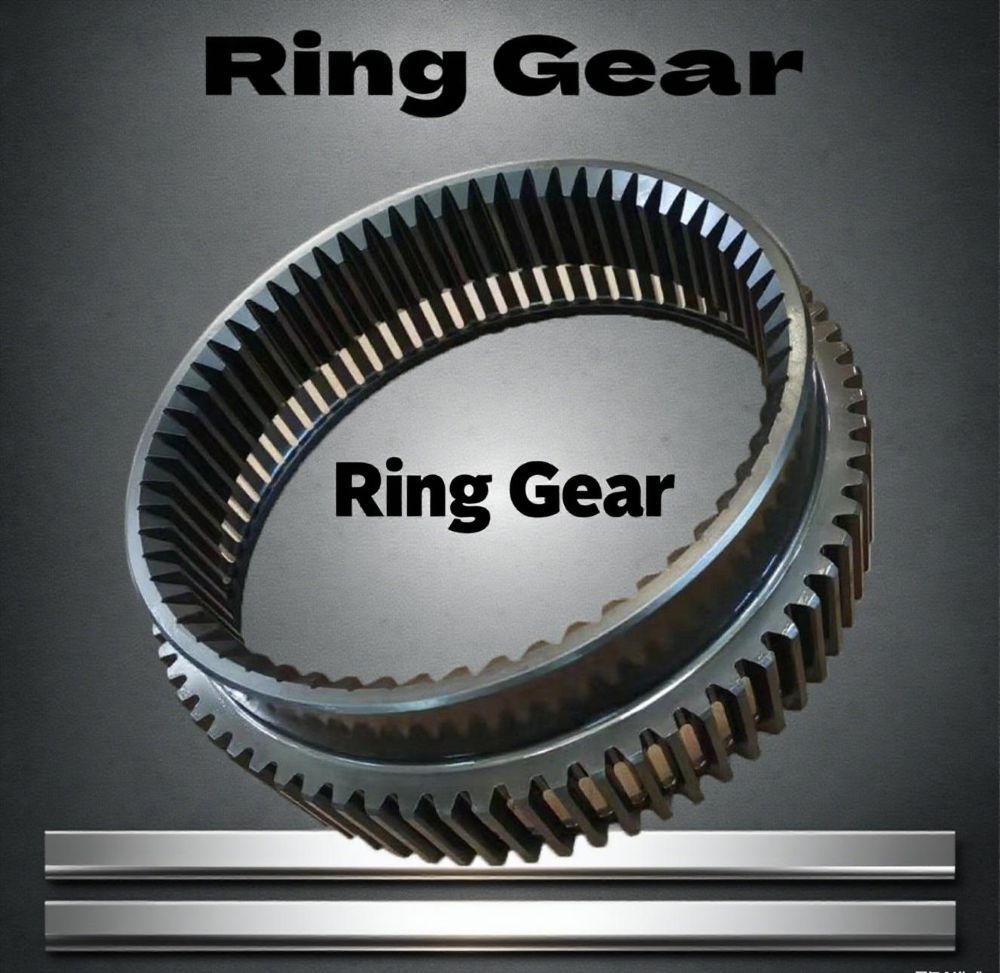
What is a Ring Gear?
A ring gear is a circular gear with internal or external teeth, designed to mesh with pinions or smaller gears. In a planetary gear system, its inner teeth surround the sun and planet gears, enabling smooth torque transfer and compact power transmission. With external teeth, the gear is widely used in heavy-duty industrial machinery and large mechanical drives, ensuring stability and strength.
In the automotive industry, the starter ring gear on the engine flywheel engages the starter motor for quick ignition. Similarly, the pinion gear ring works with smaller gears to achieve torque multiplication and reliable power flow. This versatility makes it essential across automotive, mining, energy, and aerospace applications.
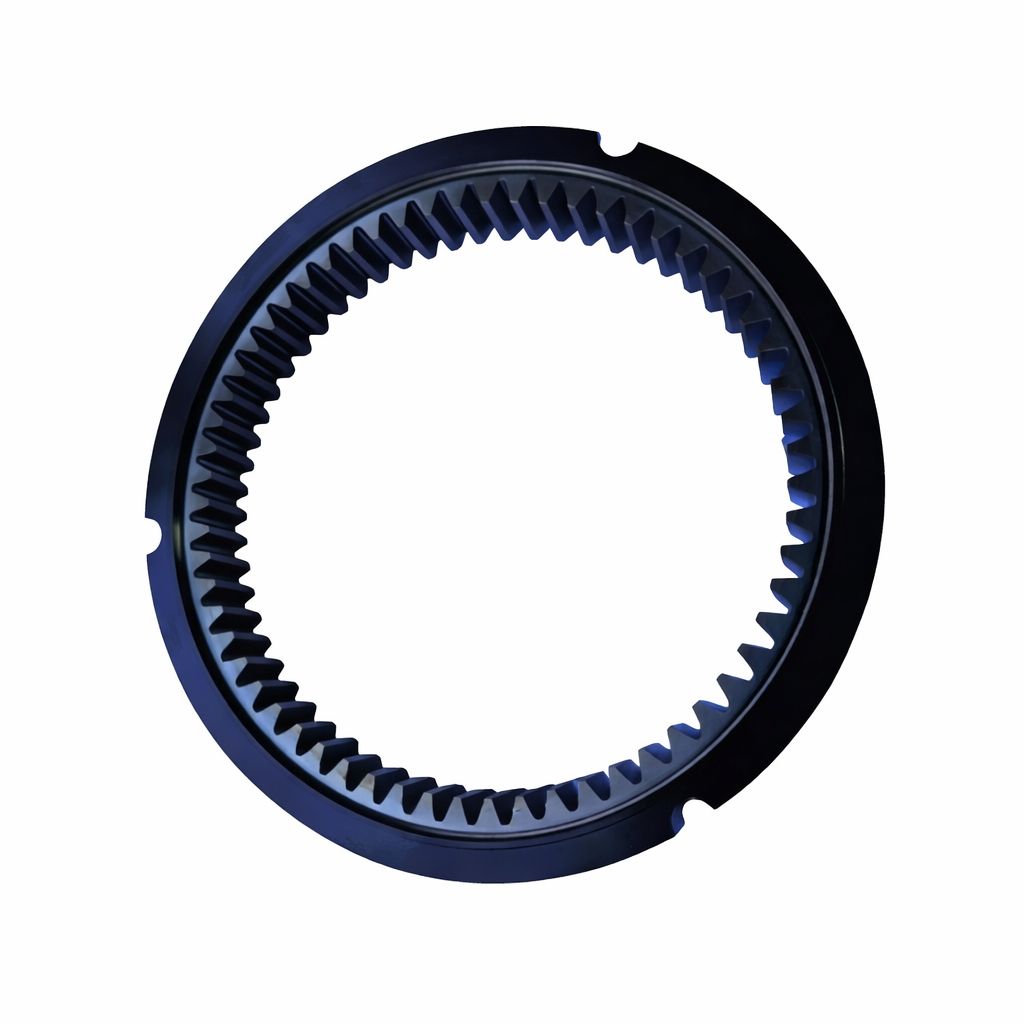
Ring Gear Materials & Manufacturing Options
Ring gears can be manufactured using different methods, each directly affecting performance, cost, and application suitability:
- Forged Ring Gear – Continuous grain flow and high fatigue resistance, ideal for heavy-duty and high-load applications
- Cast Ring Gear – Cost-effective for low to medium load conditions
- Machined Ring Gear – Suitable for smaller sizes or applications requiring high precision
In high-load environments such as mining, wind power, and heavy machinery, forged ring gears are generally preferred for their structural strength and longer service life.
Selecting the appropriate manufacturing method at the design stage helps improve performance and reduce long-term cost.
Common Types of Ring Gears
Ring gears can be classified into different types depending on their design and application:
Starter Ring Gear – Mounted on the flywheel in automotive engines, it engages with the starter motor pinion to enable ignition.
Gear Ring – Large-diameter gear rings used in cranes, mining machinery, and industrial drives where strength is required.
Ring and Pinion Gears – A matched pair applied in automotive differentials and gearboxes, ensuring smooth torque transfer and stable operation.
Pinion Gear Ring – Commonly used in planetary gearboxes where compact size and efficient torque transmission are required.
Internal Ring Gear – Built with teeth on the inner surface, widely applied in planetary gear systems for compact design and efficient torque distribution.
These gears are manufactured using forging or casting processes. However, forged ring gears provide superior grain structure, strength, precision, and longer service life compared to cast gears.
Ring Gear Types Comparison
Different types of ring gears are used in planetary gearboxes, automotive differentials, heavy machinery, and industrial transmission systems. Their structure—whether internal, external, forged, or fully machined—directly affects torque capacity, durability, manufacturing method, and application suitability.
The comparison table below provides a clear overview of common ring gear types to help engineers and procurement teams choose the most suitable option for their equipment requirements.
Ring Gear Types Comparison Table
| Type | Description | Typical Application |
|---|---|---|
| Internal Ring Gear | Teeth located on the inner surface | Planetary gearboxes |
| External Ring Gear | Teeth located on the outer diameter | Differentials, slewing drives |
| Forged Ring Gear | Grain-flow aligned, high strength | Heavy machinery, high-load equipment |
| Machined Ring Gear | Cut from bar or plate material | Low-load or standard-duty systems |
Forged vs Cast Ring Gears
The manufacturing method has a direct impact on performance.
Forged Ring Gears
- Continuous grain flow
- Higher fatigue strength
- Better impact resistance
- Suitable for heavy-duty applications
Cast Ring Gears
- Lower cost
- Suitable for low to medium loads
- Less consistent internal structure
For critical applications, forged ring gears provide better reliability and longer service life.
Applications Across Industries
The versatility of the ring gear makes it indispensable across multiple sectors:
– Automotive – Found in ring and pinion gears for differentials, in starter ring gears on flywheels, and in gearboxes.
– Industrial Machinery – Heavy-duty gear rings are used in excavators, mining equipment, and cranes.
– Wind Power – Large ring gears are integrated into wind turbine gearboxes, transferring rotational energy from blades to generators.
– Aerospace – Lightweight yet durable gears are crucial in aviation transmissions and space systems.
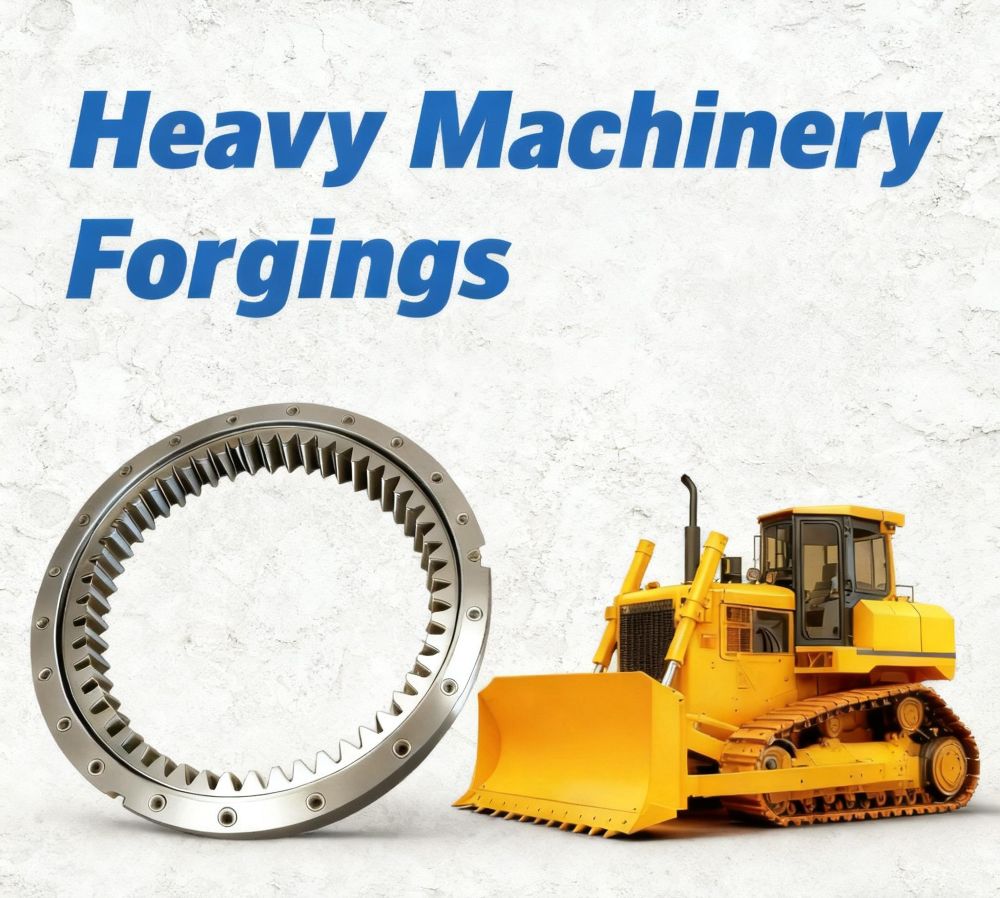
How Forged Ring Gears Are Manufactured
At Weforging, ring gears are produced through a controlled process that ensures performance and consistency.
- Forging
Hot forging creates dense material and optimized grain flow. - Heat Treatment
Carburizing, quenching, and tempering improve hardness and wear resistance. - CNC Machining
Precision machining ensures dimensional accuracy and smooth operation. - Gear Cutting
Processes such as hobbing ensure accurate tooth geometry. - Inspection & Testing
UT, MT, CMM, hardness testing, and metallography ensure quality.
This integrated process ensures that each ring gear meets performance and reliability requirements.
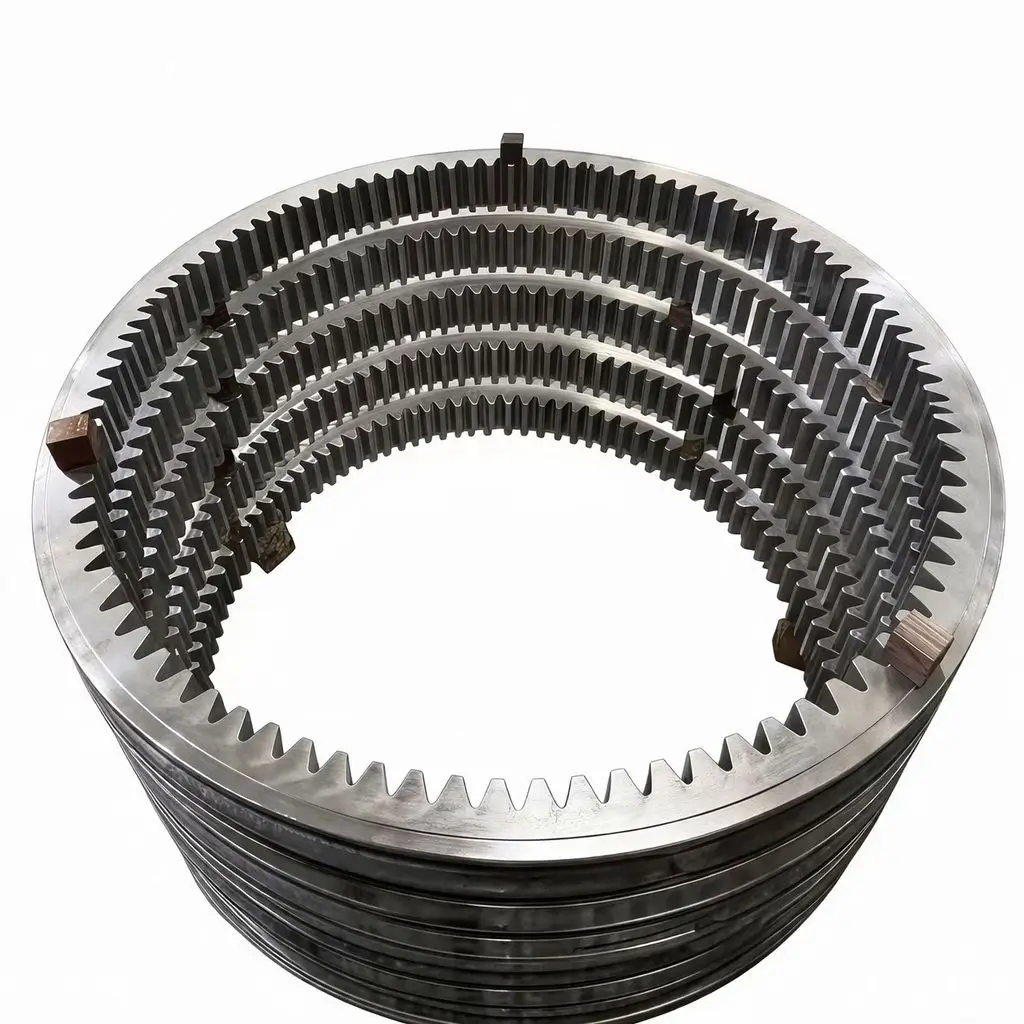
Example of a Custom Ring Gear Project
A customer in the heavy equipment sector required a large-diameter gear capable of operating under continuous load conditions.
Project highlights:
| Item | Specification |
|---|---|
| Application | Industrial Transmission System |
| Material | Alloy Steel |
| Manufacturing Route | Forging + CNC Machining |
| Inspection | UT + Dimensional Inspection |
| Product Type | Large Diameter Ring Gear |
The project required strict dimensional control and material verification to ensure long-term operational reliability.
Typical Lead Time for Custom Ring Gears
Following the wide range of applications—from automotive systems to heavy machinery—one practical question often comes next:
How long does it take to manufacture a custom ring gear?
The answer depends on factors such as size, material, and complexity. However, a typical production timeline includes:
- RFQ & drawing review: 1–2 days
- Technical confirmation: 2–3 days
- Tooling development: 10–20 days
- Sample production: 5–7 days
- Mass production: 20–30 days
Total lead time: 40–60 days, depending on size and complexity
For large-diameter or high-precision ring gears, additional time may be required for heat treatment, machining accuracy control, and inspection processes.
How to Choose a Ring Gear Supplier
Selecting the right supplier is critical for performance and reliability.
Key factors include:
- Forging capability and experience
- CNC machining precision
- Heat treatment control
- Inspection and testing capability
- Material traceability
- Compliance with ASTM, EN, ISO standards
A supplier with integrated manufacturing and testing can ensure consistent quality.
Conclusion
Ring gears play a critical role in power transmission systems across mining, construction, industrial, and energy applications. Material selection, manufacturing method, heat treatment, and quality control all influence long-term performance and reliability.
Whether you are sourcing a large diameter ring gear, evaluating a new ring gear supplier, or looking for custom ring gear solutions for a specific application, understanding these factors can help reduce risk and improve equipment performance.
For projects requiring custom forged components, early collaboration between engineering and manufacturing teams can often improve both production efficiency and product reliability.