
Alloy Steel vs Carbon Steel Forging: Key Differences
Alloy Steel vs Carbon Steel Forging is a critical material selection decision for engineers and manufacturers producing gears, shafts, flanges, and other industrial forged components.
Although both materials are widely used in forging, they provide different advantages in terms of strength, fatigue resistance, machinability, and cost. Carbon steel forging is often selected for cost-effective applications, while alloy steel forging is preferred for components requiring higher load capacity and longer service life.
This article compares alloy steel and carbon steel forging from key aspects including mechanical properties, applications, heat treatment, and material selection considerations, helping engineers choose the right solution for different forged parts.
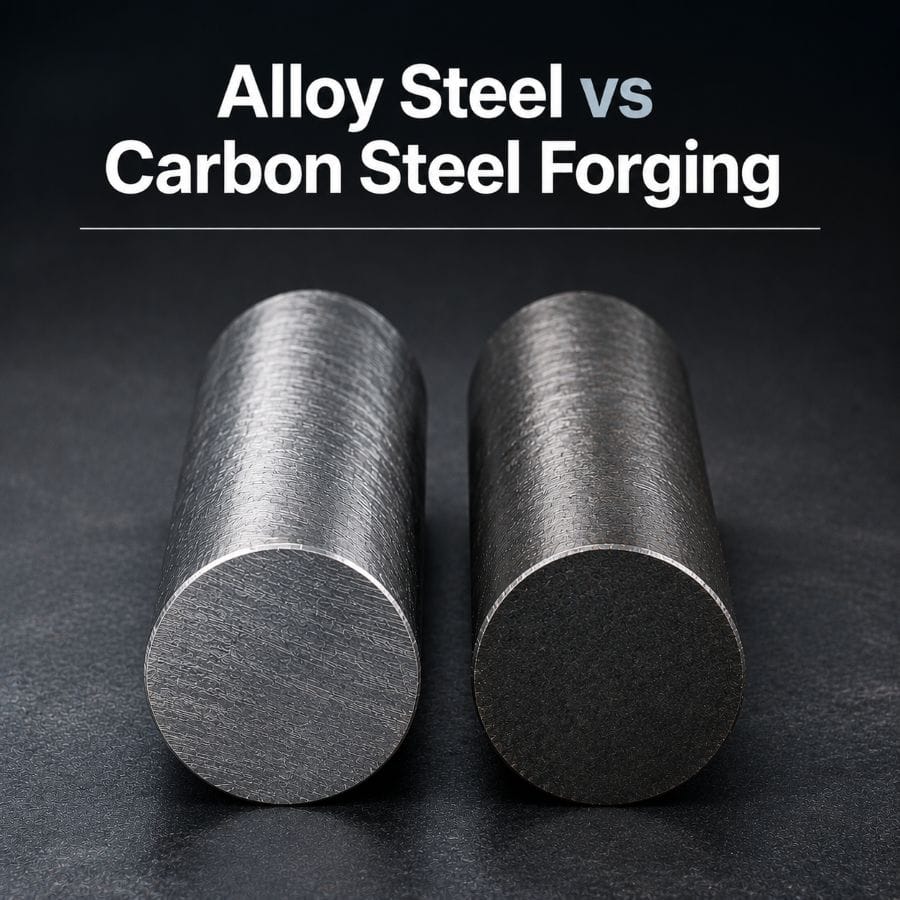
Alloy Steel vs Carbon Steel Forging Comparison
The main difference between alloy steel forging and carbon steel forging is their chemical composition and mechanical performance.
Carbon steel mainly uses carbon as the strengthening element, while alloy steel contains additional elements such as chromium, nickel, and molybdenum. These alloying elements improve hardenability and allow the material to achieve better strength, toughness, and fatigue resistance after heat treatment.
The best material choice depends on the component requirements, including load conditions, operating environment, machining needs, and expected service life.
Factor | Alloy Steel Forging | Carbon Steel Forging |
Main Elements | Chromium, nickel, molybdenum added | Mainly carbon |
Strength | Higher strength and toughness | Suitable for general applications |
Fatigue Resistance | Better performance under repeated loads | Suitable for moderate stress conditions |
Machinability | Requires optimized machining parameters | Easier CNC machining |
Material Cost | Higher | Lower |
Typical Applications | Gears, shafts, heavy-duty components | Flanges, brackets, general mechanical parts |
Carbon Steel Forging: Benefits and Applications
Carbon steel forging is a practical choice for industrial components requiring reliable strength, good machinability, and cost efficiency.
Compared with alloy steel forging, carbon steel offers a balanced combination of performance and manufacturing cost. It is commonly selected for forged components operating under moderate loads where extreme strength or fatigue resistance is not required.
Benefits of Carbon Steel Forging
Key advantages include:
- Lower material cost: Suitable for cost-sensitive applications.
- Good machinability: Easier CNC machining after forging.
- Wide availability: Common grades are suitable for various industrial uses.
Applications of Carbon Steel Forging
Carbon steel forging is commonly used for:
- Flanges
- Brackets and supports
- General mechanical components
It provides a reliable and economical solution for standard industrial applications.
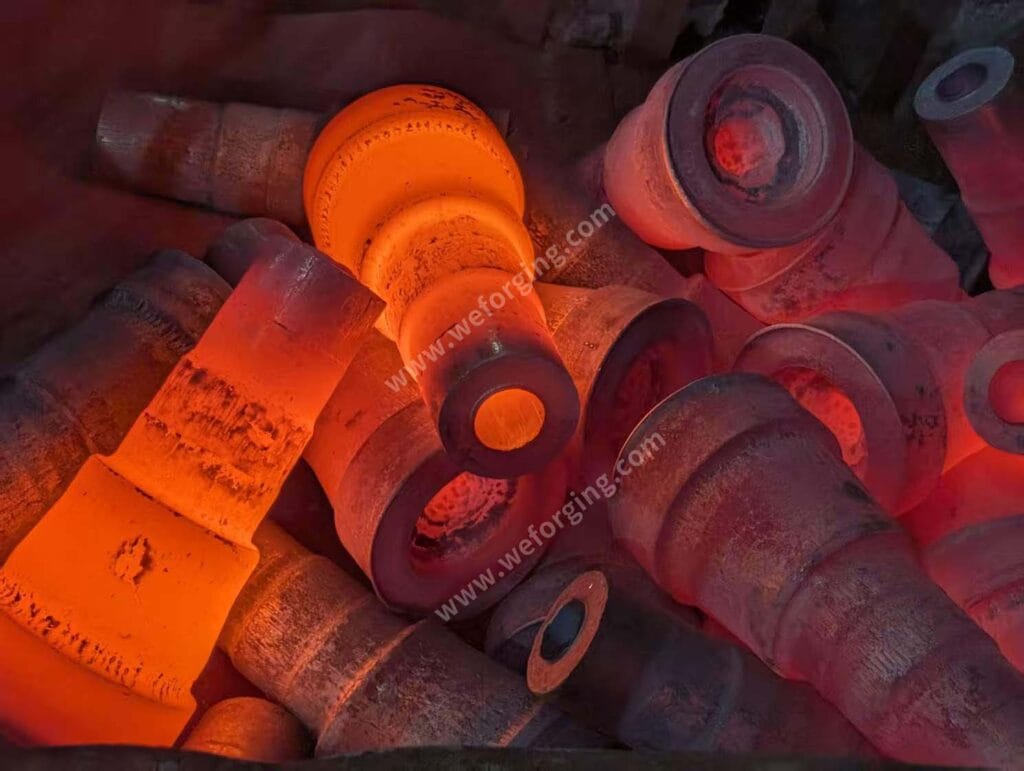
Alloy Steel Forging: Benefits and Applications
Alloy steel forging is designed for industrial components requiring higher strength, toughness, and fatigue resistance.
With alloying elements such as chromium, nickel, and molybdenum, alloy steel achieves improved mechanical performance after heat treatment. It is commonly selected for demanding forged components exposed to heavy loads, repeated stress, or longer service life requirements.
Benefits of Alloy Steel Forging
Key advantages include:
- Higher strength and toughness: Suitable for heavy-load applications.
- Better fatigue resistance: Performs well under repeated loading conditions.
- Improved heat treatment performance: Allows customized mechanical properties.
Applications of Alloy Steel Forging
Common applications include:
- Gear forgings
- Shafts and transmission components
- Mining and heavy equipment parts
Common grades include 4140, 4340, and 42CrMo4 steel forging materials.
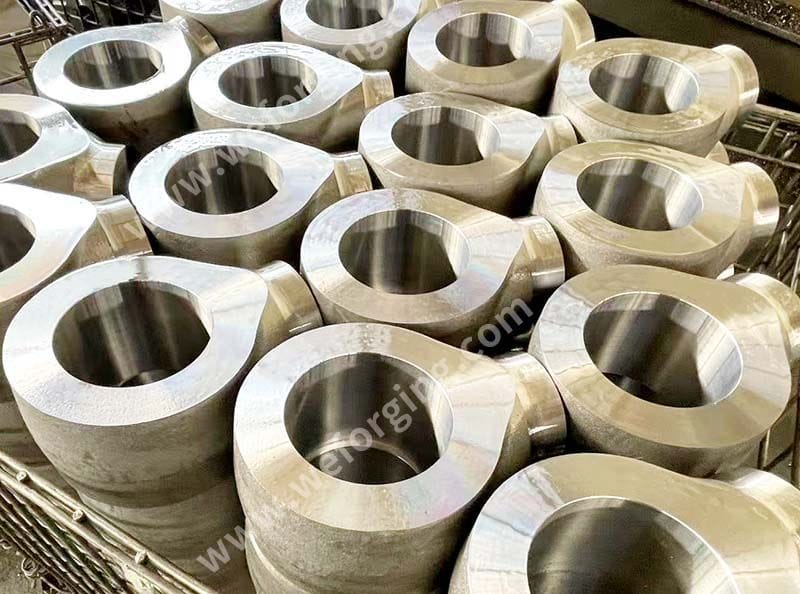
Key Differences Between Alloy and Carbon Steel
When selecting materials for forged components, the main differences between alloy steel forging and carbon steel forging are related to strength, fatigue resistance, machinability, and cost.
The right material choice depends on the component’s load requirements, operating environment, heat treatment needs, and expected service life. Alloy steel is generally selected for demanding applications requiring higher performance, while carbon steel remains a practical option for general industrial parts.
Strength and Mechanical Performance
Strength is one of the most important factors when comparing alloy steel forging and carbon steel forging.
Alloy steel forging:
- Provides higher strength and toughness due to alloying elements such as chromium, nickel, and molybdenum.
- Offers better hardenability and improved mechanical properties after heat treatment.
- Is commonly used for high-load components, including gears, shafts, and heavy machinery parts.
Carbon steel forging:
- Provides sufficient strength for many general industrial applications.
- Offers a balanced solution when extreme mechanical performance is not required.
- Is often selected for standard forged components where cost and processing efficiency are important.
Fatigue Resistance and Durability
For many industrial forged components, fatigue resistance is more important than initial strength because parts are often exposed to repeated loading during operation.
Alloy steel forging:
- Provides better toughness and resistance to fatigue failure.
- Performs well under cyclic stress and impact conditions.
- Is widely used for gear forgings, transmission components, and mining equipment parts.
Carbon steel forging:
- Performs reliably under moderate stress conditions.
- Is suitable for applications where fatigue requirements are not critical.
In addition, the forging process creates continuous grain flow, which helps forged parts achieve better fatigue performance compared with many cast alternatives.
Cost and Machining Considerations
Cost and machining requirements are also important factors in forging material selection.
Carbon steel forging:
- Has lower material cost compared with alloy steel.
- Provides easier CNC machining and better processing efficiency.
- Is suitable for cost-sensitive applications and general mechanical components.
Alloy steel forging:
- Requires higher material investment due to alloying elements.
- May require optimized machining parameters because of higher hardness and strength.
- Provides better long-term performance for critical components where reliability and service life are priorities.
In general, carbon steel forging is suitable for general industrial applications where cost efficiency and machinability are important, while alloy steel forging is preferred for high-load and fatigue-critical components requiring higher performance.
Quick Material Selection Guide
The following guide provides a simple reference for selecting between carbon steel forging and alloy steel forging:
Application | Recommended Material | Reason |
General flanges | Carbon Steel Forging | Cost efficiency and machinability |
Structural components | Carbon Steel Forging | Reliable performance under moderate loads |
Gear forgings | Alloy Steel Forging | Higher strength and fatigue resistance |
Transmission shafts | Alloy Steel Forging | Better durability under repeated stress |
Mining components | Alloy Steel Forging | Improved impact resistance |
Material Selection for Forged Components
Selecting the right material for forged components depends on the component’s load requirements, operating conditions, fatigue resistance, and manufacturing needs.
In general, carbon steel forging is suitable for standard industrial parts where cost efficiency and machinability are important. Alloy steel forging is preferred for critical components requiring higher strength, better fatigue performance, and longer service life.
Application | Recommended Material | Main Reason |
Flanges and brackets | Carbon Steel Forging | Cost efficiency and good machinability |
General mechanical parts | Carbon Steel Forging | Reliable performance under moderate loads |
Gear forgings | Alloy Steel Forging | Higher strength and fatigue resistance |
Transmission shafts | Alloy Steel Forging | Better durability under repeated stress |
Heat Treatment and Forging Performance
Material selection alone does not determine the final performance of forged components. Heat treatment plays an important role in improving mechanical properties.
Common processes include:
Quenching and Tempering
Improves:
- Strength
- Toughness
- Hardness balance
Carburizing
Used mainly for gears to achieve:
- Hard wear-resistant surfaces
- Tough internal structures
Induction Hardening
Applied to shafts and transmission parts requiring improved surface durability.
Therefore, effective forging material selection should consider both steel grade and heat treatment requirements.
Conclusion
Alloy steel forging and carbon steel forging are selected based on different performance requirements, operating conditions, and cost considerations.
Carbon steel forging is a practical choice for general forged components where machinability and cost efficiency are important. Alloy steel forging is better suited for high-load components requiring higher strength, improved fatigue resistance, and longer service life.
The right material selection should consider the component’s application, mechanical requirements, heat treatment process, and manufacturing needs. By choosing the appropriate steel grade, manufacturers can achieve more reliable forged components with consistent performance.