
Carbon Steel Forging Guide: Process, Grades and Applications
Carbon steel forging is widely used in industrial manufacturing because it offers a strong balance of strength, reliability, and cost efficiency. During the forging process, heated carbon steel is shaped under controlled pressure, which refines the grain structure and improves mechanical properties.
Compared with casting or machining from bar stock, forged carbon steel parts provide higher structural integrity and fatigue resistance. These advantages make carbon steel forgings suitable for shafts, flanges, gears, valve components, and other load-bearing industrial parts.
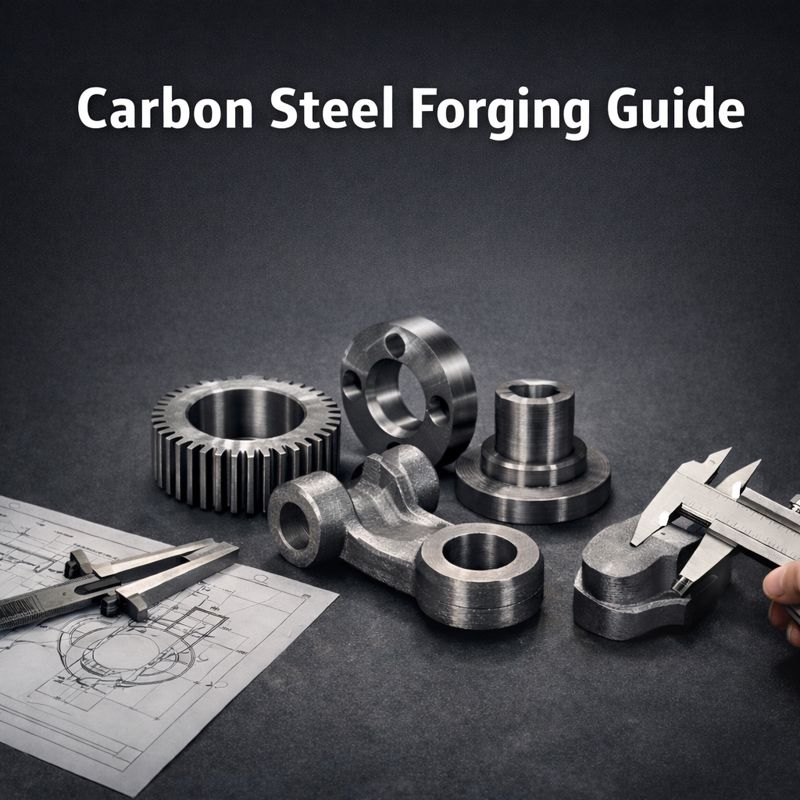
What Is Carbon Steel Forging?
Carbon steel forging is a manufacturing process in which carbon steel billets are heated and formed into shape using compressive force. The process reshapes the metal without removing material.
Key characteristics include:
Continuous grain flow aligned with part geometry
Higher strength than cast components
Reduced internal defects such as porosity
Improved fatigue resistance
Because of these advantages, forged carbon steel components are widely used in mechanical systems that require long service life and reliable performance.
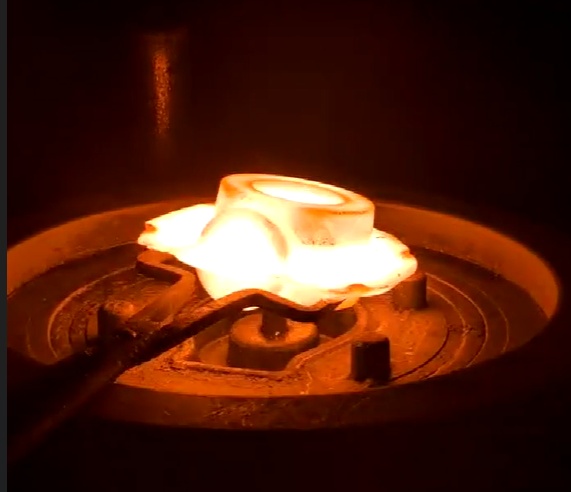
Carbon Steel Forging Process
The carbon steel forging process consists of several coordinated steps designed to ensure material consistency and dimensional accuracy and is typically carried out through a controlled hot forging process.
Billet Preparation and Heating
Carbon steel billets are selected according to specified grades and heated to forging temperatures, typically between 1,050°C and 1,250°C. Proper temperature control ensures sufficient plasticity without excessive grain growth.
Hot Forging Operations
Forging is performed using open die forging or closed die forging, depending on part geometry and production volume. Controlled deformation aligns the grain flow with the functional shape of the component.
Trimming and Surface Conditioning
After forging, excess material is removed. Surface treatments such as shot blasting may be applied to prepare the forged carbon steel parts for machining.
Heat Treatment (If Required)
Heat treating processes such as normalizing, quenching, or tempering may be applied to achieve specific mechanical properties.
CNC Machining and Inspection
Machining ensures dimensional accuracy on functional surfaces. Dimensional inspection and material verification support quality consistency.
Carbon Steel Forging Temperature
Forging temperature is critical for achieving good material deformation and grain structure. If the temperature is too low, cracks may occur. If it is too high, excessive grain growth can reduce strength.
Typical forging temperature ranges include:
| Carbon Steel Grade | Forging Temperature |
|---|---|
| A36 | 1150–1250°C |
| AISI 1018 | 1100–1200°C |
| AISI 1045 | 1100–1200°C |
| 4140 | 1050–1150°C |
Proper temperature control helps ensure consistent forging quality.
Common Carbon Steel Grades Used in Forging
Different carbon steel grades are used depending on strength and application requirements.
Common grades include:
A36 / A105 – structural forged components
AISI 1018 – excellent machinability
AISI 1045 – higher strength and wear resistance
4140 alloy steel – high-strength applications
Material selection is usually defined by engineering drawings and operating conditions.
Common Forged Carbon Steel Grades
Forged carbon steel components are produced from a range of grades selected according to strength, toughness, and application requirements. Common grades include:
- Low carbon steel grades for components requiring good machinability and moderate strength
- Medium carbon steel grades for higher strength and wear resistance
- Carbon-manganese steels for improved toughness and load performance
Material selection is typically guided by operating loads, service environment, and post-forging heat treatment requirements.
Advantages of Carbon Steel Forgings
Carbon steel forgings offer several advantages for industrial equipment manufacturing.
Main benefits include:
High structural strength due to refined grain flow
Better fatigue resistance under cyclic loads
Reliable mechanical performance in heavy-duty applications
Cost efficiency compared with alloy or stainless steel
Wide availability of raw materials
These advantages make carbon steel forging a practical choice for large-scale production.
Carbon Steel Forging vs Casting
Forging and casting are two different manufacturing methods that produce components with different internal structures.
| Feature | Forging | Casting |
|---|---|---|
| Grain structure | Continuous | Random |
| Strength | Higher | Lower |
| Internal defects | Minimal | Possible porosity |
| Best for | Load-bearing parts | Complex shapes |
Forging is generally preferred when strength and reliability are critical.
Applications
Carbon steel forgings are widely used across industrial sectors due to their strength and cost efficiency. Typical applications include:
- Shafts, flanges, and structural components
- Industrial valve bodies and valve components
- Pump and gearbox parts
- Construction and mining equipment components
Carbon steel forged steel valve components, in particular, benefit from the strength and pressure resistance provided by forging.
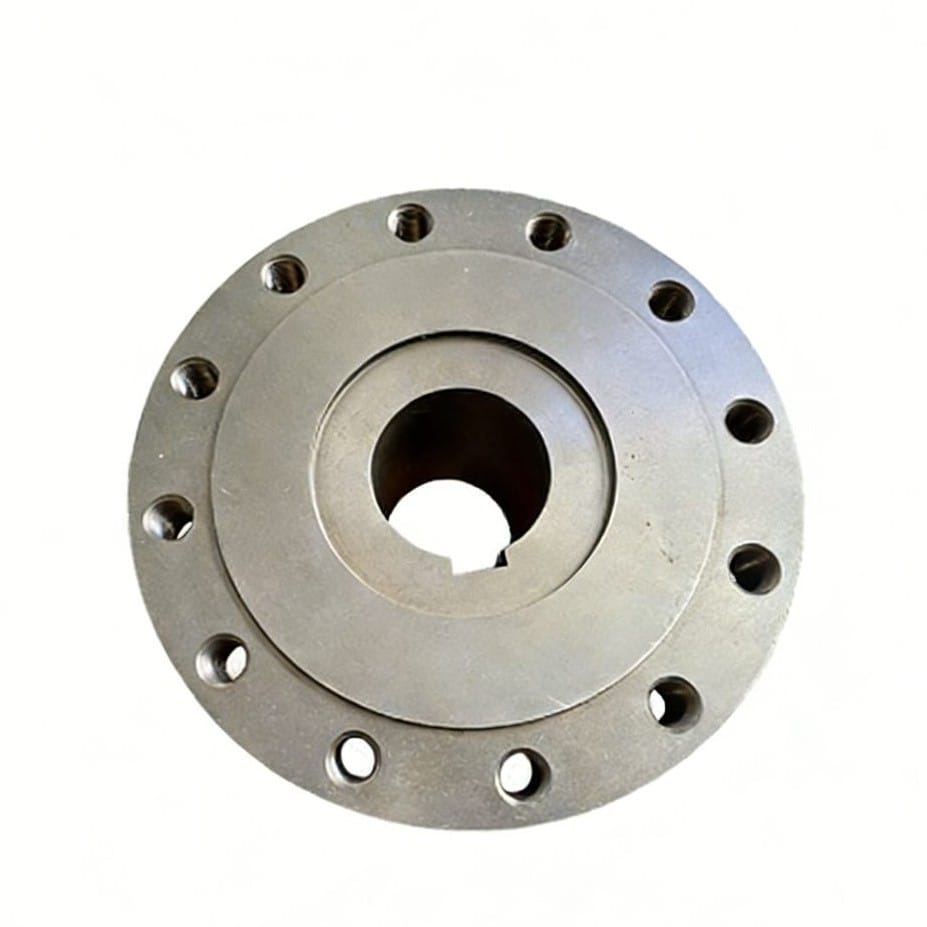
Quality Control for Carbon Steel Forged Parts
Quality control is essential for ensuring reliable forged components.
Typical inspection procedures include:
Material certification and traceability
Dimensional inspection after machining
Non-destructive testing (UT / MT)
Hardness verification after heat treatment
These measures help ensure consistency across production batches and compliance with engineering specifications.
Custom Carbon Steel Forgings for OEM Applications
Many industrial carbon steel forgings are produced as custom components according to OEM engineering drawings.
Custom forging allows manufacturers to optimize:
material utilization
forging geometry
machining allowance
dimensional accuracy
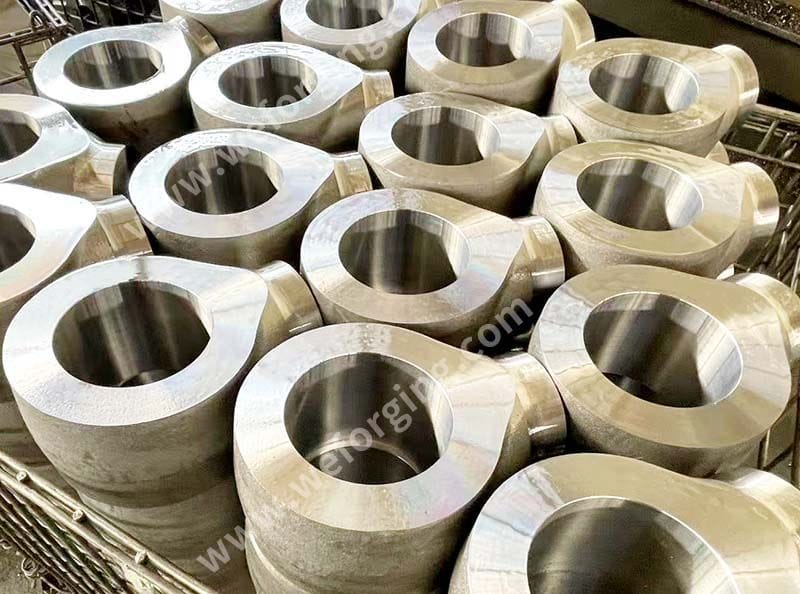
This approach is widely used for shafts, flanges, gear blanks, and structural components.
Conclusion
Carbon steel forging remains one of the most reliable manufacturing methods for producing industrial components that require strength, durability, and dimensional stability.
At Weforging, forging, CNC machining, and inspection processes are integrated to support OEM production. This coordinated workflow helps ensure stable quality and consistent performance across production batches.
If you are developing custom forged components, our engineering team can review drawings and recommend suitable forging solutions.