How to Choose the Right Ring Gear?
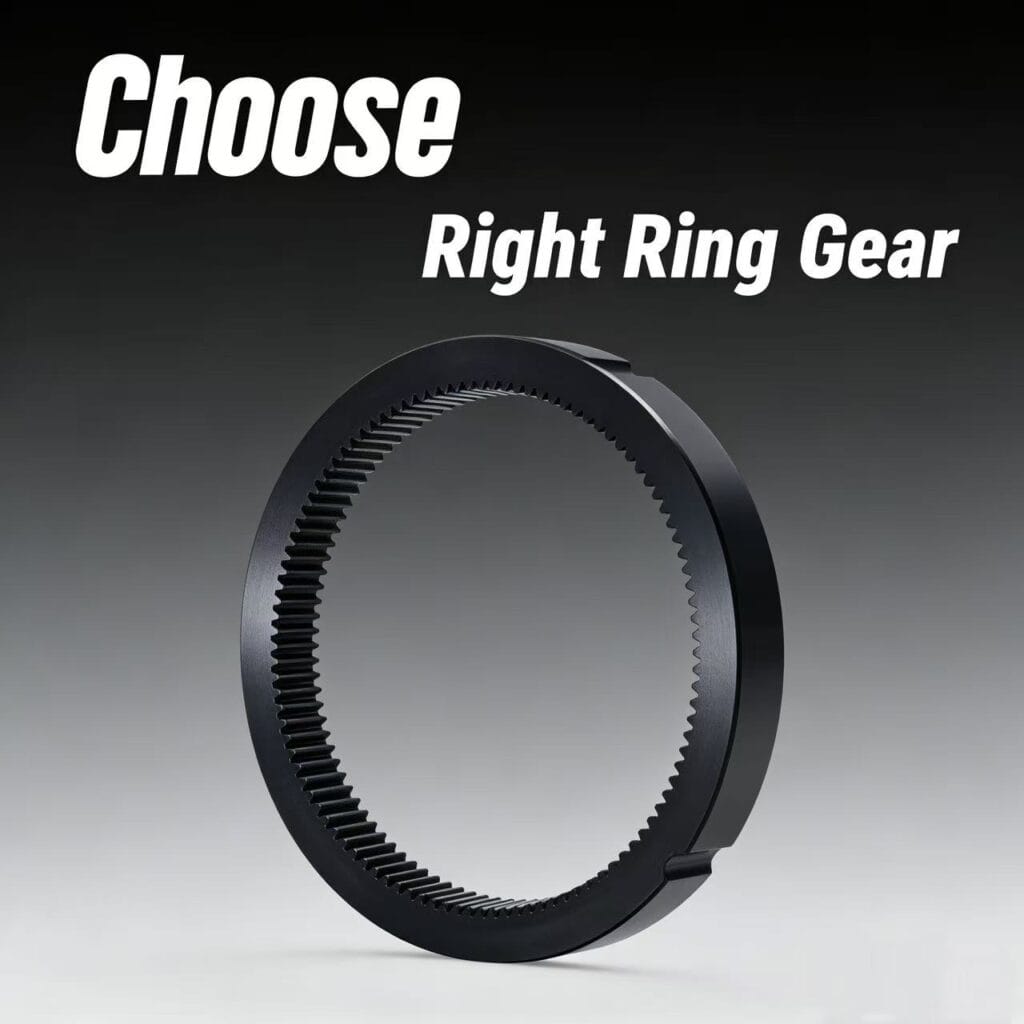
Choosing the right ring gear is an important step in designing reliable mechanical transmission systems. Ring gears are widely used in industrial applications such as heavy machinery, energy equipment, and drive systems, where size, load, and tooth configuration vary by application. A well-defined selection process helps ensure smooth gear meshing, stable operation, and efficient integration with surrounding components. By understanding how application requirements, geometry, material choice, and manufacturing considerations interact, engineers and procurement teams can select a ring gear that aligns with both functional needs and production planning.
Why Ring Gear Selection Matters in Industrial Applications
Ring gears support torque transfer, load distribution, and controlled rotational motion within transmission systems. Proper selection contributes to consistent meshing behavior and coordinated interaction with mating components. In industrial equipment operating under varied conditions, appropriate ring gear selection supports long-term operational stability and predictable system performance.
Key Factors to Consider When Choosing a Ring Gear
Load Conditions and Operating Environment
Load level, rotational speed, and duty cycle influence ring gear size, tooth geometry, and material choice. Operating environment, including temperature range and surrounding conditions, further guides material selection and surface treatment planning.
Ring Gear Size and Dimensional Requirements
Key dimensional parameters such as diameter, face width, and wall thickness define the structural form of a ring gear. Clear dimensional definition supports accurate machining and effective system integration, particularly for large-diameter applications.
Accuracy and Tooth Geometry Requirements
Tooth geometry, module, and tolerance class are selected based on system design objectives. Well-defined accuracy requirements help achieve smooth meshing and consistent motion control in transmission systems.
Internal vs External Ring Gear Selection
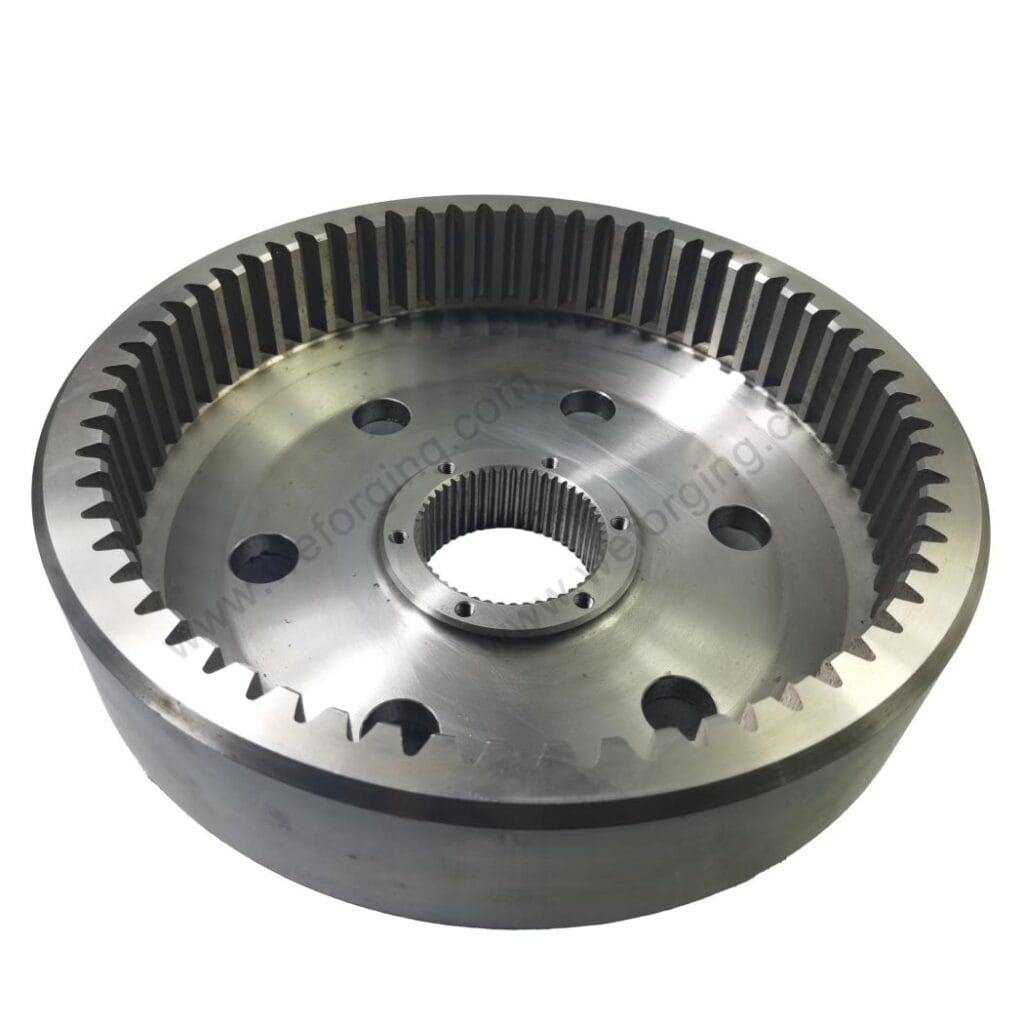
Internal Ring Gears for Planetary Systems
The Internal ring gears are widely used in planetary gear systems due to their compact arrangement and balanced load sharing characteristics. During selection, key considerations include tooth geometry, module selection, and mounting configuration within the gearbox housing. Compatibility with internal gear cutting methods, such as gear shaping, is also an important factor, as it influences achievable tooth accuracy and surface quality. Proper internal ring gear selection supports smooth meshing behavior and stable operation in compact transmission assemblies.
External Ring Gears for Large Drive Assemblies
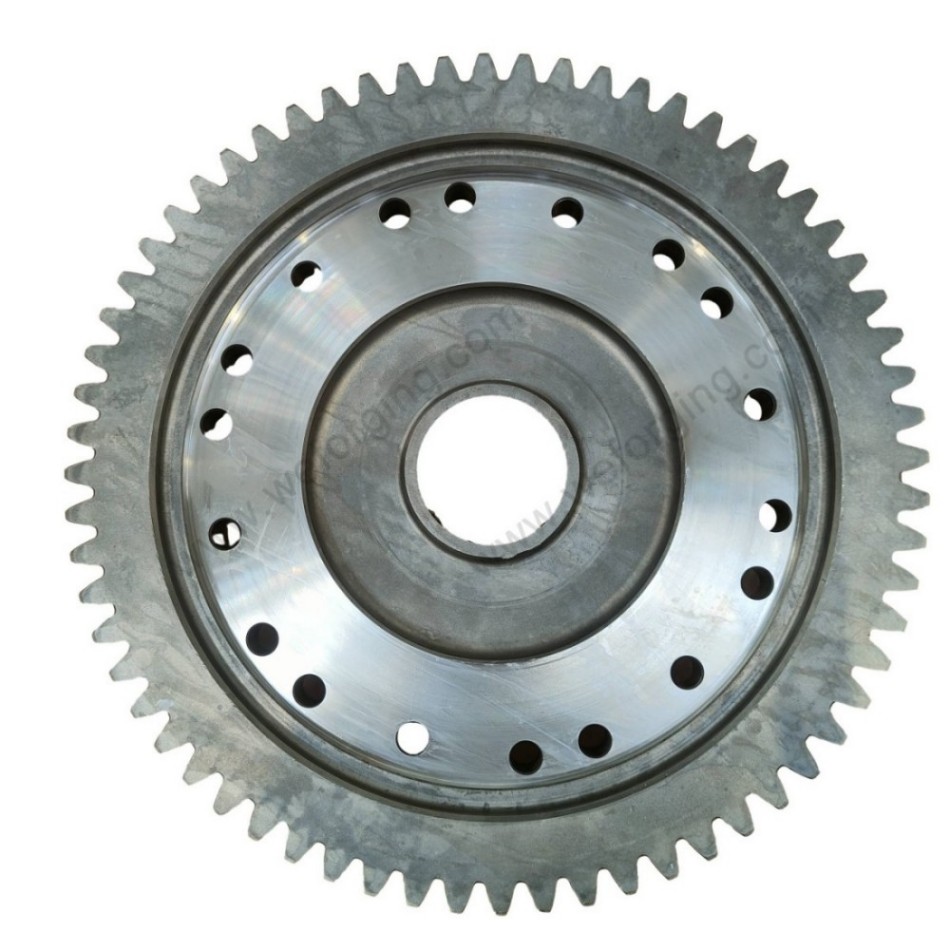
External ring gears are commonly applied in large drive assemblies where higher torque transmission and open structural layouts are required. Selection typically focuses on ring diameter, dimensional stability, and accurate tooth alignment with mating pinions. The external tooth profiles are usually produced using gear hobbing, making blank geometry and machining allowance important considerations. A well-selected external ring gear supports consistent meshing and reliable torque transfer in large industrial drive systems.
Material and Manufacturing Considerations for Ring Gear Selection
Matching Material Properties to Application Requirements
- Material selection focus: strength level, toughness, and operating environment
- Common choices: alloy steels offering balanced mechanical properties and heat treatment compatibility
- Selection outcome: supports stable performance and consistent machining results
Aligning Blank Geometry with Final Ring Gear Design
- Method consideration: alignment between blank geometry and final ring gear design
- Common approach: rolled ring forging for uniform material distribution and stable structure
- Manufacturing benefit: supports efficient machining and accurate gear cutting
Considering Manufacturing Flow and Process Compatibility
- Design scope: non-standard dimensions, mounting interfaces, and application-specific features
- Selection approach: early definition of geometry and functional requirements
- Project benefit: supports smooth coordination between design, manufacturing, and delivery
Our Ring Gear Supply Advantages
For OEM and project-based procurement, consistent delivery and process control are essential. Weforging supports ring gear supply through a coordinated manufacturing approach:
- Integrated production covering forging, machining, gear cutting, heat treatment, and inspection
- Stable material and blank control to support consistent dimensions across batches
- Drawing-based manufacturing and inspection aligned with project requirements
- Flexible delivery options, from forged blanks to finished ring gears
This approach helps procurement teams maintain schedule reliability and consistent product performance.
Conclusion
Choosing the right ring gear requires a structured evaluation of application needs, geometry, material properties, and manufacturing considerations. By viewing ring gear selection as a system-level decision, engineers and procurement teams can support consistent performance and efficient production planning.
For custom ring gear projects or selection questions, our engineering team offers free technical consultation. Share your drawings or requirements, and we will respond within 24 hours with practical feedback.