
Forged Components in Renewable Energy Equipment
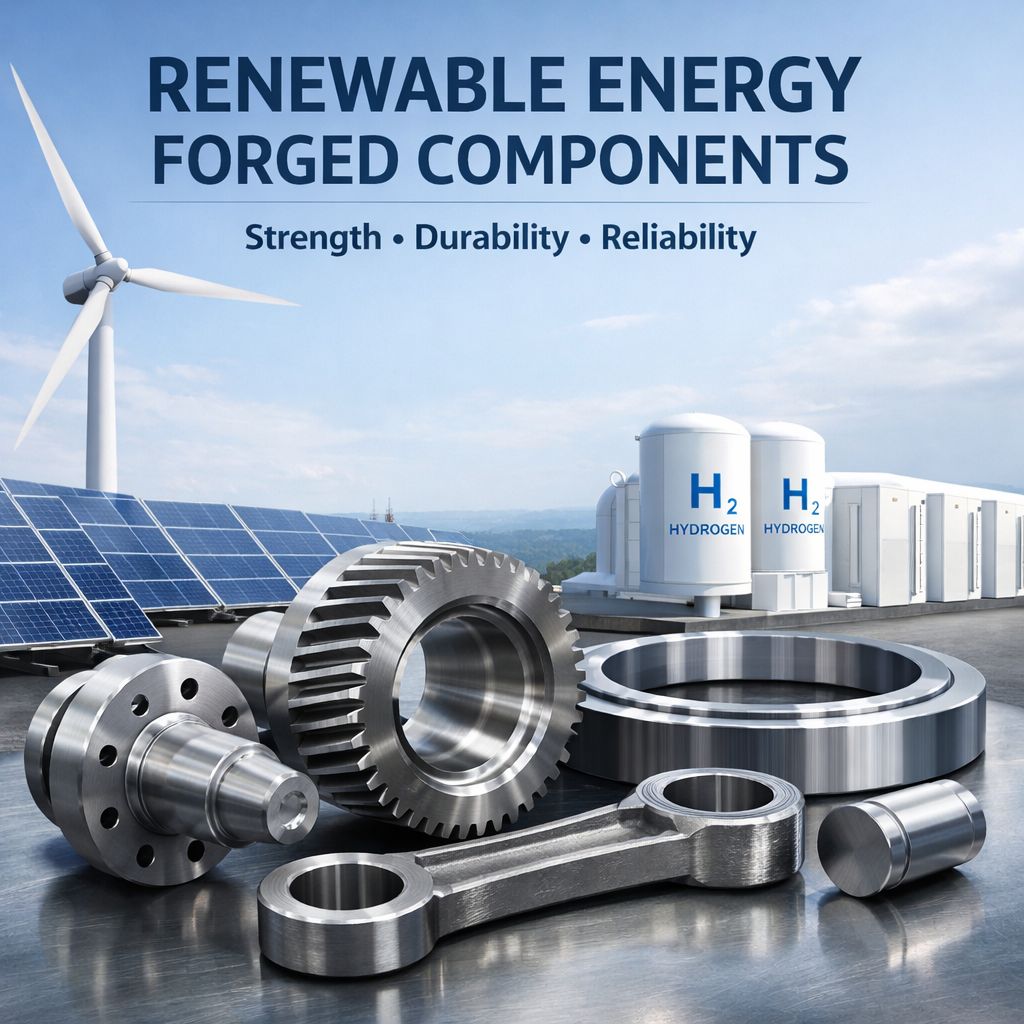
The rapid expansion of wind, solar, hydrogen, and energy storage projects is reshaping modern heavy industry. As renewable energy equipment becomes larger and more structurally demanding, long-term reliability has become a central engineering priority. In many of these systems, forged components are increasingly selected to meet higher strength and fatigue performance requirements.
In this context, renewable energy forged components are widely used in high-load and high-fatigue applications where durability is essential. Compared with cast or fabricated alternatives, forged components for renewable energy equipment provide improved material density, refined grain flow, and greater resistance to cyclic stress, directly influencing service life and operational stability.
The Structural Demands of Modern Energy Systems
Renewable energy systems operate under continuous dynamic loading. Unlike static industrial structures, components must withstand:
- Cyclic stress from rotating systems
- Variable torque caused by wind fluctuation
- Environmental exposure (offshore corrosion, vibration)
- Long service life expectations (20–25 years)
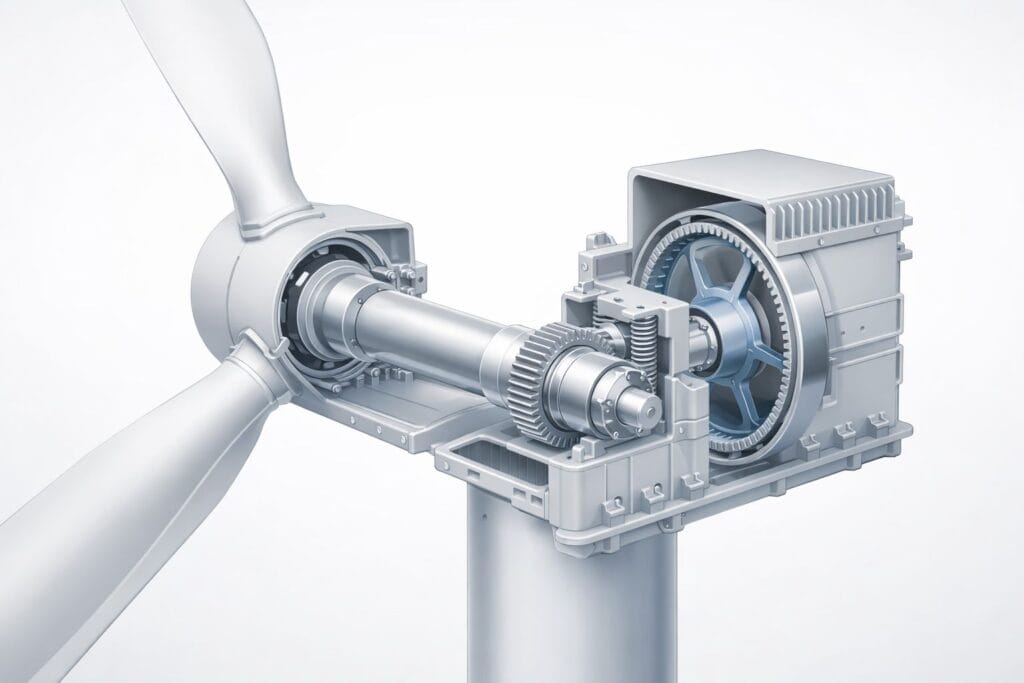
Wind turbines are a clear example. Rotor blades generate fluctuating torque that transfers through the main shaft and gearbox. Over time, fatigue resistance becomes more critical than simple tensile strength.
Hydrogen and energy storage systems also introduce unique demands:
- High-pressure environments
- Thermal expansion cycles
- Long-term dimensional stability requirements
These structural realities explain the growing reliance on high-strength forged components in renewable energy applications.
Forged Components in Renewable Energy Applications
Renewable energy forged components are widely used in load-bearing and power transmission positions.
Wind Energy
Common wind turbine forged components include:
- Main shafts
- Ring gears
- Flanges
- Gear blanks
Forged shafts for wind energy systems are critical due to torsional and bending loads. Grain flow alignment enhances fatigue resistance and reduces internal defect risks.
Energy Storage & Grid Systems
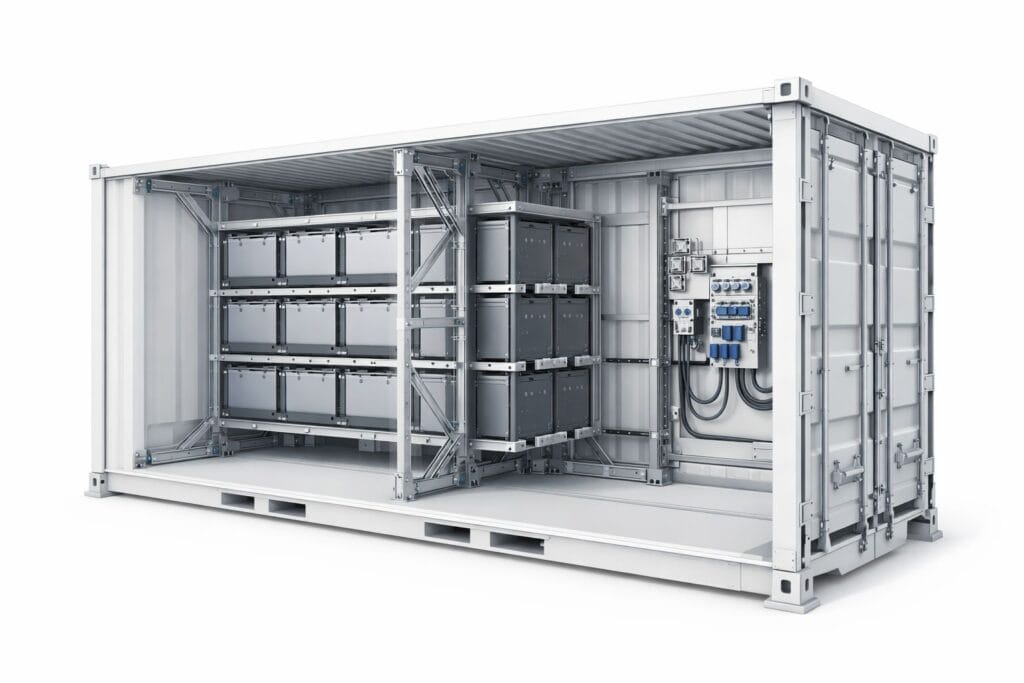
Heavy-duty forged parts are used in:
- Structural support frames
- Mounting brackets
- Mechanical interfaces
These components must maintain strength under static load and thermal variation.
Hydrogen Infrastructure
Hydrogen systems require:
- High-pressure forged fittings
- Dense structural connectors
- Precision-machined interfaces
Here, structural consistency and defect control are essential.
Materials for Renewable Energy Forged Components
Material selection directly affects the performance and service life of renewable energy forged components. These parts operate under cyclic loading, torque fluctuation, temperature variation, and, in some cases, corrosive or high-pressure environments.
Common material categories include:
- Alloy steels (42CrMo, 34CrNiMo6): high-load shafts and torque transmission components
- Carburizing steels (20CrMnTi): gears and ring gears requiring hardened surfaces
- High-strength structural steels: load-bearing frames and connection interfaces
- Stainless steels: hydrogen systems and corrosive operating environments
For renewable energy equipment, material choice is typically determined by load type, fatigue requirements, environmental exposure, and long-term dimensional stability.
Manufacturing Process of Renewable Energy Forgings
The renewable energy forging process must ensure structural integrity, material density, and dimensional accuracy. Unlike general industrial parts, these components often require full-process control.
A typical manufacturing sequence includes:
- Closed-die forging: refine grain flow and increase material density
- Rough machining: remove excess material
- Heat treatment: optimize strength and fatigue resistance
- CNC finishing: achieve tight dimensional tolerances
- Non-destructive testing (UT, MT): detect internal discontinuities
- Mechanical property verification: confirm strength and hardness
Proper grain flow alignment is critical for shafts, gear blanks, and high-load interfaces in renewable energy systems.
Forging vs Casting in High-Load Energy Applications
When comparing forging vs casting for renewable energy components, structural performance under cyclic load is often the decisive factor. Wind turbines, hydrogen systems, and large transmission assemblies operate under continuous stress, where internal material integrity directly influences fatigue life and long-term reliability. The table below outlines the key technical differences between forged and cast components in high-load energy applications.
Comparison of Forging and Casting
| Comparison Factor | Forging | Casting |
|---|---|---|
| Internal Structure | Aligned grain flow following part geometry | Random grain structure |
| Material Density | High density, minimal internal defects | Possible porosity and shrinkage |
| Fatigue Resistance | Excellent under cyclic loading | Moderate; performance may decline over time |
| Mechanical Strength | High tensile and impact strength | Lower structural consistency |
| High-Load Suitability | Ideal for torque and dynamic systems | Suitable for complex shapes |
| Long-Term Reliability | Stable, predictable performance | Higher defect-related failure risk |
In high-load applications, forging offers superior fatigue resistance and structural consistency. Casting may suit complex geometries, but forged components provide more predictable long-term performance under cyclic stress.
Mechanical Advantages Under Cyclic Loads
Renewable energy forged components benefit from structural continuity formed during plastic deformation.
Key mechanical advantages include:
- Enhanced fatigue resistance
- Improved impact toughness
- Reduced crack propagation risk
- Better compatibility with heat treatment
High-strength forged components also respond well to controlled quenching and tempering, achieving a balanced combination of strength and ductility.
For heavy-duty forged parts operating offshore or in remote installations, this balance is essential for long-term service life.
Manufacturing Considerations for Critical Energy Infrastructure
Producing forged components for renewable energy equipment requires strict control at every stage.
Critical manufacturing factors include:
- Material traceability
- Controlled heat treatment cycles
- Non-destructive testing (UT, MT)
- Dimensional accuracy after machining
- Batch consistency
Renewable energy equipment forging solutions increasingly integrate forging, CNC machining, and inspection into one workflow to minimize variability and ensure repeatability.
The Expanding Role of Forging in the Energy Transition
As turbine capacity increases and offshore wind projects expand, structural loads continue to rise.
Future renewable systems demand:
- Larger torque transmission
- Higher fatigue resistance
- Extended operational lifespan
- Reduced maintenance frequency
Renewable energy forged components will remain central to achieving these performance goals in long-term infrastructure projects.
Conclusion
Forged components in renewable energy equipment serve as structural foundations in high-load, high-fatigue environments. From wind turbine shafts to heavy-duty support systems, renewable energy forged components enhance durability, reliability, and operational stability.
As the global energy transition advances, material performance will remain a decisive factor in engineering success.
If your project requires high-strength forged components for renewable energy applications, feel free to contact our technical team. We welcome engineering drawings for evaluation and offer quotation support based on your specifications.