
Forging vs Casting: Which Is Better?
When evaluating manufacturing methods for industrial components, forging vs casting is one of the most common comparisons. Both processes are widely used to produce metal parts, but they differ significantly in mechanical properties, internal structure, cost, and long-term performance.
In general, forging produces stronger and more reliable components because compressive forces refine the grain structure and reduce internal defects. Casting offers greater design flexibility and lower initial tooling costs, making it suitable for complex geometries.
This guide explains the difference between forging and casting, compares forged steel vs cast steel performance, and helps OEM buyers determine which process is best for their application.
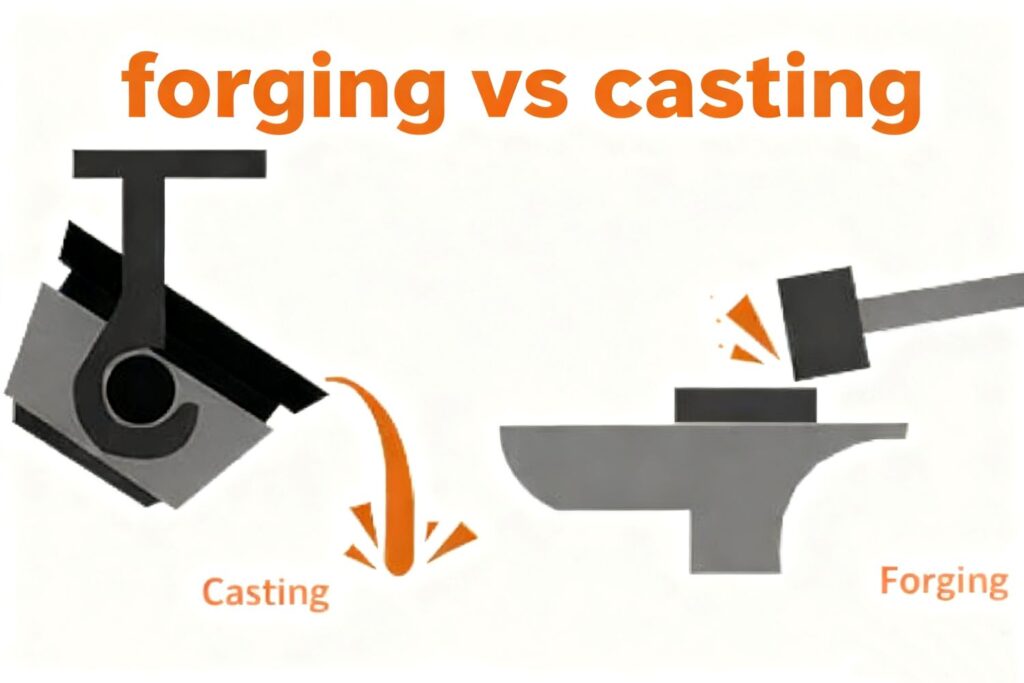
Forging vs Casting: Quick Answer
If component strength, fatigue resistance, and long service life are critical, forging is typically the preferred manufacturing process.
If design complexity, intricate internal passages, or lower upfront cost are the primary concerns, casting may be a better option.
For safety-critical parts such as shafts, gears, rings, flanges, and hydraulic cylinder components, forged steel generally delivers superior performance and reliability.
Forging vs Casting: At a Glance
| Factor | Forging | Casting |
|---|---|---|
| Strength | Excellent | Moderate |
| Fatigue Resistance | Excellent | Moderate |
| Grain Structure | Refined & Directional | Random |
| Internal Defects | Minimal | Possible Porosity |
| Impact Resistance | High | Moderate |
| Design Flexibility | Moderate | Excellent |
| Initial Tooling Cost | Higher | Lower |
| Service Life | Longer | Shorter |
| Typical Applications | Shafts, Gears, Rings | Housings, Covers |
What Is Forging?
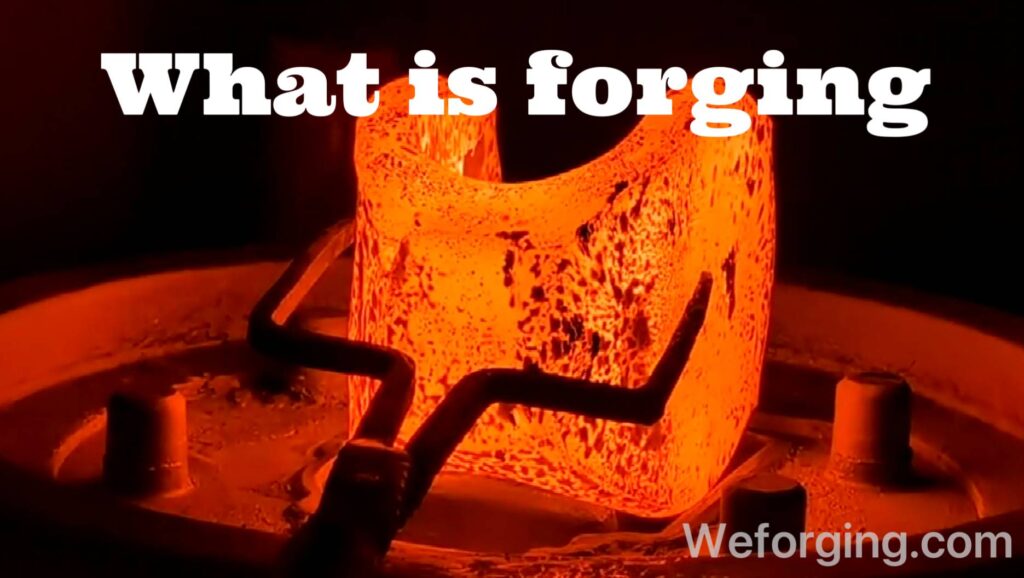
Forging is a manufacturing process that shapes metal through compressive force. The material is plastically deformed under controlled pressure, producing a refined grain structure and improved mechanical properties.
Common forging methods include:
Unlike casting, forging maintains continuous grain flow throughout the component, resulting in higher strength and improved fatigue resistance.
What Is Casting?
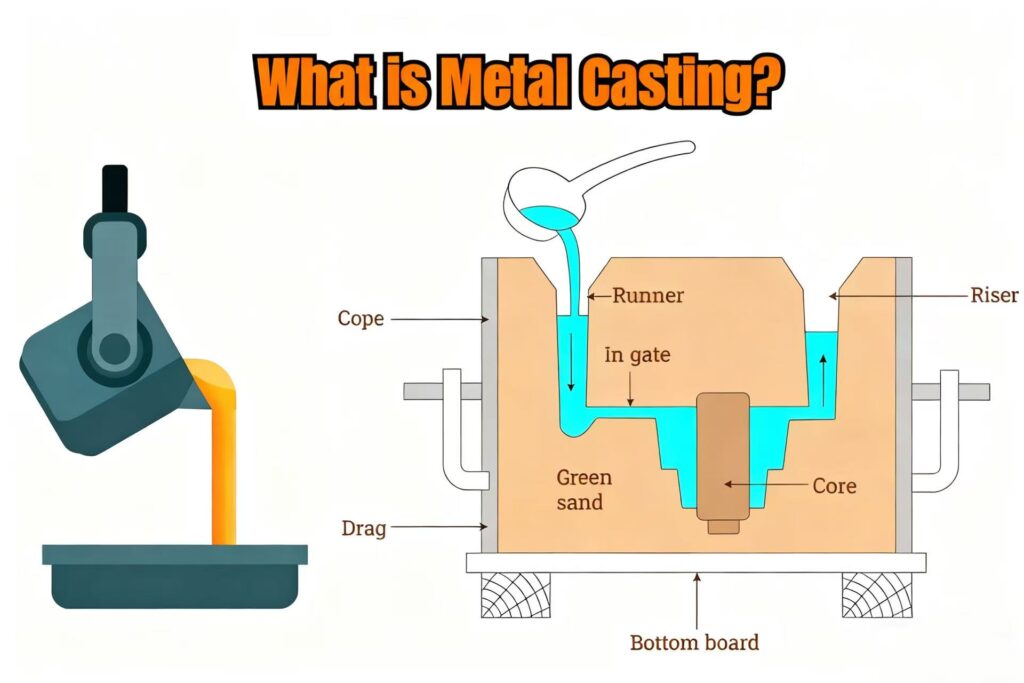
Casting is a manufacturing process in which molten metal is poured into a mold and allowed to solidify into the desired shape.
Common casting methods include:
- Sand casting
- Investment casting
- Die casting
- Permanent mold casting
Casting is particularly useful for producing complex geometries and components with internal cavities that would be difficult or expensive to forge.
Forging vs Casting — Key Technical Differences
The primary difference between forging and casting lies in how the metal structure is formed.
Grain Structure
During forging, metal grain flow follows the shape of the part, creating a continuous and directional structure.
During casting, molten metal solidifies randomly, resulting in a non-directional grain structure.
This difference has a significant impact on mechanical performance.
Internal Defects
Forging compresses the material and helps eliminate internal voids.
Casting may contain:
- Porosity
- Shrinkage cavities
- Gas pockets
- Non-metallic inclusions
These defects can reduce strength and fatigue life.
Mechanical Properties
Forged components generally provide:
- Higher tensile strength
- Better impact resistance
- Greater fatigue performance
- Improved structural integrity
Dimensional Accuracy
Modern casting processes can achieve complex shapes with minimal machining.
Forging often requires additional machining but provides better structural performance.
Production Volume
Casting is often preferred for highly complex designs.
Forging is preferred for critical load-bearing components.
Forged Steel vs Cast Steel: Performance Comparison
While both processes produce durable metal components, forging generally delivers higher strength, better fatigue resistance, and longer service life due to its refined grain structure and lower risk of internal defects.
Forged Steel vs Cast Steel Comparison
| Property | Forged Steel | Cast Steel |
|---|---|---|
| Grain Structure | Refined and directional | Random |
| Internal Defects | Minimal | Possible porosity |
| Fatigue Resistance | Excellent | Moderate |
| Impact Resistance | High | Moderate |
| Service Life | Longer | Typically shorter |
| Typical Applications | Gears, shafts, rings, flanges | Housings and complex shapes |
For components exposed to heavy loads, cyclic stress, or demanding operating conditions, forging is often the preferred choice. Casting is typically selected when design complexity and lower upfront costs are the main priorities.
Forging vs Casting: Cost and Lifecycle Considerations
When comparing forging vs casting cost, casting often has a lower initial manufacturing cost due to simpler tooling and its ability to produce complex shapes with minimal machining. For low-load applications where budget is the primary concern, casting can be a practical option.
However, initial cost is only part of the equation. Forged components typically provide longer service life, better fatigue resistance, and a lower risk of unexpected failure. As a result, maintenance, replacement, and downtime costs are often reduced over the product lifecycle.
Cost Comparison Overview
| Cost Factor | Forging | Casting |
|---|---|---|
| Initial Tooling Cost | Higher | Lower |
| Initial Part Cost | Moderate | Lower |
| Service Life | Longer | Shorter |
| Maintenance Cost | Lower | Higher |
| Failure Risk | Lower | Higher |
| Total Lifecycle Cost | Often Lower | Often Higher |
For OEM applications where reliability and long-term performance are critical, forging is often the more cost-effective choice when total ownership cost is considered.
Forging vs Casting for Common Industrial Components
| Component | Recommended Process |
|---|---|
| Gear Blank | Forging |
| Transmission Shaft | Forging |
| Rolled Ring | Forging |
| Flange | Forging |
| Hydraulic Cylinder Parts | Forging |
| Pump Housing | Casting |
| Valve Body | Casting |
| Machine Cover | Casting |
As a general rule, components subjected to dynamic loads are more suitable for forging, while complex housings and covers are often produced through casting.
Case Example: Replacing Cast Components With Forged Parts
In many industrial applications, OEMs replace cast components with forged alternatives to improve reliability and extend service life.
Typical upgrades include:
| Original Component | Replacement |
|---|---|
| Cast Ring | Rolled Ring Forging |
| Cast Shaft | Forged Shaft |
| Cast Gear Blank | Forged Gear Blank |
| Cast Flange | Forged Flange |
The most common reasons for conversion are:
- Improved fatigue resistance
- Better impact strength
- Reduced failure risk
- Longer service life
Conclusion
When comparing forging vs casting, the choice depends on performance needs. Forging provides superior strength, fatigue resistance, and dimensional accuracy—ideal for critical parts such as shafts, rings, and flanges.
With in-house forging + CNC machining + testing, Weforging delivers custom solutions that meet international standards.
Click the inquiry button below to upload your drawings or request a real-time quote. Our engineers will respond with a detailed, professional consultation.