
PPAP for Forged Parts: Requirements & Best Practices
Introduction
PPAP for forged parts is a critical step in verifying that a supplier can consistently manufacture components that meet customer specifications before mass production begins. While the Production Part Approval Process (PPAP) is widely used across manufacturing, forged parts require additional attention to material traceability, process control, heat treatment, and mechanical performance.
Unlike standard machined components, forged parts rely on tightly controlled manufacturing processes to achieve consistent strength, durability, and dimensional accuracy. For this reason, OEMs often evaluate both product quality and process capability during PPAP approval.
In this guide, you’ll learn when PPAP for forged parts is required, which PPAP documents are typically requested, what OEMs review during approval, and how suppliers can improve approval efficiency through better quality planning.
Key Takeaways
- PPAP confirms that forged parts can be manufactured consistently before mass production.
- Material traceability and process control are as important as dimensional inspection.
- A complete PPAP package combines engineering, process, material, and inspection documentation.
- Early quality planning significantly improves approval efficiency.
PPAP Requirements at a Glance
Item | Summary |
Primary Purpose | Verify production readiness |
Typical Industries | Automotive, Mining, Construction, Railway |
Key Documents | PSW, PFMEA, Control Plan, MTC |
Main Focus | Process consistency & traceability |
Common Submission | Level 3 PPAP |
When Is PPAP Required for Forged Parts?
PPAP for forged parts is typically required when a customer needs to verify that a manufacturing process is ready for serial production. It is widely used in automotive and is increasingly adopted in mining, construction, railway, agriculture, and other industries where quality and reliability are critical.
PPAP is commonly requested when:
- A new forged part enters production
- New tooling or a forging die is introduced
- The material specification changes
- The manufacturing process is modified
- Production is transferred to another facility
- A major design revision is implemented
The goal of PPAP is to verify that the supplier can consistently manufacture forged parts that meet customer requirements, helping reduce quality risks before mass production begins.
Essential PPAP Documents for Forged Parts
A PPAP package for forged parts combines engineering, process, material, and inspection documents to verify that the manufacturing process is stable and ready for serial production. While the exact requirements vary by customer and submission level, most projects include the following core documents.
Document | Purpose |
Design Record | Defines the latest product specifications |
Material Certificate (MTC) | Verifies material grade and chemical composition |
Process Flow Diagram | Describes the manufacturing sequence |
PFMEA | Identifies potential process risks |
Control Plan | Defines quality control methods |
Inspection Reports | Verify dimensions, heat treatment, and mechanical properties |
Part Submission Warrant (PSW) | Confirms the official PPAP submission |
Inspection reports typically include:
- Dimensional Inspection Report
- CMM Report
- Heat Treatment Report
- Mechanical Test Report
- UT or MT Report (if required)
Together, these documents demonstrate that the forged part meets customer specifications and that the manufacturing process is controlled, traceable, and capable of supporting consistent production.
Learn more about our forging inspection process and quality verification methods.
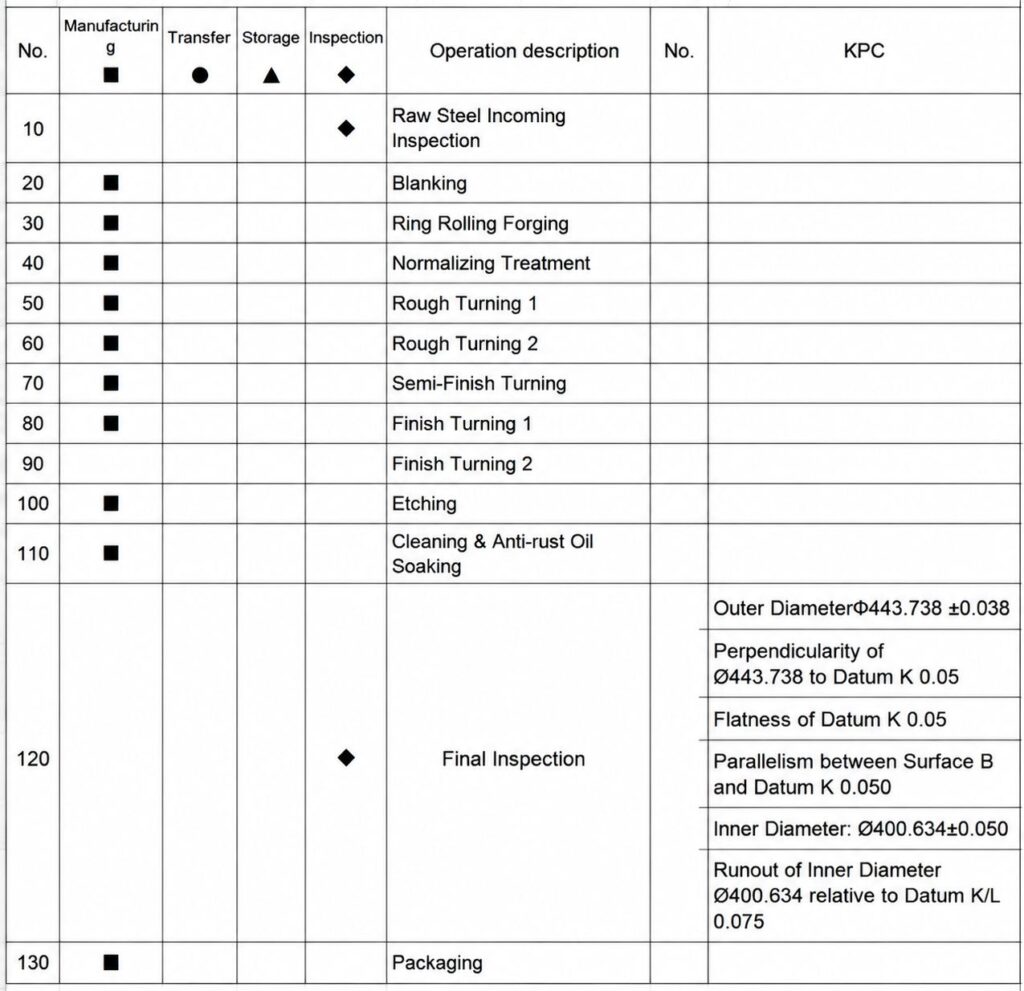
Example of Forging Process Control Plan for PPAP Submission
What Do OEMs Focus on During PPAP Review?
Submitting a complete PPAP package is only the first step. During the review process, OEMs evaluate whether the documentation proves that the manufacturing process is stable, repeatable, and capable of producing consistent quality over time.
For forged parts, the following areas usually receive the most attention:
- Material Traceability – Every part should be traceable to its raw material through heat numbers, material certificates, and batch records.
- Process Control – Key manufacturing steps such as forging, heat treatment, machining, and inspection should be documented and consistently controlled.
- Heat Treatment Verification – Hardness and mechanical properties must meet the specified requirements and be supported by test reports.
- Dimensional Inspection – Critical dimensions should be verified using calibrated equipment such as CMMs or dedicated gauges.
- Non-Destructive Testing (NDT) – For safety-critical components, UT or MT reports may be required to verify internal and surface integrity.
OEMs rarely assess these documents separately. Instead, they review them as evidence that the supplier can repeatedly deliver compliant forged parts under normal production conditions.
Common PPAP Challenges and How to Avoid Them
Many PPAP delays are caused by documentation issues rather than manufacturing defects. Identifying common problems early can reduce revisions and improve first-time approval rates.
Common Challenge | Best Practice |
Missing material traceability | Maintain complete batch records and heat numbers. |
Inconsistent inspection reports | Use calibrated equipment and standardized report formats. |
Outdated drawings | Confirm the latest revision before production starts. |
Incomplete PFMEA or Control Plan | Prepare quality documents during process planning, not afterward. |
Poor communication | Review the PPAP package across engineering, production, and quality teams before submission. |
A well-organized PPAP package saves time for both suppliers and customers. More importantly, it demonstrates that quality management is built into the manufacturing process rather than added after production.
How Can Forging Suppliers Improve PPAP Approval?
A successful PPAP for forged parts starts before sample production. Early planning helps suppliers identify risks, prepare required documents, and ensure the manufacturing process meets customer requirements.
Key steps include:
1. Review Customer Requirements Before Production
Confirm drawings, specifications, PPAP level, and special requirements before tooling and process planning.
2. Develop Process and Quality Plans
Prepare Process Flow, PFMEA, and Control Plan based on actual forging, machining, heat treatment, and inspection processes.
3. Complete Sample Inspection and Testing
Verify critical dimensions, material properties, and product performance before PPAP submission.
4. Prepare Complete PPAP Documentation
Organize material certificates, inspection reports, heat treatment records, and other required quality documents.
5. Maintain Quality Control During Mass Production
Continue monitoring process stability and traceability after approval to ensure consistent production quality.
Case Study: PPAP Preparation for a Forged Wheel Component
Project Background
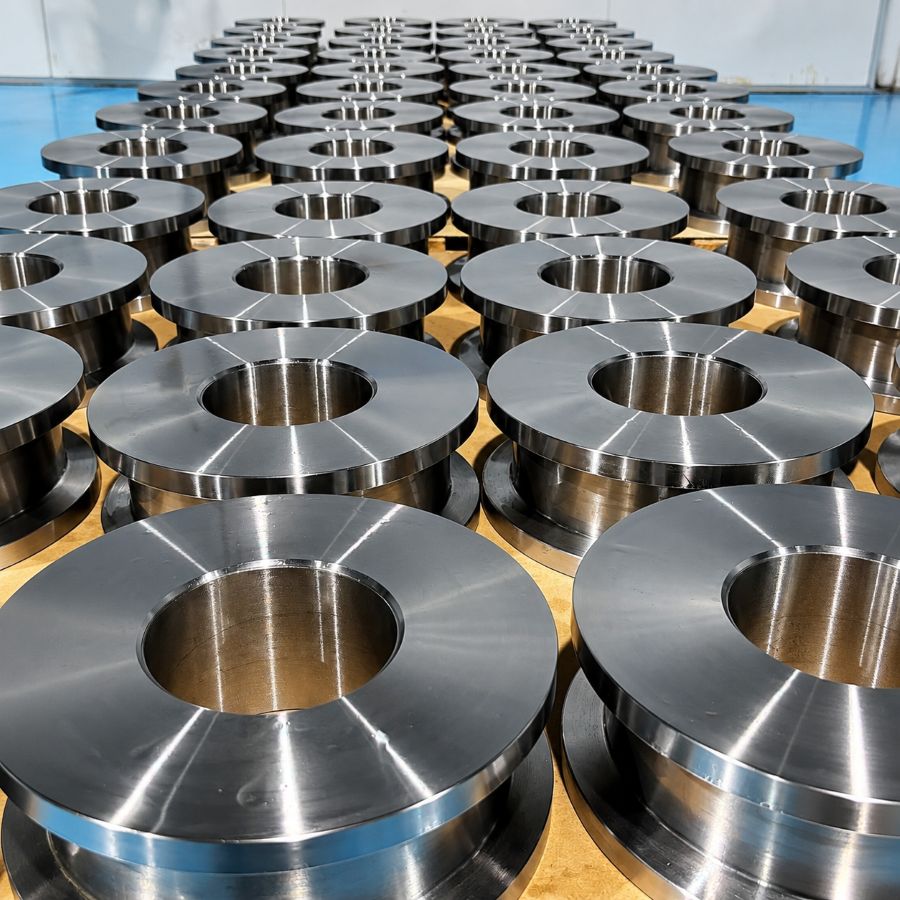
A heavy equipment manufacturer required an 8-inch forged wheel component with strict dimensional requirements. Before serial production, the forging supplier needed to verify process capability and ensure stable quality.
PPAP Preparation and Validation
The engineering team reviewed customer drawings, identified critical dimensions, and confirmed inspection requirements before production.
The PPAP package included:
- Process Flow Diagram
- PFMEA
- Control Plan
- Material Test Certificate (MTC)
- Heat Treatment Records
- Dimensional Inspection Reports
Critical features were verified through CMM inspection and dimensional checks to confirm compliance with customer specifications.
Result
By integrating engineering review, process control, and inspection verification, the project achieved production readiness before mass manufacturing, demonstrating stable dimensional control, traceability, and manufacturing capability.
Conclusion
PPAP for forged parts is more than a collection of quality documents. It verifies whether a supplier has a stable and repeatable manufacturing process before mass production.
In real forging projects, successful PPAP approval depends on process control, material traceability, heat treatment, and inspection planning. At Weforging, our engineering team works with customers on drawing review, process evaluation, and quality documentation to help define clear requirements before production.