Please enable JavaScript in your browser to complete this form.

Clevis Rod Forgings | Forged & CNC Machined Steel Components

The clevis rod is a key connecting component commonly used in hydraulic cylinders, mechanical linkages, and heavy-duty motion control systems. It is designed to transmit linear force while allowing controlled articulation, supporting stable load transfer and accurate alignment within assembled structures. Manufactured through closed-die forging and precision CNC machining, Weforging’s custom clevis rods feature optimized material flow, precise geometry, and consistent dimensional control, making them suitable for construction machinery, industrial equipment, agricultural machinery, and a wide range of hydraulic applications.
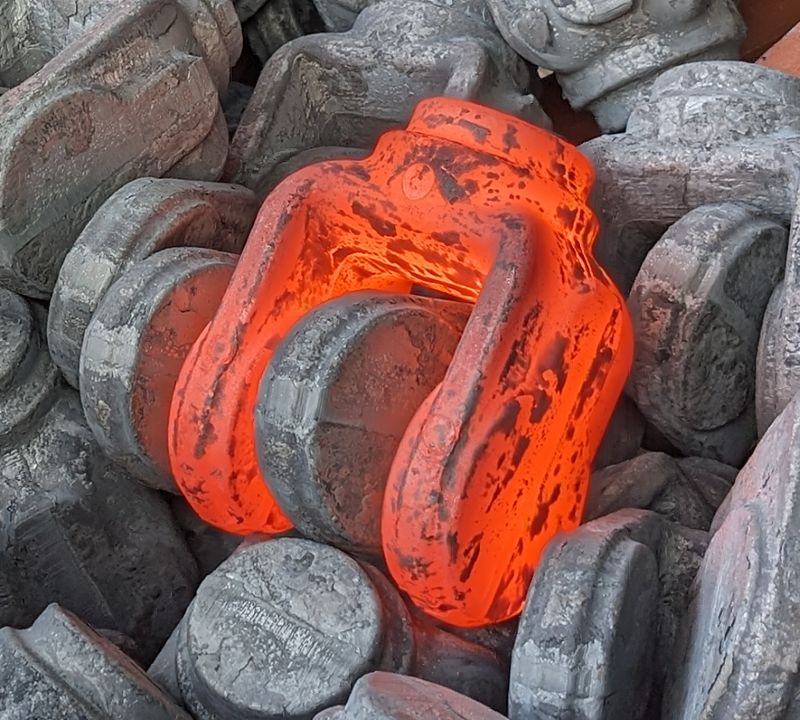
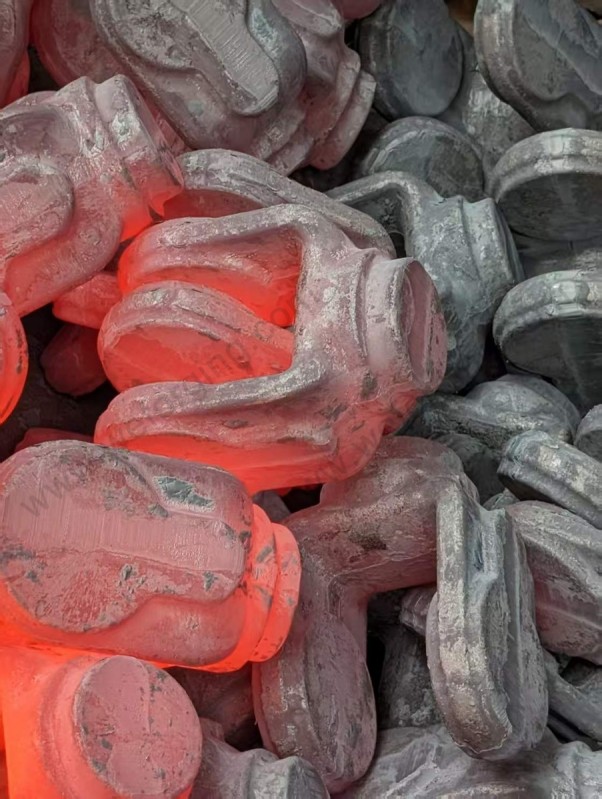
Forged clevis rod produced by hot forging for hydraulic and mechanical linkage systems

What Is a Clevis Rod?

A clevis rod typically features a forked end with parallel arms and machined pin holes, allowing it to connect with mating components through a clevis pin or shaft. This design enables controlled rotation while maintaining axial force transmission.

Compared with machined-from-bar alternatives, forged clevis rods benefit from refined grain flow following the load path. This forged structure supports balanced stress distribution and contributes to stable mechanical performance across repeated operating cycles.

Materials and Standards

Weforging manufactures clevis rod forgings using carbon steel and alloy steel grades commonly specified for structural and hydraulic components. Material selection is guided by load conditions, connection requirements, and service environments, while remaining compatible with international standards.

Typical materials include:

  • Carbon Steel: ASTM A105, C45, EN 1.0503

  • Alloy Steel: AISI 4140 / 42CrMo4, ASTM A182 F22

  • Low-Alloy Structural Steel: EN 1.7225, DIN 42CrMo

Heat treatment options such as normalizing, quenching and tempering may be applied based on application requirements.

Manufacturing Process

Weforging applies an integrated manufacturing route to ensure consistent quality from raw material to finished clevis rod:

Products can be supplied as forged blanks, semi-machined parts, or fully CNC-machined components according to drawings or samples.

Product Performance Characteristics

Thanks to the forged structure and controlled machining process, Weforging’s clevis rods offer:

  • Stable load transmission through optimized fork geometry

  • Accurate pin hole alignment supporting smooth articulation

  • Consistent dimensional control for reliable assembly

  • Balanced mechanical behavior under static or dynamic loads

These characteristics support dependable performance in hydraulic and mechanical linkage systems.

Typical Applications

Clevis rod forgings are widely used in:

  • Hydraulic cylinders: rod-end connections and pivot points

  • Construction machinery: linkage and articulation mechanisms

  • Agricultural equipment: lifting and steering systems

  • Industrial machinery: linear motion and force transmission assemblies

  • Material handling equipment: load control and guided movement

In these systems, clevis rods serve as connecting and load-transmitting elements that support stable motion and structural integrity.

Customization Capabilities

Weforging supports full customization of clevis rod forgings, including:

  • Fork width, arm thickness, and overall length

  • Pin hole diameter and tolerance

  • Material grade and heat treatment condition

  • Machining scope and surface finish

Our engineering team works directly from customer drawings or samples to ensure functional compatibility with the target assembly.

Conclusion & Inquiry

Weforging’s custom clevis rod forgings provide a reliable solution for mechanical and hydraulic connection applications requiring strength, accuracy, and structural consistency. By combining forged material structure with precision machining, we support stable performance across demanding industrial environments.

If you are developing a new project or sourcing clevis rods for an existing system, feel free to contact us to discuss drawings, technical requirements, or quotation details.

Clevis Rod Forgings | Forged & CNC Machined Steel Components

The clevis rod is a key connecting component commonly used in hydraulic cylinders, mechanical linkages, and heavy-duty motion control systems. It is designed to transmit linear force while allowing controlled articulation, supporting stable load transfer and accurate alignment within assembled structures. Manufactured through closed-die forging and precision CNC machining, Weforging’s custom clevis rods feature optimized material flow, precise geometry, and consistent dimensional control, making them suitable for construction machinery, industrial equipment, agricultural machinery, and a wide range of hydraulic applications.

Forged clevis rod produced by hot forging for hydraulic and mechanical linkage systems

What Is a Clevis Rod?

A clevis rod typically features a forked end with parallel arms and machined pin holes, allowing it to connect with mating components through a clevis pin or shaft. This design enables controlled rotation while maintaining axial force transmission.

Compared with machined-from-bar alternatives, forged clevis rods benefit from refined grain flow following the load path. This forged structure supports balanced stress distribution and contributes to stable mechanical performance across repeated operating cycles.

Materials and Standards

Weforging manufactures clevis rod forgings using carbon steel and alloy steel grades commonly specified for structural and hydraulic components. Material selection is guided by load conditions, connection requirements, and service environments, while remaining compatible with international standards.

Typical materials include:

  • Carbon Steel: ASTM A105, C45, EN 1.0503

  • Alloy Steel: AISI 4140 / 42CrMo4, ASTM A182 F22

  • Low-Alloy Structural Steel: EN 1.7225, DIN 42CrMo

Heat treatment options such as normalizing, quenching and tempering may be applied based on application requirements.

Manufacturing Process

Weforging applies an integrated manufacturing route to ensure consistent quality from raw material to finished clevis rod:

Products can be supplied as forged blanks, semi-machined parts, or fully CNC-machined components according to drawings or samples.

Product Performance Characteristics

Thanks to the forged structure and controlled machining process, Weforging’s clevis rods offer:

  • Stable load transmission through optimized fork geometry

  • Accurate pin hole alignment supporting smooth articulation

  • Consistent dimensional control for reliable assembly

  • Balanced mechanical behavior under static or dynamic loads

These characteristics support dependable performance in hydraulic and mechanical linkage systems.

Typical Applications

Clevis rod forgings are widely used in:

  • Hydraulic cylinders: rod-end connections and pivot points

  • Construction machinery: linkage and articulation mechanisms

  • Agricultural equipment: lifting and steering systems

  • Industrial machinery: linear motion and force transmission assemblies

  • Material handling equipment: load control and guided movement

In these systems, clevis rods serve as connecting and load-transmitting elements that support stable motion and structural integrity.

Customization Capabilities

Weforging supports full customization of clevis rod forgings, including:

  • Fork width, arm thickness, and overall length

  • Pin hole diameter and tolerance

  • Material grade and heat treatment condition

  • Machining scope and surface finish

Our engineering team works directly from customer drawings or samples to ensure functional compatibility with the target assembly.

Conclusion & Inquiry

Weforging’s custom clevis rod forgings provide a reliable solution for mechanical and hydraulic connection applications requiring strength, accuracy, and structural consistency. By combining forged material structure with precision machining, we support stable performance across demanding industrial environments.

If you are developing a new project or sourcing clevis rods for an existing system, feel free to contact us to discuss drawings, technical requirements, or quotation details.

Clevis Rod Forgings | Forged & CNC Machined Steel Components

The clevis rod is a key connecting component commonly used in hydraulic cylinders, mechanical linkages, and heavy-duty motion control systems. It is designed to transmit linear force while allowing controlled articulation, supporting stable load transfer and accurate alignment within assembled structures. Manufactured through closed-die forging and precision CNC machining, Weforging’s custom clevis rods feature optimized material flow, precise geometry, and consistent dimensional control, making them suitable for construction machinery, industrial equipment, agricultural machinery, and a wide range of hydraulic applications.

Forged clevis rod produced by hot forging for hydraulic and mechanical linkage systems

What Is a Clevis Rod?

A clevis rod typically features a forked end with parallel arms and machined pin holes, allowing it to connect with mating components through a clevis pin or shaft. This design enables controlled rotation while maintaining axial force transmission.

Compared with machined-from-bar alternatives, forged clevis rods benefit from refined grain flow following the load path. This forged structure supports balanced stress distribution and contributes to stable mechanical performance across repeated operating cycles.

Materials and Standards

Weforging manufactures clevis rod forgings using carbon steel and alloy steel grades commonly specified for structural and hydraulic components. Material selection is guided by load conditions, connection requirements, and service environments, while remaining compatible with international standards.

Typical materials include:

  • Carbon Steel: ASTM A105, C45, EN 1.0503

  • Alloy Steel: AISI 4140 / 42CrMo4, ASTM A182 F22

  • Low-Alloy Structural Steel: EN 1.7225, DIN 42CrMo

Heat treatment options such as normalizing, quenching and tempering may be applied based on application requirements.

Manufacturing Process

Weforging applies an integrated manufacturing route to ensure consistent quality from raw material to finished clevis rod:

Products can be supplied as forged blanks, semi-machined parts, or fully CNC-machined components according to drawings or samples.

Product Performance Characteristics

Thanks to the forged structure and controlled machining process, Weforging’s clevis rods offer:

  • Stable load transmission through optimized fork geometry

  • Accurate pin hole alignment supporting smooth articulation

  • Consistent dimensional control for reliable assembly

  • Balanced mechanical behavior under static or dynamic loads

These characteristics support dependable performance in hydraulic and mechanical linkage systems.

Typical Applications

Clevis rod forgings are widely used in:

  • Hydraulic cylinders: rod-end connections and pivot points

  • Construction machinery: linkage and articulation mechanisms

  • Agricultural equipment: lifting and steering systems

  • Industrial machinery: linear motion and force transmission assemblies

  • Material handling equipment: load control and guided movement

In these systems, clevis rods serve as connecting and load-transmitting elements that support stable motion and structural integrity.

Customization Capabilities

Weforging supports full customization of clevis rod forgings, including:

  • Fork width, arm thickness, and overall length

  • Pin hole diameter and tolerance

  • Material grade and heat treatment condition

  • Machining scope and surface finish

Our engineering team works directly from customer drawings or samples to ensure functional compatibility with the target assembly.

Conclusion & Inquiry

Weforging’s custom clevis rod forgings provide a reliable solution for mechanical and hydraulic connection applications requiring strength, accuracy, and structural consistency. By combining forged material structure with precision machining, we support stable performance across demanding industrial environments.

If you are developing a new project or sourcing clevis rods for an existing system, feel free to contact us to discuss drawings, technical requirements, or quotation details.
Scroll to Top