Ring Gear Manufacturing Process: From Forging to Machining
A ring gear is a critical component in mechanical transmission systems, supporting torque transfer, load distribution, and controlled rotation. In heavy machinery, energy equipment, and industrial drive applications, ring gears are commonly designed with large diameters and precise tooth geometry to ensure stable performance. To achieve these requirements, modern ring gear manufacturing integrates rolled ring forging, precision machining, and gear cutting processes. This article explains what a ring gear is, how rolled ring forgings are converted into finished ring gears, and how gear hobbing and gear shaping are applied to produce accurate internal and external tooth profiles for custom industrial applications.
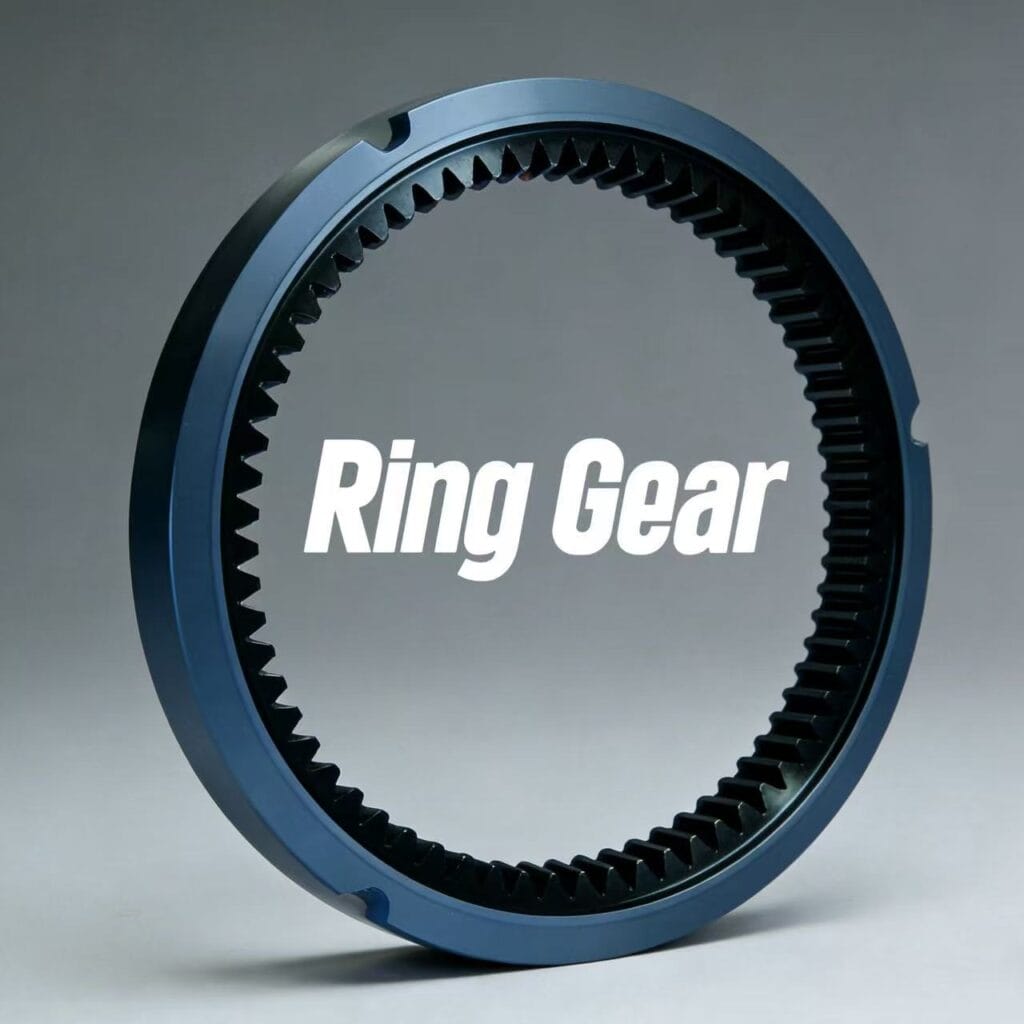
What Is a Ring Gear
A ring gear is a circular gear component with teeth formed on the inner or outer diameter of a ring-shaped body. It is widely used in mechanical transmission systems to support torque transfer, load distribution, and controlled rotational motion. Ring gears commonly function as internal gears in planetary gear systems or as external gears in large industrial drives. In many applications, ring gears are manufactured as custom components to match specific size, load, and installation requirements.
How the Ring Gear Manufacturing Process Works
The ring gear manufacturing process typically follows a structured sequence designed to balance material performance and dimensional accuracy. While details may vary by project, a typical production route includes:
- Ring blank preparation through forging or rolled ring forging
- Rough machining to establish reference surfaces
- Gear tooth machining for internal or external profiles
- Heat treatment when required by application conditions
- Finish machining and dimensional inspection
This staged approach allows each process to contribute to the final performance of the ring gear while maintaining control over geometry and material behavior.
Ring Gear Blank Preparation: Rolled Ring Forging
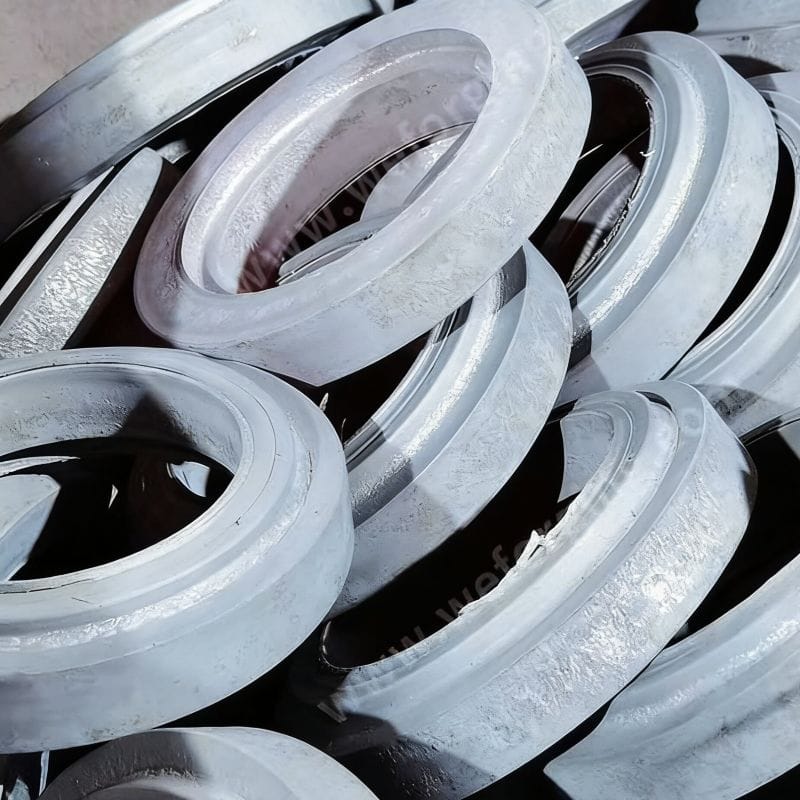
In many industrial applications, ring gear blanks are commonly produced through rolled ring forging. This process forms a seamless ring by expanding a pre-forged billet under controlled rolling conditions, promoting uniform material flow and a continuous circumferential grain structure.
Rolled ring forgings are widely used for ring gear manufacturing due to their consistent wall thickness, balanced material distribution, and efficient use of raw material. These features provide a stable foundation for subsequent machining and gear cutting operations and support reliable performance in a wide range of ring gear applications.
Internal Ring Gear Machining Methods
Internal ring gear machining requires cutting tools to operate within confined spaces while maintaining accurate tooth geometry. For this reason, gear shaping is commonly used for internal ring gears produced from rolled ring forgings.
Gear shaping employs a reciprocating cutting motion combined with synchronized rotation between the cutter and the workpiece. This method allows internal teeth to be generated with precise spacing and consistent profiles, even in large-diameter rings. When applied after rolled ring forging, gear shaping supports stable internal tooth geometry aligned with the forged ring structure.
Key Considerations in Large Ring Gear Manufacturing
Large ring gear manufacturing involves several key considerations to maintain stable geometry and consistent performance across large diameters, including:
Forging method selection to produce stable and uniform ring blanks
Machining sequence planning to maintain dimensional accuracy during processing
Gear cutting strategy based on internal or external tooth geometry
Heat treatment coordination to support material properties and dimensional stability
Inspection and quality control to verify geometry, tooth alignment, and concentricity
By coordinating these manufacturing steps, large ring gears can be produced with consistent geometry and reliable performance in industrial rotating assemblies.
Inspection and Quality Control
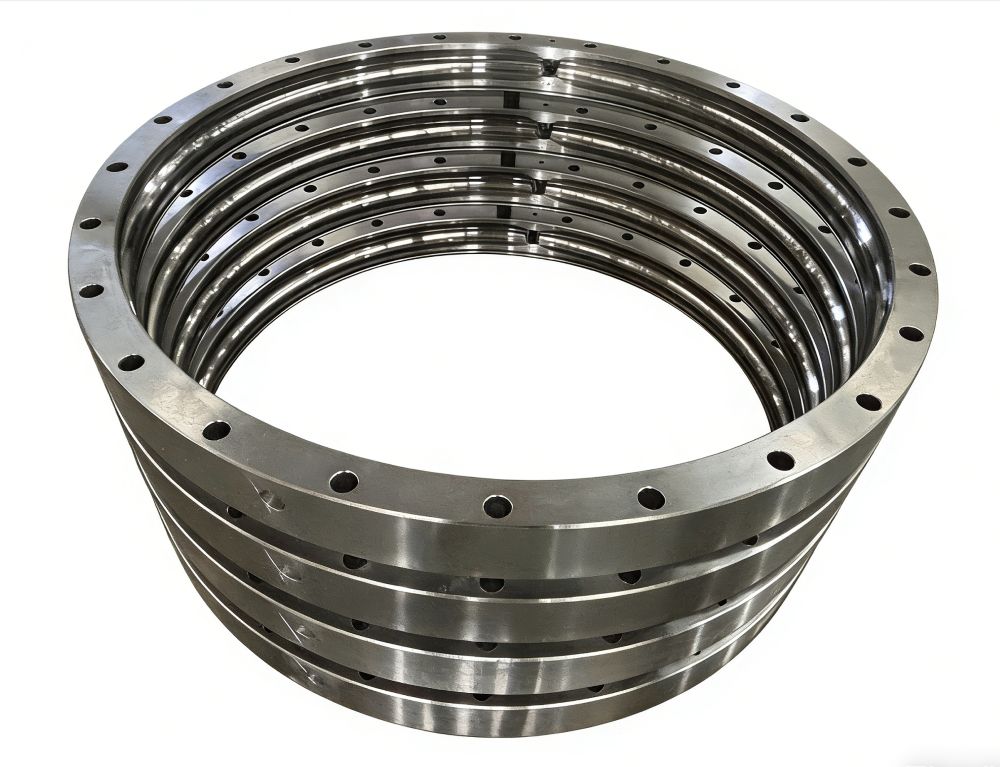
Inspection and quality control are essential in ring gear manufacturing to ensure compliance with drawing specifications and functional requirements. Key inspection activities typically include:
Dimensional inspection to verify critical diameters, widths, and tolerance compliance
Tooth profile measurement to confirm accurate gear geometry and proper tooth form
Concentricity verification to ensure uniform rotation and stable load transmission
These inspections are performed at multiple stages of production, including after machining and gear cutting. By integrating inspection into the manufacturing workflow, consistent dimensional control and reliable gear performance can be maintained across different applications.
Surface Treatment Options
Surface treatment for ring gears is selected according to operating conditions and application requirements to enhance durability, load capacity, and stable gear meshing. In many industrial applications, surface treatment contributes to improved wear behavior, fatigue performance, and long-term operational reliability.
Common methods include heat treatment processes such as quenching and tempering or induction hardening, chosen based on material grade and load characteristics. Additional surface treatments can be applied to support corrosion resistance or handling efficiency. Surface treatment is typically integrated into the overall manufacturing route and coordinated with forging and gear machining operations.
Conclusion
The ring gear manufacturing process combines rolled ring forging, precision machining, and gear cutting into an integrated production route. This approach supports accurate tooth geometry and stable structural performance for both internal and external ring gears, especially in large-diameter applications.
If you have drawings or technical requirements for a custom ring gear project, the engineering team at Weforging is available for preliminary discussion and technical evaluation to support your design and manufacturing needs.