
Stainless Steel Forgings: A Complete Guide
Stainless steel forgings are high-strength metal components manufactured through controlled forging processes to improve durability, corrosion resistance, and mechanical performance. Compared with cast or fully machined parts, forged stainless steel delivers superior grain structure and long-term reliability in demanding industrial environments.
Because of these advantages, stainless steel forgings are widely used in oil & gas systems, marine equipment, mining machinery, and heavy industrial applications. This guide explains what stainless steel forgings are, how the forging process works, which material grades are commonly used, and how buyers evaluate forged components for industrial projects.
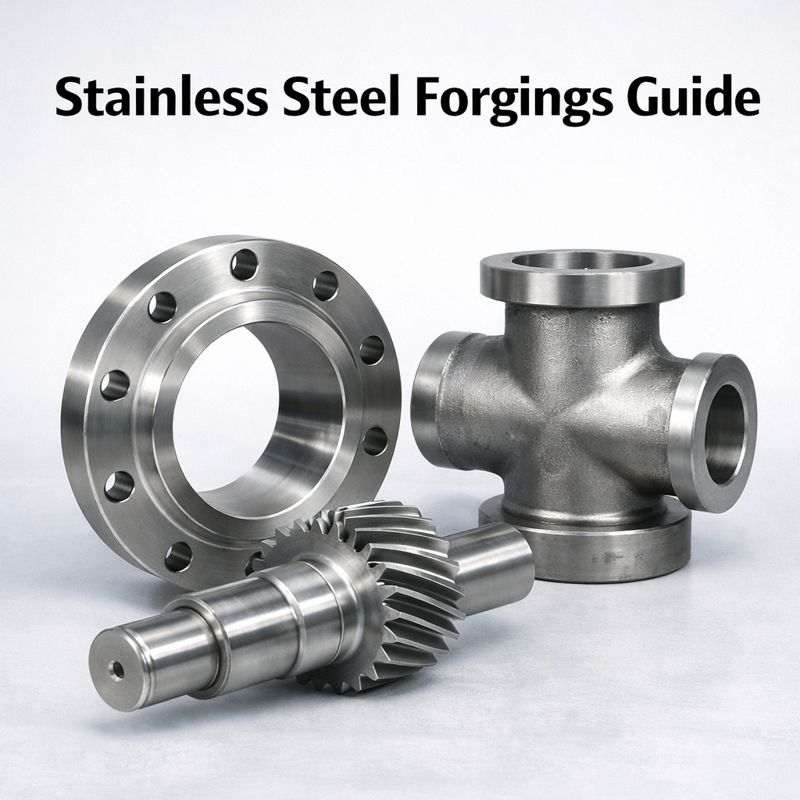
What Are Stainless Steel Forgings?
Stainless steel forgings are metal components formed by shaping heated stainless steel under high pressure. The forging process compresses the metal instead of cutting it, strengthening the internal structure and improving durability.
Key characteristics include:
- Continuous grain flow aligned with part geometry
- Improved strength and fatigue resistance
- Reduced internal defects compared with casting
- Better machining consistency
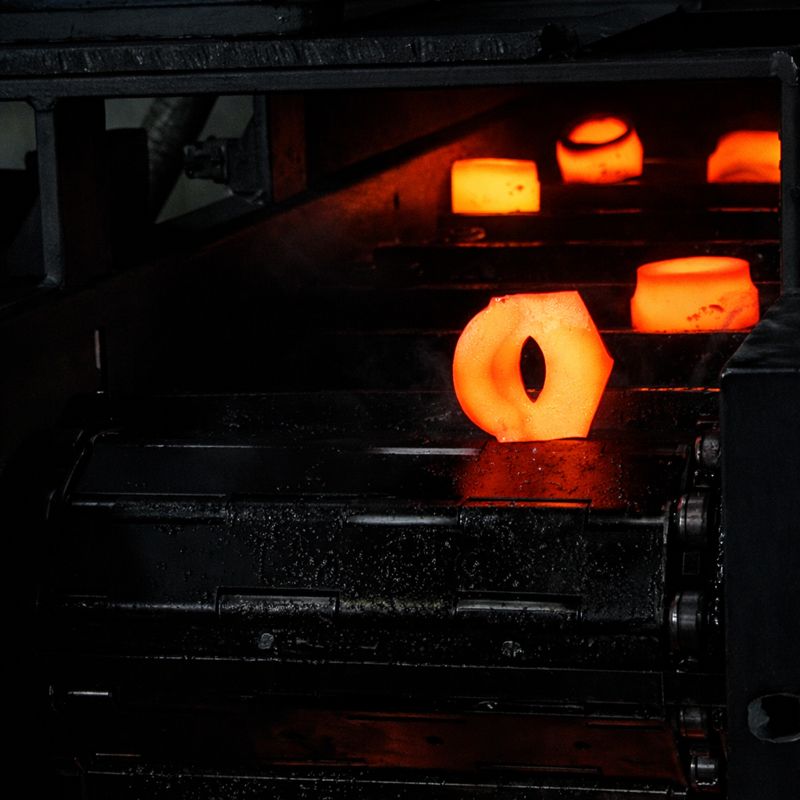
Typical Stainless Steel Forged Parts
Stainless steel forged parts are designed for environments where corrosion resistance, structural strength, and long service life are essential. Typical components include:
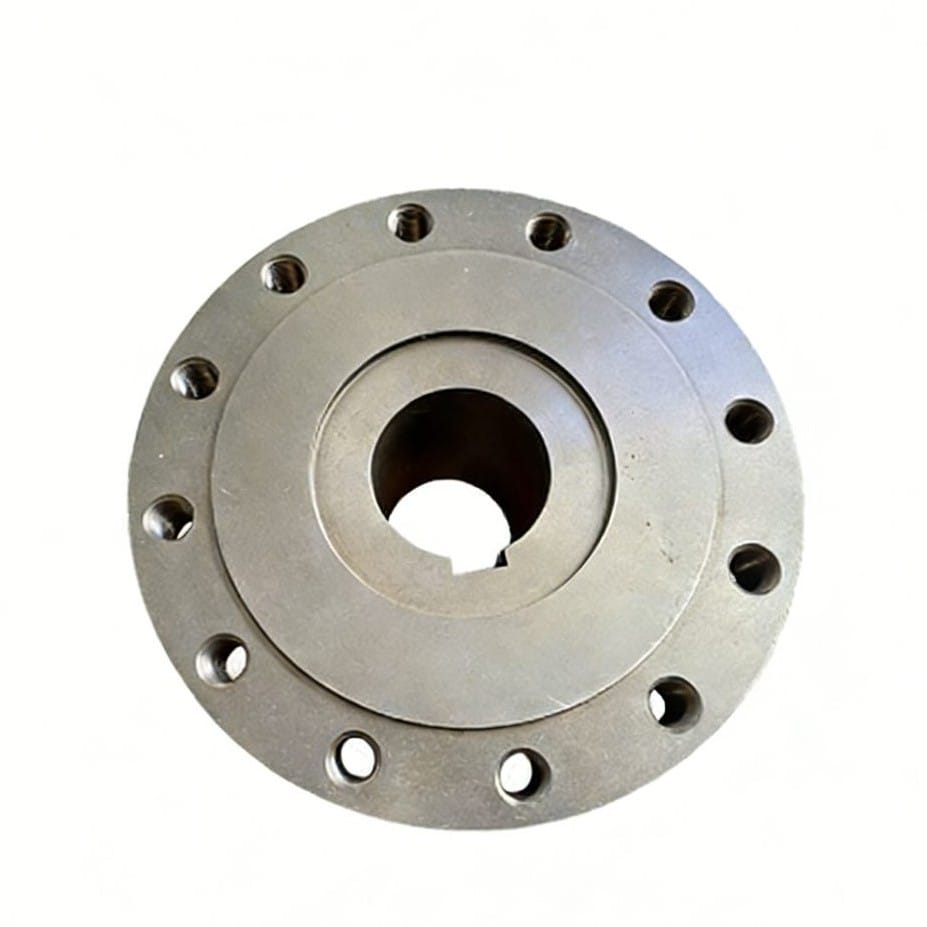
- Forged flanges— pressure and pipeline systems
- Forged shafts— rotating and load-bearing assemblies
- Gear blanks— precision transmission parts
- Valve bodies— corrosion-resistant flow systems
- Forged ringsand hubs — structural and mechanical connections
- Heavy-duty structural forgings— high-load industrial equipment
These stainless steel forgings are widely used in oil & gas, marine systems, mining machinery, chemical processing, and heavy industrial equipment. Forging improves grain flow and structural integrity, helping components maintain reliable performance under corrosion, vibration, and heavy mechanical stress.
Why Use Forging for Stainless Steel Components?
Stainless steel forgings are widely used in industrial applications because forging improves the internal grain structure of the material — not just the outer shape. This structural refinement increases strength, fatigue resistance, and long-term reliability.
Compared with cast or fully machined parts, forged stainless steel components deliver more consistent mechanical performance and fewer internal defects.
Key benefits include:
- Higher mechanical strength and impact resistance
- Improved fatigue performance under cyclic loads
- Reduced porosity compared with cast parts
- More stable machining and dimensional accuracy
- Longer service life in corrosive environments
- Lower lifecycle maintenance and replacement costs
For industries that require both corrosion resistance and structural durability, stainless steel forging remains a dependable and cost-effective manufacturing solution.
Forged vs Cast Stainless Steel Parts
Both forged and cast stainless steel parts are used in industry, but their performance characteristics differ significantly due to manufacturing methods.
Factor | Forged Stainless Steel | Cast Stainless Steel |
Grain structure | Continuous aligned grain flow | Random grain structure |
Strength | Higher mechanical strength | Moderate strength |
Internal defects | Minimal porosity | Higher risk of voids |
Fatigue resistance | Excellent under cyclic loads | Lower fatigue life |
Machining stability | More consistent | Can vary |
Typical use | High-load industrial parts | Complex shapes, lower load |
Forged stainless steel components are preferred when strength, durability, and structural reliability are critical. Cast parts may be chosen for cost or complex geometry, but they usually sacrifice long-term mechanical performance.
Stainless Steel Forging Process Explained
The stainless steel forging manufacturing process follows a controlled sequence designed to ensure strength, corrosion resistance, and dimensional stability for OEM production.
A typical process includes:
- Material preparation
Certified stainless steel billets are selected according to ASTM or EN standards. Material composition and traceability are verified before forging begins. - Heating
Billets are uniformly heated to the proper forging temperature to prevent cracking and maintain metallurgical consistency. - Forging deformation
Open-die forging or closed-die forging shapes the component while aligning grain flow with the part geometry, improving strength and fatigue resistance. - Heat treatment
Solution treatment or quenching stabilizes the microstructure and enhances corrosion resistance and mechanical performance. - Precision machining
CNC machining achieves final tolerances, surface finish, and functional features required by OEM drawings. - Inspection and testing
Dimensional inspection and non-destructive testing confirm compliance with technical standards and quality requirements.
An integrated forging–machining workflow ensures stainless steel components deliver reliable performance in demanding industrial environments.
Common Stainless Steel Grades Used in Forgings
Common stainless steel grades used in industrial forgings can be compared by cost level and performance focus. This helps engineers and procurement teams select the right material based on lifecycle requirements rather than price alone.
Grade | Key Feature | Cost Level | Performance Focus | Common Standards |
304 | General corrosion resistance | Low–Medium | Balanced corrosion protection and manufacturability | ASTM A182 F304 / EN 1.4301 |
316 | Marine & chemical resistance | Medium–High | Superior corrosion resistance in aggressive environments | ASTM A182 F316 / EN 1.4401 |
410 | High strength martensitic steel | Medium | Higher hardness and wear resistance after heat treatment | ASTM A182 F410 / EN 1.4006 |
17-4PH | Precipitation hardening stainless steel | High | Very high strength with stable corrosion resistance | ASTM A564 Type 630 / EN 1.4542 |
Material selection should balance cost, corrosion exposure, load conditions, and post-forging machining requirements. Choosing the correct stainless steel forging grade ensures predictable performance, longer service life, and lower lifecycle cost.
Typical Applications of Stainless Steel Forgings
Stainless steel forged components are widely used in:
- Oil and gas equipment
- Mining and construction machinery
- Marine propulsion systems
- Power generation equipment
- Industrial pumps and valves
- Heavy transmission components
Their corrosion resistance and structural reliability make them suitable for harsh environments.
Custom Stainless Steel Forging Advantages
Custom stainless steel forging advantages include higher strength, superior corrosion resistance, and longer service life compared with cast or machined parts. Forging refines grain structure, reduces internal defects, and improves fatigue durability, making forged stainless steel components ideal for heavy-load and harsh industrial environments.
Key advantages:
— Higher strength-to-weight ratio
— Reduced porosity and internal defects
— Improved fatigue and impact resistance
— Better dimensional stability after machining
— Longer lifecycle with lower maintenance cost
— Consistent quality for OEM batch production
Why Choose Weforging for Your Stainless Steel Forging Needs?
Weforging specializes in stainless steel forgings supported by an integrated forging and CNC machining workflow. From certified raw material sourcing to final inspection, every stage is controlled to ensure traceability, dimensional consistency, and stable batch quality for OEM production.
Our factory experience in heavy industrial forgings allows us to manage complex drawings, tight tolerances, and repeat production requirements. With responsive communication, reliable lead times, and strict quality inspection, Weforging helps buyers reduce risk and maintain long-term supply stability.
Conclusion
Stainless steel forgings provide corrosion resistance and high mechanical strength for demanding industrial applications. Understanding materials, forging processes, and supplier capability helps procurement teams make safer long-term decisions.
If you are planning a stainless steel forging project, we’re happy to provide technical advice and a free quotation. Share your drawings or requirements — we typically respond within 24 hours.