A US Buyer’s Guide to Custom Forging Suppliers in China
For US buyers sourcing industrial components, choosing the right custom forging supplier in China directly influences product quality, delivery stability, and long-term cost performance. Rather than comparing prices alone, procurement teams focus on manufacturing capability, process consistency, and long-term OEM support. This guide outlines the key factors buyers and engineers should consider when evaluating custom forging suppliers, helping teams make informed and reliable sourcing decisions.
What Is a Custom Forging Supplier?
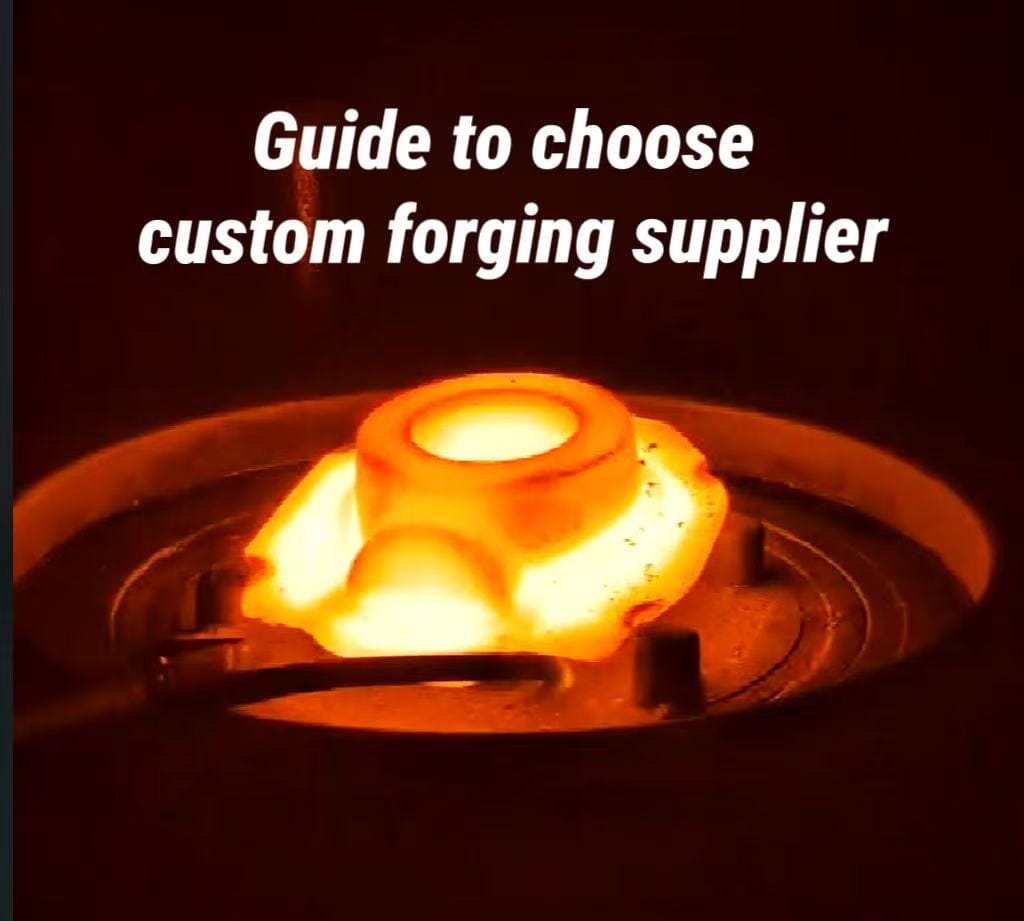
A custom forging supplier manufactures forged components based on customer-specific drawings, materials, and performance requirements. Unlike standard part suppliers or trading companies, custom forging suppliers are typically involved early in the project, supporting design optimization, material selection, and process planning.
Typical products include shafts, rings, flanges, gear blanks, and other forged steel components that require controlled grain flow, high mechanical strength, and dimensional accuracy. For OEM buyers, a true custom forging supplier is not just a producer, but a long-term technical manufacturing partner.
Why US Buyers Source Forgings from China
China has become a major global sourcing destination for custom forgings due to its mature manufacturing infrastructure and complete industrial supply chains. Many Chinese forging suppliers have decades of experience serving international OEMs across automotive, construction equipment, energy, and heavy machinery industries.
For US buyers, sourcing from China offers access to integrated forging, heat treatment, and machining capabilities within a single supplier. When properly evaluated, Chinese forging suppliers can deliver stable quality, scalable production capacity, and competitive long-term value—not just short-term cost savings.
Manufacturing Capability: From Forging Process to Final Machining
Manufacturing capability is a key factor when US buyers evaluate a custom forging supplier. Beyond price, buyers need to understand how well the supplier controls the full production flow—from forging process selection to final machining. Strong manufacturing capability supports consistent quality, stable lead times, and reliable long-term OEM cooperation.
At Weforging, this capability is built around an integrated manufacturing model that combines forging, heat treatment, CNC machining, and inspection within one system. This structure allows tighter process control and clearer engineering coordination across each production stage.
Key Forging Processes a Supplier Should Offer
A capable custom forging supplier should support multiple forging processes to meet different component geometries, load conditions, and performance requirements. Typical forging methods include:
- Open-die forging – Suitable for large components or simple geometries, offering flexibility for low-volume production and heavy-section parts.
- Closed-die forging – Ideal for precision components with complex shapes, providing better dimensional control and repeatability.
- Hot forging – Commonly used for high-strength parts where refined grain flow and reliable mechanical performance are required.
- Cold forging – Applied when tight tolerances, smooth surface finish, and high dimensional accuracy are critical.
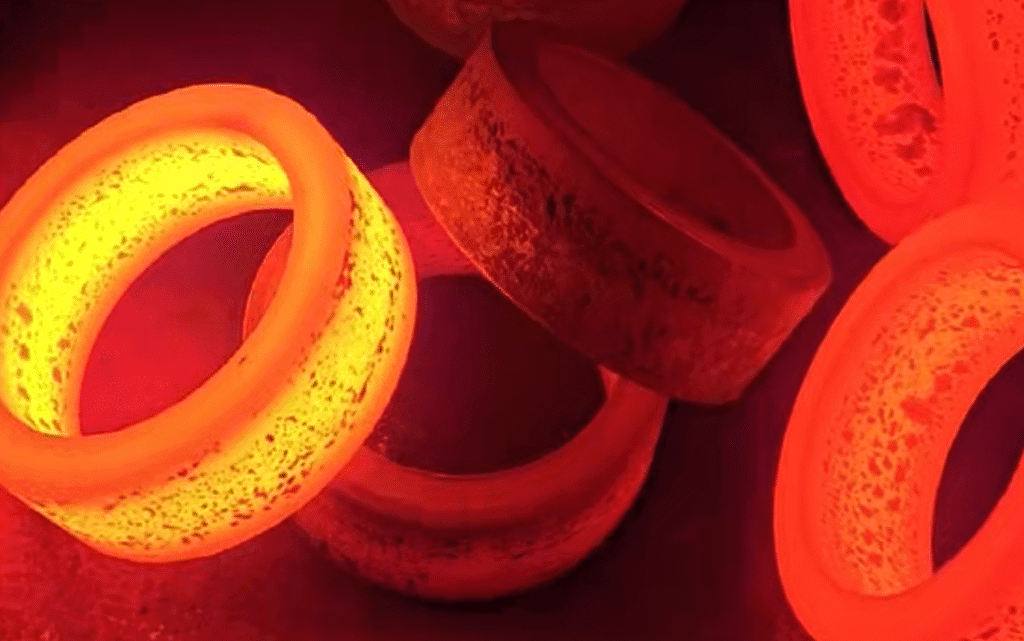
- Rolled ring forging – Used for seamless rings and circular components, delivering uniform grain flow and strong structural integrity.
Rather than applying a single method, Weforging evaluates drawings, load conditions, and service requirements to recommend the most suitable forging process for each application. This process-driven approach reflects real engineering capability and supports stable quality, efficient production, and controlled overall cost.
Hot Forging Production Line Capability
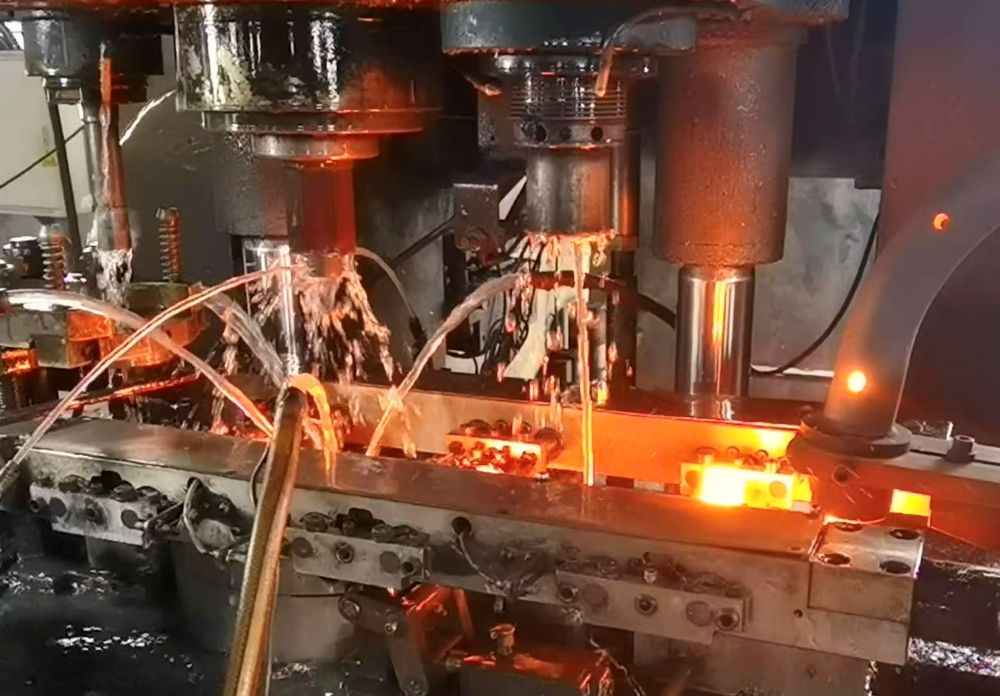
Hot forging production line capability directly affects consistency and delivery stability. Key elements include controlled billet heating, appropriate press capacity, and a suitable level of automation. Induction or furnace heating ensures uniform temperature distribution, while automated handling supports repeatable results.
For buyers, a stable hot forging production line means predictable lead times and consistent mechanical performance across production batches.
Advantages of an Integrated Forging and Machining Factory
An integrated forging and machining factory allows better control over machining allowances, dimensional accuracy, and process coordination. Forged parts can be optimized for downstream machining, reducing rework and improving overall efficiency.
In-house CNC machining also enables faster engineering response and more flexible production scheduling. For procurement teams, this integrated approach improves project control, quality consistency, and delivery reliability.
Material, Quality, and Delivery Capability
Material, quality, and delivery capability together define whether a forging supplier can support long-term OEM programs. Reliable suppliers are experienced with alloy steels such as 42CrMo, 4140, 20CrMnTi, SCM440, as well as stainless and special alloys, each requiring controlled forging and heat-treatment processes. In-house heat treatment, machining, and inspection allow better control over consistency and coordination. Combined with dimensional inspection, hardness testing, and NDT methods such as UT and MPI, these capabilities ensure stable quality across batches. Strong production planning and capacity management further support prototypes, small batches, and scalable mass production with predictable delivery.
Conclusion
Selecting the right custom forging supplier in China requires a clear focus on manufacturing capability, quality control, and delivery reliability. A structured evaluation helps US buyers build stable, long-term partnerships that support consistent production and reliable supply.
If you are sourcing custom forgings or evaluating new suppliers, our engineering team is available to review drawings, discuss requirements, and provide professional support.