
CNC Machined Forgings Manufacturer | Custom Parts
Weforging manufactures custom CNC machined forgings to OEM drawings, combining forging, heat treatment, precision machining and inspection within a coordinated manufacturing process.
We produce steel forged components that require finished bores, threads, bearing seats, mounting surfaces and other critical features. Machining operations and inspection methods are planned according to the material, component geometry, dimensional tolerances and application requirements.
From sample validation to repeat production, our focus is on delivering machined forged parts that meet the approved drawing and specified quality requirements.
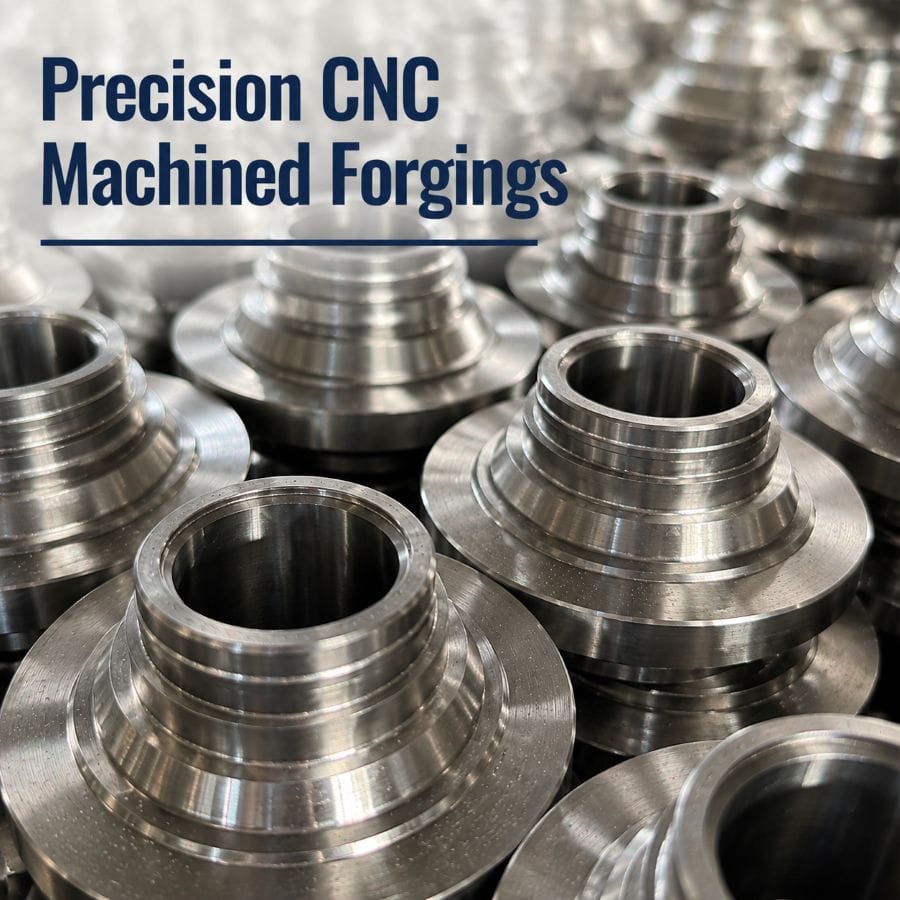
CNC Machined Forgings to OEM Drawings
CNC machined forgings are components whose basic geometry is produced by forging and whose functional features are subsequently finished through CNC machining.
For OEM projects, the finished drawing determines which surfaces require machining and which may remain in the as-forged condition. Critical dimensions, geometric tolerances, surface finish and inspection requirements must be considered before the machining route is established.
Weforging reviews these requirements alongside the forging geometry and material condition to plan a suitable manufacturing process.
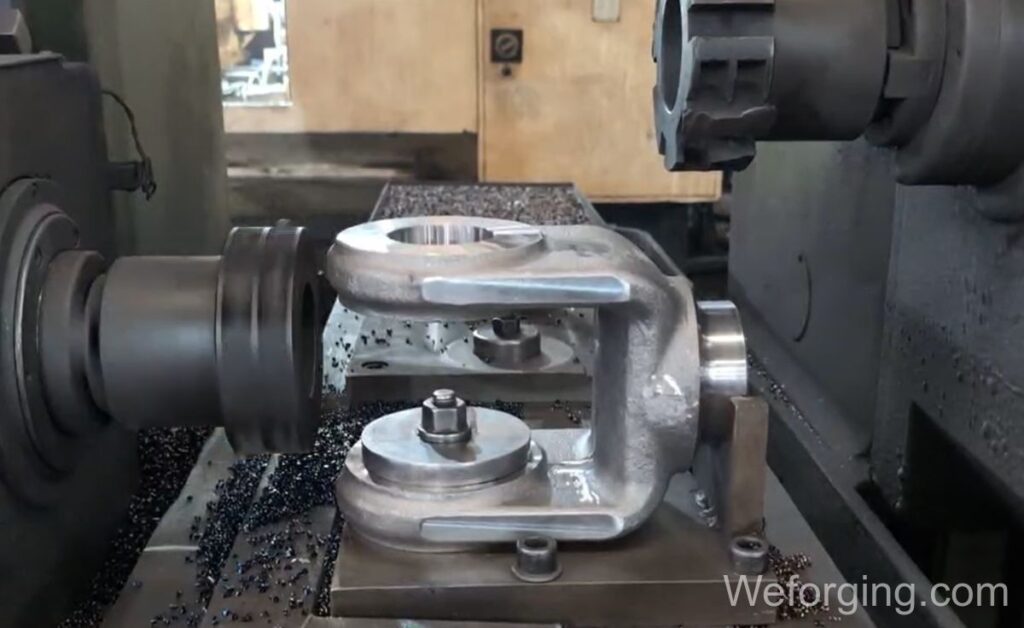
Precision CNC Machining of Forged Components
Precision machining of forged components requires more than selecting a CNC machine. The forged blank must provide suitable machining stock, locating surfaces and material condition for stable processing.
Depending on the drawing, machining operations may include:
CNC Turning: Outside diameters, internal bores, shoulders and cylindrical surfaces.
CNC Milling: Mounting faces, slots, profiles and other non-rotational features.
Drilling and Threading: Holes, threaded connections and assembly features.
Finish Machining: Critical fits, functional surfaces and specified surface finishes.
Machining datums, clamping methods and operation sequences are established according to the component geometry and tolerance requirements. Features that cannot be reliably achieved in the as-forged condition are finished and verified through suitable machining and inspection methods.
Weforging’s CNC machining services support turning, milling and precision machining for custom industrial components.
From Forged Blank to Finished CNC Machined Part
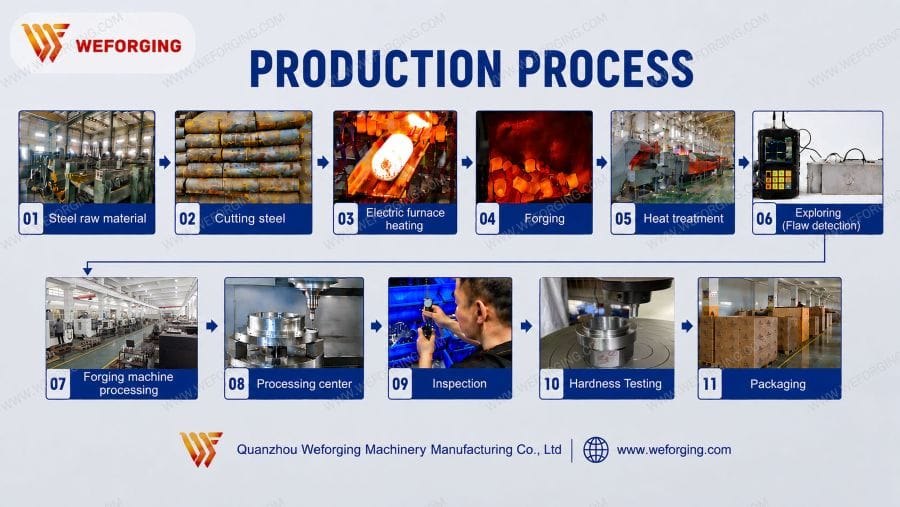
A typical manufacturing route may include:
Drawing Review → Forging → Heat Treatment → CNC Machining → Dimensional Inspection → Finished Component
The actual sequence depends on the material, mechanical requirements and machining tolerances. Some components require rough machining before heat treatment, followed by finish machining to control critical dimensions.
For suitable repeat-production components, closed die forging can produce a forged blank with controlled geometry before subsequent machining. The process is selected according to part design, material and production volume.
By reviewing the forged blank and finished drawing together, Weforging can coordinate machining allowance, process sequence and inspection requirements before production.
Materials and Manufacturing Capabilities
Weforging supports CNC machining of carbon steel, alloy steel and stainless steel forgings according to OEM specifications.
Material selection and heat-treatment requirements are defined by the drawing and intended operating conditions. For components requiring specified hardness, tensile properties or impact performance, the manufacturing and inspection route is planned around the applicable acceptance criteria.
Machining capabilities include CNC turning, milling, drilling and threading. The appropriate equipment and inspection method are selected according to component size, geometry and required tolerances.
Custom CNC Machined Forged Parts
Weforging manufactures CNC machined forged components for industrial equipment and OEM assemblies. Typical component types may include forged shafts, gear blanks, flanges, sleeves and other non-standard parts.
Manufacturing requirements vary by component. A shaft may require controlled bearing seats and runout, while a flange may require accurately machined mounting faces and hole positions.
CNC Machined Forged Spherical Bearing Component for Building Dampers
This custom spherical bearing component is manufactured from a forged steel blank followed by CNC machining for a high-rise building damper assembly. Its functional design considers load transfer, bearing contact area, allowable angular movement and the movement requirements of the damping system.
The forged blank provides the starting geometry, while CNC machining produces the specified bearing interfaces, cylindrical surfaces, mounting faces and hole positions. These features require coordinated dimensional control to achieve the intended assembly fit and movement.
At Weforging, the forging and machining processes are planned around the OEM drawing, with critical dimensions and functional features verified before delivery.
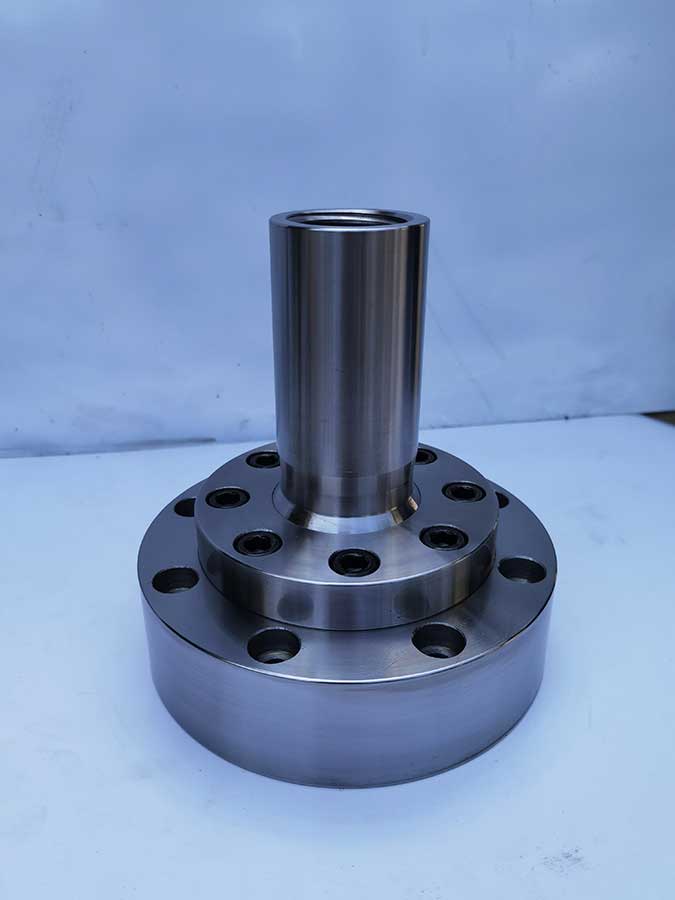
For custom projects, the manufacturing process is determined by the actual drawing rather than applying one standard machining route to every forged component.
Inspection and First-Part Verification
For CNC machined forgings, final inspection must confirm that the finished component meets the drawing rather than relying only on the condition of the forged blank.
At Weforging, operators check relevant dimensions during first-part machining. After the first complete component is produced, an inspector performs an independent verification of the specified features.
Depending on project requirements, inspection may include:
Dimensional measurement and CMM inspection.
Thread gauges and functional gauges.
Hardness and material verification.
Mechanical testing where specified.
Final inspection reports and batch records.
If results do not meet the specified requirements, the measurement method, machining setup or process parameters must be reviewed before proceeding with batch production.
Why Choose Weforging for CNC Machined Forgings?
For OEM buyers, sourcing CNC machined forgings involves responsibility for both the forged blank and the finished dimensions.
Weforging coordinates forging, heat treatment, CNC machining and inspection within one manufacturing route. This allows machining requirements to be considered earlier, reduces the need to coordinate separate suppliers and supports traceability across production stages.
For repeat orders, approved samples, controlled machining processes and inspection records provide a technical reference for maintaining batch consistency.
OEM buyers comparing forged blanks with fully finished components can also review our guide to machined forgings, which explains machining allowance, heat-treatment sequence, supplier responsibility and total finished-part cost.
Request a Quote for CNC Machined Forgings
Send Weforging your 2D drawing or 3D model, material specification, estimated quantity and critical machining requirements. Our team can review the component and discuss a suitable forging and CNC machining route before quotation.
Conclusion
CNC machined forgings require coordination between forged geometry, material condition, precision machining and final inspection. Weforging supports OEM customers with integrated manufacturing based on their drawings and technical requirements.