Best Forging Materials for High-Strength Parts
Choosing the right forging materials is one of the most important decisions in manufacturing high-strength, long-life industrial components. Material selection directly affects fatigue resistance, machining performance, and total project cost. In many OEM projects, buyers increasingly prefercustom forging materials and specialized grades that match engineering requirements more precisely. Whether selecting carbon steel forging materials for heavy machinery or custom grades for critical parts, understanding each material’s characteristics ensures better durability and performance.
What Is Forging Material?
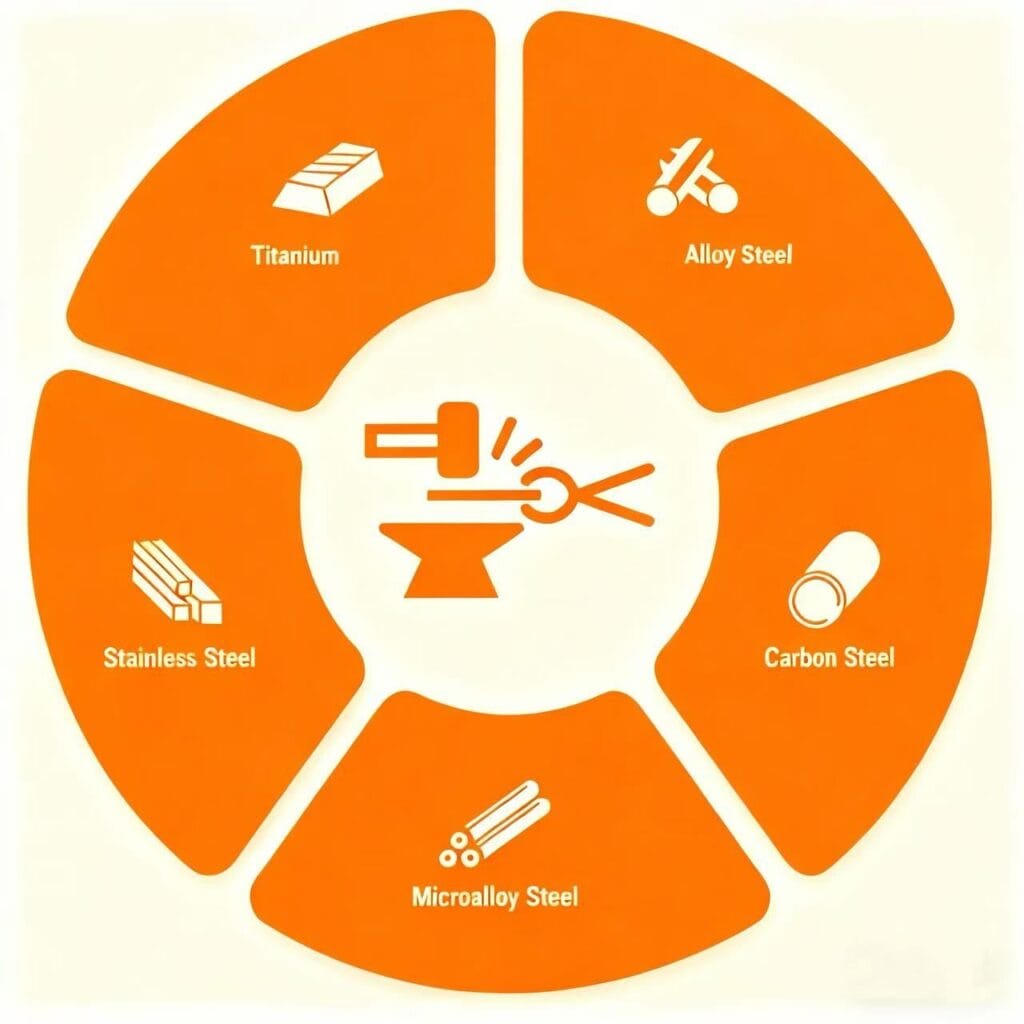
Forging materials refer to metal grades that can withstand deformation during forging while maintaining or improving mechanical strength. Common categories include:
- Carbon steel – economical and widely used in flanges, shafts, and general machinery
- Alloy steels – high strength and fatigue resistance for load-critical components
- Stainless steels – corrosion-resistant for pumps, valves, and marine use
- High-temperature alloys – maintain strength under extreme heat for aerospace and energy applications
Each forging material reacts differently under heat, deformation, and machining, making proper selection essential for both performance and cost control.
How Different Forging Materials Perform
Industry | Recommended Material | Reason |
Wind Energy | Alloy steel / Rotary forging materials | High fatigue strength and long-term stability |
Construction Machinery | Carbon steel forging materials | Strong impact resistance |
Automotive | Alloy steel | Ideal strength–weight balance for drivetrain components |
Oil & Gas | Stainless steel / Duplex | Excellent corrosion and pressure resistance |
Aerospace | High-temperature alloys (Inconel, Hastelloy) | Maintains strength under extreme heat |
Custom Forging Materials: Why OEMs Prefer Tailored Grades
Many industrial applications require more than standard steel grades. Custom forging materials allow engineers to specify:
- Customized hardenability
- Controlled alloy composition
- Improved impact resistance
- Heat-treat compatibility
- Certifications (ASTM / DIN / EN)
Custom material forging ensures that components meet precise performance demands without unnecessary material cost.
How to Select the Right Forging Material
- Mechanical Load Requirements
Evaluate how the part will be stressed, including tension, torque, shock, and cyclic fatigue. High-load or rotating components require materials with superior strength and fatigue resistance. - Working Environment
Consider temperature fluctuations, corrosion exposure, humidity, and abrasive conditions. Harsh or corrosive environments may require stainless steel, duplex steel, or heat-treated alloy steels. - Certification and Standards
Ensure materials comply with ASTM, AISI, or EN/DIN specifications such as A105, A182, 4140, or 42CrMo4. Certification ensures reliability, traceability, and OEM compatibility. - Compatible Forging Process
Match material properties with the required forging process—open-dieforging, closed-die forging, ring rolling, or rotary forging—to ensure proper deformation, grain structure, and final performance.
How to Choose a Reliable Forging Supplier
When sourcing forging materials, buyers should evaluate:
- Material sourcing and traceability
- Metallurgical testing (UT, MT, tensile, hardness, chemical analysis)
- CNC machining capability
- Heat treatment control
- Supplier certifications
- Delivery reliability (especially forging supplier in USA for local support)
Why OEMs Choose Weforging
Weforging integrates forging, CNC machining, heat treatment, and full-process inspection to support European and North American OEMs. With experience across 20+ forging material grades, we provide stable quality, fast turnaround, and consistent mechanical performance.
Conclusion
Selecting the right forging material is essential for achieving long-term strength, reliability, and cost-effective performance. By understanding material behavior and choosing suitable grades—whether carbon steel, alloy steel, stainless steel, or custom forging materials—engineers and procurement teams can significantly improve product quality and operational lifespan.
If you need guidance on material selection or support for an upcoming project, feel free to reach out.