
Forging Strength: Why Forging Increases Metal Strength
In modern heavy industry, component strength plays a critical role in equipment reliability and service life. For applications involving high loads, repeated stress, and long operating cycles, engineers often prefer forged components. One key reason is forging strength, which refers to the improved mechanical performance achieved through the forging process.
During forging, metal is plastically deformed under compressive forces. This process refines the grain structure, reduces internal defects, and aligns grain flow with the shape of the component. As a result, forged parts often provide higher strength and better fatigue resistance than cast or machined parts.
This article explains why forging increases metal strength and how it benefits industrial components.
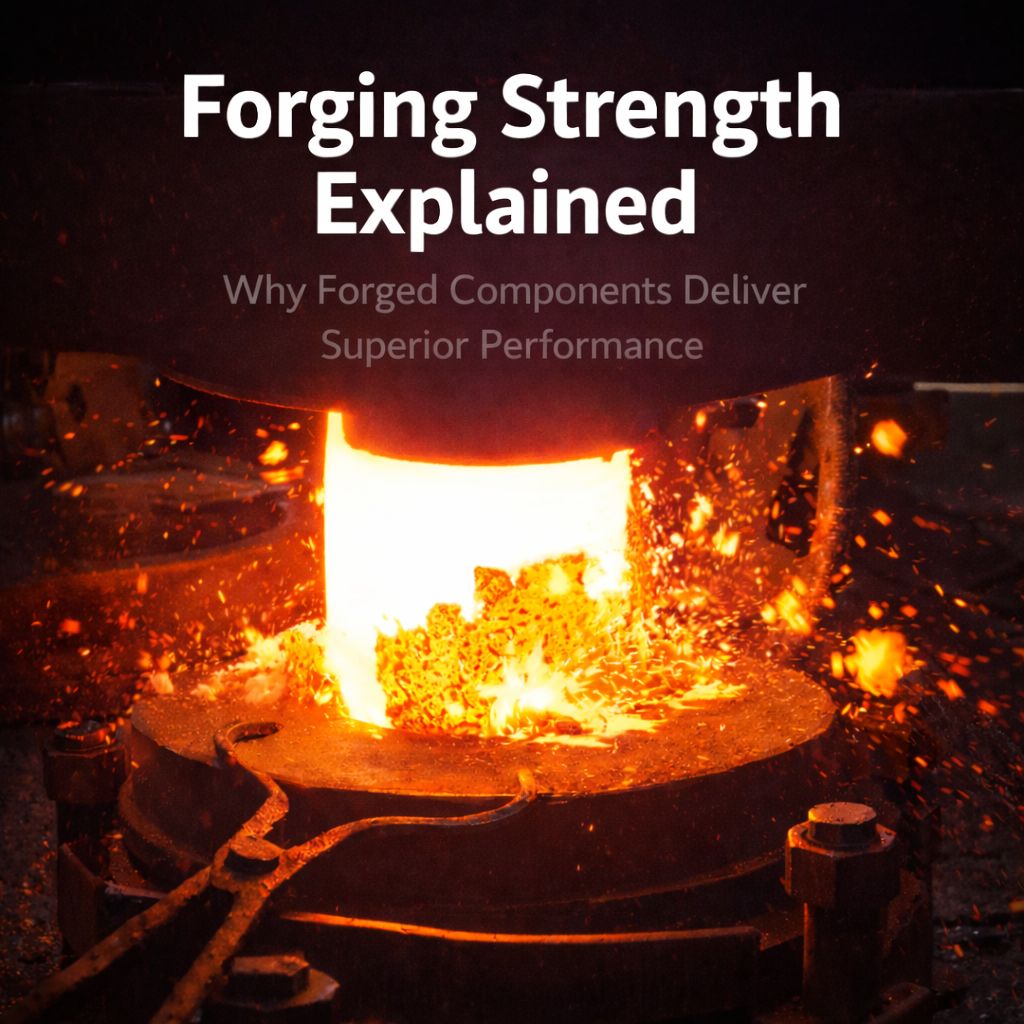
What Is Forging Strength?
Forging strength refers to the improved mechanical properties achieved when metal is formed through forging processes such as hot forging, closed-die forging, or open-die forging.
Unlike casting, where molten metal solidifies in a mold, forging shapes metal through compressive force. This deformation compresses the internal structure and improves material density.
Key characteristics of forging strength include:
- Higher tensile strength
- Improved fatigue resistance
- Better impact toughness
- Reduced internal defects
These advantages make forging a preferred manufacturing method for critical mechanical components.
Why Forging Increases Metal Strength
Forging increases metal strength mainly because of three metallurgical mechanisms:
- Grain refinement
The forging process refines the metal grain structure. Plastic deformation breaks down coarse grains into smaller and more uniform grains, improving mechanical properties. - Reduced internal porosity
Forging reduces internal porosity and defects. The compressive forces close internal voids that may exist in cast materials. - Directional grain flow
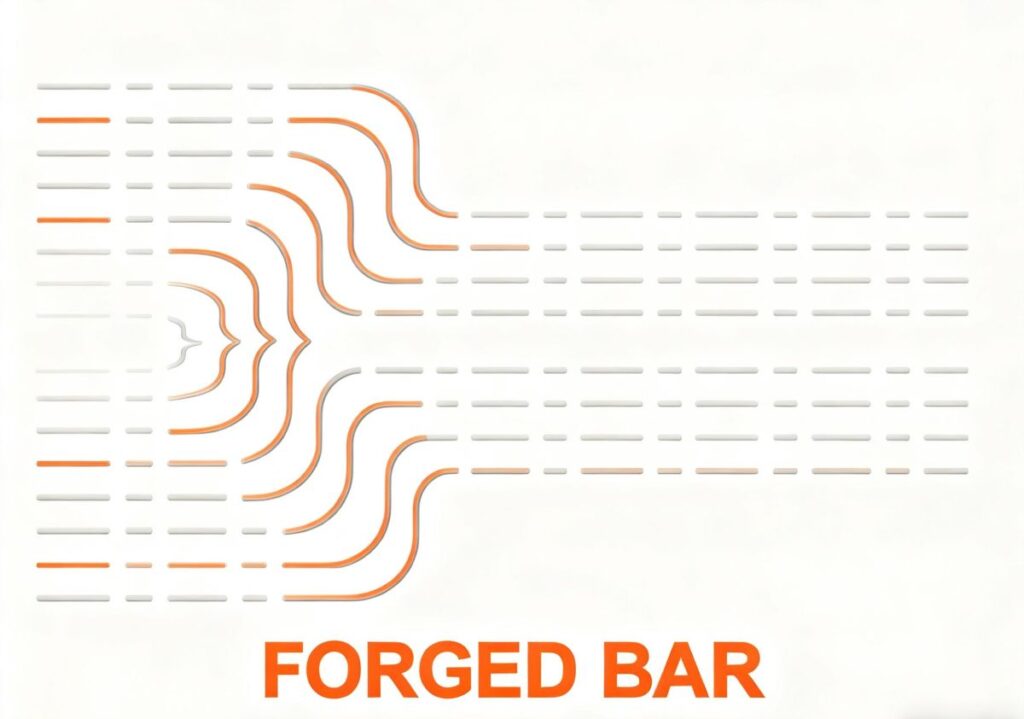
Forging aligns grain flow with the shape of the component. This directional grain structure significantly improves strength and durability under load.
These metallurgical mechanisms explain why forged components often outperform cast or fabricated parts in demanding applications.
How Forging Changes the Microstructure of Metal
The forging process significantly modifies the internal microstructure of metals. When metal is heated and deformed, dynamic recrystallization occurs, creating new fine grains.
This refined grain structure improves mechanical performance and enhances strength.
Important microstructural changes during forging include:
- Grain refinement
- Uniform grain distribution
- Directional grain flow
- Reduced segregation
These changes contribute directly to improved forging strength and material reliability.
Why Forging Ratio Is Important for Metal Strength
Another key factor influencing forging strength is the forging ratio, which describes the amount of deformation applied to the material during forging. A higher forging ratio promotes greater plastic deformation, helping to break down coarse grains and produce a finer, more uniform microstructure.
This process improves material density and reduces internal defects such as porosity or inclusions. As a result, components forged with an appropriate forging ratio typically exhibit higher tensile strength, improved fatigue resistance, and more stable mechanical properties in demanding industrial applications.
Does Forging Increase Yield Strength and Fatigue Resistance?
Yes. Forging typically increases both yield strength and fatigue resistance, contributing to higher overall forging strength.
This improvement comes from the refined grain structure and increased material density created during the forging process.
Key performance improvements include:
- Higher yield strength
Yield strength is the stress level at which a material begins to deform permanently. Forged metals usually exhibit higher yield strength because their grain structure is refined and more compact. - Improved fatigue resistance
Forged components contain fewer internal defects such as porosity or micro-cracks. This allows the material to withstand repeated stress cycles without failure.
Because of these advantages, forged parts are widely used for components subjected to dynamic loading.
How Much Strength Improvement Can Forging Provide?
The strength improvement achieved through forging depends on factors such as material type, deformation ratio, and heat treatment. In many cases, forging produces stronger components than casting or direct machining because it refines grain structure and improves material density.
Typical strength benefits include:
- Higher tensile strength
- Increased yield strength
- Improved fatigue resistance
These advantages make forging a preferred process for high-load industrial components.
Forging vs Casting Strength Comparison
Engineers often ask whether forging is stronger than casting.
In most industrial applications, the answer is yes. Forged components typically provide higher strength and better durability.
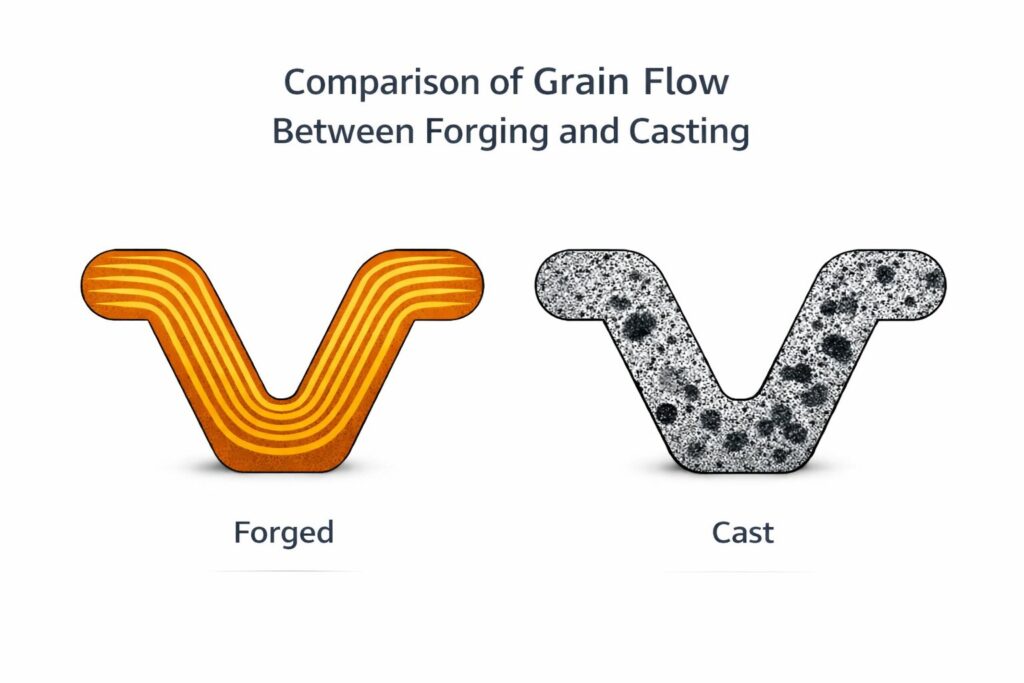
This advantage comes from the forging process. During forging, metal is compressed and the grain flow follows the shape of the component. In contrast, cast parts usually have random grain structures and may contain more internal defects.
The key differences are shown below:
Property | Forging | Casting |
Grain structure | Directional grain flow | Random grain structure |
Internal defects | Very low | Higher |
Fatigue resistance | High | Medium |
Structural integrity | Excellent | Moderate |
Because of these characteristics, forging is widely used for critical load-bearing components in heavy equipment, energy systems, and industrial machinery.
Forging vs Machining: Strength Differences
Forged components usually provide higher strength than parts machined directly from bar stock. The main difference comes from the internal grain structure.
During forging, metal is compressed and deformed. This aligns the grain flow with the shape of the part and improves material density.
Machined parts are cut from bar stock, which may interrupt the natural grain structure.
Key differences include:
- Grain structure – Forged parts have directional grain flow.
- Strength – Forged components generally offer higher strength.
- Fatigue resistance – Forged parts perform better under repeated loads.
Because of these advantages, many critical components are produced as forged blanks and then finished by CNC machining.
Industrial Applications Requiring High Forging Strength
High forging strength is essential in many industrial sectors.
Common applications include:
- Wind turbine main shafts
- Mining equipment gears
- Construction machinery components
- Agricultural machinery shafts
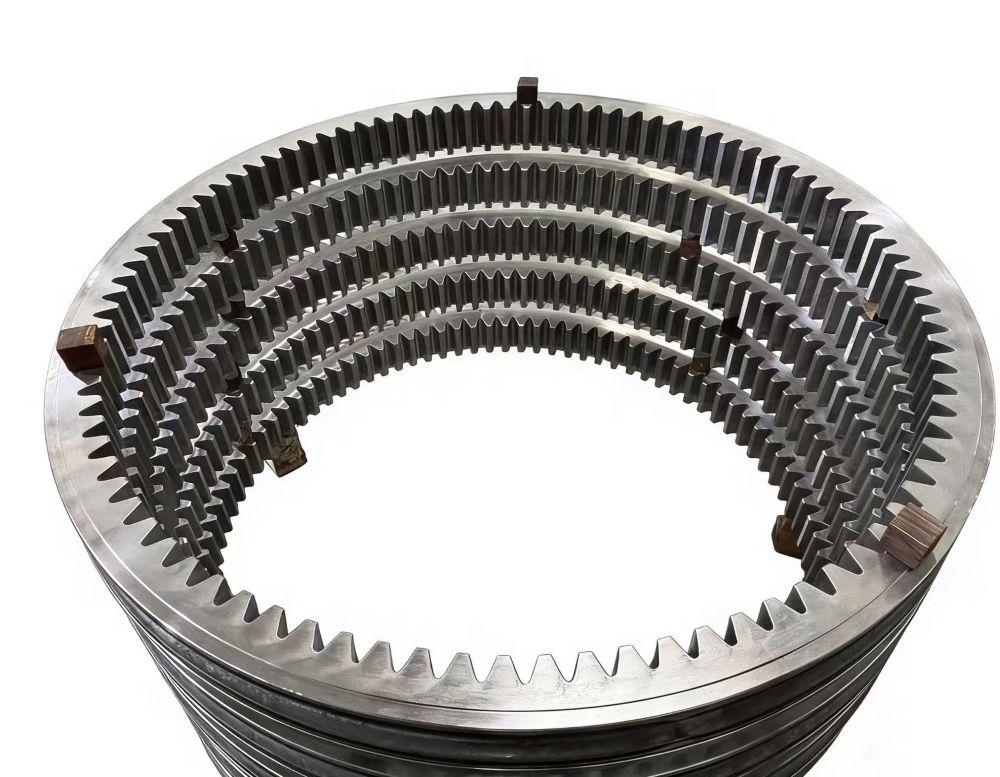
- Large bearing rings and gear blanks
In these demanding environments, forged components provide superior reliability and safety.
Choosing the Right Forging Supplier
Selecting the right forging supplier is critical for ensuring consistent product quality.
Reliable suppliers typically provide:
- Advanced forging equipment
- Controlled heat treatment processes
- Precision CNC machining
- Strict quality inspection and testing
An experienced forging manufacturer can help ensure that forged components achieve the required strength and durability for industrial applications.
Conclusion
Forging improves metal performance by refining grain structure, increasing material density, and reducing internal defects. These advantages give forged components higher forging strength, better fatigue resistance, and greater structural reliability than many alternative manufacturing methods.
If your application requires high-strength forged components, working with an experienced forging manufacturer is essential. Feel free to send us your drawings or technical requirements for evaluation and quotation.