Types of Heat Treating Processes
Heat treating is one of the most critical processes in modern manufacturing, helping metals achieve the strength, hardness, and durability required for demanding applications. As industries look for ways to improve material performance, understanding the right heat treatment process becomes essential. Whether it involves heat treating steel, enhancing wear resistance, or using controlled metal heating to improve toughness, heat treating plays a central role in producing reliable industrial components.
This article explores the main heat treatment types, explaining how each process helps thermally strengthen metal and improve long-term performance.
What Is Heat Treating?
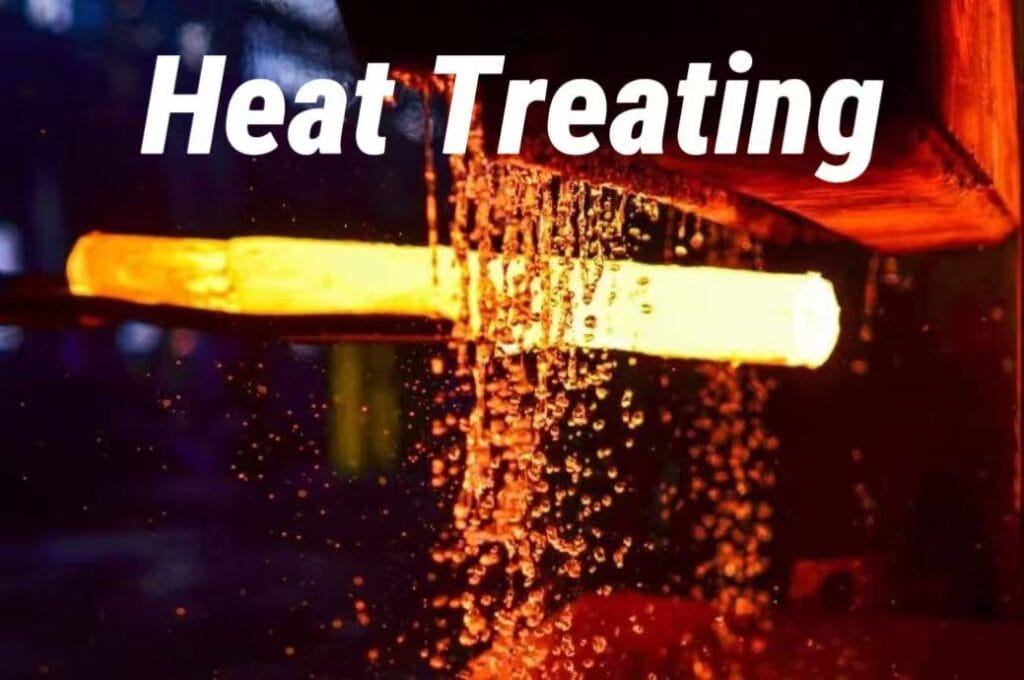
Heat treating is a controlled heating and cooling process used to change the mechanical properties of metals. By adjusting temperature and cooling rates, manufacturers can modify hardness, ductility, strength, and wear resistance. Different metals respond differently to heat treating, especially when heat treating steel, where precise temperature control is essential to achieve the desired microstructure.
In many applications, heat treating works hand in hand with forging—strengthening the forged grain structure, relieving internal stresses, and achieving the final mechanical properties required for high-performance components such as gears, shafts, and forged rings.

Major Types of Heat Treating Processes
1. Annealing – Preparing the Material Before Forging
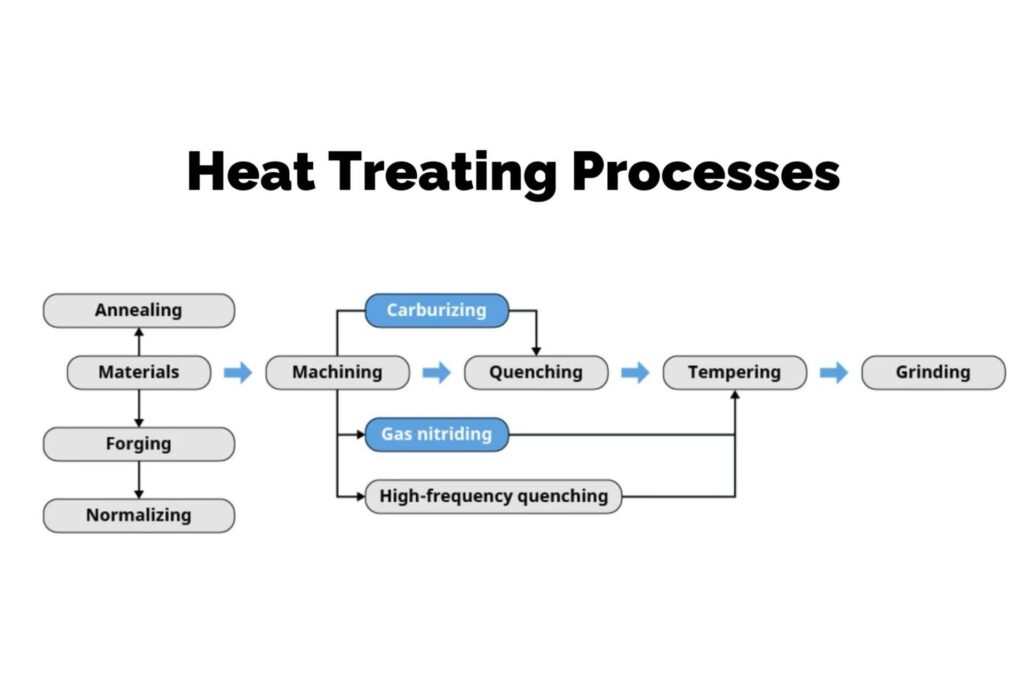
Annealing is typically performed on raw materials before forging. The metal is heated and slowly cooled to soften it, improve ductility, and remove internal stresses, ensuring stable performance during the forging process.
2. Normalizing – Stabilizing Grain Structure After Forging
Normalizing usually follows forging. The steel is heated to a critical temperature and air-cooled, producing a more uniform grain structure. This step improves strength, machinability, and consistency before entering the machining stage.
3. Carburizing – Surface Hardening Before Final Quenching
After machining, carburizing introduces carbon into the metal surface to create a hard, wear-resistant layer while keeping the core tough. In many gear and shaft applications, carburizing is performed before quenching and tempering.
4. Gas Nitriding – Low-Distortion Surface Hardening
Gas nitriding is another surface-hardening method performed after machining. It forms a hard nitride layer without high-temperature phase transformation, meaning minimal distortion—ideal for precision parts.
5. High-Frequency (Induction) Quenching – Selective Hardening
Induction hardening uses electromagnetic induction to rapidly heat a specific area before quenching. It is commonly used for shafts, gears, and bearing races where only certain surfaces require high hardness.
6. Quenching – Achieving High Hardness
Quenching rapidly cools steel—typically in water, oil, or polymer—to achieve high hardness and strength. Many surface-hardened parts (after carburizing or induction heating) enter the quenching stage afterward.
7. Tempering – Balancing Hardness and Toughness
Tempering reheats quenched steel at a lower temperature to reduce brittleness while maintaining hardness. This ensures a good balance of toughness and strength, especially for gears, shafts, and other load-bearing components.
8. Grinding – Achieving Precision Dimensions
Grinding is typically the final step after heat treatment. It removes distortion, ensures dimensional accuracy, and achieves the required surface finish for precision components.
Why Forged Parts Require Heat Treating
Forged parts often undergo heat treating because the forging process, while improving grain flow and overall strength, also introduces internal stresses and uneven hardness. Heat treating helps stabilize the forged microstructure, refine grain size, and ensure consistent mechanical properties throughout the part. For components such as gears, shafts, flanges, and ring forgings, heat treating is essential to achieve the final hardness, toughness, and dimensional stability required for demanding industrial applications.
Benefits of Heat Treating for Industrial Components
Heat treating offers several important advantages that significantly improve the performance and durability of forged and machined components:
- Increased hardness and wear resistance — extends service life in high-friction environments.
- Enhanced toughness — reduces the risk of cracking or brittle failure during impact or overload.
- Improved fatigue strength — essential for rotating parts such as gears, shafts, and bearing rings.
- Refined and stabilized microstructure — ensures consistent performance across the entire forged part.
- Optimized surface and core properties — processes like carburizing or quenching create a hard surface while keeping the core tough.
- Greater dimensional stability — helps maintain accuracy during long-term operation or after machining.
How to Choose the Right Heat Treatment Process
Choosing Selecting the right heat treatment process is essential for ensuring product durability, stable performance, and cost-effectiveness. Different heat treatment types influence hardness, wear resistance, and service life, which directly affects equipment reliability. By understanding how each method behaves during heat treating, buyers can better match specifications with their application needs and choose suppliers capable of delivering consistent, high-quality results.
Conclusion
Heat treating remains essential for improving performance and ensuring long-term reliability across industrial components. Understanding key heat treatment types allows manufacturers and engineers to thermally strengthen metal, achieve precise mechanical properties, and meet strict industry standards.
If you require heat-treated forgings, custom machined components, or technical guidance on choosing the right heat treatment process, our engineering team is ready to support you.
Send us your drawings or specifications for a fast, professional quotation.