
Ring Forging: Process, Applications & Custom Solutions
Ring forging is a metal forming process used to produce circular components for industrial machinery, power transmission and heavy-duty equipment. Depending on the required dimensions, cross-section and material, forged rings can be manufactured through ring rolling or other suitable forging methods.
Compared with machining rings from solid stock, forging can improve material utilization and develop grain flow suited to the component geometry. The final properties depend on material selection, deformation, heat treatment and subsequent machining.
This guide explains ring forging methods, materials, applications and key considerations for OEM component selection.
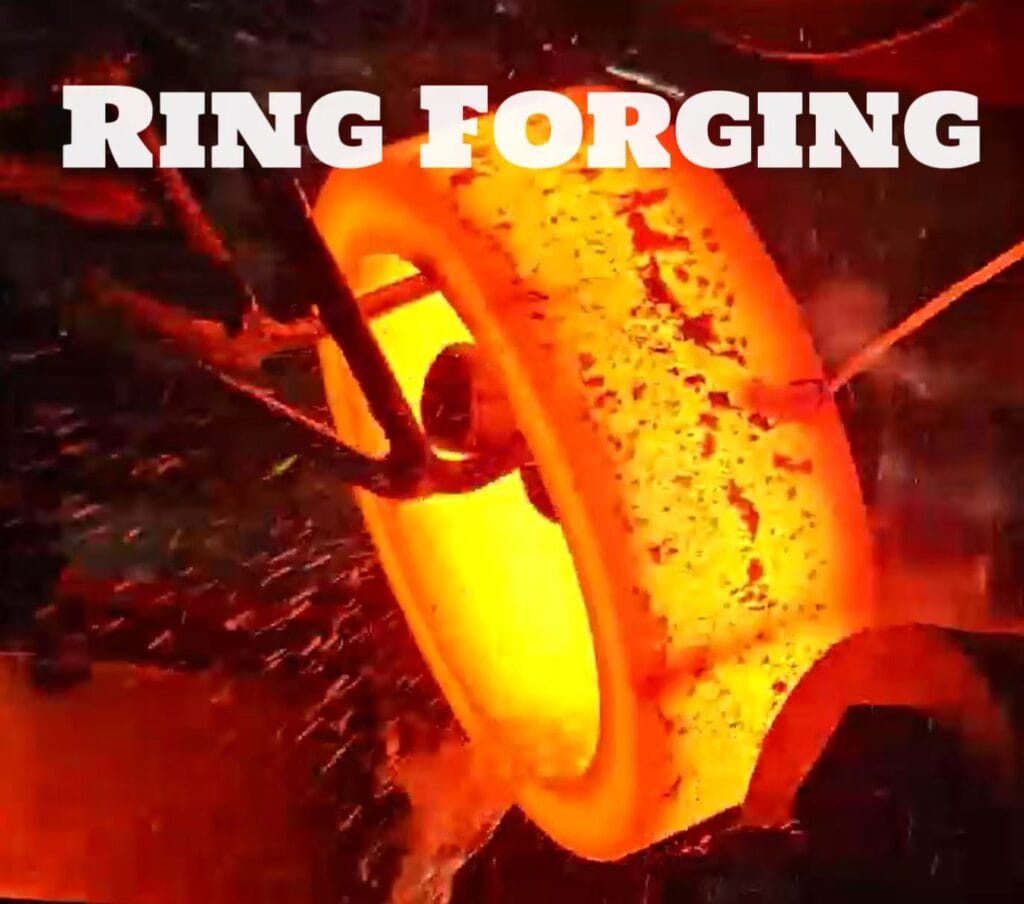
What Is Ring Forging and How Does It Work?
Ring forging is a manufacturing process that shapes heated metal into a circular forged component through controlled pressure and deformation.
The process usually starts with a steel billet that is heated to forging temperature. After piercing the center hole, the material is expanded and formed into the required ring dimensions through forging operations.
Compared with machining a ring from solid steel, ring forging provides better material utilization and improved internal grain flow, which helps enhance strength and fatigue resistance.
The main ring forging methods include:
- Rolled ring forging – widely used for industrial rings requiring different sizes and profiles.
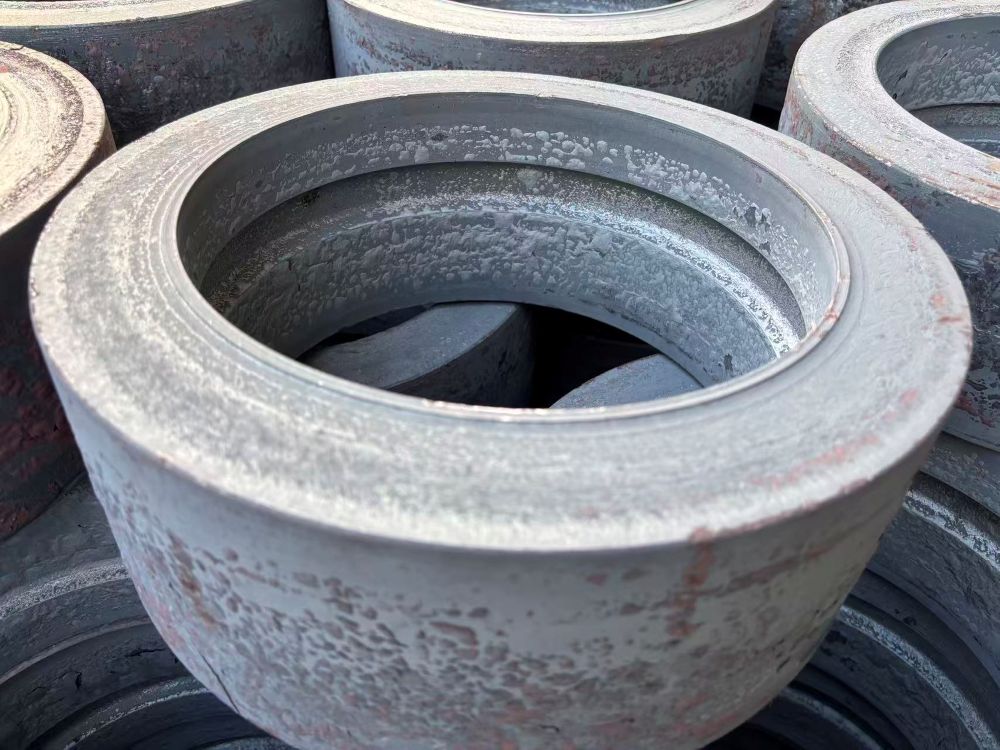
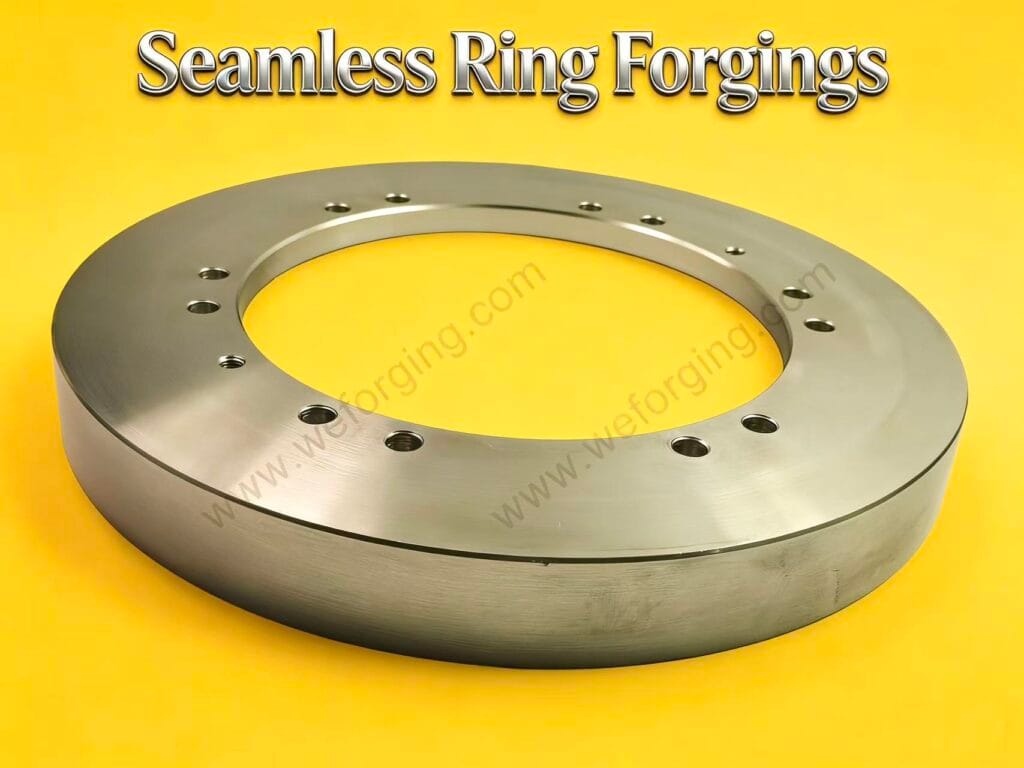
- Seamless ring forging – selected for applications requiring high structural integrity.
The final forged ring can be supplied as a forged blank or a fully machined component depending on customer requirements.
Ring Forging vs Casting: Which Is Stronger?
Ring forging and casting are both used to manufacture industrial components, but they differ in how the metal is formed and how its internal structure develops. Forging deforms solid metal under pressure, while casting shapes molten metal in a mold. The appropriate process depends on the component’s geometry, material, mechanical requirements and production volume.
| Comparison | Ring Forging | Casting |
|---|---|---|
| Manufacturing method | Shapes heated solid metal through deformation | Pours molten metal into a mold |
| Grain structure | Deformation can develop grain flow along the ring geometry | Microstructure develops during solidification |
| Mechanical properties | Can provide favorable strength, toughness and fatigue performance with appropriate processing | Depends on alloy, casting method, defect control and heat treatment |
| Internal defects | Can reduce certain internal discontinuities through deformation | Porosity, shrinkage and inclusions require process control |
| Complex geometry | May require additional CNC machining | Can produce complex shapes closer to final geometry |
| Material utilization | Ring rolling can reduce material waste compared with machining from solid stock | Depends on casting design, yield and finishing requirements |
| Production cost | Influenced by tooling, material, ring size and machining | Influenced by mold costs, production quantity and finishing |
When Should OEM Buyers Choose Ring Forging?
Ring forging is often preferred for load-bearing, rotating or fatigue-sensitive components, such as bearing rings, gear blanks and heavy machinery parts. Controlled deformation, suitable heat treatment and subsequent machining can help achieve the required mechanical properties and dimensional accuracy.
Casting may be more suitable for components with complex internal features or geometries that would otherwise require extensive machining. However, the final decision should be based on engineering requirements rather than assuming one process is always stronger or more economical.
For OEM projects, material grade, operating loads, dimensional tolerances, inspection requirements and production quantity should be reviewed before selecting the manufacturing process.
Rolled Ring Forging vs. Seamless Ring Forging
While both methods produce high-quality forged rings, each has unique advantages.
Rolled Ring Forging:
– Suitable for carbon steel, alloy steel, stainless steel
– Used for gear rings, bearing races, flanges, couplings, wind-power components
– Tight dimensional tolerances and excellent material utilization
– Highly stable and repeatable process
Seamless Ring Forging:
– No welds or joints
– Ideal for pressure vessels, aerospace components, pipelines, large gear blanks
– Withstands extreme internal or external pressure
– Preferred for high fatigue and high-integrity applications
Materials Used in Ring Forging
Forged rings can be produced from different materials depending on strength requirements, working environment, and service conditions.
Common materials include:
Carbon Steel
Used for general industrial applications requiring good strength and cost efficiency.
Alloy Steel
Materials such as 4140 and 42CrMo are widely used for heavy-duty components requiring higher toughness and wear resistance.
Stainless Steel
Suitable for applications requiring corrosion resistance and long-term durability.
Special Alloys
Aluminum, titanium, and other engineering alloys may be selected for specific performance requirements.
Material selection is usually determined by:
- Load conditions
- Operating temperature
- Fatigue requirements
- Corrosion environment
A reliable forged rings supplier should provide material traceability and technical support during material selection.
Rolled Ring Forging Process
A typical rolled ring forging process includes:
- Cutting and heating the billet to forging temperature
- Upsetting the billet to increase cross-section
- Piercing the material to create a ring preform
- Ring rolling between rotating dies
- Heat treatment (quenching, tempering, normalizing, annealing)
- CNC machining of critical dimensions or gear profiles
- NDT and dimensional inspection
This controlled workflow ensures consistent quality, tight tolerances, and excellent mechanical performance.
Common Products Made by Ring Forging
Common forged ring products include:
Bearing rings for heavy-duty rotating equipment
Gear rings used in transmission and drive systems
Flanges for pipelines and pressure systems
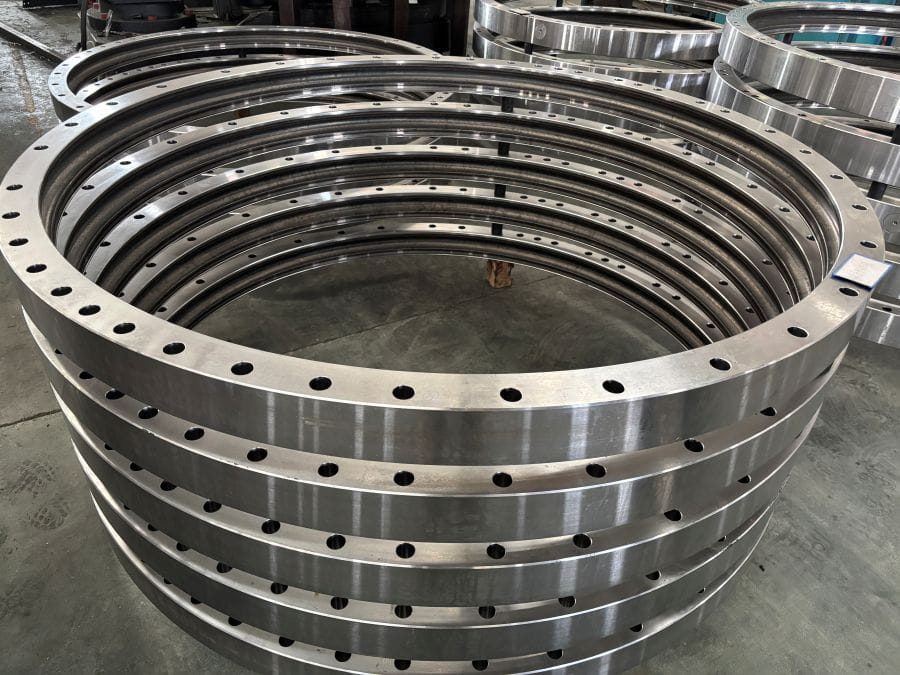
Slewing rings for cranes and large rotating platforms
Pressure vessel rings for high-load applications
Large structural rings for wind, mining, and heavy equipment
These forged rings are widely applied in transmission, rotating, and load-bearing systems where strength and durability are critical.
Applications of Forged Rings Across Industries
Forged rings are used in:
Wind Energy:
– Tower flanges
– Slewing bearings
– Main shaft bearing rings
Mining & Construction:
– Large gear rings
– Drive couplings
– Track components
Industrial Machinery:
– Gear systems
– Bearing races
– Custom forged rings
How to Select the Right Ring Forging Process
Selecting a ring forging process starts with the component drawing and operating requirements. OEM engineers and buyers should evaluate the ring diameter, cross-section, material grade, mechanical properties and machining allowances before confirming the manufacturing route.
Ring rolling is often suitable for seamless circular components, while other forging methods may be considered for specific geometries or production constraints.
The selected process should also account for heat treatment, dimensional inspection and final machining requirements. An early manufacturability review can help identify unnecessary material removal and potential production risks.
Conclusion
Ring forging provides reliable solutions for manufacturing high-strength components used in demanding industrial environments.
Compared with casting alternatives, forged rings offer improved strength, fatigue resistance, and long-term performance.
Weforging supports OEM customers with custom ring forging solutions, from forging development and machining to inspection and final delivery.