
What Are Fasteners?
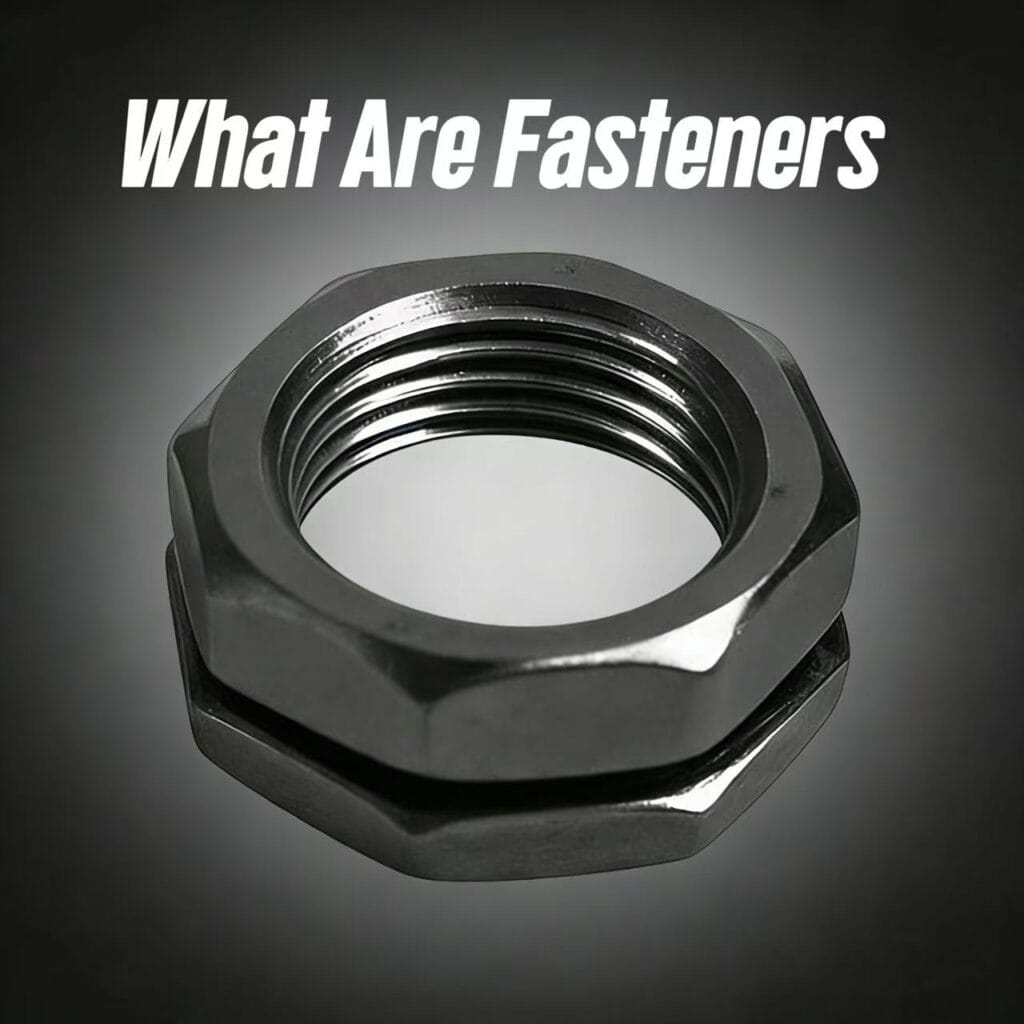
Fasteners are mechanical components used to join, secure, or position parts in an assembly. Common types include bolts, screws, nuts, rivets, and anchors, each serving different functions in machinery, construction, automotive systems, and other engineering applications. Understanding their types, materials, and strength grades helps engineers and buyers select suitable fasteners for different operating conditions.
Key Takeaways
Function: Fasteners join, secure, or position components in mechanical assemblies.
Types: Common fasteners include bolts, screws, nuts, washers, rivets, anchors, pins, and retaining rings.
Connections: Fasteners can create removable joints, such as bolted connections, or permanent joints, such as riveted assemblies.
Selection: Material, strength grade, thread size, load requirements, and corrosion resistance determine fastener suitability.
What Are Fasteners?
A fastener is a mechanical component used to join, secure, or retain two or more parts. Fasteners create either removable connections, such as bolted joints, or permanent connections, such as riveted assemblies.
Threaded fasteners, including bolts and screws, typically secure parts through thread engagement and clamping force. Non-threaded fasteners, such as pins and retaining rings, can provide positioning or mechanical retention without relying on threaded connections. The appropriate type depends on the joint’s mechanical function and operating conditions.
Types of Fasteners
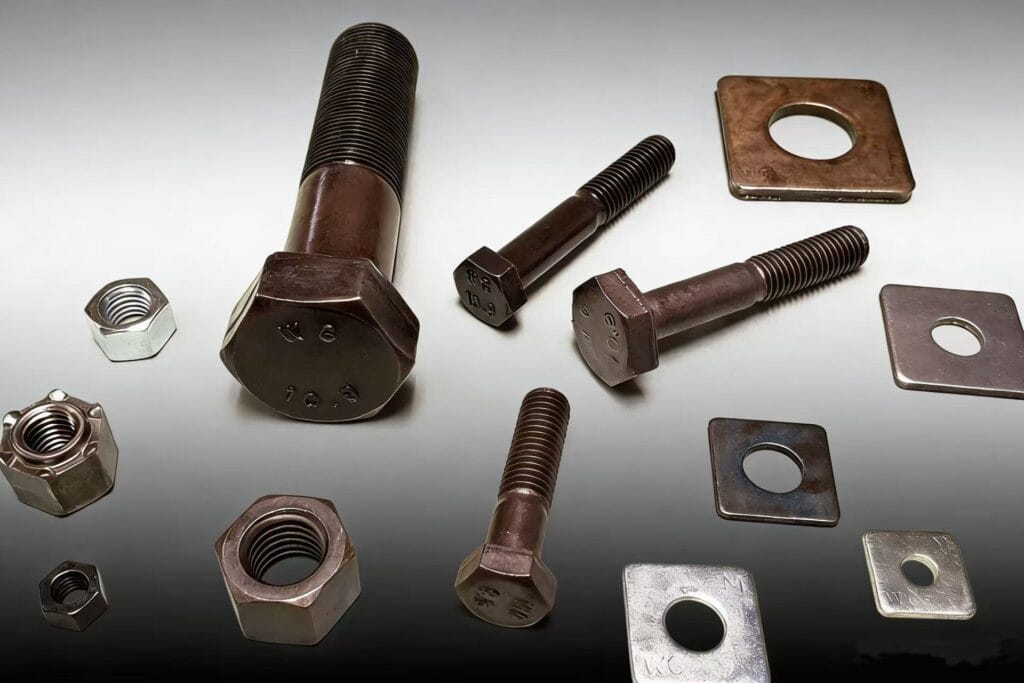
Fasteners come in different forms, each designed for a specific joining, fastening, or retaining function. The most common types include bolts, screws, nuts, washers, rivets, anchors, studs, pins, and retaining rings. Some create removable connections, while others provide permanent fastening or mechanical positioning.
Bolts and Screws
Bolts and screws are among the most widely used threaded fasteners. Bolts commonly secure parts through a nut or tapped hole, while screws may engage pre-threaded holes or form threads in the material being joined.
Hex bolts, socket head cap screws, and machine screws are common examples. Their selection depends on joint design, available installation space, required clamping force, and assembly methods.
Nuts and Washers
Nuts have internal threads that engage with bolts or studs to secure assembled parts. Common designs include hex nuts, lock nuts, and flange nuts, each suited to different assembly requirements. Specialized designs, including forged nuts, are also used in certain heavy-duty mechanical assemblies.
Washers are placed beneath bolt heads or nuts to distribute bearing pressure, protect contact surfaces, or support specific locking arrangements. Flat washers and spring washers serve different functions and are not interchangeable in every application.
Rivets and Anchors
Rivets are used to create permanent mechanical joints, commonly in sheet-metal assemblies and structural connections. Solid rivets and blind rivets are selected according to joint design and installation access.
Anchors secure components to concrete, masonry, or other base materials. Mechanical anchors may use expansion or undercut engagement, while other anchoring systems rely on different mechanisms. Anchor selection depends on the base material, loading conditions, and installation requirements.
Studs, Pins and Retaining Rings
Studs are externally threaded fasteners, often threaded at both ends, used with nuts or tapped holes. They are common in machinery, engine assemblies, and equipment requiring repeated maintenance.
Pins, such as dowel pins and cotter pins, are used for positioning, alignment, or retention. Retaining rings fit into grooves on shafts or inside bores to restrict axial movement of components.
Common Fastener Types and Functions
Fastener Type | Main Function | Common Applications |
|---|---|---|
Bolts | Clamping and joining | Machinery, structures |
Screws | Threaded fastening | Housings, equipment |
Nuts | Thread engagement | Bolted assemblies |
Washers | Load distribution and surface protection | Bolted joints |
Rivets | Permanent joining | Sheet-metal assemblies |
Anchors | Fastening to base materials | Concrete, masonry |
Studs | Threaded assembly | Engines, machinery |
Pins | Positioning and retention | Mechanical assemblies |
Retaining rings | Axial retention | Shafts, bearings |
Fastener Materials and Strength Grades
Fasteners are manufactured from carbon steel, alloy steel, stainless steel, aluminum, brass, and other materials. Material selection depends on mechanical loads, corrosion exposure, operating temperature, weight, and compatibility with the joined components.
Material | Key Characteristics | Typical Applications |
Carbon steel | Economical; strength varies by grade and heat treatment | General machinery |
Alloy steel | Can achieve high strength through suitable processing | High-load assemblies |
Stainless steel | Good corrosion resistance; properties vary by grade | Outdoor and process equipment |
Aluminum | Lightweight and corrosion resistant | Lightweight assemblies |
Brass | Corrosion resistant and electrically conductive | Electrical and low-load applications |
Strength Grades
Strength grades indicate specified mechanical properties rather than simply describing material hardness. Common metric steel bolt property classes include 8.8, 10.9, and 12.9 under ISO 898-1. SAE J429 provides a different grading system for certain inch-series fasteners, including Grades 5 and 8.
A higher strength grade is not automatically better for every joint. Engineers must also consider ductility, fatigue loading, environmental conditions, and compatibility with mating components.
Fastener Sizes, Threads and Standards
Fastener sizes are defined by dimensions such as diameter, length, and thread pitch. Correct thread specifications are essential for assembly compatibility and reliable mechanical connections.
Two common thread systems are ISO metric threads and Unified inch-series threads, widely used in European and North American engineering applications.
| Thread Designation | Size and Pitch | Thread System |
|---|---|---|
| M8 × 1.25 | 8 mm nominal diameter, 1.25 mm pitch | ISO Metric |
| M10 × 1.5 | 10 mm nominal diameter, 1.5 mm pitch | ISO Metric |
| 1/4-20 UNC | 1/4-inch nominal diameter, 20 threads per inch | Unified |
| 3/8-24 UNF | 3/8-inch nominal diameter, 24 threads per inch | Unified |
ISO 261 specifies general diameter and pitch combinations for metric threads, while ISO 965 covers thread tolerances. ASME B1.1 defines dimensions and tolerances for Unified inch screw threads.
When selecting or replacing fasteners, engineers should verify thread diameter, pitch, tolerance, and engagement length. Metric and inch-series threads are generally not interchangeable, even when their nominal diameters are similar.
How Fasteners Are Manufactured
Cold Forging (Cold Forming)
Cold forging is widely used for mass-produced fasteners such as bolts, nuts, and sleeves. It offers excellent dimensional accuracy, high material utilization, and superior mechanical strength due to refined grain flow.
Hot Forging
Larger or high-strength fasteners may require hot forging to achieve proper shaping and deformation. Hot forging is ideal for alloy steel components exposed to extreme loads.
CNC Machining and Finishing
Threads, precision surfaces, and custom geometries are achieved through CNC turning and milling. This step ensures strict tolerances and assembly reliability.
Advantages of Choosing the Right Fasteners
– Safety & Reliability – Prevents catastrophic failures in construction and machinery.
– Cost Efficiency – Durable fasteners reduce replacement frequency and downtime.
– Performance – High-precision components improve efficiency in automotive and aerospace systems.
– Customization – Engineered solutions adapt to unique load and environmental requirements.
How to Choose the Right Fastener
Key factors include:
Required load performance and appropriate strength grade
Suitable material selection and desired corrosion protection
Operating temperature and surrounding environment
Stability under dynamic conditions and preferred locking method
Available assembly space and the chosen installation approach
Conclusion
Fasteners may appear simple, but selecting the right type, material, and manufacturing process is vital for ensuring system reliability and long-term performance. Weforging provides custom-engineered fasteners through forging, machining, and precision finishing.
If you need support for a new project, our engineering team is ready to assist.