
CNC Precision Machining: Process, Parts & Services
CNC precision machining services provide accurate and repeatable manufacturing solutions for industrial components requiring tight tolerances, complex geometries, and consistent quality. From CNC milling and turning to precision inspection, CNC machining enables manufacturers to produce customized parts for demanding applications.
Weforging provides integrated manufacturing solutions by combining CNC machining with forging, heat treatment, and quality inspection. We support customers from prototype development to production orders, delivering reliable machined components for mining equipment, construction machinery, energy systems, and other industrial applications.
What Is CNC Precision Machining?
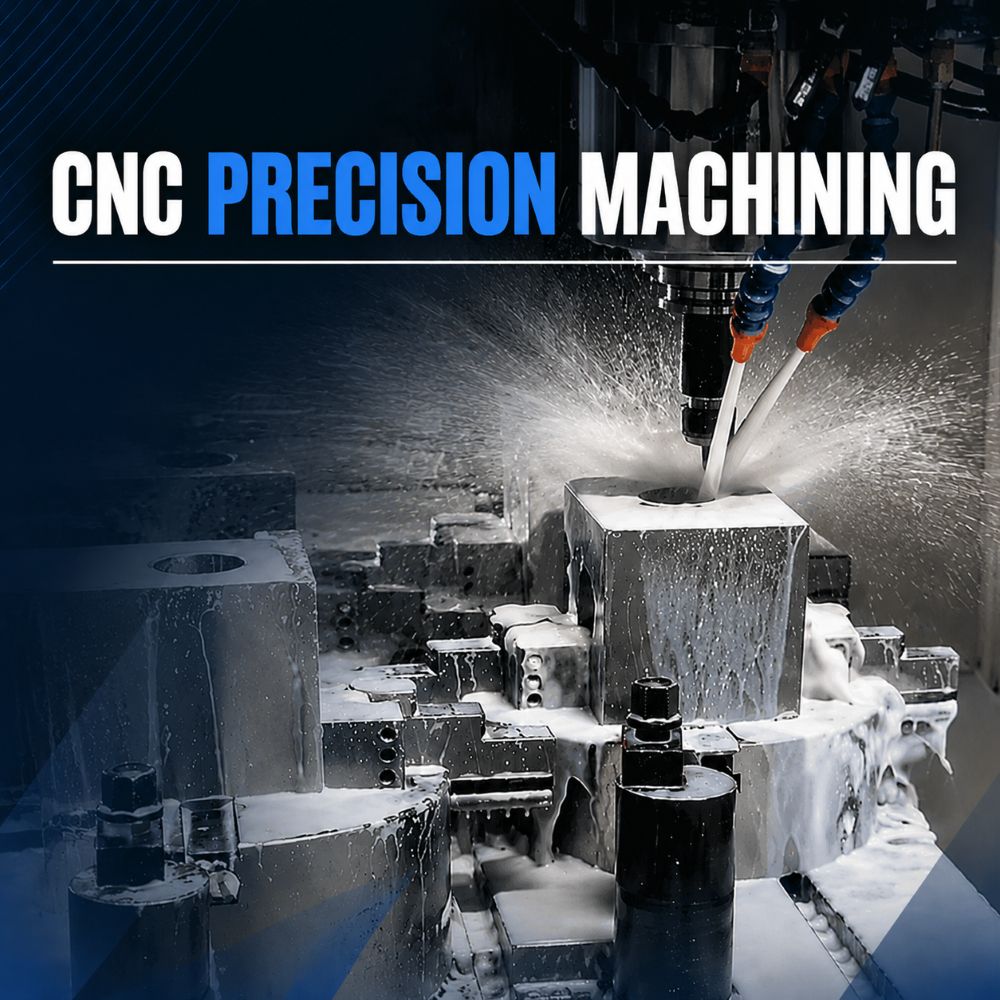
CNC precision machining uses computer-controlled machines to produce accurate metal components from digital drawings. It provides high dimensional accuracy, repeatable quality, and the ability to manufacture complex industrial parts.
Common processes include:
- CNC milling for complex features
- CNC turning for shafts and cylindrical parts
- Drilling and grinding for precision requirements
For demanding applications, CNC machining can be combined with forging, heat treatment, and inspection to improve component performance.
How Does CNC Precision Machining Work?
A reliable CNC machining process involves several key stages, from engineering review to final inspection.
1. Engineering Review and Programming
Before machining begins, engineers review part drawings, material requirements, tolerances, and surface specifications. CAD/CAM software is then used to create machining programs and optimize tool paths.
This step is important because proper planning helps avoid unnecessary machining time and improves production consistency.
2. Material Preparation
The selected material must meet the mechanical requirements of the application. Common materials include carbon steel, stainless steel, aluminum alloys, and alloy steel.
For forged components, CNC machining is usually performed after the forging process to achieve precise dimensions while maintaining the strength advantages created by the forged structure.
3. Machining Operations
During production, CNC machines automatically control cutting speed, feed rate, and tool movement according to programmed instructions.
Depending on part requirements, manufacturers may use:
- CNC milling machines
- CNC turning centers
- Gear machining equipment
- Grinding machines
Advanced equipment helps achieve stable quality across different production batches.
4. Inspection and Quality Verification
Precision machining requires accurate inspection to ensure finished parts meet drawing specifications.
Typical inspection methods include:
- Coordinate Measuring Machine (CMM)
- Dimensional inspection
- Surface measurement
- Material traceability verification
A complete quality control system is essential for industries where component failure may affect equipment performance and reliability.
Types of CNC Machining Operations
Different CNC operations are selected according to part geometry and accuracy requirements.
CNC Milling
CNC milling uses rotating cutting tools to create complex shapes, flat surfaces, and precision features. It is commonly used for housings, plates, flanges, and structural components.
CNC Turning
CNC turning is suitable for cylindrical parts such as shafts, bushings, sleeves, and pins. It provides efficient machining for round components requiring accurate dimensions.
5-Axis CNC Machining and Grinding
For complex components, 5-axis CNC machining reduces setup time and improves accuracy. CNC grinding is used when tighter dimensional control or better surface finish is required.
Materials Used in CNC Precision Machining
Material selection directly affects component performance, durability, and service life.
Common CNC machining materials include:
| Material | Applications |
|---|---|
| Carbon Steel | Structural and mechanical components |
| Stainless Steel | Corrosion-resistant parts |
| Alloy Steel | High-strength applications |
| Aluminum | Lightweight precision components |
For demanding industrial parts, heat treatment can further improve hardness, wear resistance, and fatigue performance.
Weforging also supports material traceability with production records and documentation when required.
Advantages of CNC Precision Machining
CNC precision machining provides accurate, repeatable, and flexible manufacturing solutions for industrial components.
Key advantages include:
- High Accuracy and Consistency
Produces precise parts with stable quality across different production batches. - Complex Part Capability
Manufactures complex geometries and tight-tolerance components with advanced CNC equipment. - Flexible Production Options
Supports prototypes, small batches, and production manufacturing requirements. - Reliable Quality Control
Uses CMM inspection and process control to ensure consistent part accuracy and performance.
CNC Machining vs Forging: Choosing the Right Process
CNC machining and forging offer different advantages.
CNC machining is suitable for:
- Complex geometries
- Tight dimensional requirements
- Precision finishing
Forging is preferred for:
- High-strength components
- Heavy-load applications
- Improved fatigue resistance
For many industrial parts, the best solution is forging combined with CNC machining. Forging improves material structure, while machining achieves accurate dimensions and finishing requirements.
This integrated approach is especially valuable for heavy equipment, mining, and energy applications.
Conclusion
CNC precision machining services provide accurate, repeatable, and reliable solutions for demanding industrial components. With advanced machining capabilities and strict quality control, manufacturers can achieve complex geometries, tight tolerances, and consistent production results.
Weforging combines CNC machining with forging, heat treatment, and inspection to deliver complete manufacturing solutions. From prototype development to production orders, we help customers produce durable components with stable quality and efficient supply chain support.