
What Is Forged Steel? Properties, Grades & Applications
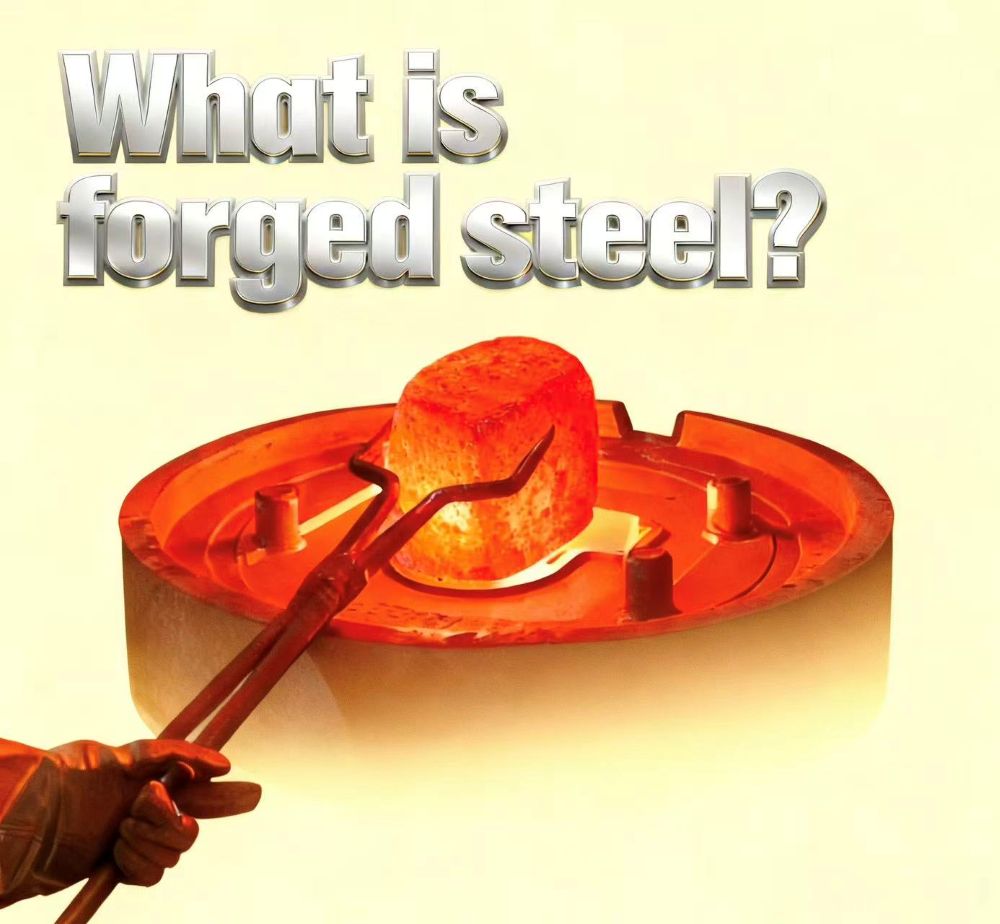
Forged steel is steel that has been shaped by controlled compressive force rather than being poured as molten metal into a mold. During forging, the steel is plastically deformed by hammering, pressing or rolling, which can refine the grain structure and create directional grain flow within the component.
“Forged” does not refer to a single steel grade. Carbon steel, alloy steel and stainless steel can all be forged, and the final properties of a forged component depend on the material grade, forging process, degree of deformation and subsequent heat treatment. For this reason, forging alone does not determine the strength or performance of a finished steel part.
This guide explains what forged steel is, its properties, common steel grades, manufacturing processes and industrial applications, as well as the key differences between forged and cast steel.
What Is Forged Steel?
Forged steel means steel that has been mechanically shaped through controlled plastic deformation under compressive force, typically by hammering, pressing or rolling. Unlike casting, where molten steel solidifies in a mold, forging reshapes the steel while it is in a solid or semi-solid workable state.
During forging, controlled deformation can influence the internal grain flow so that it follows the geometry of the component. When combined with appropriate heat treatment, this can support the strength, toughness and fatigue resistance required for components exposed to high loads, impact or repeated stress.
The final performance of forged steel depends on several factors, including the steel grade, forging temperature, degree of deformation, heat treatment and component geometry. These factors must be considered together when specifying forged steel components for industrial applications.
Is Forged Steel a Material or a Manufacturing Process?
A forged material is not a separate material category by itself. “Forged” describes how a metal has been mechanically formed, while the material itself may be carbon steel, alloy steel, stainless steel or another forgeable metal. Forged steel therefore refers to steel that has undergone controlled deformation during the forging process.
Different steel grades can all be supplied as forged materials, but their chemical composition, hardenability and achievable mechanical properties are different. Final component performance depends on both the selected steel grade and the forging and heat-treatment route.
For OEM components, material requirements should therefore be defined by the steel grade, required mechanical properties and applicable specification, rather than simply describing the material as “forged steel.”
Forged Steel Properties
Forged steel is valued for its combination of strength, toughness, fatigue resistance and controlled grain flow, but these properties are not created by forging alone. Steel grade, forging reduction and heat treatment all affect final performance.
The properties most commonly considered for forged steel components include:
Strength
Strength determines how much load a component can withstand before yielding or failure. Tensile strength and yield strength are commonly specified for forged steel parts.
Fatigue Resistance
Many industrial components experience repeated loading rather than a single static load. Shafts, gears, and power-transmission components may undergo millions of load cycles during service.
The suitability of forged steel for these applications depends on material grade, heat treatment, geometry, surface condition, and manufacturing quality.
Impact Toughness
Impact toughness describes a material’s ability to absorb energy under sudden loading without fracturing.
This can be important for mining equipment, heavy machinery, and other components exposed to shock loads.
Hardness
Hardness affects resistance to indentation and wear. It is strongly influenced by the steel grade and heat-treatment condition.
For components such as gears, surface hardness may be especially important, while other components may require a balance between hardness and toughness.
Ductility and Toughness
Ductility allows steel to deform before fracture. Toughness describes the ability to absorb energy before failure.
For many heavy-duty applications, a suitable balance of strength, hardness, ductility, and toughness is more important than maximizing a single property.
Grain Flow
Forging can produce directional material flow that follows the shape of the component.
For load-bearing components, appropriate forging and die design can help place material flow in a favorable orientation relative to the main loads.
Common Forged Steel Grades
Steel grade selection for a forged component depends on the required strength, toughness, wear resistance, corrosion resistance, heat treatment and operating conditions. Carbon steels are commonly used for general mechanical parts, while alloy steels are selected when higher strength, hardenability or fatigue performance is required. Stainless steels are used where corrosion resistance is an important service requirement.
Common grades used for forged components include:
Steel Type | Common Grades | Typical Forged Components |
Carbon Steel | AISI 1045 / C45 | Shafts, hubs, pins, general machinery parts |
Alloy Steel | AISI 4140 / 42CrMo4 | Gears, shafts, flanges, mining and heavy-duty components |
Alloy Steel | AISI 4340 / 34CrNiMo6 | High-load shafts, gears and power transmission components |
Stainless Steel | 304 / 316 | Corrosion-resistant industrial components |
The steel grade alone does not determine the final performance of a forging. Forging deformation, heat treatment, component geometry and required mechanical properties must be considered together. For OEM production, the material grade and applicable ASTM, EN, DIN or customer specification should be defined on the drawing or technical documentation.
How Forged Steel Is Manufactured
1️⃣ Material Preparation
High-quality steel billets are selected based on mechanical requirements and application standards.
2️⃣ Closed-Die Forging
The heated billet is compressed inside precision dies to form near-net shapes with optimized grain flow.
3️⃣ Heat Treatment
Processes such as quenching and tempering enhance hardness, toughness, and wear resistance.
4️⃣ CNC Machining
Precision machining ensures dimensional accuracy and repeatability for OEM assemblies.
5️⃣ Inspection & Testing
UT testing, hardness verification, and dimensional inspection ensure consistent batch quality.
Types of Forged Steel Processes
Used for large shafts, rings, and heavy-duty components requiring excellent internal soundness.
Ideal for precision parts such as gears, flanges, and couplings requiring repeatable accuracy.
Improves material plasticity and is widely applied to high-strength industrial components.
Provides excellent surface finish and dimensional accuracy for small precision parts.
At Weforging, closed-die and hot forging are the primary processes used to manufacture OEM-grade forged steel components.
Common Forged Steel Components
Forged steel is widely used in:
Gear shafts
Flanges
Bearing rings
Heavy machinery structural parts
All components can be customized based on customer drawings and application requirements.
Forged Steel vs Cast Steel
Forged steel and cast steel differ mainly in how the material is formed and how the process affects its internal structure. Forging uses controlled deformation to shape the steel and can create directional grain flow along the component geometry. Casting forms the part by solidifying molten steel in a mold.
For components exposed to high loads, impact or repeated stress, forged steel is commonly used for shafts, gears, rings and other load-bearing parts. Casting can be more suitable for complex geometries that are difficult or uneconomical to forge.
Factor | Forged Steel | Cast Steel |
Forming method | Controlled plastic deformation | Molten steel solidified in a mold |
Internal structure | Directional grain flow can follow part geometry | Solidification structure |
Typical geometry | Load-bearing parts with forgeable shapes | Complex or difficult-to-forge shapes |
Typical applications | Shafts, gears, rings, heavy-duty components | Complex housings and large cast shapes |
Final performance | Depends on grade, forging and heat treatment | Depends on grade, casting quality and heat treatment |
For OEM projects, the choice should be based on material grade, component geometry, mechanical requirements, production volume and inspection criteria rather than assuming that one process is always better.
What Is Forged Steel Used For?
Forged steel is widely used in mechanical systems where components need to handle significant loads or long operating cycles.
Power Transmission
Common forged components include:
- Gear blanks
- Gear shafts
- Shafts
- Couplings
- Flanges
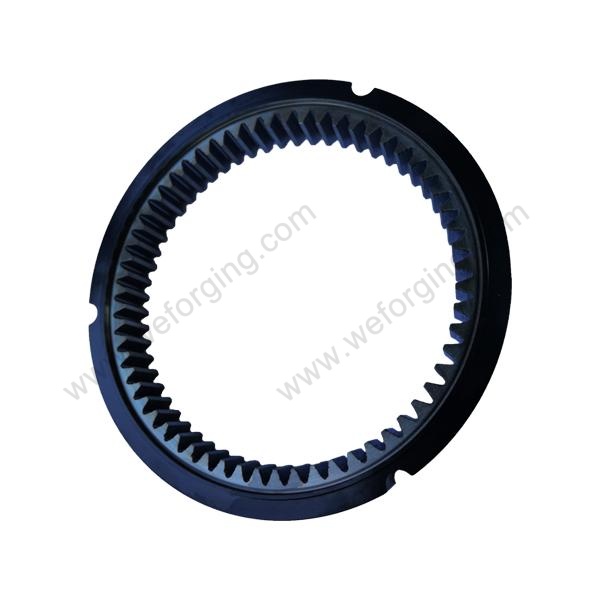
- Ring gears
These components may experience torque, cyclic loading, and vibration during operation.
Mining Equipment
Mining equipment operates under heavy loads, impact, vibration, and demanding environmental conditions.
Forged shafts, gears, rings, pins, and other structural components are commonly used in this sector.
Heavy Equipment
Construction and heavy machinery require components that can withstand repeated mechanical loading.
Forged steel is used for shafts, pins, gear components, structural parts, and other load-bearing applications.
Energy Equipment
Forged rings, shafts, flanges, and other components are used in various energy and industrial systems where mechanical reliability is important.
General Industrial Machinery
Forged steel can also be used in hydraulic equipment, industrial machinery, process equipment, and other applications where strength and durability are required.
For OEM sourcing, the manufacturing route should be selected according to the component geometry, material grade, mechanical requirements, heat treatment and production volume rather than specifying forging only for its general mechanical advantages.
What Should OEM Buyers Specify When Sourcing Forged Steel?
A clear RFQ helps a forging supplier determine the correct manufacturing route and reduces technical uncertainty before production.
For an OEM forged steel component, the RFQ should normally include:
Material
Specify the steel grade and applicable material standard.
Mechanical Properties
Define required values for:
- Tensile strength
- Yield strength
- Elongation
- Reduction of area
- Impact toughness
- Hardness
Not every property is required for every component. The specification should follow the applicable drawing, standard, or purchase requirement.
Heat Treatment
Specify the required heat-treatment condition where applicable.
Dimensions and Tolerances
Provide:
- Forged dimensions
- Finished dimensions
- Machining allowances
- Critical tolerances
- Surface-finish requirements
Inspection
Identify required inspection methods such as:
- Dimensional inspection
- Hardness testing
- Tensile testing
- UT
- MT
Documentation
Depending on the project, documentation may include:
- Material certificate
- Heat-number traceability
- Heat-treatment records
- Mechanical test reports
- NDT reports
- Dimensional inspection reports
Clear requirements at the RFQ stage make supplier comparison easier and reduce the risk of technical differences appearing after production begins.
How OEM Engineers Choose Forged Steel Components
When selecting forged steel components, engineers typically evaluate:
Load conditions and fatigue cycles
Required tensile strength and hardness
Heat treatment compatibility
Dimensional tolerance requirements
Surface finish specifications
Material standards (ASTM / EN / DIN)
Choosing the right forging supplier ensures long-term reliability and stable production performance.
Conclusion
Forged steel is steel shaped through controlled compressive deformation. Its performance comes from the combination of steel grade, forging deformation, grain flow and heat treatment—not from forging alone.
For industrial components such as gears, shafts, rings and flanges, forged steel is commonly selected where strength, fatigue resistance and impact performance are important.
For OEM sourcing, the steel grade, mechanical properties, heat treatment, machining requirements and inspection criteria should be defined together rather than evaluating the forging process in isolation.
F.A.Q.
Forged steel is shaped by applying pressure to heated billets, refining the grain structure and improving strength. Cast steel, on the other hand, is produced by pouring molten metal into a mold, which may contain microscopic porosity. Therefore, forged offers higher fatigue resistance and better structural integrity.
It provides excellent strength, toughness, and dimensional stability. Its refined grain flow enhances fatigue life and impact resistance, making it ideal for components under heavy or cyclic loads, such as gears, shafts, and flanges.
Heat treatment plays a crucial role in optimizing the mechanical properties of forged steel.After forging, the metal’s internal structure becomes denser but can also retain residual stresses.Processes such as normalizing, quenching, and tempering refine the grain structure, relieve stress, and enhance hardness, strength, and toughness.Proper heat treatment ensures that forged steel components maintain their dimensional stability and fatigue resistance during long-term operation, especially in demanding applications such as turbines, shafts, and pressure systems.