
Forged Gear Blanks: Materials, Process & OEM Supply
Selecting the right gear blank is one of the most important decisions in gear manufacturing. The quality of the blank directly affects gear strength, fatigue life, dimensional stability, machining efficiency, and long-term reliability.
Forged gear blanks are widely used in industrial gearboxes, mining equipment, wind power systems, construction machinery, and heavy-duty transmission applications because they provide superior mechanical properties compared with cast or fully machined alternatives.
This guide explains how forged gear blanks are manufactured, which materials are commonly used, how OEM buyers evaluate suppliers, and what factors influence long-term gear performance.
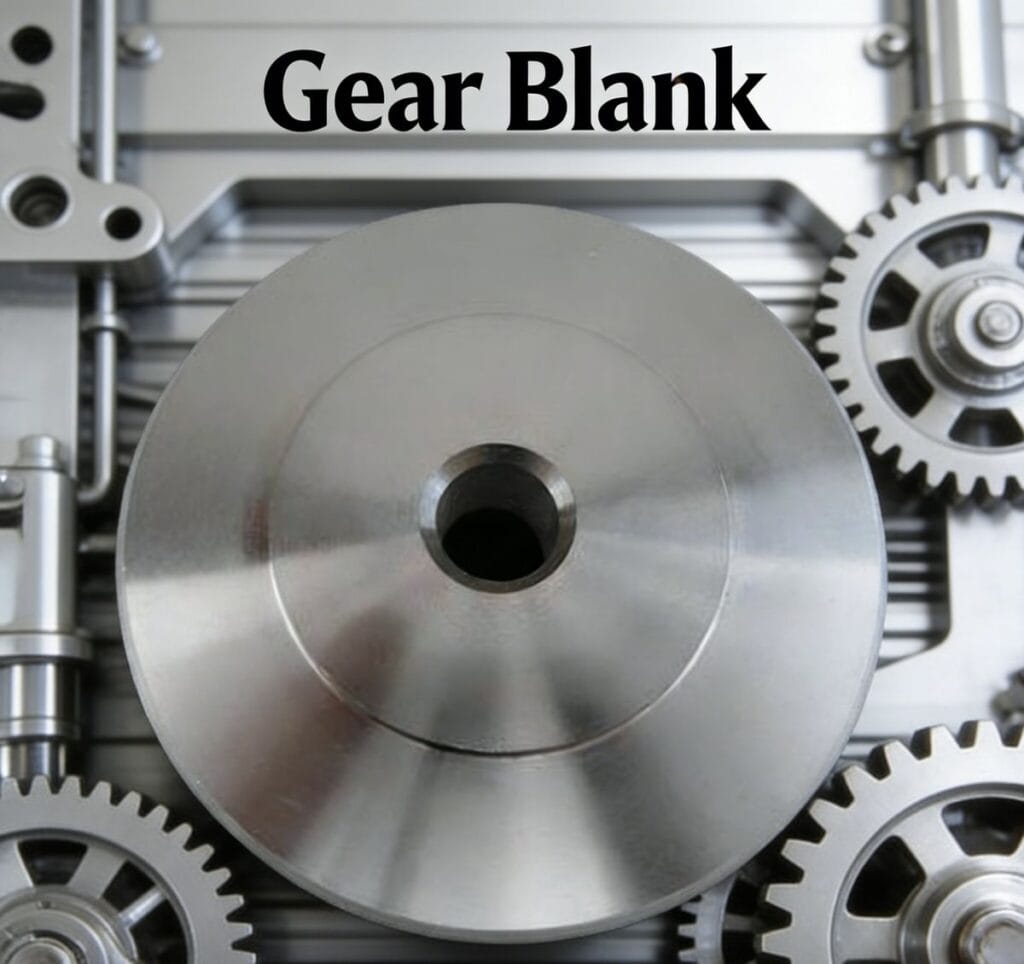
What Are Forged Gear Blanks?
Forged gear blanks are solid metal preforms produced through forging processes prior to final gear cutting operations such as hobbing, shaping, or grinding. They serve as the structural foundation of gears and directly influence load capacity, fatigue life, and dimensional accuracy.
By aligning the metal’s grain flow with the geometry of the blank, forging significantly enhances mechanical performance compared with cast or fully machined alternatives. As a result, forged gear blanks are commonly specified for gears operating under high load, cyclic stress, or demanding service conditions.
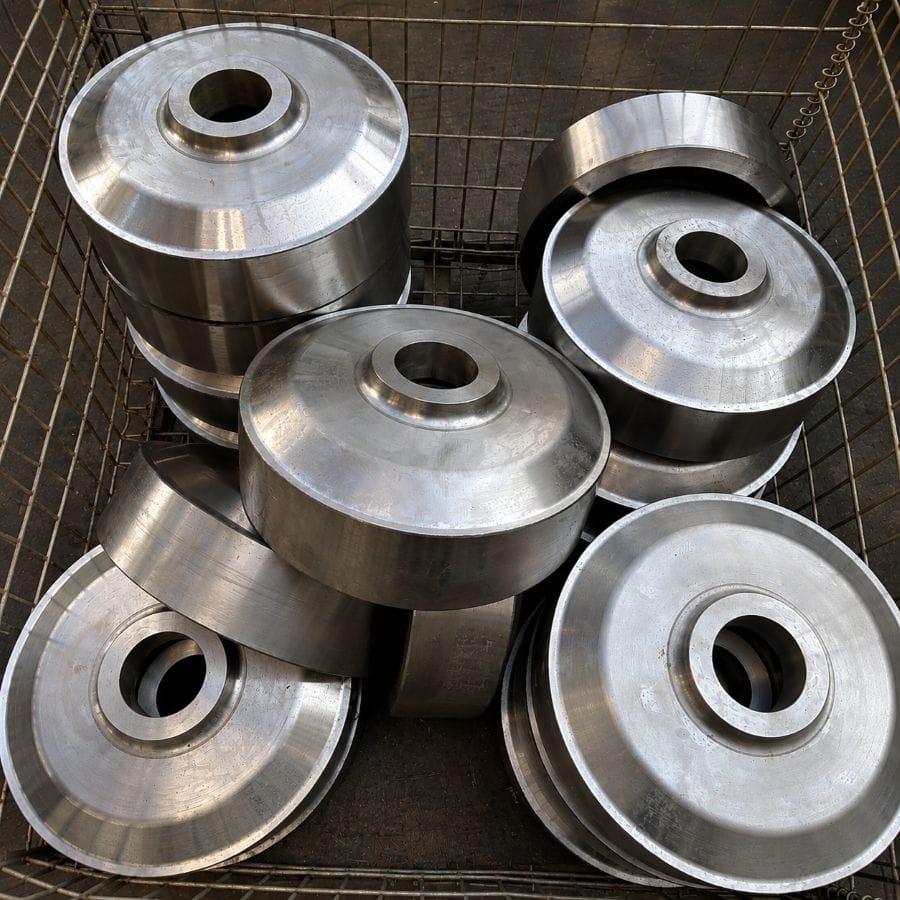
Forged Gear Blanks vs Cast and Machined Gear Blanks
Forged gear blanks provide better grain flow, fatigue resistance, and impact strength compared with cast or fully machined alternatives. They are commonly selected for heavy-duty gears used in mining equipment, industrial gearboxes, and wind power systems.
Factor | Forged Blank | Cast Blank | Machined from Bar/Plate |
Grain structure | Grain flow developed during forging | Cast microstructure | Original stock grain is cut during machining |
Heavy-load suitability | Commonly selected for high-load gears | Application dependent | Suitable when forging benefits are not required |
Material utilization | Near-net geometry can reduce stock removal | Depends on casting geometry | Often requires greater material removal |
Downstream machining | Designed with controlled machining allowance | Machining usually required | Extensive stock removal may be required |
Typical OEM use | Gearboxes, reducers, heavy-duty drives | Complex or lower-volume components | Prototype or low-volume production |
While casting may be suitable for complex geometries and low-load applications, forged gear blanks are generally preferred where strength and durability are critical.
How Are Forged Gear Blanks Manufactured?
A typical forged gear blank manufacturing process includes the following steps:
- Material preparation
Selecting suitable alloy steel billets based on mechanical requirements, load conditions, and application standards. - Heating
Heating billets to the appropriate forging temperature to ensure uniform deformation and controlled grain flow. - Forging
Forming the gear blank through one of the following forging methods, depending on size, geometry, and performance requirements:
(Each method supports different dimensional and mechanical performance targets.)
- Trimming & conditioning
Removing excess material, flash, or scale, and preparing surfaces for subsequent processing. - Heat treatment
Applying normalizing or quenching and tempering processes to stabilize mechanical properties and internal structure. - Pre-machining (optional)
Facing, boring, or rough machining to prepare the forged blank for gear cutting operations.
Each step contributes to the dimensional consistency, mechanical reliability, and long-term performance of the forged gear blank.
Common Materials for Forged Gear Blanks
Material selection has a direct impact on gear strength, wear resistance, and service life. The choice of steel grade usually depends on load conditions, operating environment, heat treatment requirements, and final gear performance.
Common materials used for forged gear blanks include alloy steels and carburizing steels with good strength, toughness, and hardenability.
| Material | Typical Characteristics | Common Applications |
|---|---|---|
| 4140 / 42CrMo4 | High strength, good toughness, suitable for heavy loads | Industrial gears, machinery components |
| 4340 | Excellent fatigue strength and impact resistance | Heavy-duty gears and mining equipment |
| 20MnCr5 | Good carburizing performance and wear resistance | Transmission gears and gearboxes |
| 18CrNiMo7-6 | High hardenability and fatigue resistance | Large industrial gear systems |
| SAE 8620 | Carburizing | Transmission and gearbox gears |
For OEM applications, selecting the right forged gear blank material requires balancing strength requirements, heat treatment process, machining performance, and operating conditions. Experienced suppliers can recommend suitable steel grades based on gear size, load requirements, and service environment.
What Should OEM Buyers Specify for Forged Gear Blanks?
A forged gear blank should be specified according to the finished gear and its operating requirements, not only by outside diameter and material grade. For an OEM project, the drawing, machining condition, heat treatment and inspection requirements should be reviewed before the forging route and machining allowance are finalized.
Clear specifications at the RFQ stage help the manufacturer select a suitable forging process and reduce unnecessary material removal during subsequent gear machining.
Finished Gear Drawing and Blank Geometry
Whenever possible, provide the finished gear drawing or 3D model together with the required blank dimensions. Important information includes outside diameter, bore, hub, web, face width, machining datums and critical tolerances.
The finished geometry helps determine whether the part is better suited to closed-die forging, open-die forging or ring rolling and allows the forged blank to be designed around the actual machining requirements.
Machining Allowance and Delivery Condition
Machining allowance should be determined from the finished gear geometry, forging process, heat treatment and required tolerances rather than using one standard allowance for every part.
Depending on the project, forged gear blanks can be supplied as-forged, rough-machined, semi-finished or prepared for subsequent gear cutting. Where required, CNC turning, boring and other machining operations can be completed before the blank moves to hobbing, shaping or other gear-cutting processes.
Defining the required delivery condition during the RFQ stage helps avoid unnecessary machining and material removal.
Material and Heat Treatment Requirements
The RFQ should identify the required material grade and, where applicable, mechanical properties, hardness and heat-treatment condition. Common materials for industrial forged gear blanks include AISI 4140 / 42CrMo4, AISI 4340, 20MnCr5, 18CrNiMo7-6 and SAE 8620, depending on the gear application.
The required condition—such as annealed, normalized, quenched and tempered, or prepared for subsequent carburizing—should be confirmed before production because heat treatment affects both mechanical properties and subsequent machining.
Inspection and Batch Traceability
Inspection requirements should be defined according to the drawing and application. Depending on the project, this may include dimensional inspection, hardness testing, material verification, mechanical testing and UT or MT when specified.
For repeat OEM production, material heat numbers, forging batches, heat treatment records and inspection results can be linked to the corresponding production lot. First-part verification can also be completed before batch production to confirm that the approved manufacturing route and critical dimensions meet the project requirements
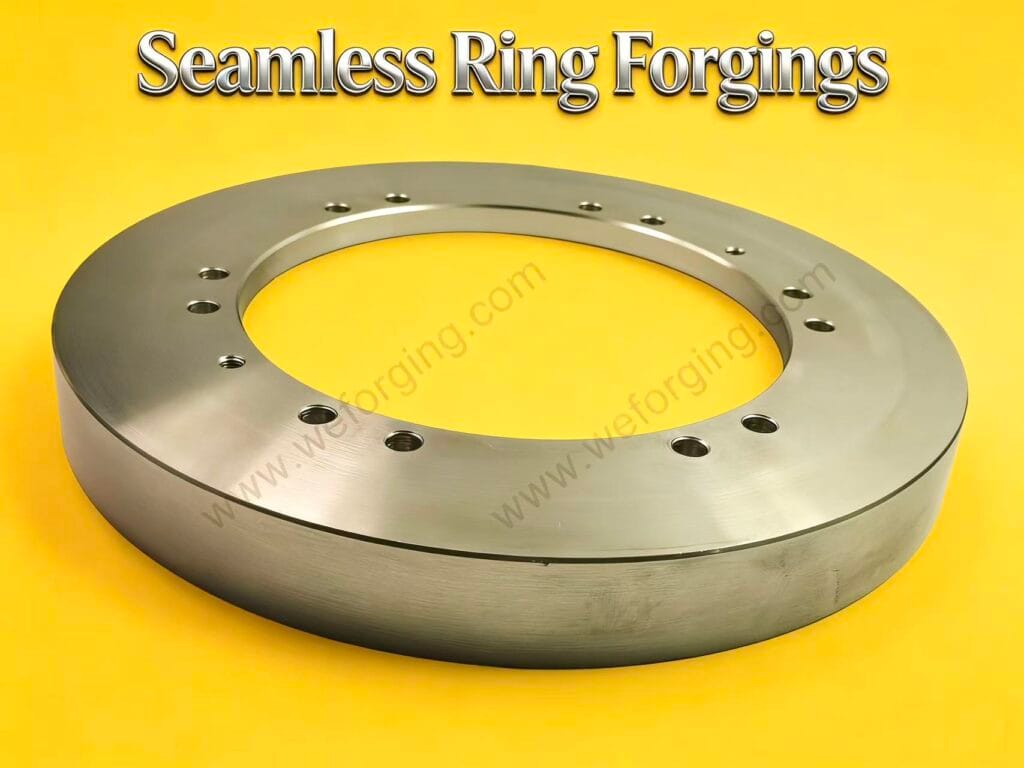
Seamless Rolled Gear Blanks for Ring Gears
Seamless rolled gear blanks are produced through ring rolling forging and are commonly used for large-diameter gears and ring gears. During the ring rolling process, material is plastically deformed in a controlled manner, forming continuous circumferential grain flow. This refined structure improves load distribution, fatigue resistance, and long-term dimensional stability, especially under high loads or cyclic operating conditions. As a result, rolled gear blanks are widely applied in slewing drives, wind turbine gear systems, planetary gearboxes, and large industrial ring gears.
How Should OEM Buyers Evaluate a Forged Gear Blank Manufacturer?
For repeat OEM gear programs, supplier evaluation should go beyond forging capacity and unit price. Buyers should consider whether the manufacturer can control the complete route from raw material and forging through heat treatment, machining and inspection.
Key points to evaluate include:
- Relevant forging capability: The supplier should be able to select an appropriate process such as closed-die forging, open-die forging or ring rolling according to the gear blank geometry and production volume.
- Integrated machining: Rough turning, boring and other CNC operations can reduce supplier handoffs and prepare the blank for subsequent gear cutting.
- Inspection capability: Dimensional inspection, hardness testing, material verification and project-specific NDT or mechanical testing should be available when required.
- Batch traceability: Material heat numbers, forging batches, heat treatment records and inspection results should be traceable for repeat production.
- OEM gear manufacturing experience: Previous experience with gear blanks, ring gears, pinions or other power transmission components can help identify manufacturing risks before batch production.
For long-term OEM sourcing, the objective is not simply to purchase a forged blank, but to establish a repeatable manufacturing route that can maintain the approved material, process and dimensional requirements across future production batches.
Applications of Forged Gear Blanks
Forged gear blanks are widely used in industries where gears must withstand high loads, continuous operation, and demanding working conditions.
| Industry | Typical Applications |
|---|---|
| Mining equipment | Large gears, reducers, and transmission components |
| Wind power | Gearbox components and large ring gears |
| Construction machinery | Heavy-duty drive systems |
| Industrial gearboxes | High-load transmission gears |
| Agricultural machinery | Power transmission components |
Due to their strength, fatigue resistance, and structural reliability, forged gear blanks are often selected for critical transmission systems where long service life is required.
Conclusion
Forged gear blanks provide a reliable foundation for high-performance gears used in demanding industrial applications. Compared with cast alternatives, forged blanks offer advantages in grain structure, fatigue resistance, and mechanical reliability.
For OEM projects, selecting the right supplier involves evaluating forging capability, material control, machining support, and inspection processes.
With experience in forging, ring rolling, CNC machining, and quality inspection, Weforging supports customers with customized forged gear blanks for industrial transmission, mining equipment, wind power, and other heavy-duty applications.