
Open Die Forging vs Closed Die Forging: Key Differences
Open die forging and closed die forging are two common metal forging processes used to manufacture industrial components. The main difference is that open die forging forms metal between simple dies, while closed die forging shapes parts inside precision die cavities.
For OEM manufacturers, the right forging process depends on part size, complexity, production volume, accuracy, and cost. This guide explains the key differences, applications, and advantages of open die vs closed die forging to help engineers select the right solution.
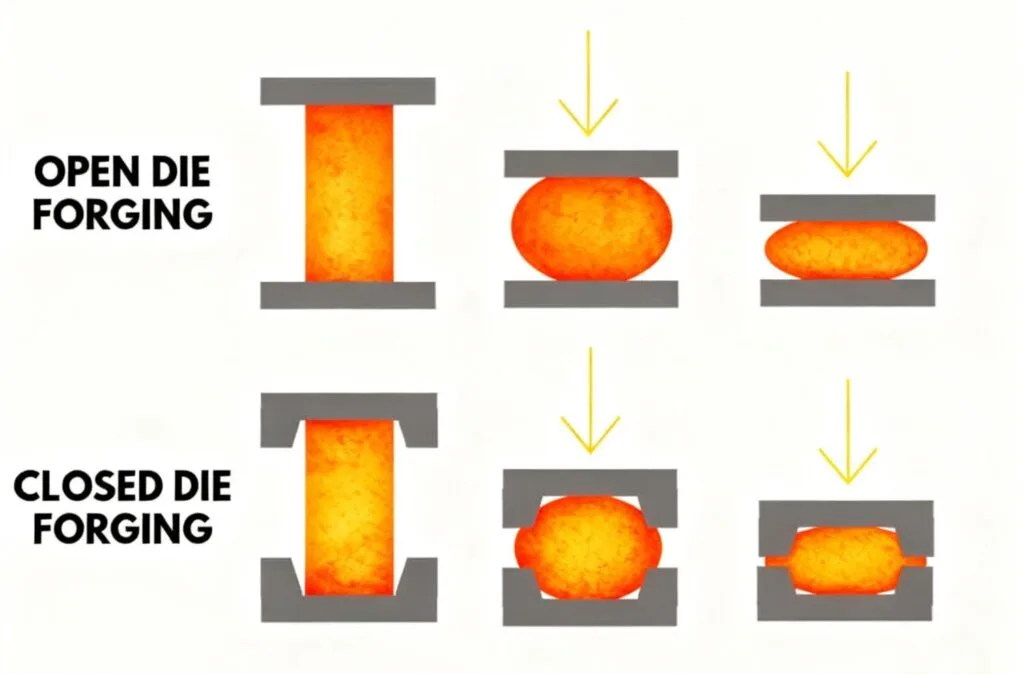
Open Die Forging vs Closed Die Forging: Quick Comparison
| Factor | Open Die Forging | Closed Die Forging |
|---|---|---|
| Manufacturing method | Metal is compressed between flat or simple dies | Metal is formed inside a precision die cavity |
| Part size | Large and heavy components | Small to medium-sized components |
| Shape complexity | Suitable for simple geometries | Suitable for complex shapes |
| Dimensional accuracy | Requires more machining after forging | Higher as-forged accuracy |
| Tooling cost | Lower initial tooling investment | Higher tooling cost |
| Production volume | Low to medium volume | Medium to high volume |
| Material utilization | Higher machining allowance | Better material efficiency |
| Typical products | Shafts, rings, flanges, large blocks | Gears, clevises, connecting rods, hydraulic components |
What Is Open Die Forging
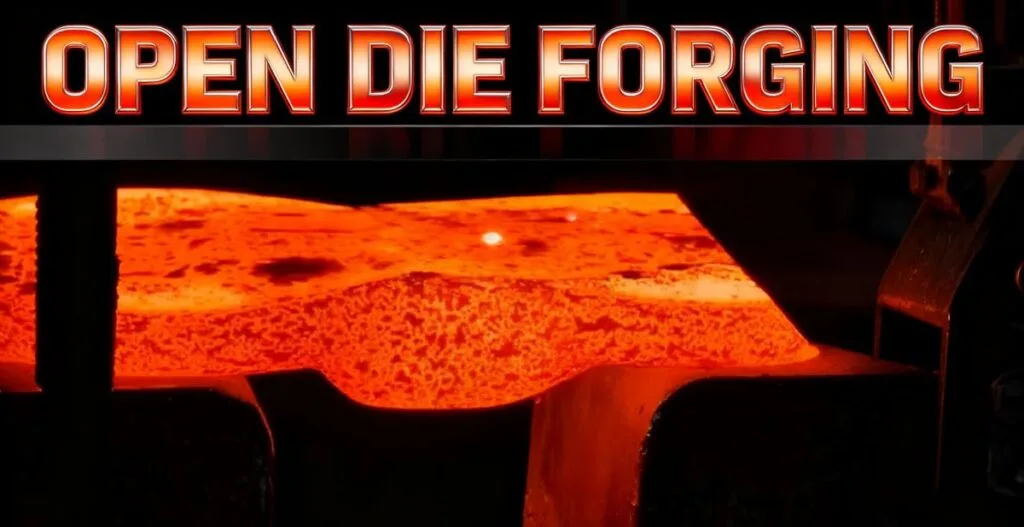
Open die forging, also known as free forging, is a metal forming process where heated metal is compressed between flat or simple-shaped dies without being fully enclosed. Unlike closed die forging, the material can flow freely during deformation, making it suitable for producing large and strong forged components.
Open die forging is commonly used for large steel forgings such as rings, shafts, and flanges that require excellent grain structure, mechanical strength, and durability. It is widely applied in industries including energy, mining, and heavy machinery.
What Is Closed Die Forging
Closed die forging, also called impression die forging, uses precision-designed dies that completely surround the heated metal during forming.
Under high pressure, the material flows into the die cavity and takes the required shape. Compared with open die forging, closed die forging provides better dimensional accuracy, improved surface finish, and higher repeatability.
A closed die forging manufacturer typically uses this process for medium-sized components with complex geometries and higher production volumes.
Open Die Forging vs Closed Die Forging: Key Differences
Choosing between open die and closed die forging requires more than comparing the dies themselves. Part size, geometry, tolerance, tooling, production volume, material utilization, and machining requirements all affect which process is more suitable.
1. Component Size
Open die forging is generally better suited to very large components. Because the workpiece is not fully enclosed in a die cavity, the process is less restricted by fixed tooling dimensions.
Closed die forging is more commonly used for small- to medium-sized components that can be formed within dedicated die cavities.
2. Shape Complexity
Closed die forging is better suited to complex and repeatable geometries. Precision die cavities can form features that would require considerably more machining after open die forging.
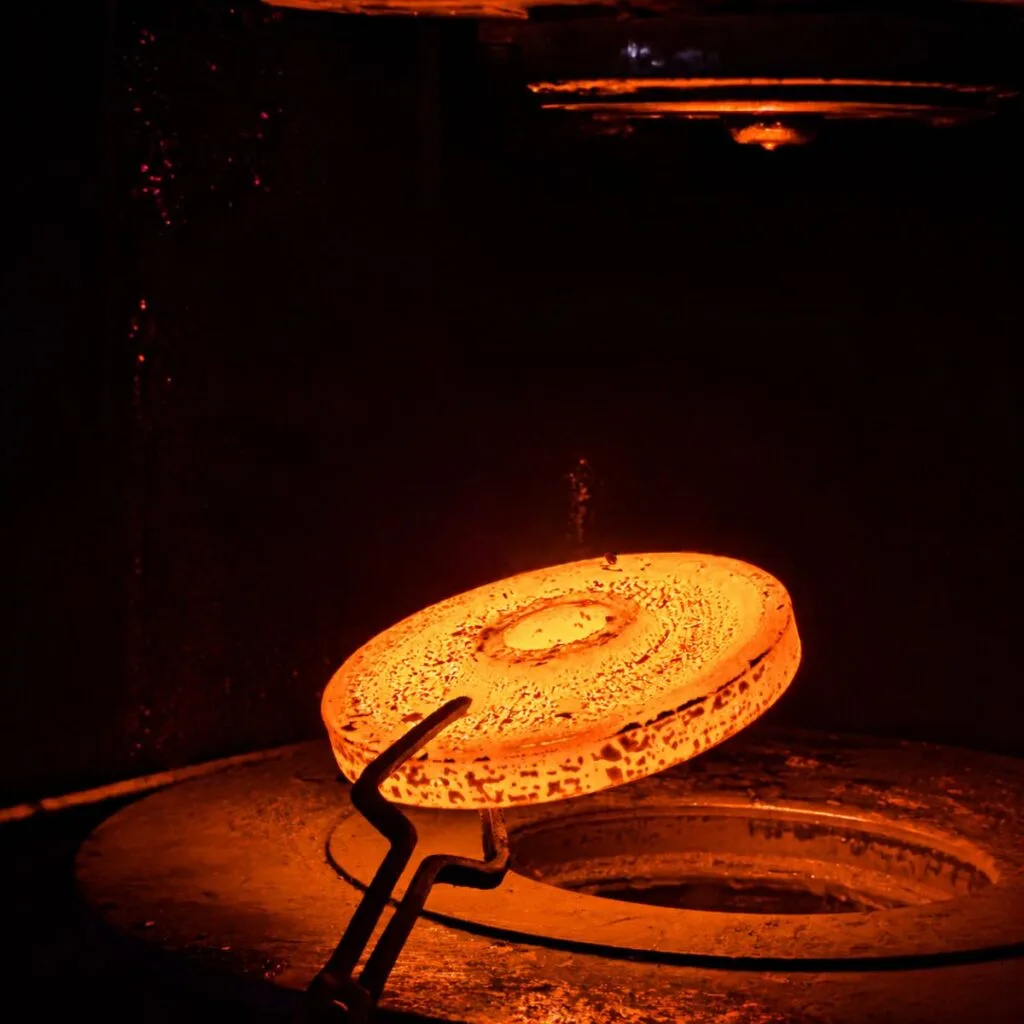
Open die forging is more appropriate for simpler shapes such as shafts, discs, rings, blocks, and large stepped components.
3. Dimensional Accuracy
Closed die forging generally provides higher as-forged dimensional accuracy because the die cavity controls the final shape.
Open die forgings typically require greater machining allowance to achieve tight final tolerances. However, the actual tolerances depend on part size, geometry, material, forging method, and applicable specifications.
4. Tooling Requirements
Open die forging usually requires less dedicated tooling, making it more flexible for custom components, prototypes, and low-volume production.
Closed die forging requires purpose-built dies. This increases initial tooling investment but provides consistent geometry and repeatability across larger production quantities.
5. Production Volume
Open die forging is commonly used for low- to medium-volume production, especially when parts are large or highly customized.
Closed die forging becomes more economical as production volume increases because tooling costs can be distributed across more parts. It is therefore widely used for repeat production.
6. Material Utilization
Closed die forging can provide better material utilization when the forged shape closely follows the final component geometry. Less material may need to be removed during subsequent machining.
Open die forgings often require larger machining allowances, although material utilization varies significantly with component geometry and process design.
7. Machining Allowance
Open die forgings generally require more finish machining because the forging process provides less control over near-net-shape geometry.
Closed die forgings can be produced closer to final dimensions, reducing machining allowance for many components. The actual benefit depends on die design, tolerance requirements, flash, and final geometry.
8. Grain Flow and Mechanical Properties
Both open die and closed die forging use controlled deformation to modify the internal structure of the metal. Proper forging can refine grain structure, influence grain flow, and help reduce internal discontinuities.
Closed die forging can provide grain flow that closely follows complex part geometry, while open die forging allows deformation to be controlled across large sections. Final mechanical properties still depend on material grade, deformation, forging temperature, heat treatment, and component design.
Open Die vs Closed Die Forging: Cost Considerations
The most cost-effective forging method depends on the component requirements rather than simply the forging process itself.
Open Die Forging Cost Factors
Open die forging usually requires lower tooling investment because it uses simpler dies.
It is often a better choice for:
- Prototype development
- Small production batches
- Large components
- Customized industrial parts
However, additional machining may be required to achieve final dimensions.
Closed Die Forging Cost Factors
Closed die forging requires higher initial die investment due to precision tooling.
However, it becomes more economical for repeated production because it provides:
- Lower machining allowance
- Faster production cycles
- Better material utilization
- Consistent part quality
For OEM projects, the best solution depends on production volume, component complexity, tolerance requirements, and long-term manufacturing plans.
Applications of Open Die and Closed Die Forgings
Both forging methods play important roles in modern industrial manufacturing.
Open Die Forging Applications
Open die forging is commonly used in industries requiring large and durable components:
- Energy equipment
- Mining machinery
- Heavy industrial equipment
- Pressure vessels
- Power transmission systems
Closed Die Forging Applications
Closed die forging is widely used for precision components:
- Automotive systems
- Hydraulic equipment
- Construction machinery
- Gear systems
- Industrial assemblies
Selecting the correct forging method helps manufacturers balance strength, accuracy, production efficiency, and cost.
Which Forging Process Should You Choose?
Choose open die forging for large, simple, or low-volume parts where tooling flexibility is important. Choose closed die forging when complex geometry, repeatability, and higher production volumes justify dedicated tooling.
| Requirement | Open Die Forging | Closed Die Forging |
|---|---|---|
| Part size | Large components | Small to medium components |
| Geometry | Simple or custom shapes | Complex shapes |
| Production volume | Low to medium | Medium to high |
| Dimensional accuracy | More machining usually required | Better as-forged accuracy |
| Tooling | Lower investment | Higher initial investment |
| Machining allowance | Generally higher | Generally lower |
The final choice should also consider material, mechanical properties, tolerance requirements, and total manufacturing cost.
Conclusion
Open die forging and closed die forging offer different advantages for industrial component manufacturing. Open die forging is suitable for large and heavy parts, while closed die forging is preferred for complex components requiring higher accuracy and repeatability.
As a custom forging manufacturer, Weforging provides OEM forging solutions including forging, CNC machining, heat treatment, and inspection. Contact us to discuss your forged components project and request a quotation.