Please enable JavaScript in your browser to complete this form.

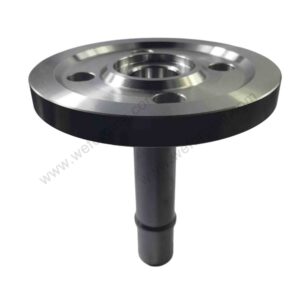
Custom Forged Pinion Gear

A forged pinion gear is a critical transmission component designed to transfer torque and rotational motion in gear systems operating under heavy load. Compared with machined-only alternatives, a forged structure improves grain flow, fatigue resistance, and overall mechanical strength, making it suitable for demanding industrial applications.

Weforging manufactures custom forged pinion gears through an integrated process combining hot forging, CNC machining, gear cutting, and inspection. Our production system supports stable batch quality and long service life for OEM transmission equipment.
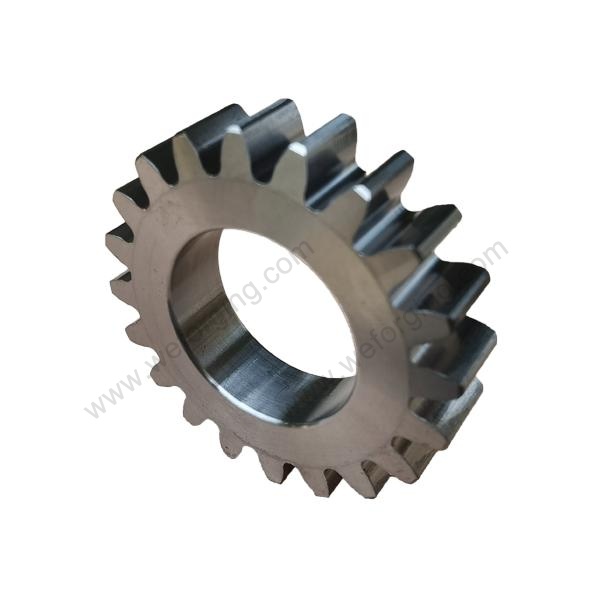
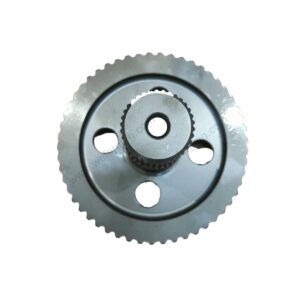
Precision-ground pinion gear with helical teeth for smooth power transmission

What Is a Forged Pinion Gear

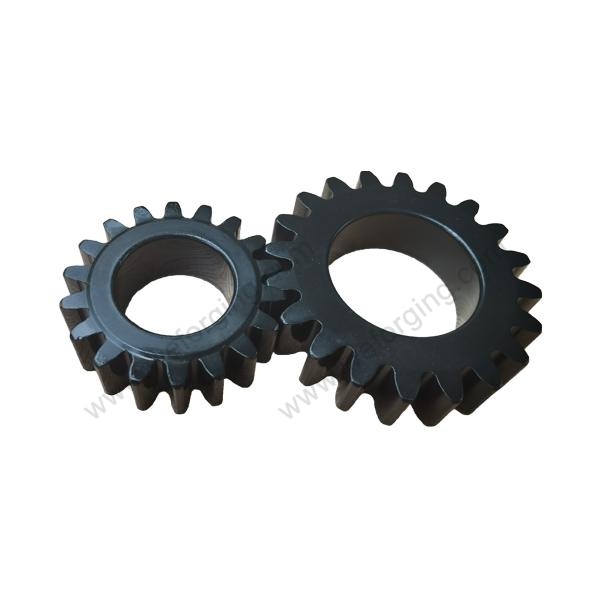
A forged pinion gear is a precision gear component formed through controlled forging and finishing processes. It typically serves as the driving gear in a transmission pair, engaging with a larger gear to convert speed and torque efficiently.

Forged pinion gears are widely used in heavy-duty transmission systems where strength, alignment, and wear resistance are critical.

Materials & Heat Treatment

Forged pinion gears are produced from alloy steels selected based on torque requirements and wear conditions. Common materials include:

  • 20CrMnTi / AISI 8620 – carburizing steel for hardened tooth surfaces

  • 42CrMo / AISI 4140 – balanced strength and toughness

  • 34CrNiMo6 – high fatigue performance under dynamic load

Heat treatment may include:

  • Carburizing and surface hardening

  • Quenching and tempering

  • Stress relieving for dimensional stability

All processes comply with ASTM, EN, or customer specifications.

Manufacturing Process

Each forged pinion gear is produced through a controlled workflow:

  1. Material Selection – Premium alloy or carbon steel (42CrMo, 20CrMnTi, 8620, 4140).

  2. Closed-Die Forging – Forms high-density gear blanks with refined grain structure.

  3. CNC Turning & Milling – Ensures precise hub, bore, and reference dimensions.

  4. Gear Hobbing or Grinding – Cuts accurate teeth and smooth profiles.

  5. Heat Treatment – Carburizing, quenching, and tempering to improve hardness and wear resistance.

  6. Inspection & Testing – Dimensional, hardness, and tooth contact verification.

Precision & Machining Capability

Weforging controls key machining parameters to achieve precision forged pinion gears with:

  • Accurate tooth geometry

  • High concentricity

  • Controlled surface finish

  • Stable batch repeatability

These characteristics support smooth transmission and reduced vibration

Quality Control & Inspection

Each CNC machined pinion gear undergoes comprehensive testing:

  • CMM dimensional verification

  • Ultrasonic testing

  • Magnetic particle inspection

  • Hardness measurement

Production follows ISO 9001:2015 standards.

Applications

Forged pinion gears are applied in transmission systems that require high load capacity, stable alignment, and long service life. Typical applications include:

  • Industrial gearboxes — torque transfer in heavy-duty reduction and drive systems

  • Construction & mining machinery — excavators, crushers, and load-bearing transmission units

  • Automotive & commercial vehicles — differential assemblies and powertrain components

  • Wind and energy equipment — turbine gear systems under cyclic and variable loads

  • Marine & offshore machinery — corrosion-resistant drive mechanisms

  • General industrial equipment — conveyors, presses, and mechanical actuators

These applications demand forged components capable of resisting fatigue, wear, and impact under continuous operation.

OEM Custom Pinion Gear Manufacturing

Weforging provides OEM custom forged pinion gear manufacturing including:

  • Drawing-based production

  • Custom materials

  • Prototype to batch manufacturing

  • Engineering optimization

Why Choose Weforging

As an OEM forged pinion gear manufacturer, Weforging operates a fully integrated production system combining hot forging, CNC machining, heat treatment, and precision inspection. This closed-loop workflow ensures dimensional stability, consistent batch quality, and reliable mechanical performance.

Our engineering team supports drawing-based manufacturing, material optimization, and production planning for heavy-duty transmission applications. With long-term OEM export experience, we deliver stable supply, traceability, and repeatable quality across every production batch.

Conclusion

Forged pinion gears are critical components in high-load transmission systems where precision, strength, and fatigue resistance determine service life. Choosing a manufacturer with integrated forging and machining capability reduces sourcing risk and ensures long-term reliability.

Share your drawings and technical requirements with Weforging to receive an engineering review and detailed quotation.
Custom Forged Pinion Gear

A forged pinion gear is a critical transmission component designed to transfer torque and rotational motion in gear systems operating under heavy load. Compared with machined-only alternatives, a forged structure improves grain flow, fatigue resistance, and overall mechanical strength, making it suitable for demanding industrial applications.

Weforging manufactures custom forged pinion gears through an integrated process combining hot forging, CNC machining, gear cutting, and inspection. Our production system supports stable batch quality and long service life for OEM transmission equipment.

Precision-ground pinion gear with helical teeth for smooth power transmission

What Is a Forged Pinion Gear

A forged pinion gear is a precision gear component formed through controlled forging and finishing processes. It typically serves as the driving gear in a transmission pair, engaging with a larger gear to convert speed and torque efficiently.

Forged pinion gears are widely used in heavy-duty transmission systems where strength, alignment, and wear resistance are critical.

Materials & Heat Treatment

Forged pinion gears are produced from alloy steels selected based on torque requirements and wear conditions. Common materials include:

  • 20CrMnTi / AISI 8620 – carburizing steel for hardened tooth surfaces

  • 42CrMo / AISI 4140 – balanced strength and toughness

  • 34CrNiMo6 – high fatigue performance under dynamic load

Heat treatment may include:

  • Carburizing and surface hardening

  • Quenching and tempering

  • Stress relieving for dimensional stability

All processes comply with ASTM, EN, or customer specifications.

Manufacturing Process

Each forged pinion gear is produced through a controlled workflow:

  1. Material Selection – Premium alloy or carbon steel (42CrMo, 20CrMnTi, 8620, 4140).

  2. Closed-Die Forging – Forms high-density gear blanks with refined grain structure.

  3. CNC Turning & Milling – Ensures precise hub, bore, and reference dimensions.

  4. Gear Hobbing or Grinding – Cuts accurate teeth and smooth profiles.

  5. Heat Treatment – Carburizing, quenching, and tempering to improve hardness and wear resistance.

  6. Inspection & Testing – Dimensional, hardness, and tooth contact verification.

Precision & Machining Capability

Weforging controls key machining parameters to achieve precision forged pinion gears with:

  • Accurate tooth geometry

  • High concentricity

  • Controlled surface finish

  • Stable batch repeatability

These characteristics support smooth transmission and reduced vibration

Quality Control & Inspection

Each CNC machined pinion gear undergoes comprehensive testing:

  • CMM dimensional verification

  • Ultrasonic testing

  • Magnetic particle inspection

  • Hardness measurement

Production follows ISO 9001:2015 standards.

Applications

Forged pinion gears are applied in transmission systems that require high load capacity, stable alignment, and long service life. Typical applications include:

  • Industrial gearboxes — torque transfer in heavy-duty reduction and drive systems

  • Construction & mining machinery — excavators, crushers, and load-bearing transmission units

  • Automotive & commercial vehicles — differential assemblies and powertrain components

  • Wind and energy equipment — turbine gear systems under cyclic and variable loads

  • Marine & offshore machinery — corrosion-resistant drive mechanisms

  • General industrial equipment — conveyors, presses, and mechanical actuators

These applications demand forged components capable of resisting fatigue, wear, and impact under continuous operation.

OEM Custom Pinion Gear Manufacturing

Weforging provides OEM custom forged pinion gear manufacturing including:

  • Drawing-based production

  • Custom materials

  • Prototype to batch manufacturing

  • Engineering optimization

Why Choose Weforging

As an OEM forged pinion gear manufacturer, Weforging operates a fully integrated production system combining hot forging, CNC machining, heat treatment, and precision inspection. This closed-loop workflow ensures dimensional stability, consistent batch quality, and reliable mechanical performance.

Our engineering team supports drawing-based manufacturing, material optimization, and production planning for heavy-duty transmission applications. With long-term OEM export experience, we deliver stable supply, traceability, and repeatable quality across every production batch.

Conclusion

Forged pinion gears are critical components in high-load transmission systems where precision, strength, and fatigue resistance determine service life. Choosing a manufacturer with integrated forging and machining capability reduces sourcing risk and ensures long-term reliability.

Share your drawings and technical requirements with Weforging to receive an engineering review and detailed quotation.
Custom Forged Pinion Gear

A forged pinion gear is a critical transmission component designed to transfer torque and rotational motion in gear systems operating under heavy load. Compared with machined-only alternatives, a forged structure improves grain flow, fatigue resistance, and overall mechanical strength, making it suitable for demanding industrial applications.

Weforging manufactures custom forged pinion gears through an integrated process combining hot forging, CNC machining, gear cutting, and inspection. Our production system supports stable batch quality and long service life for OEM transmission equipment.

Precision-ground pinion gear with helical teeth for smooth power transmission

What Is a Forged Pinion Gear

A forged pinion gear is a precision gear component formed through controlled forging and finishing processes. It typically serves as the driving gear in a transmission pair, engaging with a larger gear to convert speed and torque efficiently.

Forged pinion gears are widely used in heavy-duty transmission systems where strength, alignment, and wear resistance are critical.

Materials & Heat Treatment

Forged pinion gears are produced from alloy steels selected based on torque requirements and wear conditions. Common materials include:

  • 20CrMnTi / AISI 8620 – carburizing steel for hardened tooth surfaces

  • 42CrMo / AISI 4140 – balanced strength and toughness

  • 34CrNiMo6 – high fatigue performance under dynamic load

Heat treatment may include:

  • Carburizing and surface hardening

  • Quenching and tempering

  • Stress relieving for dimensional stability

All processes comply with ASTM, EN, or customer specifications.

Manufacturing Process

Each forged pinion gear is produced through a controlled workflow:

  1. Material Selection – Premium alloy or carbon steel (42CrMo, 20CrMnTi, 8620, 4140).

  2. Closed-Die Forging – Forms high-density gear blanks with refined grain structure.

  3. CNC Turning & Milling – Ensures precise hub, bore, and reference dimensions.

  4. Gear Hobbing or Grinding – Cuts accurate teeth and smooth profiles.

  5. Heat Treatment – Carburizing, quenching, and tempering to improve hardness and wear resistance.

  6. Inspection & Testing – Dimensional, hardness, and tooth contact verification.

Precision & Machining Capability

Weforging controls key machining parameters to achieve precision forged pinion gears with:

  • Accurate tooth geometry

  • High concentricity

  • Controlled surface finish

  • Stable batch repeatability

These characteristics support smooth transmission and reduced vibration

Quality Control & Inspection

Each CNC machined pinion gear undergoes comprehensive testing:

  • CMM dimensional verification

  • Ultrasonic testing

  • Magnetic particle inspection

  • Hardness measurement

Production follows ISO 9001:2015 standards.

Applications

Forged pinion gears are applied in transmission systems that require high load capacity, stable alignment, and long service life. Typical applications include:

  • Industrial gearboxes — torque transfer in heavy-duty reduction and drive systems

  • Construction & mining machinery — excavators, crushers, and load-bearing transmission units

  • Automotive & commercial vehicles — differential assemblies and powertrain components

  • Wind and energy equipment — turbine gear systems under cyclic and variable loads

  • Marine & offshore machinery — corrosion-resistant drive mechanisms

  • General industrial equipment — conveyors, presses, and mechanical actuators

These applications demand forged components capable of resisting fatigue, wear, and impact under continuous operation.

OEM Custom Pinion Gear Manufacturing

Weforging provides OEM custom forged pinion gear manufacturing including:

  • Drawing-based production

  • Custom materials

  • Prototype to batch manufacturing

  • Engineering optimization

Why Choose Weforging

As an OEM forged pinion gear manufacturer, Weforging operates a fully integrated production system combining hot forging, CNC machining, heat treatment, and precision inspection. This closed-loop workflow ensures dimensional stability, consistent batch quality, and reliable mechanical performance.

Our engineering team supports drawing-based manufacturing, material optimization, and production planning for heavy-duty transmission applications. With long-term OEM export experience, we deliver stable supply, traceability, and repeatable quality across every production batch.

Conclusion

Forged pinion gears are critical components in high-load transmission systems where precision, strength, and fatigue resistance determine service life. Choosing a manufacturer with integrated forging and machining capability reduces sourcing risk and ensures long-term reliability.

Share your drawings and technical requirements with Weforging to receive an engineering review and detailed quotation.
Scroll to Top