
What Does Forged Mean? Forged Steel Manufacturing Explained
In manufacturing, “forged” refers to metal components shaped through controlled deformation under pressure. Unlike casting, forging reshapes solid metal to improve its internal grain structure, helping achieve higher strength, fatigue resistance, and reliability.
Forged components are widely used in heavy machinery, mining equipment, transmission systems, and energy applications where durability and consistent performance are essential. Common forged parts include shafts, gears, rings, flanges, and other load-bearing components.
At Weforging, we integrate forging, CNC machining, heat treatment, and inspection processes to support OEM customers with reliable forged parts for demanding industrial applications. Our focus is delivering consistent quality and engineering support throughout the manufacturing process.
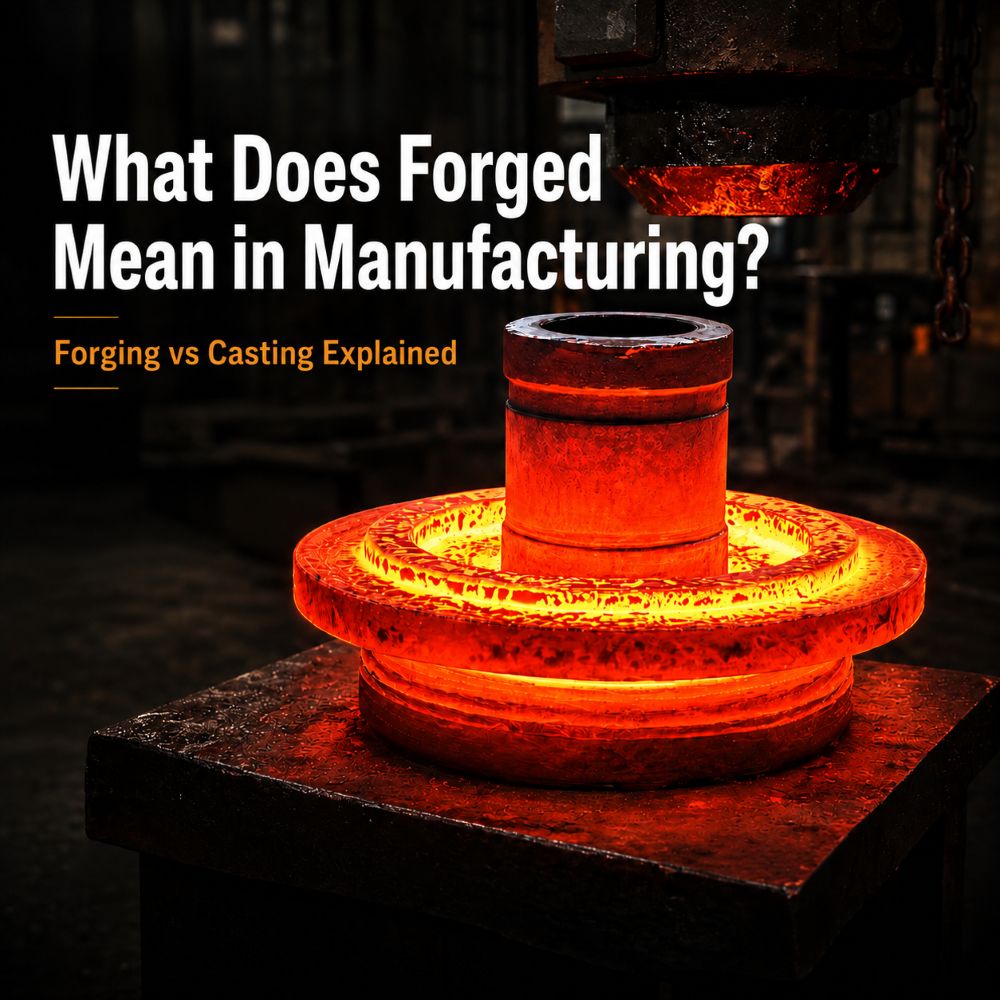
Definition of Forged in Manufacturing
A forged component is a metal part shaped through controlled pressure and deformation. During the forging process, the material grain structure is optimized, improving strength, fatigue resistance, and overall reliability.
Compared with many conventional manufacturing methods, forging is preferred for components that require high mechanical performance and long service life. Common forged parts include shafts, gears, rings, and other load-bearing components used in industrial applications.
Forging vs Casting: What’s the Difference?
One of the most common comparisons in manufacturing is forging vs casting. While both processes can produce metal components, their internal structures and mechanical properties are very different.
Key Differences Between Forging and Casting
| Aspect | Forging | Casting |
|---|---|---|
| Manufacturing Method | Metal shaped under pressure | Molten metal poured into mold |
| Grain Structure | Continuous and aligned | Random structure |
| Internal Density | Higher | Lower |
| Porosity Risk | Minimal | Possible |
| Fatigue Resistance | Better under cyclic load | Lower |
| Impact Strength | Higher | Moderate |
| Structural Reliability | Excellent for critical parts | Suitable for less critical applications |
| Initial Tooling Cost | Higher | Lower |
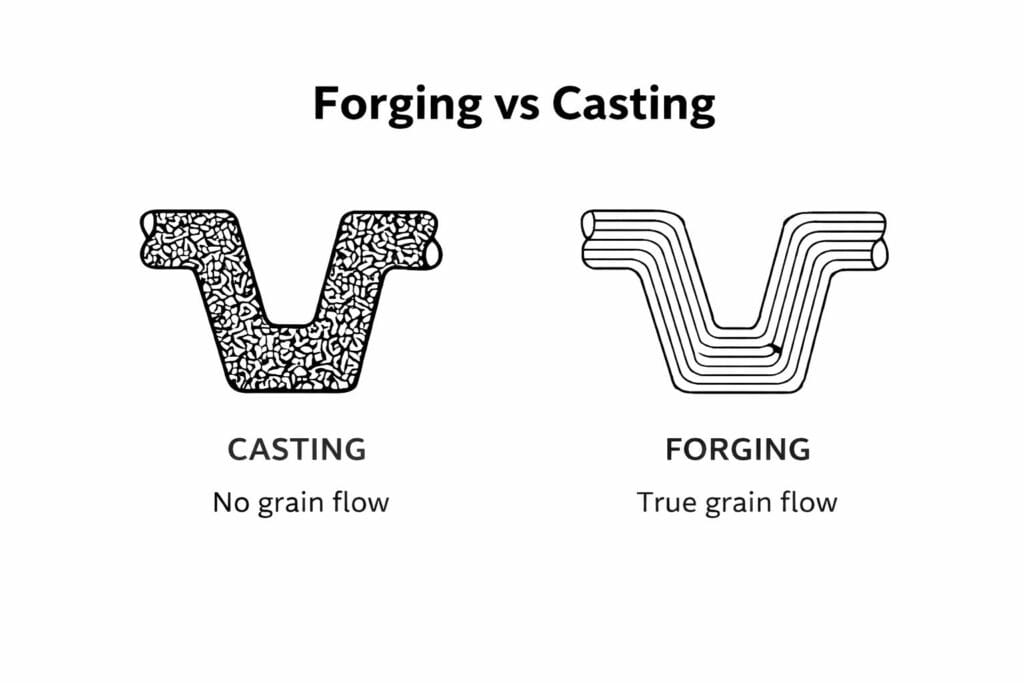
Why Forging Is Stronger Than Casting
The strength advantage of forging comes from its internal structure.
During forging:
- Grain flow follows the part shape
- Internal voids are compressed
- Density is improved
Engineering-Level Benefits:
- Fatigue resistance increases by up to 30–50%
- Load-bearing capacity is significantly higher
- Better performance under dynamic stress
This is why forged components are used in gears, shafts, flanges, and heavy-duty mechanical systems.
Key Advantages of Forged Components
Forged components are widely used in industrial applications because the forging process improves the material’s internal structure and mechanical performance. Controlled deformation helps create better grain flow, resulting in higher strength, fatigue resistance, and reliability.
Forged parts are especially suitable for components exposed to heavy loads, repeated stress, and demanding operating conditions. Key advantages include:
- Higher fatigue resistance: Performs reliably under repeated loading conditions, making forged parts suitable for gears, shafts, and heavy-duty components.
- Improved structural reliability: Provides more consistent mechanical properties with a stronger internal grain structure.
- Better durability: Helps components withstand impact, vibration, and harsh working environments.
For OEM applications, forging is often combined with heat treatment, CNC machining, and inspection processes to achieve the required balance of strength, precision, and service life.
How the Forging Process Works
Although forging methods vary depending on the part geometry and material grade, the overall forging process usually includes several key stages.
Typical Forging Process
Carbon steel, alloy steel, stainless steel, or other materials are selected based on mechanical requirements and application conditions.
2. Heating
The material is heated to a controlled temperature to improve plasticity before forming.
3. Forging and Shaping
Presses, hammers, or rolling equipment deform the material into the required geometry.
4. Trimming and Pre-Machining
Excess material is removed and the forged shape is prepared for further processing.
Processes such as quenching, tempering, or normalizing help achieve the required hardness and toughness balance.
6. CNC Machining and Inspection
Final machining ensures dimensional accuracy, while inspection verifies structural integrity and tolerance compliance.
Types of Forging Used in Manufacturing
Different forging methods are used depending on part size, geometry, production volume, and mechanical requirements.
Closed-Die Forging
Closed-die forging is widely used for complex components requiring high strength and consistent dimensional accuracy.
Typical applications include:
- Gear blanks
- Connecting components
- Hydraulic parts
- Structural mechanical components
Rolled Ring Forging
Rolled ring forging is commonly used for large ring-shaped components requiring high structural reliability.
Typical products include:
- Ring gears
- Bearing rings
- Flanges
- Wind energy rings
Typical OEM Applications
Forged components are widely used in OEM applications where strength, fatigue resistance, and long-term reliability are required. Common applications include:
- Mining & Heavy Machinery: shafts, gears, rings, and structural components for demanding operating conditions.
- Power Transmission Systems: gear blanks, shafts, and other forged parts requiring durability and consistent performance.
- Renewable Energy Equipment: flanges, rings, and other large forged components used in long-term service environments.
How OEM Manufacturers Ensure Forging Quality
High-quality forged components depend on more than the forging process itself. Stable production, precision machining, heat treatment, and comprehensive inspection all contribute to long-term product performance.
At Weforging, our integrated manufacturing process includes:
- Closed-die and rolled ring forging
- CNC machining for tight tolerances
- Heat treatment based on material requirements
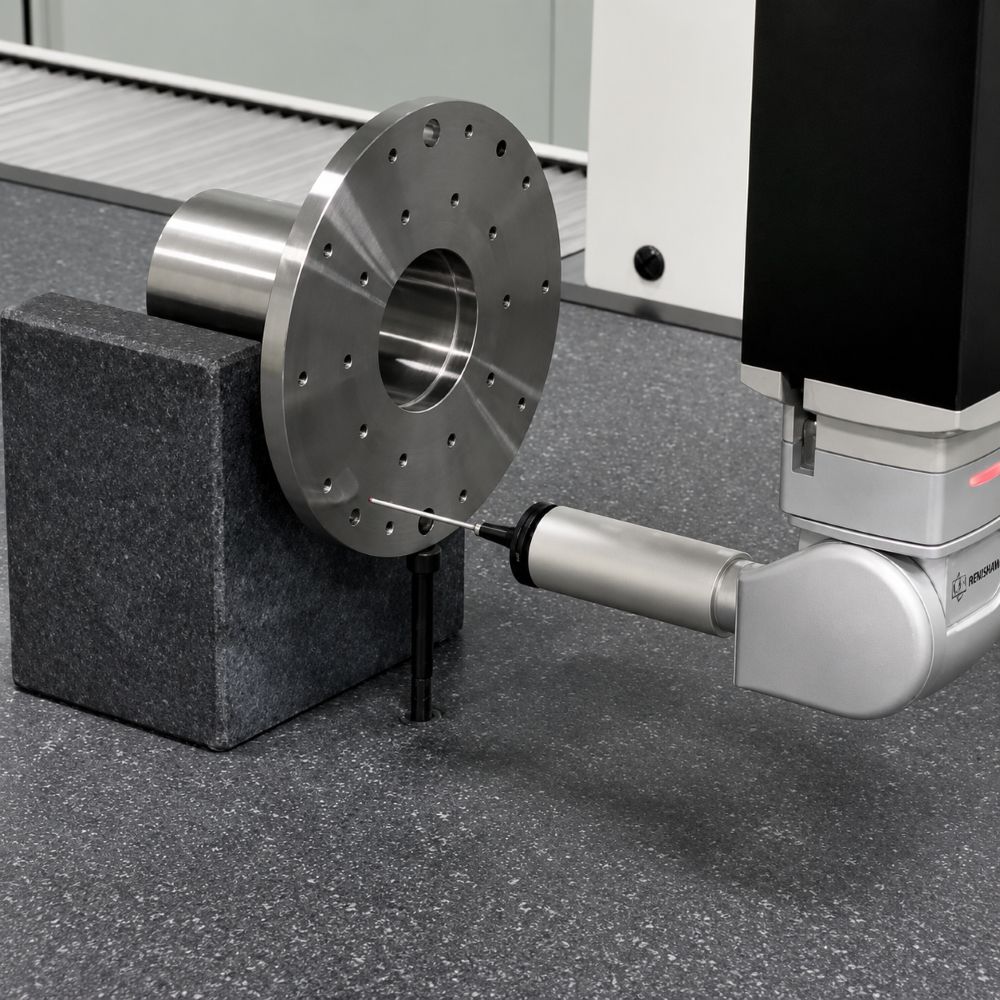
- Coordinate Measuring Machine (CMM) inspection
- UT and MT non-destructive testing
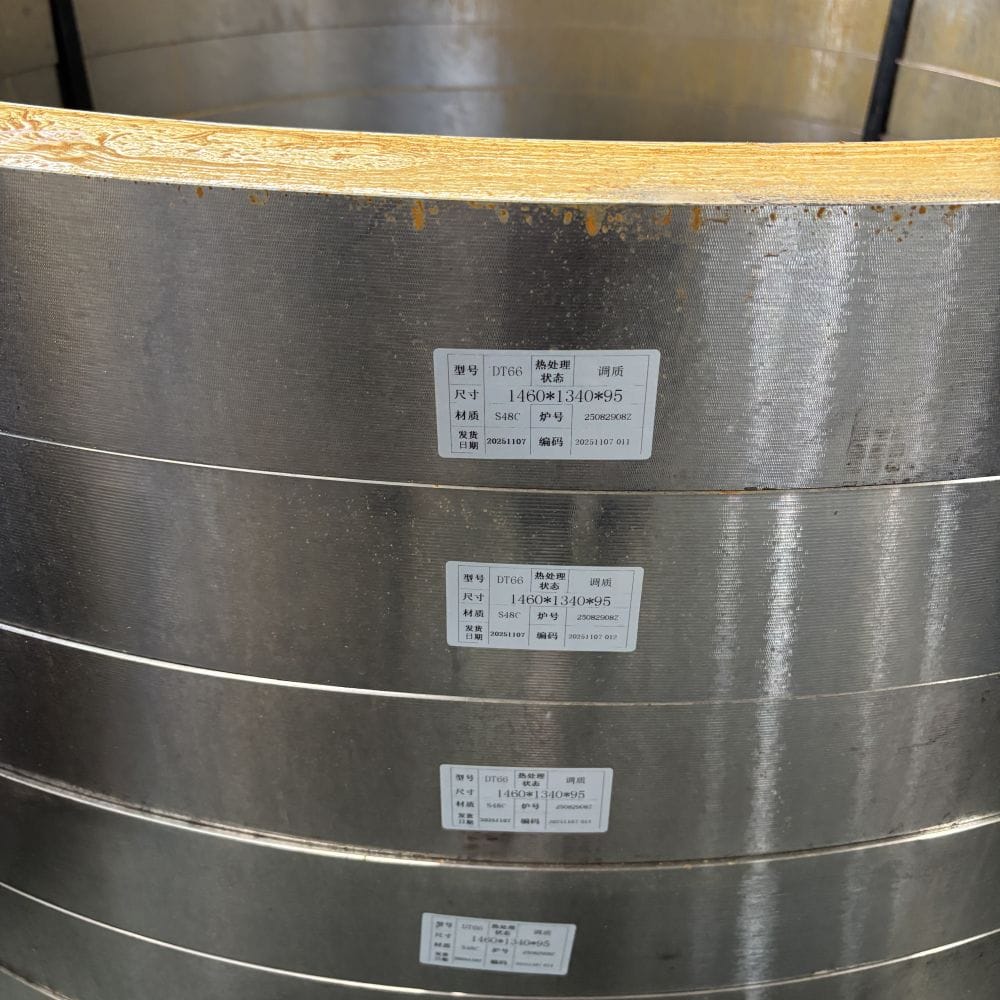
- Heat number and batch traceability
- Material certificates and inspection reports
This integrated workflow helps OEM customers improve consistency, shorten lead times, and simplify supplier management.
Conclusion
Understanding what forged means is not only about learning a manufacturing process—it is about understanding why forged components are trusted in demanding industrial applications.
Compared with casting, forging provides better grain flow, higher structural strength, improved fatigue resistance, and longer service life. These advantages make forged parts the preferred choice for gears, shafts, flanges, hydraulic components, and other critical OEM applications.
If you are evaluating forged components for your next project, discussing material selection, forging methods, machining, and inspection requirements early can help improve product performance while reducing long-term manufacturing risks.
F.A.Q.
Forged means shaping metal using compressive force instead of melting it. This process improves grain structure, strength, and durability, making forged parts ideal for high-load and safety-critical applications.
Forged metal is formed under pressure, resulting in higher strength and fewer defects. Cast metal is poured in liquid form, which may create porosity and weaker internal structure. Forging is preferred for critical applications.
Forging aligns the metal’s grain flow and compresses internal voids, increasing density and strength. This results in better fatigue resistance and load-bearing performance compared to cast components.
Many OEM buyers prefer forged components because they generally provide better durability, dimensional stability, and long-term reliability in demanding applications. Forged parts are commonly used in equipment exposed to vibration, cyclic load, pressure, or impact stress.